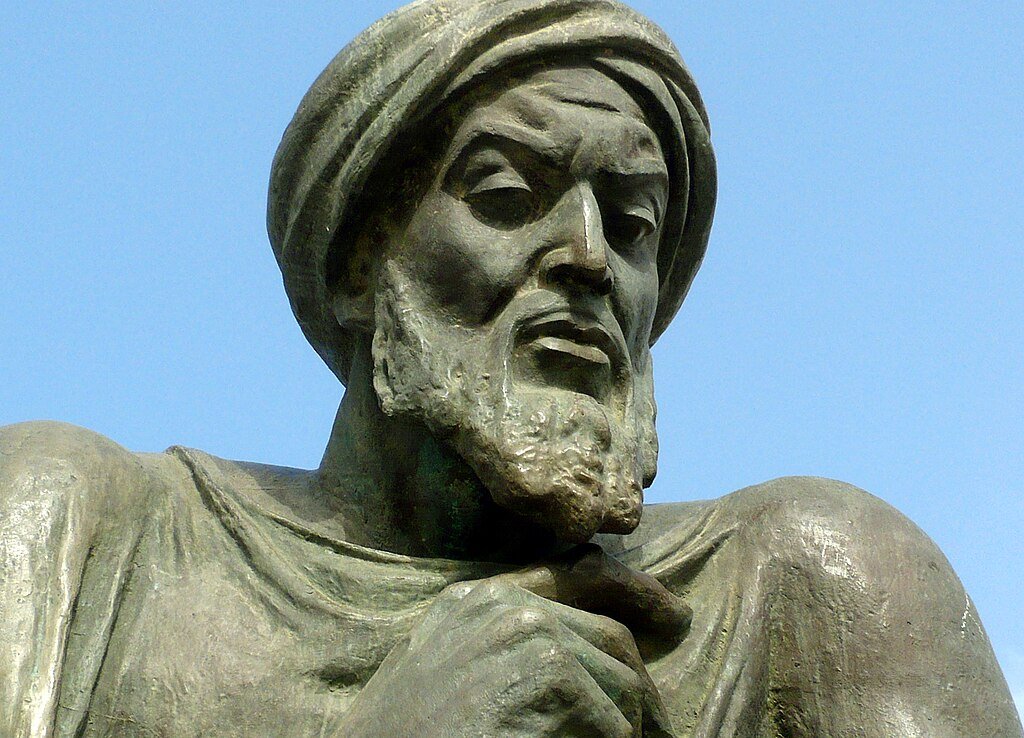
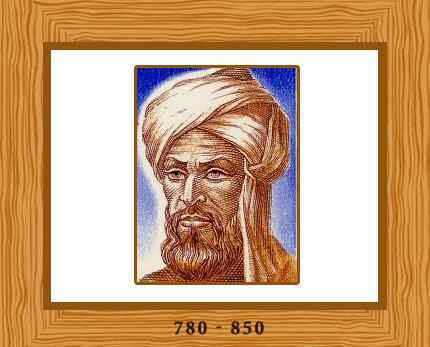
Muhammad ibn Musa al-Khwarizmi, a towering polymath of the Islamic Golden Age, revolutionized mathematics, astronomy, and geography through systematic methods that introduced the foundations of algebra, systematic use of Hindu-Arabic numerals, and precise geographical cartography. His masterworks transformed abstract arithmetic into practical problem-solving tools, giving modern science and digital computing their fundamental lexicon, including the very words algebra and algorithm.
Introduction to Al-Khwarizmi and the Intellectual Landscape of the Islamic Golden Age
Operating primarily at the House of Wisdom (Bayt al-Hikma) in Baghdad during the 9th century under the Abbasid Caliphate, Muhammad ibn Musa al-Khwarizmi synthesized Greek, Indian, and Mesopotamian mathematical traditions. While earlier civilizations—most notably the Babylonians, Indians, and Greeks—solved specific mathematical problems through geometric proofs or rhetorical arithmetic, al-Khwarizmi elevated these techniques into a generalized, universal discipline.
The primary search intent surrounding al-khwarizmi inventions and their historical impact centers on understanding how his revolutionary texts shaped modern mathematics, trade, astronomy, and computation. Resolving any potential historical ambiguity, modern scholarship attributes the monumental breakthroughs in symbolic calculation and positional numeration directly to his foundational treatises, which bridged ancient wisdom and modern scientific thought. His contributions established a structural methodology for solving equations and processing data that remains foundational to modern software engineering, cryptography, and quantitative analysis.
The Invention of Algebra: Kitab al-Jabr wa-l-Muqabala
The single most influential contribution of al-Khwarizmi was the formalization of algebra as an independent discipline. Around 820 CE, he published his seminal work, Al-Kitab al-mukhtasar fi hisab al-jabr wa-l-muqabala (The Compendious Book on Calculation by Completion and Balancing). This text marked a decisive departure from the geometric problem-solving favored by classical Greek mathematicians like Euclid.
Etymology and Core Concepts of Al-Jabr
- Al-Jabr (Completion): The process of removing negative terms from an equation by adding equivalent quantities to both sides.
- Al-Muqabala (Balancing): The process of reducing positive terms of the same power on both sides of an equation to simplify its structure.
Al-Khwarizmi categorized equations into linear and quadratic forms, classifying them into six standard types using roots, squares, and simple numbers. By establishing systematic rules for reducing complex word problems into standard mathematical equations, he enabled merchants, judges, and surveyors to solve real-world problems involving inheritance, trade, and land division without relying on geometric diagrams.
The Propagation of Hindu-Arabic Numerals and Algorithms
Beyond algebra, al-Khwarizmi played a pivotal role in transmitting the positional decimal system—including the zero—from the Indian subcontinent to the Islamic world and subsequently to medieval Europe. His arithmetic treatise, preserved primarily in Latin translations as Algoritmi de numero Indorum (Al-Khwarizmi on the Hindu Art of Reckoning), revolutionized computation.
From Algorismus to Modern Algorithms
The Latinization of al-Khwarizmi's name yielded the term algorism, which eventually evolved into algorithm. In his arithmetic texts, he detailed step-by-step procedures for performing arithmetic operations (addition, subtraction, multiplication, division, extraction of square roots, and fractions) using the place-value system.
Before this innovation, calculations in Europe required cumbersome Roman numerals or physical counting boards like the abacus. Al-Khwarizmi's explicit instructions made complex multi-digit calculations repeatable, verifiable, and efficient. Today, every software program, cryptographic protocol, and data sorting routine relies on algorithmic principles directly traceable to these early computational steps.
Contributions to Trigonometry and Astronomy
Al-Khwarizmi’s scientific output extended deeply into astronomy (ilm al-falak) and spherical trigonometry. He updated and corrected earlier astronomical tables, drawing on Persian, Indian, and Ptolemaic data.
- Sine and Cosine Tables: He calculated precise sine tables and introduced tangent functions, which facilitated the accurate tracking of celestial bodies, star positioning, and the calculation of planetary orbits.
- Astrolabes and Sundials: He authored specialized treatises on the construction and calibration of astronomical instruments, including the astrolabe, quadrant, and advanced sundials. These tools were essential for maritime navigation, timekeeping, and determining the direction of Mecca (qibla) for Islamic daily prayers.
Cartography and Geography: Kitab Surat al-Ard
In the field of geography, al-Khwarizmi shattered Ptolemaic limitations by recalculating the circumference of the Earth and producing a remarkably accurate map of the known world. His book Kitab Surat al-Ard (The Image of the Earth) provided precise coordinates of latitude and longitude for cities, mountains, seas, and rivers across the Mediterranean, Asia, and Africa.
He corrected Ptolemy's overestimation of the length of the Mediterranean Sea and provided empirical measurements gathered by dozens of scholars dispatched by Caliph al-Ma'mun. This geographical framework formed the backbone of medieval Islamic cartography and influenced European mapmakers during the Renaissance.
Summary Comparison of Al-Khwarizmi’s Major Works and Impacts
| Work / Treatise | Primary Subject | Core Innovation | Modern Legacy |
|---|---|---|---|
| Kitab al-Jabr wa-l-Muqabala | Algebra | Systematic classification and solution of linear and quadratic equations. | Foundation of modern algebra and symbolic mathematics. |
| Algoritmi de numero Indorum | Arithmetic | Introduction of Hindu-Arabic numerals and positional notation. | Origin of the term "algorithm" and modern digital computation. |
| Zij al-Sindhind | Astronomy | Astronomical tables, solar/lunar equations, and trigonometric functions. | Advancement of observational astronomy and spherical trigonometry. |
| Kitab Surat al-Ard | Geography | Coordinates of latitude and longitude; mapping of the known world. | Scientific cartography and spatial referencing standards. |
Frequently Asked Questions
What did al-Khwarizmi invent?
Al-Khwarizmi invented the academic discipline of algebra through his systematic approach to solving linear and quadratic equations. While he did not invent numerals from scratch, he was the primary catalyst who popularized Hindu-Arabic numerals and the zero in the Islamic world and Europe.
How did al-Khwarizmi influence modern computers?
The word algorithm derives directly from his Latinized name, Algoritmi. His step-by-step written procedures for performing arithmetic calculations laid the logical groundwork for computational processes, data sorting, and computer programming.
Why is al-Khwarizmi called the father of algebra?
He is called the father of algebra because his book Kitab al-Jabr wa-l-Muqabala was the first text to treat algebra as an independent discipline in its own right, separate from geometry and arithmetic, introducing abstract symbols and systematic equation-balancing techniques.
What languages were al-Khwarizmi's books written in?
Al-Khwarizmi wrote his original treatises in Classical Arabic, which was the scientific lingua franca of the Islamic Golden Age. During the 12th century, these works were translated into Latin by scholars such as Gerard of Cremona and Robert of Chester, introducing his ideas to Western Europe.
Next Actions and Further Exploration
To deepen your understanding of al-Khwarizmi's historical impact, examine translated excerpts of The Compendious Book on Calculation by Completion and Balancing alongside historical analyses of medieval Islamic science. Reviewing the evolution of positional numeral systems will further clarify how ancient mathematical traditions converged into the computational frameworks utilized today.