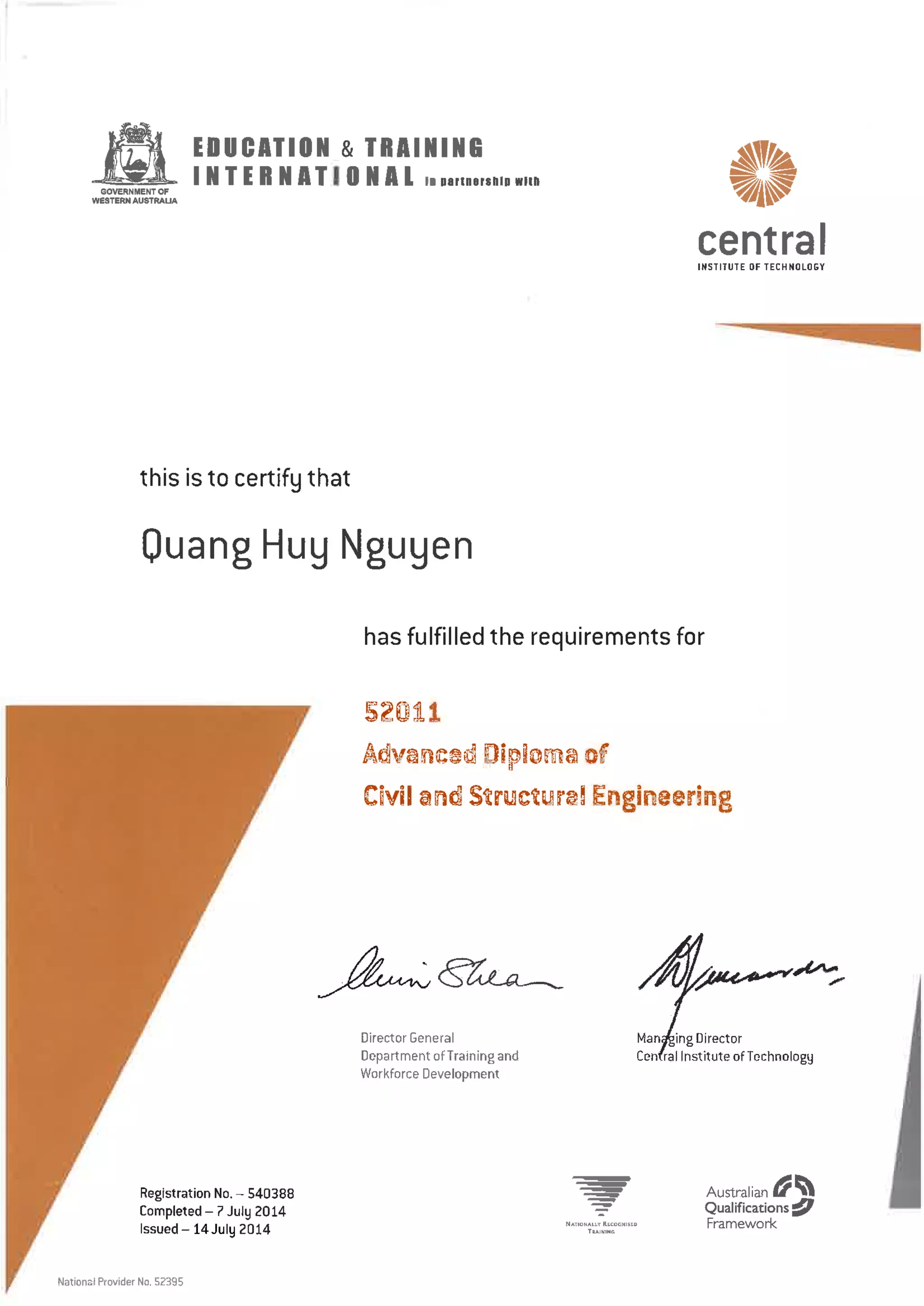
An advanced diploma is a post-secondary academic credential that sits above a standard diploma and often parallels the first or second year of a bachelor's degree. It typically requires one to three years of focused, career-oriented study, emphasizing practical skills, technical proficiency, and professional readiness over purely theoretical instruction.
Navigating the landscape of higher education and professional credentials often involves sorting through a dense alphabet soup of certificates, diplomas, degrees, and associate qualifications. Among these options, the advanced diploma holds a distinct position, particularly in vocational, technical, and applied arts education systems around the globe. Understanding what an advanced diploma means requires examining how it is structured, how it differs from other educational credentials, and how employers and universities view it. Whether you are a high school graduate mapping out your career path or a working professional looking to upskill, grasping the true value of this qualification is essential for making informed educational and financial investments.
Defining the Advanced Diploma: Core Characteristics
To understand the meaning of an advanced diploma, one must first look at its structural place within educational frameworks. Unlike a foundational certificate or a basic vocational diploma—which usually take a few months to a year to complete and focus on narrow, entry-level tasks—an advanced diploma represents a deeper, more comprehensive level of study.
Typically requiring between 1,200 and 2,400 hours of instruction, or roughly two to three years of full-time academic commitment, an advanced diploma bridges the gap between basic job training and undergraduate higher education. It is designed to equip students with specialized technical skills, middle-management competencies, and a robust understanding of industry standards.
In many educational jurisdictions, such as parts of Canada, Australia, and various European nations, qualification frameworks explicitly define an advanced diploma. For instance, in the Australian Qualifications Framework (AQF), an Advanced Diploma is classified as a higher-level qualification that prepares individuals for self-directed work and substantial specialized paraprofessional or managerial roles.
Academic Rigor and Practical Focus
The curriculum of an advanced diploma is characterized by a deliberate blend of rigorous theory and intensive hands-on practice. While a university bachelor's degree often emphasizes academic research, critical analysis, and broad theoretical frameworks, an advanced diploma concentrates heavily on applied knowledge.
Students enrolled in these programs spend a significant portion of their time in laboratories, workshops, clinical settings, or through structured internships and cooperative education placements. The goal is to produce graduates who can step into a workplace environment and immediately perform complex technical tasks without requiring extensive on-the-boarding or remedial training.
Instructors in these programs are frequently industry practitioners rather than purely academic researchers. This ensures that the curriculum remains closely aligned with current market demands, emerging technologies, and real-world operational challenges.
Advanced Diploma vs. Other Educational Credentials
Confusion frequently arises when comparing an advanced diploma to other credentials such as standard diplomas, associate degrees, and bachelor's degrees. Each credential serves a distinct purpose and is governed by different institutional standards.
Advanced Diploma vs. Standard Diploma
A standard diploma generally signifies the completion of a foundational vocational program or a high school graduation certificate. When offered at the post-secondary level, a standard diploma usually takes one year to complete and focuses on entry-level operational skills. In contrast, an advanced diploma requires multiple years of study, delves deeper into complex problem-solving, and often qualifies the holder for supervisory or advanced technical roles.
Advanced Diploma vs. Associate Degree
An associate degree, common in the United States and Canada, typically requires two years of full-time study and is structured to function either as a terminal vocational credential or as a stepping stone to the first two years of a bachelor's degree. An advanced diploma is often very similar in duration and academic depth, but it traditionally leans more toward practical, career-specific execution than general education breadth. However, many modern advanced diplomas offer robust credit transfer agreements with universities, blurring this historical distinction.
Advanced Diploma vs. Bachelor's Degree
A bachelor's degree is a comprehensive undergraduate degree that usually requires four years of full-time study (or three years in systems like the UK and Australia). It provides a comprehensive foundation in a discipline, blending theory, research, and practical application. An advanced diploma takes less time to complete—usually two to three years—and prioritizes vocational mastery.
| Credential Type | Typical Duration | Primary Focus | Career Entry Level | University Transfer Potential |
|---|---|---|---|---|
| Certificate | 6 months – 1 year | Basic, entry-level tasks | Entry-level worker | Very low |
| Standard Diploma | 1 – 2 years | Core vocational skills | Skilled practitioner | Low to moderate |
| Advanced Diploma | 2 – 3 years | Specialized, advanced technical & supervisory skills | Senior technician, supervisor | Moderate to high (via articulation agreements) |
| Associate Degree | 2 years | General education & foundational major coursework | Junior professional | High |
| Bachelor’s Degree | 3 – 4 years | Comprehensive theory, research, and application | Professional, entry-management | N/A (Terminal undergraduate) |
Prerequisites, Access, and Admission Requirements
Gaining entry into an advanced diploma program requires meeting specific academic and professional prerequisites. Because these programs demand a higher level of cognitive and technical engagement than basic certificates, institutions enforce clear admission standards to ensure student success.
Academic Prerequisites
- Secondary School Completion: Most institutions require a high school diploma or its recognized international equivalent (such as a GED or A-Levels).
- Specific Course Grades: Programs in technical fields like engineering technology or information technology frequently require prerequisite grades in senior-level mathematics (such as algebra or calculus) and physical sciences (such as physics or chemistry).
- Language Proficiency: For international students or non-native speakers, standardized tests like IELTS or TOEFL are mandatory to demonstrate sufficient reading, writing, and comprehension skills for complex technical study.
Alternative Pathways and Mature Students
Many colleges and technical institutes maintain flexible admission policies for mature students—typically defined as individuals aged 19 or 21 and older who lack a traditional high school diploma. These applicants may gain entry by demonstrating relevant work experience, passing entrance assessments, or successfully completing foundational upgrading courses (often called bridging programs or preparatory certificates).
Costs, Financial Considerations, and Return on Investment
Evaluating an advanced diploma requires a clear-eyed assessment of financial investment and expected economic return. Because these programs are frequently offered by community colleges, polytechnics, and specialized technical institutes, their tuition structures are often significantly lower than those of traditional four-year universities.
Tuition and Associated Expenses
Tuition fees vary widely based on the country, the institution (public versus private), and the specific field of study. Technical fields requiring expensive laboratory equipment, specialized software licenses, or safety gear—such as aviation technology, dental hygiene, or advanced manufacturing—generally carry higher fees than administrative or creative arts diplomas.
Beyond tuition, students must budget for:
- Mandatory student fees and technology levies.
- Specialized textbooks, manuals, and digital learning platforms.
- Professional tools, safety equipment, or uniform requirements.
- Living expenses during the duration of study.
Return on Investment (ROI)
The financial appeal of an advanced diploma lies in its efficiency. By spending two to three years in targeted education rather than four, students enter the full-time workforce sooner, reducing opportunity costs and student loan accumulation.
Graduates with specialized technical skills are often in high demand, allowing them to command competitive starting salaries. Furthermore, many employers view advanced diploma holders as immediately productive, leading to faster advancement into specialized technical tracks or supervisory roles.
Transfer Pathways: From Diploma to Degree
A common misconception is that an advanced diploma is a dead-end qualification that permanently locks a student out of university education. In reality, many higher education institutions maintain formal articulation agreements and credit-recognition frameworks that facilitate seamless transitions from college to university.
Understanding Articulation Agreements
An articulation agreement is a formal partnership between a college offering advanced diplomas and a university offering bachelor's degrees. These agreements specify exactly how many credits will transfer when a graduate enters a degree program.
- Block Transfer: Instead of evaluating courses individually, a university may grant a "block" of credits—such as granting two full years of credit (60 to 90 credit hours) to an advanced diploma graduate entering a related bachelor of technology or applied science program.
- Conditional Admission: Some pathways allow students to complete a two- or three-year advanced diploma and then transition directly into the third year of a university degree, enabling them to earn both a diploma and a bachelor's degree in a reduced total timeframe.
Common Fields of Study for Advanced Diplomas
Advanced diplomas are utilized across numerous industries where practical execution and technical proficiency are paramount. While offerings vary by region and institution, several sectors routinely feature robust advanced diploma curricula:
- Engineering and Applied Sciences: Civil engineering technology, mechanical design, electrical systems, and architectural technology.
- Information Technology: Network administration, software development, cybersecurity, and database management.
- Health and Human Services: Dental hygiene, paramedicine, medical laboratory technology, and early childhood education administration.
- Business and Applied Arts: Graphic design, international business management, accounting technology, and hospitality management.
Frequently Asked Questions
Is an advanced diploma considered a degree?
No, an advanced diploma is a distinct post-secondary credential, not a degree. While degrees are typically conferred by universities and emphasize a mix of broad theoretical frameworks and research, advanced diplomas are usually awarded by colleges, polytechnics, or technical institutes and focus on specialized, career-ready practical training.
Can I use an advanced diploma to enter a university degree program?
Yes, many institutions offer credit transfer pathways or articulation agreements. Depending on the university and the specific program alignment, an advanced diploma can often substitute for the first two years of a related bachelor's degree, allowing you to complete your university education in less time.
How long does it take to complete an advanced diploma?
Most full-time advanced diploma programs take between two and three years to complete. The exact duration depends on the specific curriculum, the number of required operational hours, and whether the program includes mandatory cooperative education or internship terms.
How does an employer view an advanced diploma compared to a university degree?
Employers in technical, applied, and operational fields often view advanced diplomas very favorably because graduates possess proven, hands-on skills that require minimal initial on-the-job training. For management or research-heavy roles, however, employers may still prefer or explicitly require a traditional bachelor's degree.
Are online or part-time advanced diploma options available?
While many advanced diploma programs require in-person attendance due to the heavy emphasis on laboratory, workshop, and clinical training, some institutions offer hybrid or part-time formats. Theory-heavy courses are often available online, though practical components usually mandate physical presence on campus.
Next Actions and Strategic Recommendations
If you are considering pursuing an advanced diploma, your next step should be to thoroughly research specific programs offered by accredited institutions in your region. Verify whether the credentials align with your long-term career aspirations, check their professional accreditation status, and investigate potential credit transfer pathways if you eventually wish to pursue a university degree. Consulting with an academic advisor or an industry professional in your target field can provide valuable clarity before you commit your time and financial resources.