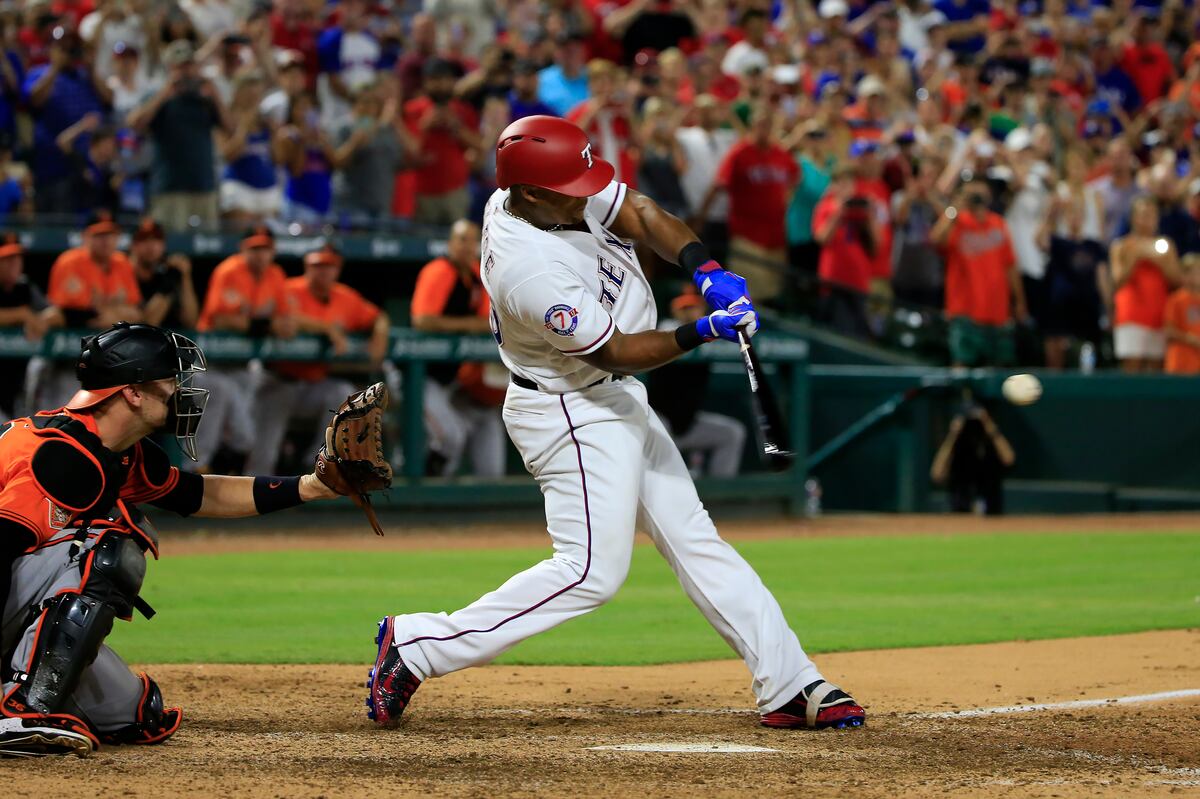
In his 1998 rookie season, Adrian Beltre played 77 games for the Los Angeles Dodgers. After being called up directly from Double-A San Antonio at just 19 years old, he made his Major League debut on June 24, 1998, against the Anaheim Angels, recording 198 at-bats and finishing the season with 46 hits.
The debut of Adrian Beltre is one of the most significant moments in modern baseball history, marking the arrival of a player who would eventually become a first-ballot Hall of Famer and a member of the 3,000-hit club. However, back in 1998, his arrival was seen as a desperate but necessary move by a Dodgers organization in flux. To understand the weight of those 77 games, one must look at the circumstances surrounding the team, the maturity of a teenager playing the "hot corner," and the statistical foundation he laid for a career that spanned over two decades.
The Context of Adrian Beltre's 1998 Call-Up
In 1998, the Los Angeles Dodgers were undergoing a seismic shift. The franchise had recently been sold by the O'Malley family to Fox Television Creative Services, and the clubhouse was reeling from the blockbuster trade that sent franchise icon Mike Piazza to the Florida Marlins. The team was looking for a new identity and a spark of hope.
Adrian Beltre was that spark. Entering the 1998 season, Beltre was a consensus top prospect, but few expected him to reach the majors before the year was out. He started the season with the San Antonio Missions in the Texas League (Double-A). At just 19 years old, Beltre was significantly younger than his competition, yet he dominated. In 64 games at the Double-A level, he posted an OPS of .995 with 13 home runs.
The Dodgers’ decision to bypass Triple-A Albuquerque entirely was a testament to Beltre's raw talent. On June 24, 1998, he was inserted into the lineup at third base, becoming the youngest player in the National League at the time. This aggressive promotion set the stage for a 77-game "rookie" stint that served as a masterclass in professional adaptation.
Breaking Down the Numbers: Adrian Beltre’s 77 Rookie Games
While Beltre’s career totals are legendary—3,166 hits and 477 home runs—his rookie numbers were modest, reflecting the steep learning curve of a 19-year-old facing Hall of Fame-caliber pitching for the first time.
Monthly Performance and Adaptation
Beltre's 77 games were spread across the final three and a half months of the 1998 season. His progression showed a young hitter trying to find his rhythm:
- June: Beltre appeared in 6 games immediately following his call-up. He recorded his first MLB hit—a double—in his very first game against the Angels’ Chuck Finley.
- July: This was his most difficult month. Playing in 26 games, he struggled with the velocity and movement of Big League sliders. He batted just .191 during this stretch, a common hurdle for young players seeing high-volume scouting reports for the first time.
- August: Beltre began to adjust. In 25 games, he raised his monthly average and showed more consistency in the field.
- September: He finished strong, appearing in 20 games and flashing the power that would eventually define his career.
Statistical Summary of the 1998 Season
Over his 77 games, Beltre accumulated 214 plate appearances. He hit 7 home runs and drove in 22 runs. While his .215 batting average was low by his eventual standards, his isolated power (ISO) and defensive range indicated that he was not overmatched physically, merely needing more "looks" at elite pitching.
Defensive Contributions at Third Base
The "games played" statistic only tells half the story. In those 77 games, Beltre spent 635.1 innings at third base. Even as a teenager, his defensive instincts were elite. Third base, often called the "hot corner," requires lightning-fast reflexes and a powerful arm—two traits Beltre possessed in abundance.
In 1998, Beltre recorded 56 putouts and 147 assists. While he committed 12 errors (a result of his aggressive style and youthful exuberance), his Range Factor per 9 innings (RF/9) was 2.87, which was already highly competitive among National League third basemen. Observers at the time noted that his ability to charge bunts and throw from his knees was reminiscent of Brooks Robinson, foreshadowing the five Gold Glove Awards he would later win.
The Significance of Being a 19-Year-Old Rookie
Playing 77 games at age 19 is a rarity in Major League Baseball. Most players at that age are still competing in low-level Class-A ball or are freshman in college. To find a comparison for Beltre's 1998 season, one must look at other legends who debuted as teenagers, such as Ken Griffey Jr. or Alex Rodriguez.
The physical toll of 77 games in the heat of a pennant race (though the Dodgers would ultimately finish 83-79) cannot be understated. Beltre had to manage the media scrutiny of Los Angeles, the transition to living in a new city, and the pressure of replacing veteran presence in the lineup. His durability during this stretch—missing very few games once he was established in the starting lineup—was an early indicator of the "iron man" reputation he would build, eventually playing 2,933 career games.
Adrian Beltre’s 1998 Rookie Statistics Table
The following table provides a comprehensive look at the statistical output from Beltre's 77-game debut in 1998.
| Statistic | Value |
|---|---|
| Games Played | 77 |
| At Bats (AB) | 198 |
| Runs Scored | 18 |
| Hits | 46 |
| Doubles | 9 |
| Triples | 1 |
| Home Runs | 7 |
| Runs Batted In (RBI) | 22 |
| Stolen Bases | 3 |
| Batting Average (AVG) | .215 |
| On-Base Percentage (OBP) | .278 |
| Slugging Percentage (SLG) | .369 |
| OPS | .647 |
| Total Bases | 73 |
Challenges Faced by Beltre in His Debut Year
Beyond the box score, Beltre faced significant hurdles during his first 77 games. One major issue was the controversy surrounding his actual age and signing. It was later revealed that the Dodgers had signed Beltre when he was only 15 years old in the Dominican Republic, a violation of MLB rules which stated players must be 16.
This resulted in the Dodgers being sanctioned and Beltre eventually being granted free agency later in his career, but during his rookie year, it added a layer of complexity to his status. Furthermore, he was joining a veteran-heavy clubhouse that included personalities like Eric Karros and Raul Mondesi. As a rookie who spoke limited English at the time, the 77 games he played were as much a lesson in cultural navigation as they were in baseball.
Key Milestones During the 77-Game Stretch
Several specific moments during those 77 games stand out as harbingers of his future greatness:
- The First Hit (June 24, 1998): Facing Chuck Finley, one of the premier left-handers of the era, Beltre hit an RBI double. This immediately silenced critics who thought he wasn't ready for MLB velocity.
- The First Home Run (June 30, 1998): In a game against the New York Mets, Beltre launched his first career homer off Rick Reed.
- Defensive Gem (August 1998): In a series against the Braves, Beltre made a diving stop against Chipper Jones that remains a highlight of his early career, signaling his arrival as a defensive force.
- Endurance Test: Beltre started 71 of his 77 games, showing the coaching staff that he was the everyday solution at third base, leading to the trade of other veteran infielders.
Legacy and the Path to 3,000 Hits
The 77 games played in 1998 were the foundation. By 2026, we look back at these games as the "growing pains" of a legend. Had Beltre not been given those 77 games of exposure in 1998, he might not have been ready for his breakout 1999 season, where he played 152 games and established himself as a permanent fixture in the Dodgers' lineup.
The experience gained in 1998 allowed him to refine his plate discipline. While he struck out 37 times in his rookie year, he learned the necessity of the "two-strike approach," a skill that would later help him maintain a high batting average even as his power increased. His 77 games also allowed the Dodgers to evaluate his chemistry with shortstop Mark Grudzielanek, forming a defensive left side of the infield that would stabilize the team for years.
FAQs About Adrian Beltre’s Rookie Season
How old was Adrian Beltre during his rookie games?
Adrian Beltre was 19 years old when he played his first 77 games in 1998. He was born on April 7, 1979, making him one of the youngest players in the league at the time of his debut.
Did Adrian Beltre win Rookie of the Year in 1998?
No, Adrian Beltre did not win the Rookie of the Year award in 1998. Because he only played 77 games and struggled with his batting average, he did not receive significant votes. The 1998 National League Rookie of the Year was Kerry Wood of the Chicago Cubs.
Why did the Dodgers call up Beltre so early?
The Dodgers called up Beltre directly from Double-A because they lacked production at third base and were looking to rebuild their roster after the Mike Piazza trade. His performance in the minors (13 HR in 64 games) suggested he had nothing left to prove at that level.
Against which team did Adrian Beltre play his first rookie game?
Beltre made his debut against the Anaheim Angels on June 24, 1998, as part of an Interleague Play series. He played third base and batted eighth in the lineup.
How many home runs did Beltre hit in his rookie games?
Beltre hit 7 home runs during his 77 games in 1998. His first came against the New York Mets just six days after his debut.
What was Adrian Beltre's batting average in his first 77 games?
He finished the 1998 season with a .215 batting average. While low, this is often attributed to his age and the jump from Double-A pitching directly to the Major Leagues.
Practical Summary for Collectors and Historians
For those tracking Adrian Beltre’s career for historical or collecting purposes (such as rookie cards), the 1998 season is the definitive starting point. Although he played only 77 games, he exceeded the 130 at-bat threshold (recording 198), meaning his official rookie status ended in 1998.
Collectors should note that while his "true" rookie cards were often produced in 1997 (Bowman) and 1998, the 1998 season is the only one where he saw MLB action as a rookie. If you are analyzing his career trajectory, those 77 games represent the rawest version of Beltre—a high-ceiling prospect who used every one of those games to transition from a teenage phenom into a professional cornerstone.