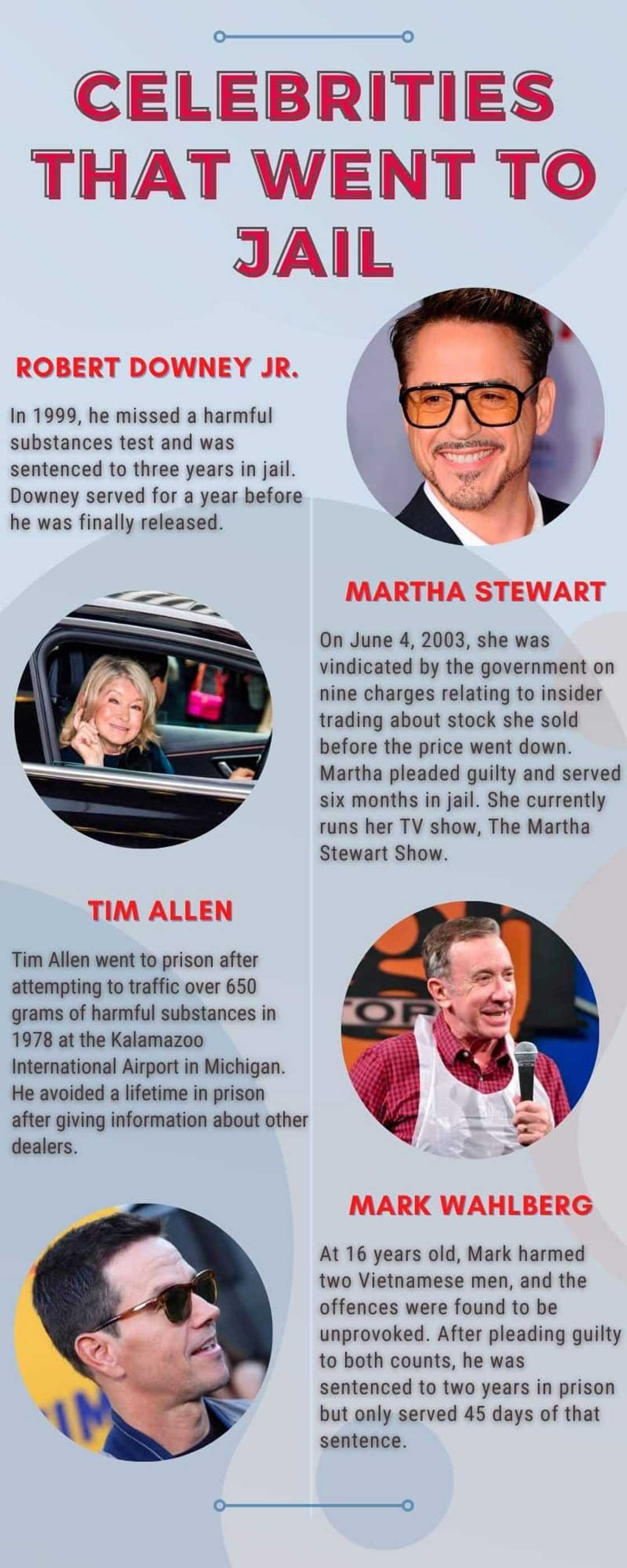
The intersection of celebrity culture and the justice system frequently captures public attention, especially when prominent actors face criminal prosecution and time behind bars. While the glamorous veneer of Hollywood suggests immunity, numerous well-known performers have been convicted of crimes ranging from tax evasion and DUI-manslaughter to financial fraud and severe violent offenses, resulting in actual incarceration.
The fascination with actors who went to jail spans decades of cinematic history, reflecting society’s complex relationship with fame, accountability, and the legal system. When a recognizable face trades a red carpet for a correctional facility jumpsuit, it triggers intense media coverage, public debate, and profound professional consequences. Understanding these cases requires looking past the tabloid headlines to examine the specific legal charges, the judicial outcomes, the time actually served, and the long-term impact on the entertainment industry.
The Legal Landscape of Celebrity Crime and Incarceration
When an actor commits a crime, they are subject to the same criminal justice procedures as any other citizen, though high-profile status often introduces unique dynamics regarding bail, legal representation, and public scrutiny. The spectrum of offenses that lead to incarceration among performers can be broadly categorized into white-collar crimes, violent offenses, drug-related violations, and probation or parole violations.
White-collar crimes, such as securities fraud, tax evasion, and embezzlement, often result from complex financial mismanagement or intentional deception. Unlike impulsive acts, these offenses involve premeditation and paper trails, making convictions significant when they occur. On the other end of the spectrum, violent crimes or gross negligence leading to fatalities—such as vehicular manslaughter—carry severe mandatory sentencing guidelines that judges have little discretion to bypass, regardless of an actor's box-office draw.
Furthermore, probation violations are a surprisingly common catalyst for celebrity imprisonment. When a court grants probation following a lesser offense, strict conditions are imposed, including mandatory counseling, community service, drug testing, and travel restrictions. High-earning individuals accustomed to demanding travel schedules sometimes struggle to adhere to these rigid parameters, leading to probation revocation and subsequent jail time.
Notable Historical and Modern Cases
Examining specific instances where actors faced incarceration reveals diverse circumstances, legal arguments, and sentencing outcomes. These cases illustrate how different types of legal infractions are handled within various jurisdictions.
Financial Crimes and Fraud
Financial malfeasance has sent several notable figures to federal or state correctional facilities. A prime example is Wesley Snipes, a prominent action star known for blockbuster franchises like Blade, who was convicted of willful failure to file federal income tax returns. In 2008, Snipes was sentenced to three years in federal prison, serving the majority of that time before transitioning to home confinement in 2013. His case served as a high-profile warning regarding tax compliance, particularly among high-income earners targeted by the Internal Revenue Service.
Another significant white-collar case involved Allison Mack, known for her role in the television series Smallville, who became embroiled in the NXIVM criminal enterprise. Mack pleaded guilty to racketeering and racketeering conspiracy charges related to her involvement in coercing women into forced labor and illegal acts. In 2021, she was sentenced to three years in federal prison, reflecting the severity of participating in organized criminal operations disguised as self-help programs.
Manslaughter and Gross Negligence
Vehicular offenses and negligence resulting in death carry some of the most stringent penalties in criminal law. Lane Garrison, recognized for his role in the television series Prison Break, was involved in a 2006 high-speed car crash while driving under the influence of alcohol and cocaine, resulting in the death of a 17-year-old passenger. Garrison pleaded guilty to vehicular manslaughter without gross negligence and driving with a blood-alcohol level above the legal limit. He was sentenced to 40 months in state prison and served approximately 22 months before being released on parole.
Similarly, Matthew Broderick was involved in a fatal car crash in Northern Ireland in 1987 that resulted in the deaths of two local citizens. While Broderick faced charges of death by dangerous driving, he was ultimately convicted of the lesser charge of careless driving and fined, avoiding jail time—a case that remains a frequent point of comparison in discussions regarding celebrity sentencing disparities.
Violent Offenses and Assault
Incidents of domestic violence or public assault occasionally result in jail sentences for actors, though outcomes vary wildly based on evidence and legal representation. Thomas Gibson, and more famously, actors like Michael Jace—who portrayed a police officer in the television series The Shield—faced catastrophic legal reckonings. In 2016, Jace was convicted of second-degree murder for shooting his wife in their home. He was sentenced to 40 years to life in state prison, permanently ending his career and underscoring the tragic real-world consequences of domestic violence.
Comparison of Notable Actor Incarceration Cases
| Actor Name | Primary Offense | Jurisdiction | Sentence Imposed | Time Served / Status |
|---|---|---|---|---|
| Wesley Snipes | Willful failure to file tax returns | Federal | 3 Years | Served approx. 2.5 years; released in 2013 |
| Lane Garrison | Vehicular manslaughter, DUI | State (California) | 40 Months | Served approx. 22 months; released on parole |
| Allison Mack | Racketeering and conspiracy | Federal | 3 Years | Served full sentence; released in 2023 |
| Michael Jace | Second-degree murder | State (California) | 40 Years to Life | Serving sentence |
| Mark Salling | Possession of child exploitation material | Federal | Pending sentencing (died prior) | Deceased (died by suicide before final sentencing) |
The Impact of Incarceration on Career and Rehabilitation
When an actor is sentenced to jail, the immediate professional consequence is the termination of active contracts, cancellation of ongoing projects, and potential blacklisting by major studios and streaming platforms. Hollywood operates within a risk-averse economic model where insurance underwriters refuse to back productions featuring actors facing active criminal charges or incarceration. Consequently, studios routinely practice swift decoupling, replacing actors in post-production or recasting roles entirely.
Rehabilitation upon release presents an uphill battle. While some performers manage successful career revivals after serving time, others find the cultural stigma and professional alienation insurmountable.
- The Stigma Factor: Public perception heavily influences casting decisions. While audiences occasionally embrace redemption narratives, certain offenses—particularly those involving violence, abuse, or exploitation—trigger permanent reputational damage.
- Insurance and Bonding Issues: Even if a director or producer wishes to cast an actor with a criminal record, completion bond companies often veto the decision due to liability concerns and the risk of negative publicity impacting box-office returns.
- Personal Transformation: Many actors who experience incarceration report significant shifts in perspective, subsequently dedicating their post-prison lives to advocacy, counseling, or independent artistic endeavors outside the mainstream studio system.
Frequently Asked Questions
Do actors receive preferential treatment in the judicial system?
While high-profile actors often afford elite legal defense teams that can negotiate favorable bail terms, secure plea agreements, or identify procedural errors, high-profile cases also attract intense public scrutiny. This intense spotlight can sometimes pressure prosecutors and judges to pursue maximum penalties to demonstrate that fame does not grant immunity from the law.
Can an actor return to Hollywood after serving jail time?
Yes, but it depends heavily on the nature of the crime, public sentiment, and industry relationships. Actors convicted of non-violent or white-collar offenses, such as tax evasion or minor drug infractions, have successfully resumed their careers after completing their sentences and rehabilitation programs. Conversely, convictions for violent crimes or offenses against children typically result in permanent professional ostracization.
How do studios handle unreleased projects when an actor goes to jail?
Depending on the production stage, studios utilize various strategies. If filming is ongoing, the actor is typically recast and scenes are reshot. If the project is completed, studios may delay release, edit the actor out where digitally feasible, or shelve the project entirely if the actor's presence compromises the commercial viability of the work.
Are prison sentences for celebrities served in standard facilities?
Celebrity inmates are typically housed in administrative segregation, protective custody, or specialized units within federal or state facilities. This housing assignment is not necessarily a perk of fame, but rather a security protocol implemented by correctional institutions to mitigate the high risk of extortion, assault, or targeted violence directed at recognizable public figures.
Practical Takeaways and Next Actions
For those studying media law, entertainment industry dynamics, or criminal justice, analyzing celebrity cases provides a clear view of how public accountability functions under the law.
- Verify Legal Facts: When researching celebrity legal troubles, rely on court documents, official indictments, and statements from district attorneys rather than sensationalized tabloid reporting.
- Understand Jurisdictional Differences: Note that federal crimes (like tax fraud) carry vastly different sentencing guidelines and parole structures compared to state-level crimes (like vehicular manslaughter or assault).
- Analyze Industry Precedent: Recognize that the entertainment industry's response to criminal behavior is primarily driven by financial risk management, insurance requirements, and public relations calculus.