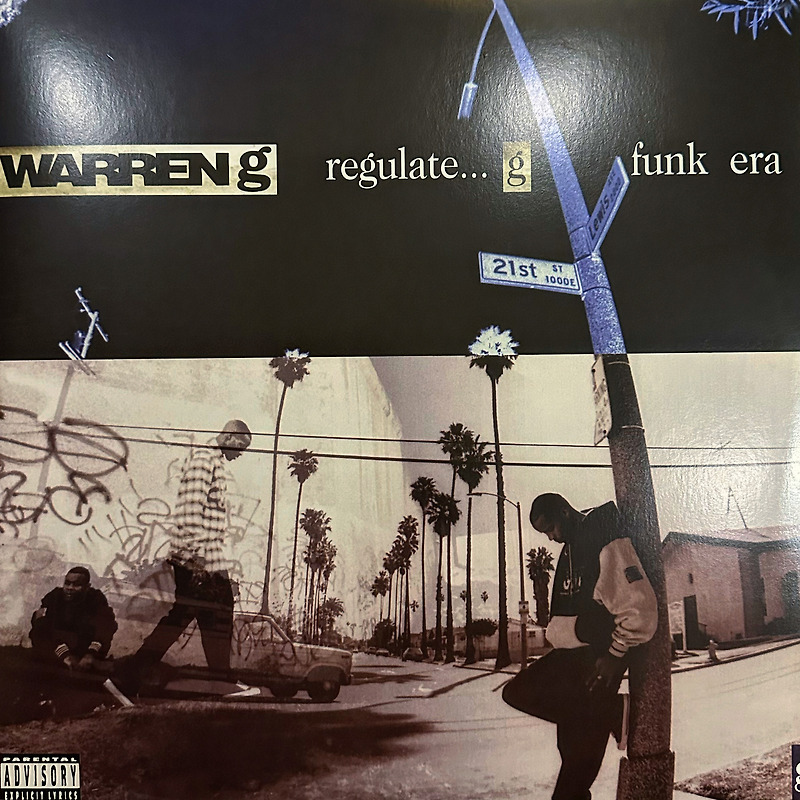
Warren G’s 1994 debut album, Regulate... G Funk Era, accounts for approximately 75% of his total RIAA-certified album sales released during the 1990s. While he released three studio albums within that decade, the triple-platinum success of his debut established a commercial benchmark that defined the G-funk movement and the mid-90s hip-hop landscape.
Breaking Down the Numbers: The 75% Sales Threshold
To understand the claim that the majority of Warren G’s 1990s sales came from a single project, one must look at the RIAA (Recording Industry Association of America) certification data for his three 1990s studio releases. In the music industry, "sales" are often tracked via certifications, which represent units shipped to retailers, and SoundScan data, which tracks point-of-sale transactions.
In the 1990s, Warren G released the following studio albums:
- Regulate... G Funk Era (1994): Certified 3x Platinum (3,000,000 units).
- Take a Look Over Your Shoulder (1997): Certified Gold (500,000 units).
- I Want It All (1999): Certified Gold (500,000 units).
When aggregating these certified figures, Warren G moved a total of 4 million certified units across his 90s discography. The 3 million units attributed to his debut album represent exactly 75% of his total certified output for that decade. Even when accounting for uncertified sales or international fluctuations, the statistical weight of the debut album remains the overwhelming driver of his commercial legacy.
This concentration of sales is a phenomenon often seen with "era-defining" artists where a single cultural moment—in this case, the G-funk explosion of 1994—creates a commercial peak that is difficult to replicate, even with high-quality subsequent releases.
The Cultural Catalyst: Why "Regulate" Dominated 1994
The disproportionate success of the debut album was not an accident; it was the result of a perfect storm involving film soundtracks, regional identity, and a shift in the "hardness" of West Coast rap.
The Above the Rim Factor
Before the album Regulate... G Funk Era was even released, the title track "Regulate" (featuring Nate Dogg) appeared on the soundtrack for the film Above the Rim. The song became a massive crossover hit, peaking at number 2 on the Billboard Hot 100. This created an unprecedented "pull" effect. By the time the solo album arrived in June 1994, the lead single had already primed the audience, making the album an essential purchase for both hardcore hip-hop fans and mainstream pop listeners.
The "Kinder, Gentler" G-Funk
In 1994, West Coast rap was dominated by the "Gangsta" aesthetic of Death Row Records. While Warren G was the stepbrother of Dr. Dre and heavily influenced by the G-funk sound, his approach was notably more melodic and less aggressive than his contemporaries. Regulate... G Funk Era offered a laid-back, "cookout-friendly" version of the West Coast sound that appealed to a broader demographic, including suburban audiences and international markets, which contributed heavily to its 3x Platinum status.
Comparing the 90s Trilogy: From Triple-Platinum to Gold
While the debut album was a behemoth, Warren G’s subsequent 90s albums were solid commercial performers that would be considered successes for most artists. However, compared to the debut, they highlight the changing tides of the music industry.
Take a Look Over Your Shoulder (1997)
Released three years after his debut, this album faced a significantly different market. The "East Coast vs. West Coast" feud had peaked and tragically concluded with the deaths of 2Pac and The Notorious B.I.G. The sound of hip-hop was shifting toward the "Bling Era" and the polished pop-rap of Bad Boy Records. Despite having a major hit with "Smokin' Me Out" (featuring Ron Isley), the album stalled at Gold certification. It was a victim of a saturated market and a cooling interest in the traditional G-funk sound.
I Want It All (1999)
By 1999, Warren G had moved toward a more collaborative, producer-heavy approach. I Want It All featured a star-studded lineup including Snoop Dogg, Mack 10, and Eve. The title track was a successful single, and the album reached Gold status relatively quickly. However, by the end of the 1990s, the "center" of hip-hop had moved to the South (No Limit, Cash Money) and the Midwest (Eminem). Achieving the triple-platinum heights of 1994 was no longer a realistic expectation for a legacy G-funk artist in a climate obsessed with the "New North" and "Dirty South."
| Album Title | Release Year | RIAA Certification | Primary Single | Key Contributors |
|---|---|---|---|---|
| Regulate... G Funk Era | 1994 | 3x Platinum | "Regulate" | Nate Dogg, The Dove Shack |
| Take a Look Over Your Shoulder | 1997 | Gold | "Smokin' Me Out" | Ron Isley, Nate Dogg |
| I Want It All | 1999 | Gold | "I Want It All" | Mack 10, Snoop Dogg, Eve |
The Financial Impact on Def Jam Recordings
The significance of Warren G’s 1994 sales extends beyond his personal bank account; it was a pivotal moment for Def Jam Recordings. In the early 90s, Def Jam was facing significant financial distress. The label, primarily known for its East Coast roots (LL Cool J, Public Enemy), was struggling to stay relevant as the industry’s focus shifted to the West Coast.
Russell Simmons and Lyor Cohen took a gamble by signing Warren G, a Long Beach native, to an East Coast-centric label. The 3 million copies sold of Regulate... G Funk Era are widely credited with "saving" Def Jam. The massive influx of capital from those 1994 sales allowed the label to restructure, clear debts, and eventually sign the next generation of superstars, including DMX and Jay-Z.
The "75% of sales" statistic is therefore not just a reflection of Warren G's career trajectory, but a marker of a financial windfall that altered the course of one of hip-hop’s most important institutions.
Technical Aspects of RIAA Certifications vs. SoundScan in the 90s
To accurately analyze these sales, one must distinguish between RIAA Certifications and Nielsen SoundScan data. In 2026, we look back at the 90s as a transition period for data.
- RIAA Certifications: These are based on "units shipped" to stores. When an album is "certified platinum," it means 1,000,000 copies were sent to retailers. If those retailers returned 200,000 copies later, the certification usually remained, but the "actual" sales might be lower.
- SoundScan: Introduced in 1991, this system tracked actual point-of-sale transactions at the register.
For Warren G, the SoundScan numbers for Regulate... G Funk Era hovered around 2.8 million by the end of the decade, while the RIAA certification was 3 million. For the later albums, the gap between "shipped" and "sold" was narrower. This discrepancy is why some historians might argue the percentage is slightly lower or higher than 75%, but the consensus remains that the debut represents the vast majority of his 90s commercial footprint.
Frequently Asked Questions
Did the "Regulate" single sales count toward the album sales?
In the 1990s, physical singles (CD singles, cassettes) were counted separately from full-length albums. The "Regulate" single was certified Platinum on its own (1 million copies). These single sales are not included in the 3 million album sales for Regulate... G Funk Era. If you were to include single sales, the dominance of the "Regulate" era would be even more pronounced.
Why didn't his later 90s albums reach Platinum status?
The decline from Triple-Platinum to Gold was driven by three factors: the cooling of the G-funk trend, the rise of competing sub-genres (like the Bad Boy/shiny suit era), and a longer gap between releases. By 1997, the "novelty" of the G-funk sound had transitioned into a standard industry staple, meaning it no longer stood out as a unique market disruptor.
Is Warren G considered a "one-hit wonder" because of these stats?
No. In the music industry, a "one-hit wonder" usually refers to an artist with a single successful song and no subsequent presence. Warren G achieved two additional Gold albums in the 90s and continued to be a highly sought-after producer. While his commercial peak was concentrated in 1994, his professional career remained consistent.
How did international sales affect the 70-75% ratio?
The 75% figure is primarily based on US domestic RIAA data. Internationally, Regulate... G Funk Era was also his most successful project, charting highly in the UK, Germany, and Australia. Because his debut had much stronger global distribution than his later 90s projects, the international data likely pushes the debut's share of his total sales even higher than the domestic 75%.
Did the Above the Rim soundtrack sales count as Warren G sales?
No. Soundtrack sales are credited to the "Various Artists" or the label releasing the soundtrack (Death Row/Interscope in that case). However, the success of the soundtrack is what fueled the sales of Warren G's solo debut on Def Jam.
Practical Recommendation for Music Historians
When analyzing hip-hop sales data from the 1990s, it is essential to look beyond the "Platinum" or "Gold" labels and examine the time-to-certification. Warren G’s debut went Triple-Platinum within a year of its release, indicating a high-velocity "blockbuster" event. In contrast, his later albums took longer to reach Gold status, indicating "steady" but lower-impact sales. For those researching the financial history of the West Coast sound, the 1994–1995 window remains the most critical period for study, as it represents the peak of G-funk's "market share" relative to other genres.