5 carat total weight (abbreviated as 5 ctw or 5 tcw) refers to the combined weight of all gemstones in a piece of jewelry, totaling exactly 1,000 milligrams or 1 gram. While a single 5-carat stone is an exceptionally rare and expensive luxury, a 5 ctw piece typically utilizes multiple smaller diamonds to achieve a high-impact aesthetic at a more approachable price point.
The distinction between a single carat weight and total carat weight is perhaps the most significant factor in determining the market value, rarity, and visual profile of high-end jewelry. When you see "5 carat total weight" on a tag in 2026, it signifies a specific measurement of mass, but it does not tell the whole story regarding the number of stones or their individual quality. Understanding the nuances of this measurement is essential for any consumer looking to invest in significant pieces like tennis bracelets, eternity bands, or cluster engagement rings.
The Definition of Carat vs. Total Carat Weight
To understand 5 carat total weight, one must first understand the "carat" itself. A carat is a unit of metric weight used specifically for gemstones and pearls. One carat is equivalent to 200 milligrams. Therefore, a 5-carat total weight item contains 1 gram of gemstone mass.
The term Total Carat Weight (TCW or CTW) is the industry-standard way to describe jewelry that features more than one stone. If a ring has a 3-carat center stone and two 1-carat side stones, the total carat weight is 5 carats. Similarly, a tennis bracelet featuring 50 individual diamonds that each weigh 0.10 carats would also be labeled as 5 carat total weight.
The Fractional Weight Rule
In the jewelry industry, the Federal Trade Commission (FTC) provides guidelines for how weight can be advertised. For a piece labeled 5 ctw, there is a small allowed "tolerance" or range. Generally, a piece advertised as 5 carats may actually weigh between 4.95 and 5.05 carats. As of 2026, most reputable retailers provide the exact decimal weight on the grading report or certificate of authenticity to ensure transparency, but "5 ctw" remains the primary marketing category.
The Pricing Exponential: Why 5 CTW is Not One 5-Carat Stone
One of the most common points of confusion for buyers is the price discrepancy between a single 5-carat diamond and a 5 ctw piece of jewelry. In the world of gemstones, rarity drives price. Large, high-quality diamonds are exponentially rarer than small ones.
A single 5-carat diamond of high color and clarity (such as D color, VVS1 clarity) is a collector’s item. Because such large, clean crystals are rarely pulled from the earth, the price per carat increases as the stone size increases. As of 2026, a single 5-carat natural diamond might retail for anywhere from $150,000 to over $400,000 depending on its cut and origin.
In contrast, a 5 carat total weight tennis bracelet is composed of many small "melee" diamonds. These smaller stones are much more abundant in nature. Consequently, the price for a 5 ctw bracelet—even one using high-quality stones—might range from $6,000 to $15,000. While the weight is the same (1 gram of diamond), the value of the single large stone is significantly higher because it is much harder to find in nature.
Common Jewelry Styles Featuring 5 Carat Total Weight
Because 5 carats is a substantial amount of gemstone mass, it is most commonly found in specific types of "statement" jewelry.
1. Diamond Tennis Bracelets
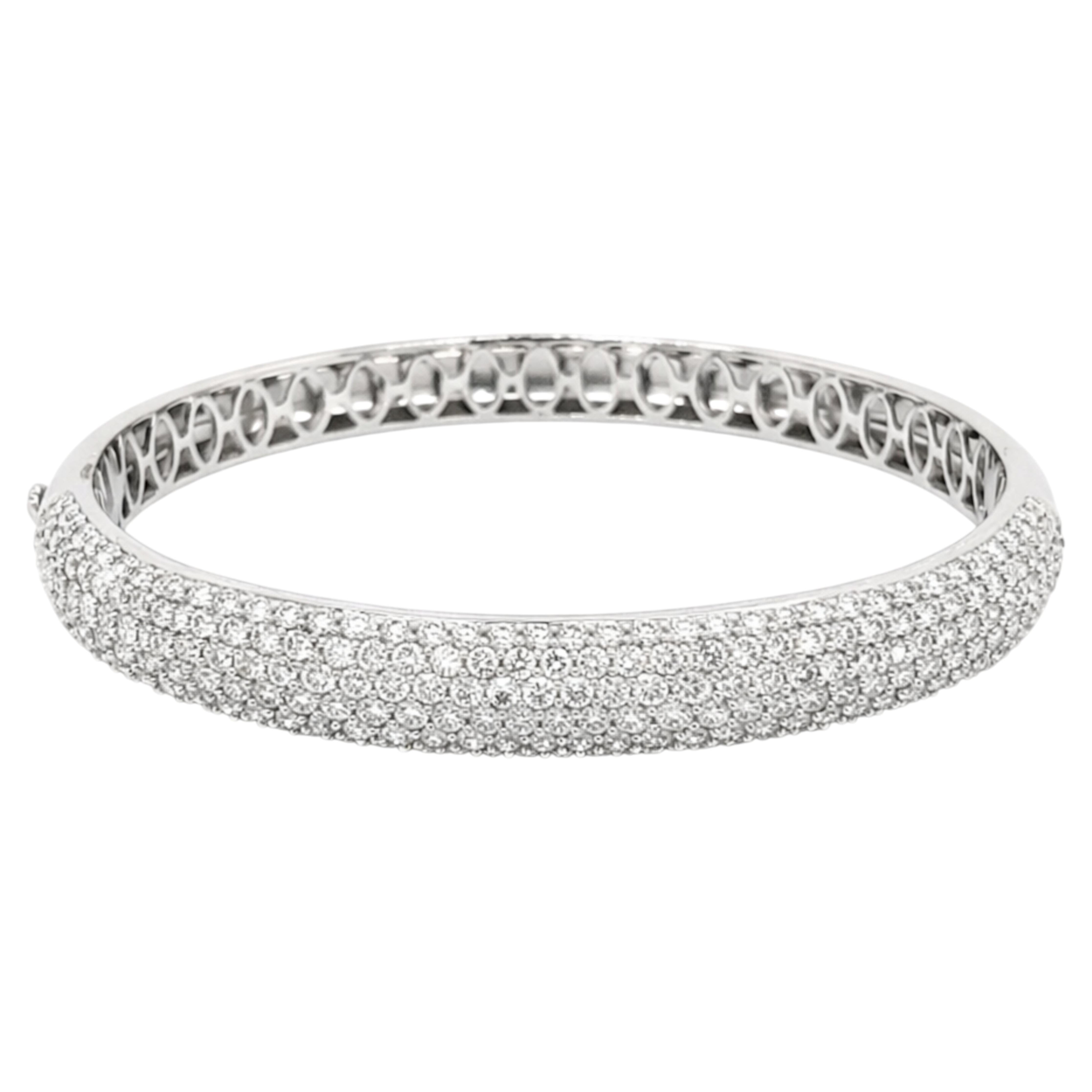
This is perhaps the most iconic application of 5 ctw. A standard 7-inch tennis bracelet with a 5-carat total weight provides a very noticeable "wall of light" on the wrist. Depending on the setting style (four-prong, three-prong, or bezel), each stone will typically be around 0.10 to 0.15 carats. This size is large enough for each stone to exhibit distinct "fire" and brilliance.
2. Eternity Bands
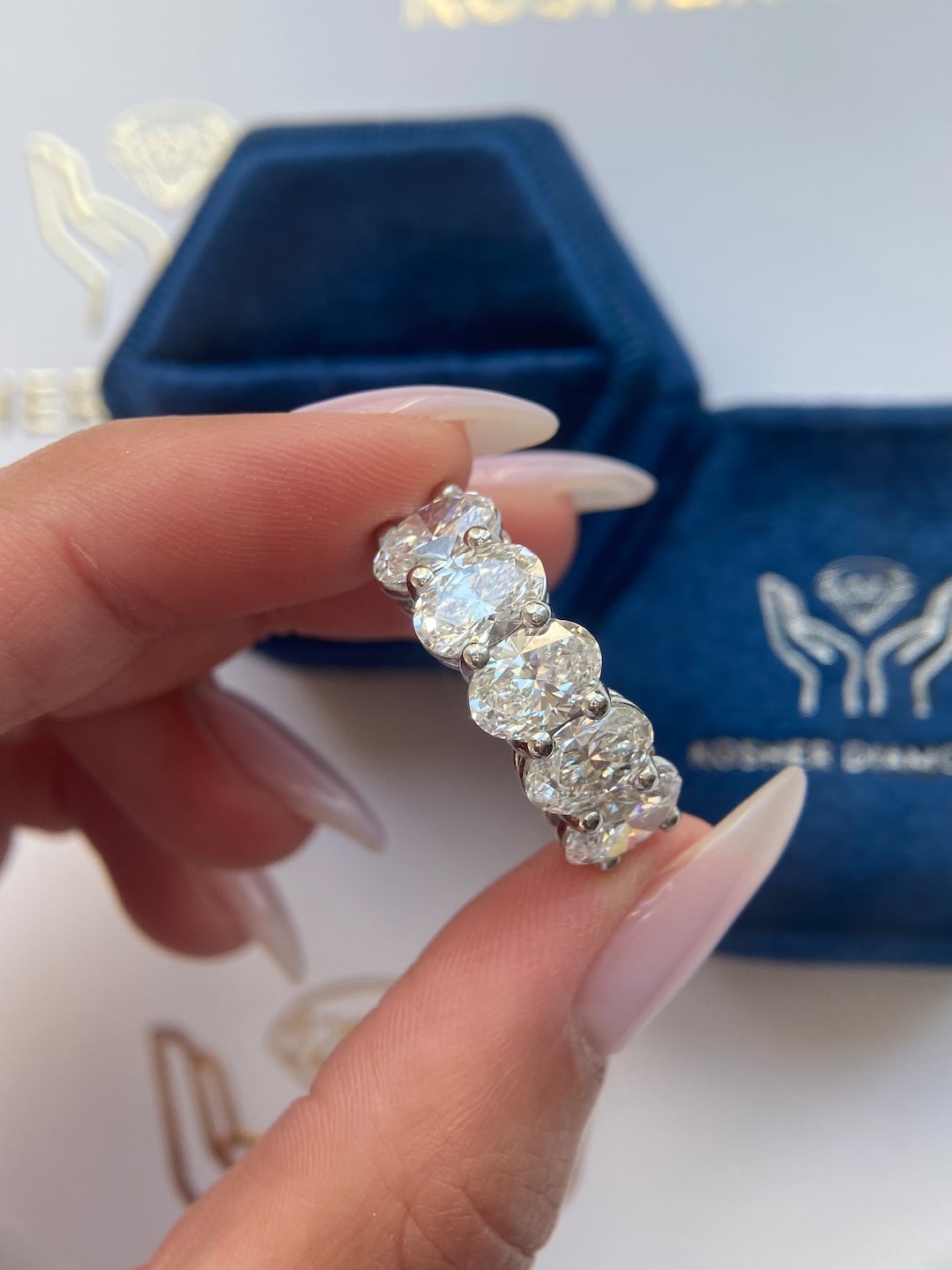
A 5 ctw eternity band is a high-luxury choice. Because a ring has a smaller circumference than a bracelet, the individual stones in a 5 ctw ring are much larger than those in a 5 ctw bracelet. For an average finger size, a 5 ctw eternity band might feature stones that are approximately 0.25 to 0.30 carats each. These are substantial diamonds that stand high off the finger.
3. Multi-Stone or "Toi et Moi" Rings
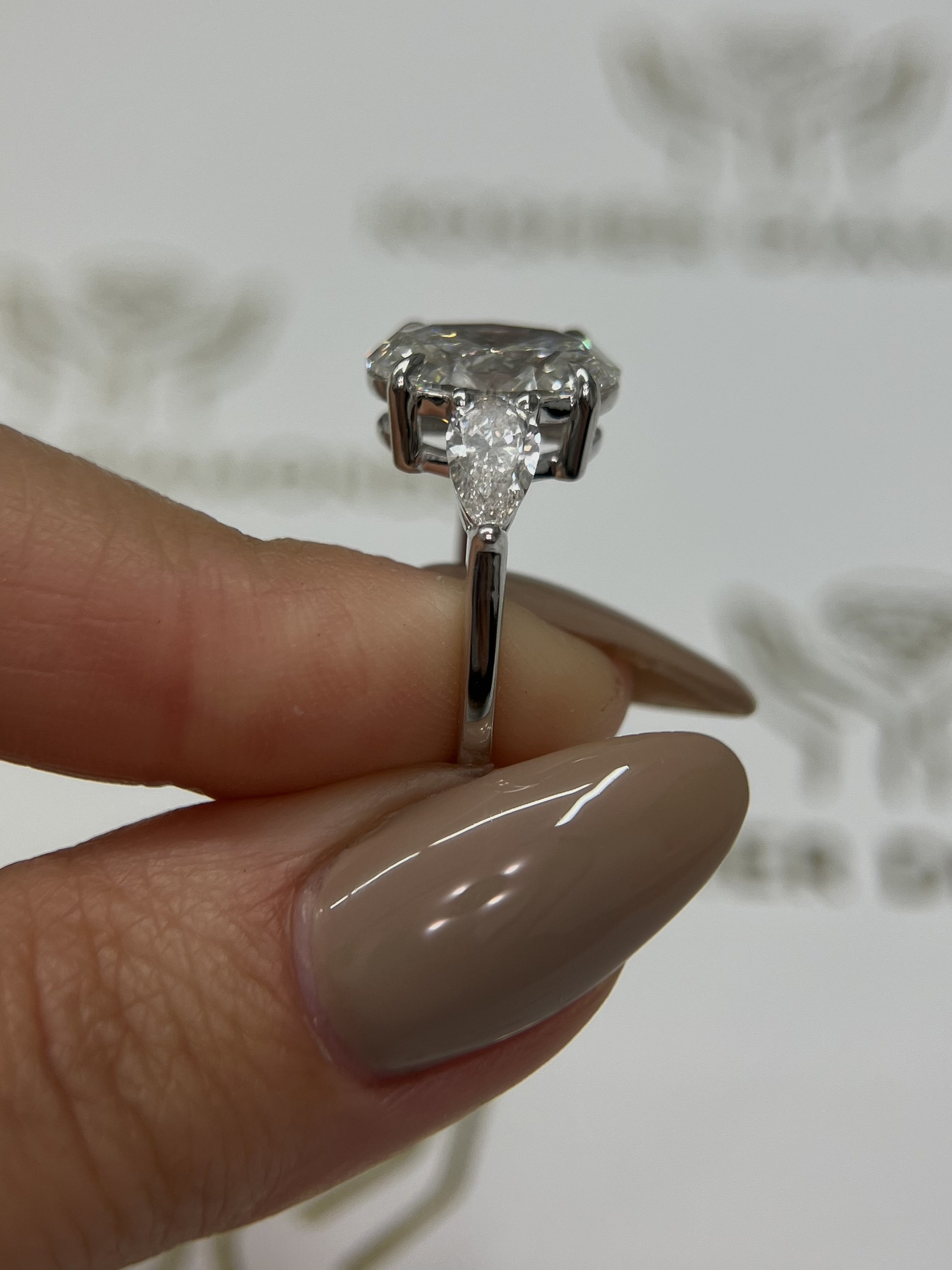
In 2026, the trend for multi-stone engagement rings remains strong. A ring featuring two 2.5-carat stones side-by-side totals 5 ctw. This look offers a massive surface area of diamond coverage on the finger, often appearing larger than a single 5-carat solitaire because of the way the two stones spread across the hand.
4. Cluster and Halo Stud Earrings
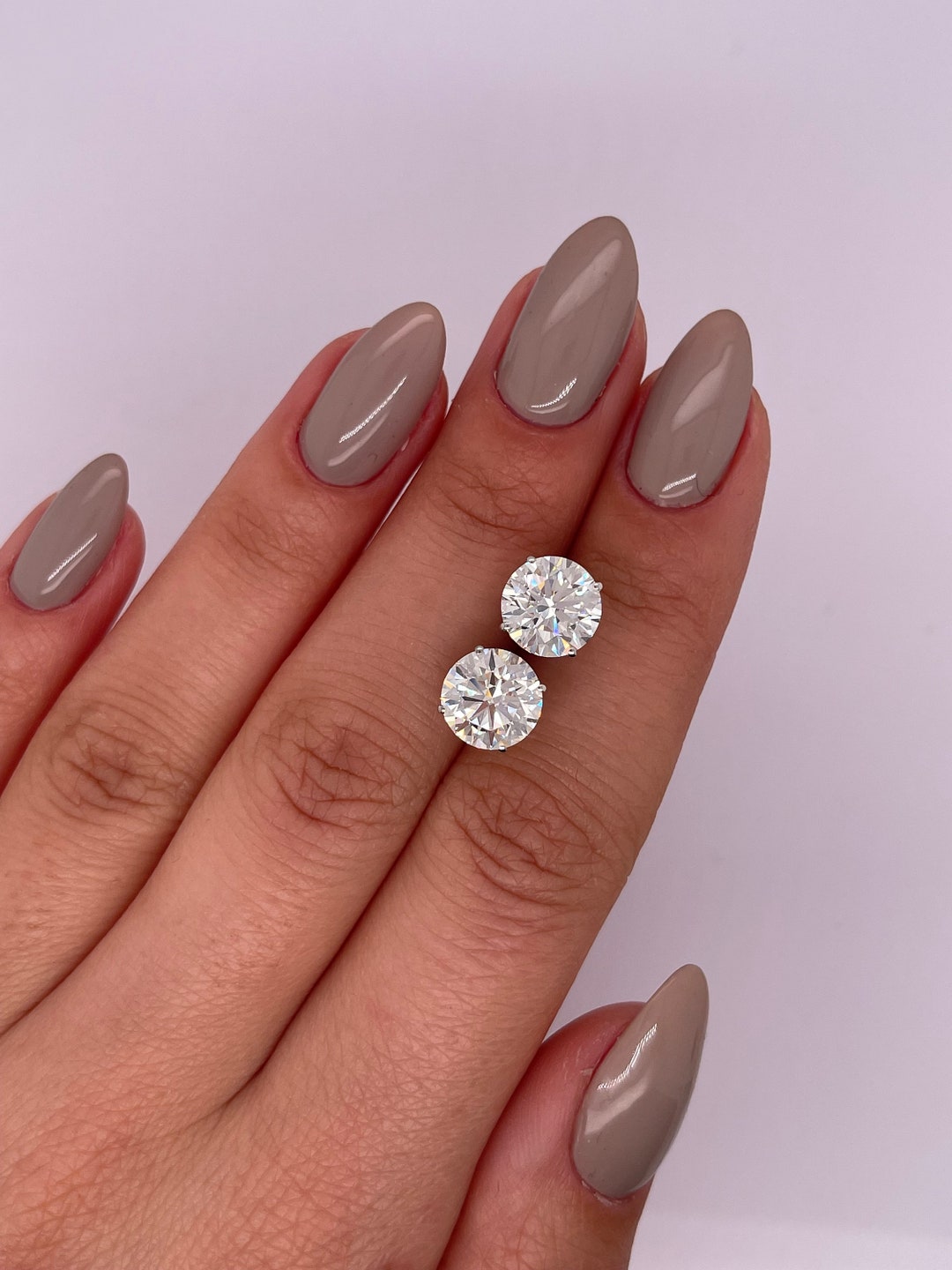
For earrings, 5 ctw usually means 2.5 carats per ear. While a 2.5-carat solitaire stud is very large, a cluster design totaling 2.5 carats per ear can create an even larger visual "footprint," reflecting light from dozens of different angles.
Comparison: 5 Carat Solitaire vs. 5 Carat Total Weight Configurations
To visualize how 5 carats can be distributed, consider the following table which breaks down common configurations and their typical market characteristics in 2026.
| Jewelry Type | Configuration | Avg. Stone Size | Visual Impact | Relative Price |
|---|---|---|---|---|
| Solitaire Ring | 1 Stone | 5.00 ct | Extreme (Singular) | Very High |
| Three-Stone Ring | 3 Stones | ~1.66 ct each | High (Broad) | High |
| Eternity Band | ~18-22 Stones | ~0.25 ct each | Continuous Sparkle | Moderate-High |
| Tennis Bracelet | ~45-55 Stones | ~0.10 ct each | Delicate Brilliance | Moderate |
| Cluster Studs | ~20-40 Stones | ~0.10 ct each | Massive Face-up Size | Moderate |
Technical Considerations: Consistency and Grading
When buying 5 carat total weight jewelry, the technical focus shifts from the "Four Cs" of a single stone to the uniformity across all stones. In a piece with 50 diamonds, if one stone is noticeably yellower or cloudier than the others, it will ruin the visual harmony of the piece.
Color and Clarity Matching
Reputable jewelers ensure that all stones in a 5 ctw piece fall within a tight range. For example, a high-quality bracelet might be graded as "F-G color" and "VS clarity." This means every stone in the piece meets that minimum standard. In lower-quality "commercial grade" jewelry, you may see wider ranges, which can result in a "salt and pepper" look where some stones appear dark or hazy.
The Role of Lab-Grown Diamonds
By 2026, lab-grown diamonds have become a dominant force in the 5 ctw market. Because lab-grown diamonds are chemically identical to natural diamonds but cost significantly less, consumers can often afford a 5 ctw piece that would have been financially out of reach a decade ago. This has made the "5-carat look" a staple of modern luxury rather than a once-in-a-lifetime rarity reserved for the ultra-wealthy.
The Visual Impact of "Face-Up" Size
It is important to remember that carat is a measure of weight, not size. Two different 5 ctw rings can look very different in size depending on how the diamonds are cut.
- Deep Cuts: If diamonds are cut too deep, the weight is "hidden" in the bottom of the stone. A 5 ctw ring with deep-cut stones might look like a 4 ctw ring.
- Shallow Cuts: If stones are cut too shallow, they may look large (high "spread") but will lack the sparkle and "life" that consumers expect from high-end jewelry.
The goal is to find a 5 ctw piece where the stones are cut to "Ideal" or "Excellent" proportions, maximizing the light return (scintillation) so that the 5 carats of weight perform to their full potential.
Maintenance and Security for 5 CTW Jewelry
Owning a piece of jewelry with 5 carats of total weight carries specific maintenance responsibilities. Because these pieces often involve many small stones held by many tiny prongs, there are more "points of failure" than in a simple solitaire.
- Prong Checks: A 5 ctw tennis bracelet may have over 200 individual prongs. If just one or two become snagged or worn down, a stone can easily fall out. Professionals recommend a "claw check" every six months.
- Cleaning: Multi-stone jewelry has many "nooks and crannies" where lotions, soaps, and skin oils can accumulate. This buildup blocks light from entering the stones, making the 5 ctw piece look dull. Regular ultrasonic cleaning is usually required to maintain the brilliance.
- Insurance: Even though a 5 ctw bracelet is cheaper than a 5-carat solitaire, it is still a significant financial asset. Insuring the piece based on a 2026 appraisal is critical to protect against loss, theft, or damage.
Buying Guide: What to Look for in 5 CTW Pieces
When shopping for "5 carat total weight," follow these expert steps to ensure you are getting true value:
- Verify the Stone Count: Ask how many stones make up the 5 carats. Fewer, larger stones are generally more valuable than many tiny ones.
- Check for "Total" vs. "Center": Ensure the salesperson isn't confusing 5 ctw with a 5-carat center stone. If a ring is 5 ctw and the center stone is 4 carats, the side stones are 0.50 carats each.
- Inspect under Magnification: Use a jeweler’s loupe to look for consistency. Are all the stones sitting at the same height? Do they all have the same "white" color?
- Review the Certification: For a 5 ctw piece, you may not get a GIA report for every single tiny diamond (which would be cost-prohibitive), but the jeweler should provide a "Master Report" for the entire piece certifying the minimum average color and clarity.
- Evaluate the Metal: 5 carats of diamonds require a sturdy framework. In 2026, 14k or 18k gold and platinum remain the standards. Ensure the metal weight feels substantial; if the setting is too light, it may warp and drop stones.
Frequently Asked Questions
Is 5 carat total weight too big for everyday wear?
Whether 5 ctw is "too big" depends on the jewelry type. A 5 ctw tennis bracelet is considered a classic "everyday luxury" item. However, a 5 ctw eternity band is quite thick and may be uncomfortable for daily wear if you have an active lifestyle or work with your hands.
Does 5 ctw hold its value?
The resale value of 5 ctw jewelry depends heavily on whether the diamonds are natural or lab-grown. Natural diamonds generally retain a higher percentage of their value over time. However, because 5 ctw pieces are made of smaller stones (melee), they do not appreciate in value as rapidly as a single, large 5-carat investment-grade diamond.
Why does my 5 ctw ring look smaller than my friend's 5 ctw ring?
This is usually due to the "spread" or the way the diamonds are arranged. A cluster setting that spreads the stones out across the finger will always look larger than an eternity band where the stones are tucked between the fingers. Additionally, different diamond shapes (like Marise or Pear) can appear larger than Round Brilliant stones of the same weight.
Can a 5 ctw piece be resized?
This is a major consideration for eternity bands. Most 5 ctw eternity bands cannot be resized because the diamonds go all the way around the circumference. Tennis bracelets, however, can usually be shortened by removing stones or lengthened by adding links, provided the jeweler can match the diamond quality.
What is the difference between CTW and CTTW?
There is no difference. Both CTW (Carat Total Weight) and CTTW (Carat Total Weight) are used interchangeably by jewelers to describe the sum of all gemstone weights in a single piece of jewelry.
Final Recommendation
When purchasing 5 carat total weight jewelry in 2026, focus on balance and brilliance. Because you are buying a significant amount of diamond mass, the quality of the setting and the uniformity of the stones are just as important as the weight itself. A well-crafted 5 ctw piece is a timeless investment that offers a level of sparkle and prestige that few other weight classes can match. If you prioritize visual impact, a multi-stone 5 ctw piece is often a much smarter financial move than a smaller, single solitaire stone of the same price.