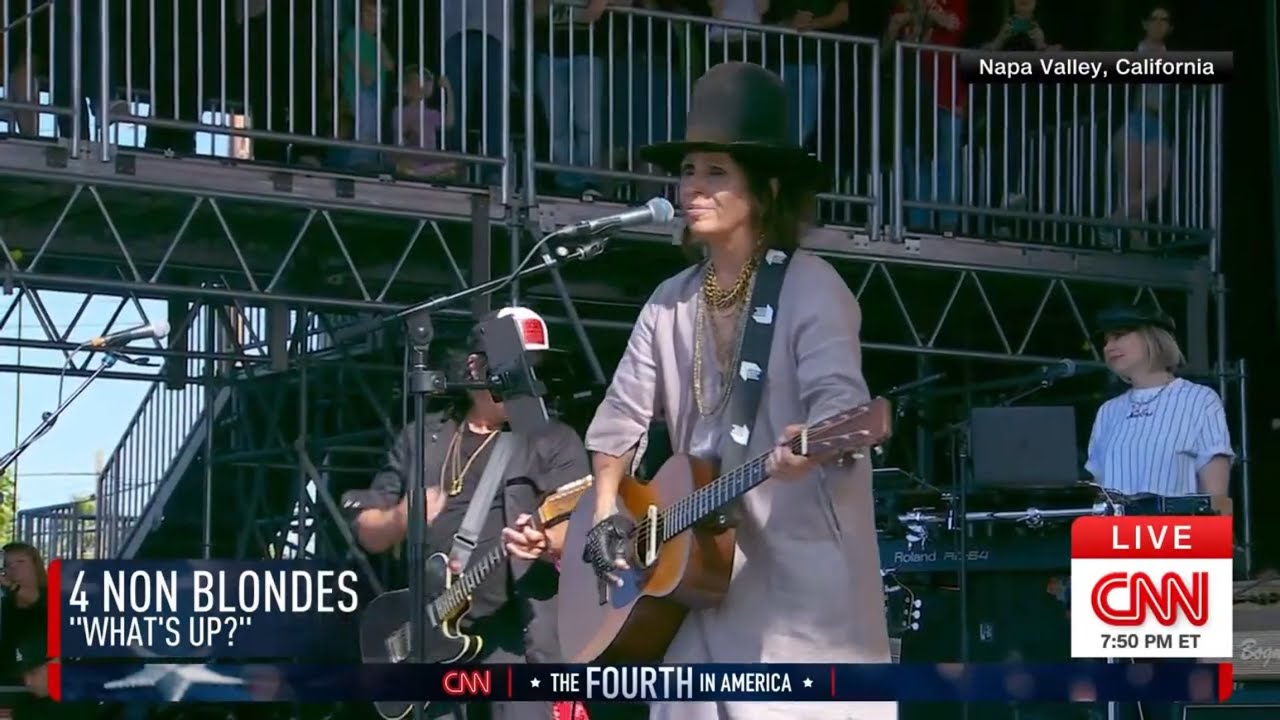
The live performances of "Mighty Lady" by 4 Non Blondes serve as a definitive showcase of the band’s raw, blues-infused alternative rock energy. Primarily performed between 1991 and 1994, these renditions highlighted Linda Perry's immense vocal range and the band’s tight, improvisational chemistry, often extending the studio version's length to incorporate soulful jams and aggressive vocal improvisations.
The Significance of "Mighty Lady" in the Live Setting
While "What's Up?" became the global anthem that defined 4 Non Blondes in the mainstream consciousness, "Mighty Lady" remained the soul of their live set. As the third track on their 1992 debut album, Bigger, Better, Faster, More!, the song captures a grit and psychedelic blues influence that was often polished away in radio edits of their more popular singles. In a live environment, "Mighty Lady" allowed the band to reconnect with their San Francisco club roots.
For the audience in the early 1990s, seeing "Mighty Lady" performed live was an exercise in witnessing vocal endurance. Linda Perry’s performance of the track was never a static reproduction of the studio recording. Instead, it was a volatile, evolving piece of performance art. The song's structure—characterized by its heavy, swinging rhythm and ascending vocal lines—provided the perfect canvas for the band to experiment with dynamics, moving from a low, simmering tension to a high-octane explosive climax.
As we look back from 2026, these performances are viewed by musicologists as quintessential examples of the "Post-Grunge" era's capability for technical proficiency mixed with unbridled emotion. The song's feminist undertones and themes of self-actualization resonated deeply in the live circuit, making it a highlight of their sets at major festivals like Reading and Pinkpop.
Musical Composition and Live Adaptation
To understand why the live overview of "Mighty Lady" is so critical to the band’s legacy, one must look at the technical arrangement. The studio version is approximately 4 minutes and 52 seconds of controlled power. However, live versions frequently pushed past the six-minute mark.
The Rhythm Section’s Foundation
The backbone of "Mighty Lady" live was the interplay between bassist Christa Hillhouse and drummer Dawn Richardson. Hillhouse’s bass lines in this specific track are melodic yet driving, providing a thick "wall of sound" that allowed guitarist Roger Rocha to venture into more atmospheric, psychedelic territory. During live performances, Richardson often accentuated the song's blues-shuffle feel, giving it a "swing" that was much more pronounced than on the record.
Guitar Textures and Improvisation
Roger Rocha’s guitar work on "Mighty Lady" live was characterized by a heavy use of wah-pedals and overdrive that channeled late 60s blues-rock. In a live setting, the bridge of the song often transformed into an extended solo. Rocha would utilize feedback and sustain to build a sonic bridge between the second chorus and the final vocal explosion, a technique that became a staple of their 1993 world tour.
The Vocal Masterclass
The "Mighty Lady" live performance is, first and foremost, a vehicle for Linda Perry. Live, she would often alter the phrasing of the lyrics, using her voice as a second lead instrument. Her ability to transition from a husky, whispered contralto to a glass-shattering belt was the focal point of every performance. Critics often noted that Perry’s live "growl" on the word "Lady" was more visceral and guttural than the version captured at Interscope Studios.
Key Historical Live Performances (1991–1994)
The evolution of "Mighty Lady" can be tracked through several key bootlegs and professionally recorded sets that have survived into the digital age of 2026.
The San Francisco Club Era (1991–1992)
Before the band signed to a major label, they were staples at San Francisco venues like Slim’s and The Nightbreak. In these intimate settings, "Mighty Lady" was often played early in the set to establish the band's authority. These early performances are characterized by a faster tempo and a more aggressive, punk-influenced delivery. The intimacy of the clubs allowed Perry to interact directly with the audience during the song's breakdown, often turning the performance into a call-and-response session.
The 1993 World Tour and Festival Circuit
As the band exploded in popularity, "Mighty Lady" moved to massive outdoor stages. Two performances stand out as definitive:
- Pinkpop Festival (1993): This performance is often cited as one of the band's best. The outdoor acoustics allowed the "stadium rock" elements of the song to shine. The ending of the song was notably extended, with Perry pushing her vocals to the absolute limit under the afternoon sun.
- Reading Festival (1993): At Reading, the band faced a more "alternative" leaning crowd. Their rendition of "Mighty Lady" here was darker and more brooding, highlighting the song's psychedelic undertones. It served as a reminder that 4 Non Blondes were more than just a "one-hit wonder" pop act; they were a formidable rock unit.
TV Appearances and "Unplugged" Variations
While the band never did a full MTV Unplugged special, they performed acoustic versions of "Mighty Lady" for various radio and television outlets. These stripped-back versions highlighted the song's folk-blues skeleton. Without the wall of electric guitar, the lyrical content—centered on strength and the internal struggle for identity—became more poignant.
Technical Analysis of Live Audio and Visuals
For collectors and fans analyzing "Mighty Lady" in 2026, the technical quality of available recordings varies. However, the common threads across all high-quality live captures include:
- Dynamic Range: Live, the song spans from roughly 65 dB during the intro to over 105 dB during the final crescendo.
- Vocal Frequency: Perry’s live screams often hit the upper registers of the soprano range, despite her natural lower placement, showing incredible laryngeal control.
- Stage Presence: Visually, the performances were dominated by Perry’s eccentric 90s fashion—top hats, goggles, and oversized boots—which contrasted with the raw, serious nature of the music.
| Feature | Studio Version (1992) | Typical Live Version (1993) |
|---|---|---|
| Duration | 4:52 | 5:30 - 7:00 |
| Vocal Style | Controlled, layered harmonies | Raw, solo-focused, improvisational |
| Guitar Tone | Clean-to-crunch, balanced | High-gain, heavy wah-wah, feedback |
| Rhythm | Strict 4/4 time signature | Fluid, blues-shuffle variations |
| Endings | Fade out / Standard resolution | Extended jam or vocal solo |
The Role of "Mighty Lady" in the Band's Breakup
It is often discussed in 4 Non Blondes' retrospectives that the tension between the band's heavy live sound and their label's desire for more pop-oriented hits led to their eventual dissolution in 1994. "Mighty Lady" represents the direction Linda Perry wanted to take—deep, artistic, and uncompromisingly loud. In her final live performances with the band, the song often felt like a manifesto.
By the time they toured Europe for the last time, the live performances of "Mighty Lady" had become increasingly experimental. Perry would sometimes incorporate snippets of other blues standards into the bridge, signaling her impending move toward a solo career and her eventual success as a songwriter and producer for other artists.
Impact on the 90s Alternative Scene
"Mighty Lady" helped bridge the gap between the Lilith Fair style of female-led songwriting and the aggressive grunge movement. While the song didn't have the chart success of "Train," it earned the band respect among their peers. Bands like Hole and L7 were known to appreciate the musicianship 4 Non Blondes brought to the stage, and "Mighty Lady" was the primary evidence of that technical skill.
In the context of 2026, music historians point to "Mighty Lady" live as a precursor to the "Vocal Powerhouse" movement. It showed that a female-fronted band could be just as "heavy" and "masculine" in their sound as the Seattle-based giants of the era, without losing a sense of feminine perspective.
Equipment and Gear Used in Live Performances
To achieve the specific sound of "Mighty Lady" live, the band relied on a mixture of vintage and then-modern gear:
- Linda Perry: Usually used a Shure SM58 or Beta 58 microphone, which could handle the high sound pressure levels of her belting. For acoustic sets, she favored Gibson and Guild 12-string guitars.
- Roger Rocha: Often played Fender Stratocasters or Gibson SGs through Marshall JCM800 stacks to get that biting, mid-range heavy tone essential for the "Mighty Lady" solo.
- Christa Hillhouse: Favored Fender Precision and Jazz basses, often run through Ampeg SVT rigs to ensure the low end was felt as much as heard.
- Dawn Richardson: Played a standard rock kit, typically Ludwig or Gretsch, with Zildjian cymbals, focusing on a deep, resonant snare sound.
Frequently Asked Questions
Is there an official live album featuring "Mighty Lady"?
As of 2026, there is no single "Live" album released during the band's peak that focuses solely on their concerts. However, "Mighty Lady" live tracks appeared as B-sides on European CD singles for "What's Up?" and "Spaceman." Additionally, several high-quality radio broadcasts and festival recordings have been archived by fans and are available through digital historical archives.
Why is the live version of "Mighty Lady" considered better than the studio version?
Many fans prefer the live version because it captures the "unfiltered" Linda Perry. The studio version is highly produced and features polished vocal layering. Live, the song becomes more visceral, showing the true power of Perry's voice and the band's ability to jam, which was a significant part of their identity that the album only partially captured.
What are the best video recordings of "Mighty Lady" live?
The 1993 Pinkpop Festival recording is widely considered the gold standard. It features multi-camera professional editing and excellent soundboard audio. Another notable mention is their appearance on the "Late Show with David Letterman" era or similar late-night appearances, though "Mighty Lady" was less frequently chosen for TV slots than their hits.
Did the band perform "Mighty Lady" during their 2014 reunion?
Yes. During their brief 2014 reunion for an "Evening with Women" event, the band performed a short set that included their most meaningful tracks. "Mighty Lady" was included, showing that even decades later, the song held a special place in the band's history. Linda Perry’s voice had matured, offering a deeper, more resonant take on the classic.
Who wrote "Mighty Lady"?
The song was written by Linda Perry. Like most of the material on Bigger, Better, Faster, More!, it was born out of her personal experiences and her background in the San Francisco music scene. The lyrics reflect a search for strength and the recognition of one's own power, which Perry embodied through her stage presence.
Final Recommendations for Fans and Collectors
If you are looking to truly experience the "Mighty Lady" live overview, start by sourcing the 1993 European festival recordings. These provide the best balance of audio quality and performance intensity. Pay close attention to the way the band handles the transition into the final chorus; it is a masterclass in building musical tension.
For those interested in the technical side of 90s rock, "Mighty Lady" remains an essential study in dynamics. It proves that 4 Non Blondes were a sophisticated musical ensemble capable of much more than the "pop-rock" label they were often given. To fully appreciate the legacy of the band in 2026, one must look past the hits and into the high-energy, live-recorded archives where "Mighty Lady" reigns supreme.