4 engine propeller planes are aircraft configured with four powerplants—either reciprocating piston engines or gas-turbine turboprops—to drive thrust-generating propellers. This configuration provides superior redundancy, heavy-lift capability, and short-field performance. In 2026, they serve primarily in tactical military transport, specialized cargo, and aerial firefighting roles, maintaining a vital niche in global aviation.
The history of 4 engine propeller planes is a testament to the pursuit of safety and scale. Before the advent of reliable jet engines, the four-engine layout was the gold standard for long-distance travel and heavy bombardment. By spreading the power requirement across four units, engineers ensured that the failure of a single engine would not result in a catastrophic loss of flight capability, a factor that was particularly crucial for transoceanic crossings and high-altitude combat missions.
The Evolution of Four-Engine Powerplants
To understand 4 engine propeller planes, one must distinguish between the two primary types of powerplants used: the reciprocating piston engine and the turboprop. The transition between these technologies marked a significant shift in how these aircraft operated and what they could achieve.
Reciprocating Piston Engines
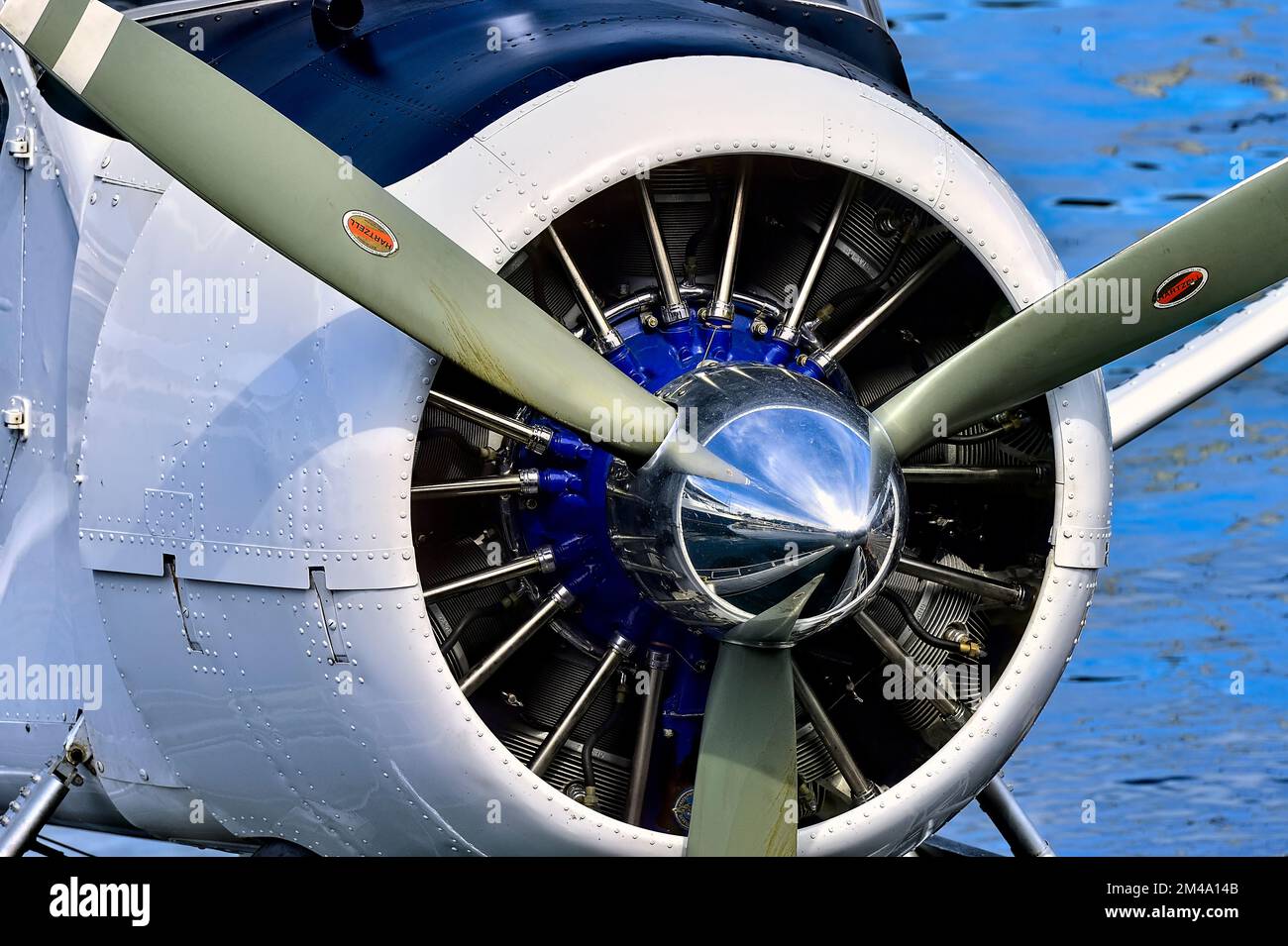
The earliest 4 engine propeller planes relied on large radial or inline piston engines. During the 1940s and 1950s, engines like the Wright R-3350 Duplex-Cyclone and the Pratt & Whitney R-2800 Double Wasp represented the pinnacle of internal combustion technology. These engines were complex, featuring dozens of cylinders arranged in rows.
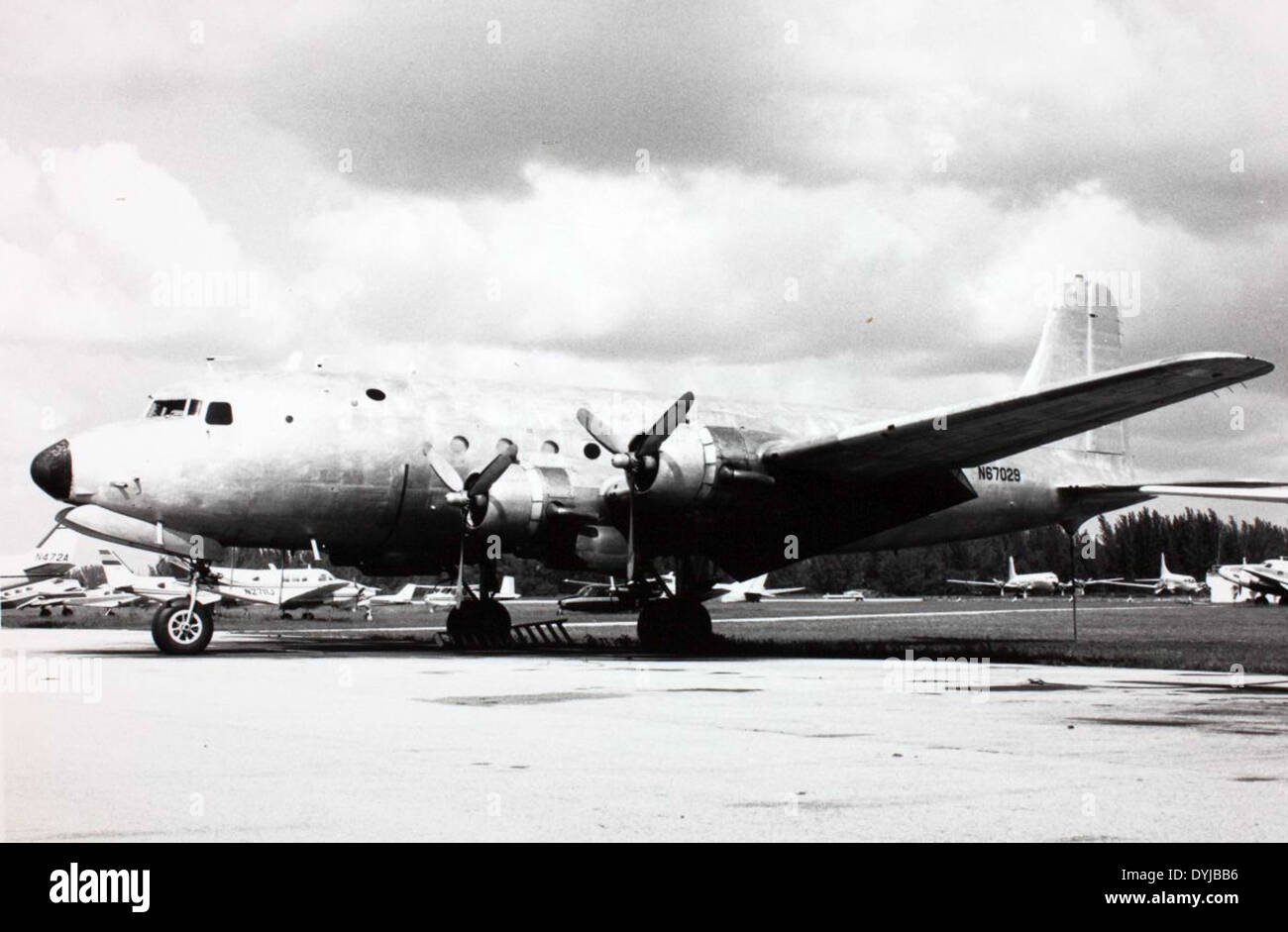
In a four-engine configuration, these powerplants provided the immense torque necessary to lift heavy payloads. However, they were also mechanically temperamental. The "four-turning, two-burning" era (referring to hybrid prop/jet planes) or the frequent engine failures on planes like the Douglas DC-7 earned them the nickname "the best three-engine plane in the world" among some cynical crews. Despite these challenges, piston-driven four-engine planes like the Boeing B-17 Flying Fortress and the Lockheed Constellation defined the mid-20th century.
The Turboprop Revolution
As gas turbine technology matured, the turboprop emerged as the superior choice for 4 engine propeller planes. A turboprop uses a jet turbine to turn a gearbox, which in turn rotates a propeller. This combines the high-speed efficiency of a turbine with the low-speed thrust efficiency of a propeller.
The Lockheed C-130 Hercules, first flown in the 1950s and still in active production and service in 2026, is the quintessential example of this evolution. Its four Allison T56 (or Rolls-Royce AE 2100 on newer models) turboprops provide a level of reliability and power-to-weight ratio that piston engines could never match. Turboprops are particularly effective at altitudes below 30,000 feet and speeds below 450 mph, making them the ideal choice for tactical lift and maritime patrol.
Strategic Importance and Operational Roles
The four-engine layout is rarely chosen for light duties. It is a configuration born of necessity, intended for roles that demand high "engine-out" safety margins and significant gross weight capacities.
Tactical and Strategic Airlift
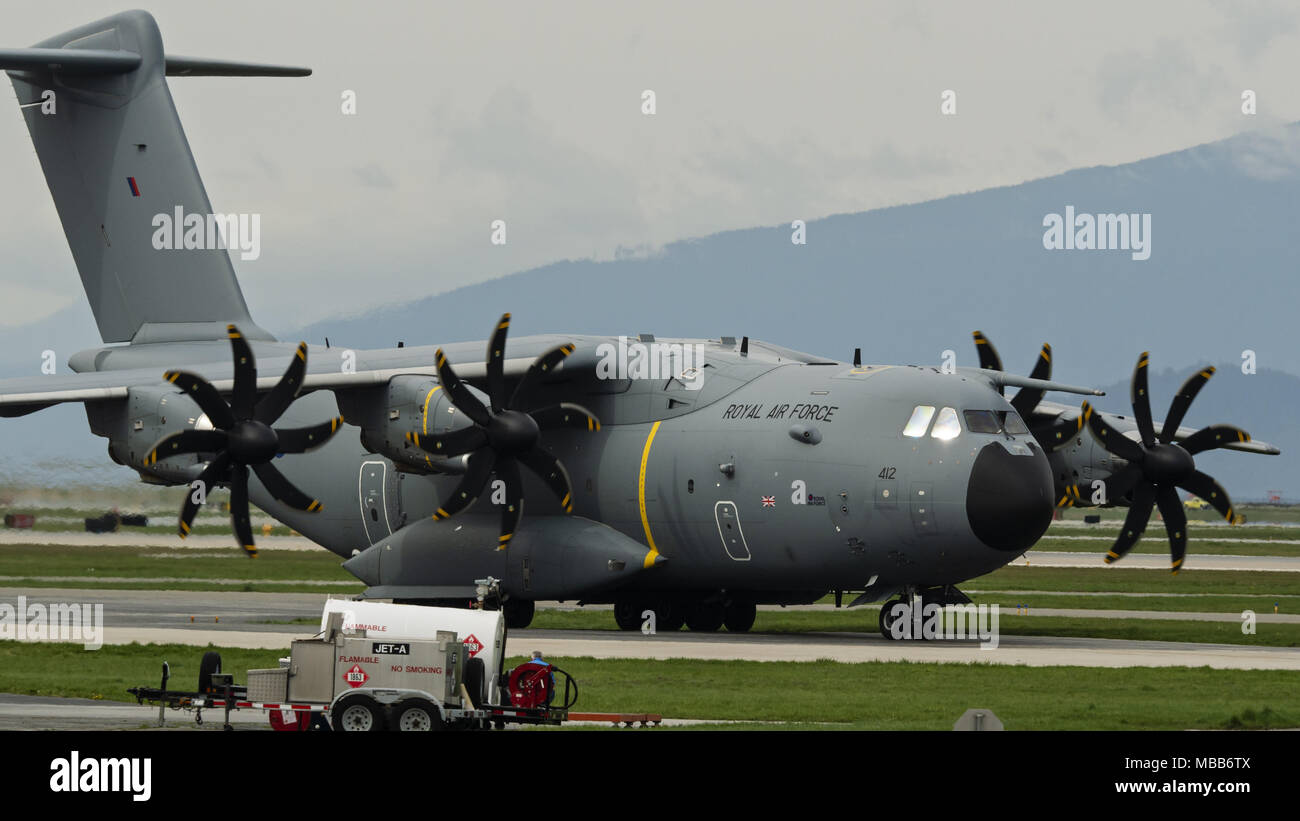
In 2026, the four-engine turboprop remains the backbone of military logistics. The ability to operate from unpaved, short, or damaged runways is a hallmark of the 4 engine propeller plane. By using four smaller propellers rather than two massive ones, designers can keep the aircraft closer to the ground for easier loading while still generating massive total thrust. The Airbus A400M Atlas utilizes four massive Europrop TP400-D6 engines, proving that the configuration is still relevant for modern European and global defense strategies. More information on modern tactical lift can be found via the official Airbus A400M documentation.
Maritime Patrol and Anti-Submarine Warfare (ASW)
Endurance is the primary requirement for maritime patrol. Aircraft like the Lockheed P-3 Orion utilize their four engines to stay airborne for up to 12 hours. A unique operational feature of 4 engine propeller planes in this role is "loitering," where the crew may shut down one or even two engines mid-flight to conserve fuel while patrolling a specific area. This flexibility is a significant advantage over twin-engine aircraft, which lack the safety margin to shut down 50% of their powerplants over the open ocean.
Aerial Firefighting and Special Missions
Many retired military and commercial 4 engine propeller planes find a second life as "Air Tankers." The Lockheed L-188 Electra and the Douglas DC-6 have been staples of aerial firefighting for decades. Their four engines provide the redundancy needed when flying at low altitudes through turbulent, hot air near active wildfires. The high torque of the propellers allows for rapid acceleration after a heavy retardant drop, which is critical for clearing mountainous terrain.
Technical Advantages: Why Four Propellers?
The decision to use four engines instead of two involves complex trade-offs in aerodynamics, weight, and maintenance.
- Redundancy and Safety: The most obvious advantage is the safety margin. If a twin-engine plane loses one engine, it loses 50% of its power and faces significant asymmetric thrust issues. A 4 engine propeller plane loses only 25% of its power, making the aircraft much more controllable and capable of continuing a mission or returning to base safely.
- Propeller Wash and Lift: The airflow pushed back by the propellers (propeller wash) flows over a larger portion of the wing surface. This "blown wing" effect creates additional lift at low speeds, allowing for shorter takeoff and landing distances.
- Weight Distribution: Spreading the weight of the engines across the wing helps to alleviate some of the structural stress on the wing roots. This "wing-loading" benefit allows for a lighter overall wing structure relative to the weight it can carry.
- Fuel Efficiency at Low Altitudes: Propellers are inherently more efficient than turbofans at low altitudes and lower airspeeds. For missions like search and rescue or agricultural spraying, the four-engine turboprop configuration offers a superior balance of power and fuel economy.
Comparison of Iconic 4 Engine Propeller Planes
The following table compares several historically and operationally significant four-engine propeller aircraft, highlighting their transition from piston power to modern turboprops.
| Aircraft Model | Engine Type | Introduced | Max Speed (approx) | Primary Use Case |
|---|---|---|---|---|
| Boeing B-17G | Piston (Radial) | 1938 | 287 mph | World War II Heavy Bomber |
| Douglas DC-6 | Piston (Radial) | 1946 | 315 mph | Post-war Commercial Travel |
| Lockheed Constellation | Piston (Radial) | 1943 | 340 mph | Transcontinental Passenger Service |
| Lockheed C-130J | Turboprop | 1996 | 417 mph | Tactical Military Transport |
| Lockheed P-3 Orion | Turboprop | 1962 | 475 mph | Maritime Patrol & ASW |
| Airbus A400M | Turboprop | 2013 | 485 mph | Heavy Tactical Lift |
| Antonov An-12 | Turboprop | 1959 | 482 mph | Soviet-era Cargo & Transport |
Maintenance and Economic Considerations in 2026
Operating a 4 engine propeller plane in 2026 is a specialized undertaking. The primary deterrent for commercial operators is the maintenance overhead. Every additional engine represents a significant increase in inspection hours, spare parts inventory, and potential failure points.
For piston-driven vintage aircraft, the scarcity of high-octane aviation gasoline (AvGas) and the disappearing pool of mechanics familiar with complex radial engines make them museum pieces or highly expensive "warbirds." Organizations like the Smithsonian National Air and Space Museum maintain these aircraft as historical records of engineering, but they are no longer viable for mass logistics.
In the turboprop sector, the economics are different. While a four-engine C-130 is more expensive to maintain than a twin-engine C-27J Spartan, the C-130's ability to carry twice the payload into the same remote strips justifies the cost. In 2026, the focus has shifted toward Condition-Based Maintenance (CBM), where sensors monitor engine health in real-time, allowing operators to extend the life of turboprop components and reduce the frequency of "teardown" inspections.
The Future of the Four-Engine Layout
As we look toward the latter half of the 2020s, the four-engine propeller configuration is seeing a resurgence in the form of distributed electric propulsion. Several aerospace startups and established firms are testing aircraft with four or more electric motors driving propellers.
Electric motors are significantly lighter and more reliable than internal combustion engines, removing many of the traditional downsides of the four-engine layout. By using four electric "propulsors," these aircraft can achieve extreme STOL (Short Take-Off and Landing) performance and reduced noise footprints. While the traditional "heavy metal" 4 engine propeller planes of the 20th century are fading, the underlying physics of using four points of thrust remains a cornerstone of aerospace design.
Frequently Asked Questions
Why don't modern airliners use 4 engine propeller planes?
Modern commercial airliners prioritize fuel efficiency and high-speed cruise at high altitudes. High-bypass turbofan engines (jets) are far more efficient than propellers at the altitudes (35,000+ feet) and speeds (500+ mph) where modern airlines operate. Additionally, the maintenance costs of four engines compared to two have made the four-engine layout economically unfeasible for passenger service.
Is a 4 engine propeller plane safer than a twin-engine plane?
In terms of redundancy, yes. A 4 engine propeller plane can lose 25% of its power and still maintain a high degree of performance, whereas a twin-engine plane loses 50%. However, modern engine reliability is so high that the statistical difference in safety is negligible for most civilian operations. The FAA and other regulators have established ETOPS (Extended-range Twin-engine Operational Performance Standards), which allow twin-engine planes to fly long distances safely.
Which is the fastest 4 engine propeller plane ever made?
The Tupolev Tu-114 holds the record as the fastest propeller-driven aircraft. It used four massive Kuznetsov NK-12 turboprops with contra-rotating propellers to reach speeds exceeding 540 mph. While it was incredibly loud and vibrated significantly, its speed rivaled many early jet aircraft.
Are 4 engine propeller planes still being manufactured in 2026?
Yes, the Lockheed Martin C-130J Super Hercules and the Airbus A400M remain in production as of 2026. These aircraft are produced for military and specialized government customers rather than commercial airlines. Their unique capabilities in rugged environments ensure they remain in demand for tactical applications.
What is the difference between a piston engine and a turboprop engine?
A piston engine works like a car engine, using cylinders and pistons to turn a crankshaft. A turboprop is a jet engine (turbine) that uses its power to spin a propeller through a reduction gearbox. Turboprops are generally more powerful, more reliable, and lighter, but they are also more expensive to manufacture.
Final Recommendation for Aviation Enthusiasts and Operators
If you are researching 4 engine propeller planes for historical or technical interest, focus on the transition period between 1945 and 1960, which saw the most rapid innovation in this category. For those looking into modern applications, the C-130J represents the current state-of-the-art in four-engine prop technology. For operators, the decision to utilize these aircraft should be driven by a specific need for heavy lift from short runways or high-endurance loitering, as the maintenance costs of four engines generally outweigh the benefits for standard point-to-point cargo or passenger transport.