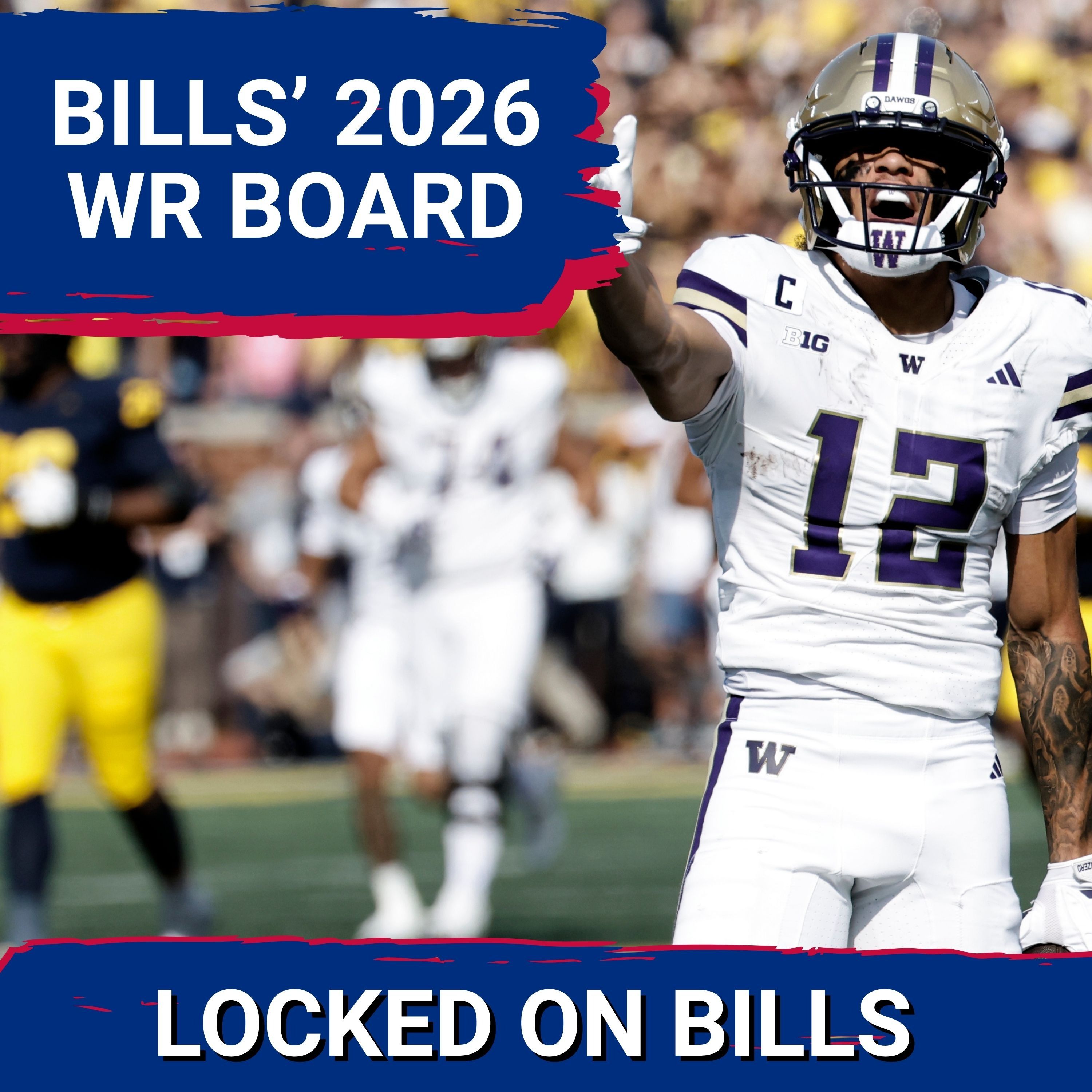
The 2026 wide receiver prospect rankings highlight a dramatic evolution in how NFL personnel departments and draft analysts evaluate incoming talent. Advanced metrics—such as Yards Per Route Run (YPRR), early breakout age, and success rates against press coverage—are shifting draft boards, often placing agile, high-efficiency separators ahead of traditional height-weight-speed perimeter athletes.
Decoding the 2026 Wide Receiver Class: Why the Board Surprised Analysts
The evaluation of wide receiver prospects entering the 2026 draft cycle reflects a fundamental realignment in offensive philosophy across both professional and collegiate football. For decades, front offices prioritized classic physical traits at the perimeter "X" receiver position: length, raw vertical jump, and straight-line forty-yard dash speed. However, recent tracking data and micro-level efficiency metrics have forced evaluators to recalibrate their boards.
The consensus rankings for 2026 wide receiver prospects feature notable surprises. Developmental boundary targets with prototypical size have drifted downward in early draft boards, while lower-profile, highly efficient route runners from high-tempo, spread-option, or pro-style offenses have surged upward. This movement is not an anomaly; it reflects a league-wide shift toward prioritizing immediate scheme fit, spatial awareness, and consistent separation over raw physical potential.
- Traditional Scouting Priority (Pre-Analytics Era)
- Raw Height/Weight/Speed
- Highlight Reel Plays
- Projected Ceiling
- Modern Scouting Priority (2026 Draft Evaluation)
- YPRR & Separation Rate
- Breakout Age & Target Share
- Scheme Adaptability
Modern defensive structures, predominantly featuring two-high safety shells and match-zone coverages, have altered what NFL teams require from their receiving corps. Offenses no longer depend solely on a single dominant boundary receiver winning isolated jump balls. Instead, front offices seek wideouts who can manipulate coverage leverage, win quickly off the line of scrimmage (LOS), and convert short pass receptions into high-volume yards after the catch (YAC).
Core Analytics and Scouting Criteria Reshaping the 2026 Board
To understand why the 2026 receiver rankings appear unexpected compared to conventional recruiting profiles, evaluators examine specific quantitative and qualitative markers. Modern front offices rely heavily on tracking metrics that separate scheme-manufactured production from individual technical dominance.
1. Yards Per Route Run (YPRR)
Yards Per Route Run has emerged as one of the most predictive efficiency metrics for wide receiver prospects. Unlike total receiving yards or receptions, which can be artificially inflated by high team passing volume or high snap counts, YPRR measures a player’s production relative to their actual opportunity on the field.
- Elite Threshold: $\ge 3.00$ YPRR against FBS competition indicates elite efficiency and primary-option capability.
- Above-Average Threshold: $2.25 - 2.99$ YPRR signals strong starter potential within a balanced passing system.
- Warning Flag: Below $1.80$ YPRR, even with high total yardage, suggests a player who requires heavy volume or manufactured touches to produce.
2. Success Rate Against Press-Man Coverage
Winning against physical press coverage remains a primary divider between collegiate stars and successful NFL receivers. Evaluators isolate film snaps where defensive backs align within two yards of the line of scrimmage with physical contact. Prospects who rely purely on athletic out-running often struggle when physical corners disrupt their timing. Advanced film charting tracks hand-fighting technique, footwork efficiency at the release, and shoulder dip to quantify press win rates.
3. Early Breakout Age and Dominator Rating
Historical draft data confirms that receivers who achieve a high market share of their team's passing offense at a young age transition to the NFL at a significantly higher rate. A prospect’s Dominator Rating—the percentage of total team receiving yards and receiving touchdowns accounted for by an individual player—serves as a primary indicator of dynamic ability. Achieving a Dominator Rating over 20% before age 20 serves as a strong positive signal in predictive draft modeling.
4. Separation Distance at Catch Point
Using optical tracking and GPS chip data, modern scouts evaluate average separation distance from the nearest defender at the exact moment of pass arrival. Receivers who consistently create more than 2.5 yards of separation on intermediate route trees (10–19 yards downfield) reduce quarterback risk and sustain drive efficiency, regardless of their overall top-end sprint speed.
Prospect Archetypes in the 2026 Draft Class
The 2026 wide receiver board can be categorized into four primary receiver archetypes. Understanding these roles helps clarify why specific players are ranked higher by NFL scouting departments than by casual media boards.
| Archetype Profile | Primary Technical Traits | Key Metric Focus | Projected NFL Role | Primary Risk Factor |
|---|---|---|---|---|
| Separation Specialist (Z / Motion) | Elite change of direction, sudden releases, nuanced stem manipulation | YPRR, Separation vs. Press (>70%) | High-volume target feeder, movement key | Physical limitation against length |
| Traditional Boundary (X) | Catch radius, high-point timing, boundary body control | Contested Catch Rate (>60%), ADOT (>14.0) | Perimeter threat, isolated isolated alignment | Lower dynamic YAC capability |
| YAC/Power Slot | Acceleration out of cuts, tackle-breaking strength, contact balance | Yards After Catch per Reception (>7.0) | Slot weapon, screen/sweep engine, mesh passer | Route tree depth limitations |
| Vertical Field Stretcher | Elite top-end speed, deep tracking, late hands | Average Depth of Target (ADOT >16.0) | Clear-out decoy, deep shot dynamic target | Inconsistent hands in traffic |
The Rise of the Separation Specialist
The most noticeable trend in the 2026 rankings is the valuation of the Separation Specialist. Receivers in this mold may not measure 6-foot-3 or clock a sub-4.35 forty-yard dash, but their foot frequency, hip fluidities, and ability to sell double moves allow them to win across all three levels of the field. NFL offenses increasingly use pre-snap motion to align these receivers in protected positions, allowing them to dynamic matchups against nickel cornerbacks and safeties.
Re-evaluating the Perimeter "X" Receiver
Conversely, pure boundary receivers who rely on winning contested jump balls are subjected to deeper scrutiny. While contested catches make compelling highlight footage, a high contested-catch rate can sometimes indicate an inability to create natural separation. If a collegiate prospect generates a 65% contested catch rate but ranks in the 30th percentile in separation distance, NFL scouts often flag the profile as high-risk, as tight-window passing becomes significantly harder against elite NFL defensive backs.
System Inflation vs. Independent Skill: Dissecting the Film
A major reason why 2026 wide receiver rankings cause debate among analysts is the influence of modern college offensive systems. Air-raid derivatives, wide-slot formations, and heavy bubble-screen packages can inflate a player's traditional box-score production. Evaluators must separate manufactured touches from independent route-running wins.
- Total Receptions & Yardage
- Manufactured Touches
- Screen Passes
- Pop Passes
- Uncontested Motion
- High System Risk
- Independent Route Wins
- Isolated Press Releases
- True Route Stemming
- contested Catch Radius
- High NFL Translation
- Manufactured Touches
Manufactured Production Indicators
- High Screen Rate: If more than 25% of a target's receptions occur behind the line of scrimmage, total yardage must be adjusted for context.
- Uncontested Motion Flips: Jet sweeps and pop-passes count as passing yards in standard statistics, but they provide limited information regarding a player's ability to run true route trees.
- Stack Formations: Offenses that frequently align receivers in stacked or bunched formations protect them from press coverage. Evaluators must verify how the receiver performs when isolated on the perimeter without pre-snap alignment assistance.
Independent Skill Indicators
- Stem Execution on Intermediate Dig/Out Routes: The ability to sink hips rapidly at the break point without slowing stride frequency.
- Late Hands Technique: Keeping hands down until the ball arrives prevents defensive backs from reacting to the pass arrival time.
- Slab and Blind-Spot Manipulation: Utilizing the defensive back's turning radius to snap routes off into open field zones.
Evaluating the Impact of Pre-Draft Testing Metrics
As the draft cycle progresses, physical testing data from pro days and combined workouts will be synthesized into these early rankings. However, historical scouting studies demonstrate that physical metrics carry different weight depending on the specific receiver position and role.
- Combining Analytics & Film in WR Evaluation
- Athletic Testing Data
- 40-Yard Dash (Speed)
- 3-Cone Drill (Agility)
- Broad Jump (Explosion)
- Film & Tracking Data
- Separation Rate
- Route Tree Breadth
- Press-Man Win %
- Composite Prospect Rating
- Athletic Testing Data
- Agility Drills (3-Cone & Short Shuttle): For slot and Z-receivers, agility metrics correlate more closely with NFL separation rates than raw straight-line speed. A sub-6.80 three-cone time frequently validates quick-twitch separation seen on tape.
- Ten-Yard Split: Initial acceleration off the line of scrimmage matters more than top-end forty-yard dash speed for beating press coverage and capitalizing on quick-game passing routes.
- Catch Radius and Hand Size: Hand measurement ($\ge 9.5$ inches) and arm length directly correlate with security on high-velocity throws into tight coverage windows.
Dynasty Fantasy Football vs. NFL Front Office Rankings
A persistent cause of confusion regarding wide receiver rankings is the divergence between NFL Draft Boards and Dynasty Fantasy Football Rankings. While both communities analyze the same prospect pool, their evaluation frameworks prioritize different outcomes.
Front Office Priorities
- Run-Blocking Commitment: An NFL team will not keep a receiver on the field for 80% of snaps if they cannot execute perimeter stalk blocks in the run game.
- Special Teams Versatility: Back-end roster wideouts must contribute on kickoff/punt coverage units or return teams.
- Scheme Flexibility: Front offices value wideouts who understand complex blocking adjustments and can play multiple alignment spots (X, Z, and Slot).
Fantasy Community Priorities
- Target Concentration: Fantasy analysts seek receivers who command disproportionately high target shares, regardless of blocking contributions.
- Air Yards Share: High-ADOT targets generate higher fantasy volatility and explosive points.
- Projected Pass-to-Run Ratios: Fantasy evaluators weight landing-spot offensive play-calling heavily, whereas NFL teams draft for long-term talent regardless of immediate coaching staff dynamics.
Common Mistakes in Evaluating Wide Receiver Rankings
When examining wide receiver prospects for the 2026 class, draft observers frequently fall into analytical traps that distort prospect evaluations:
- Overvaluing Raw Height/Weight: Projecting a 6-foot-4 receiver to automatically develop into an elite boundary threat overlooks the technical necessity of footwork and hip fluidities. Height without agility often leads to struggles against professional cornerbacks.
- Ignoring Target Competition: A prospect who posts 900 receiving yards alongside two other future NFL draft picks on the same roster may be far more impressive than a prospect who accumulates 1,200 yards as the sole option in an inferior passing attack.
- Double-Counting Forty Times: A fast 40-yard dash time should confirm field speed seen on tape, not override a multi-year history of poor separation metrics on film.
- Confusing Volume with Efficiency: High catch totals resulting from heavy target volume on low-efficiency routes (e.g., shallow drag routes) can obscure poor performance on vertical and intermediate route trees.
Frequently Asked Questions
What makes the 2026 wide receiver class different from recent draft classes?
The 2026 wide receiver class is characterized by a strong group of technician-style separators and versatile slot/motion weapons. Compared to classes dominated by raw physical boundary receivers, the 2026 pool features players who developed refined route-running skill sets earlier in their college careers.
Why are smaller slot receivers ranking higher than boundary receivers on modern draft boards?
Modern NFL defenses rely heavily on nickel alignments and two-high safety coverages designed to eliminate deep perimeter plays. Evaluators prioritize receivers who can win inside against coverage, operate in tight spaces, and create yards after the catch over boundary receivers who rely exclusively on tight-window contested catches.
What is the most predictive metric for wide receiver success in the NFL?
While no single metric guarantees success, Yards Per Route Run (YPRR) against power-conference competition—combined with early-career Dominator Rating—serves as one of the most reliable analytical predictors of future NFL efficiency.
How does breakout age influence a prospect's draft evaluation?
Breakout age measures the age at which a receiver first achieves a major market share (typically 20% or higher) of their college team's passing production. Players who break out at age 18 or 19 statistically transition to the NFL at a higher success rate than players who do not break out until their fourth or fifth college season.
Can high screen-pass usage distort a receiver's evaluation metrics?
Yes. Offenses that rely heavily on wide receiver screens, jet sweeps, and pop passes inflate traditional yardage totals and yards-after-catch statistics. Scouts isolate plays involving true route trees downfield to evaluate a prospect's actual route-running ability and press-coverage release package.
How do scouts evaluate receivers who played in run-heavy collegiate offenses?
Scouts utilize efficiency-based ratios—such as Target Rate Per Route Run (TPRR), YPRR, and isolated film snaps against man coverage—to evaluate prospects playing in low-volume passing systems. These contextual metrics reveal how effectively a receiver wins when given route opportunities, regardless of total team passing attempts.
Strategic Takeaways for Draft Observers
To accurately monitor the 2026 wide receiver prospect landscape as the draft season progresses, track these final steps:
- Cross-Reference Film with Metric Thresholds: Look beyond raw yardage totals; verify whether a prospect's YPRR clears the 2.25 benchmark against top-tier defensive opponents.
- Monitor Senior Bowl and All-Star Game Practice Reps: One-on-one release drills during all-star practice weeks provide raw film of receivers facing isolated press coverage without pre-snap system aids.
- Evaluate Agility Testing over Top Speed: Pay close attention to 10-yard split acceleration and 3-cone times during pre-draft workouts, as these metrics directly correlate with modern separation requirements.