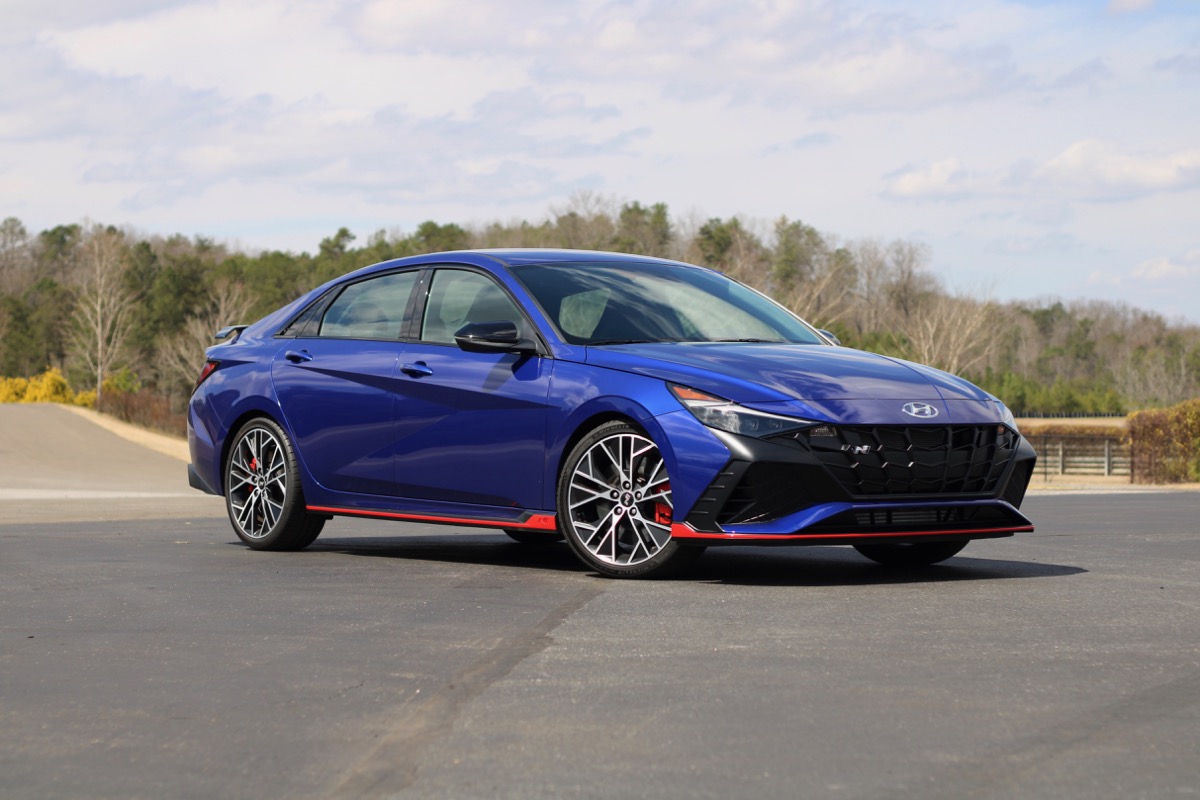
The 2022 Hyundai Elantra N produces a factory-rated 276 horsepower and 289 lb-ft of torque from its 2.0-liter turbocharged "Flat Power" engine. When equipped with the 8-speed Dual-Clutch Transmission (DCT), the "N Grin Shift" (NGS) feature provides a temporary overboost, increasing output to 286 horsepower for 20-second intervals.
As we look back from 2026, the 2022 Elantra N remains a high-water mark for internal combustion sport sedans. It wasn't just about the raw numbers on a spec sheet; it was about how that power was delivered to the front wheels and the sophisticated electronic architecture that managed it. This guide provides a deep dive into the powertrain, the mechanics of its overboost system, and how its horsepower translates to real-world performance.
The Heart of the N: The 2.0L Turbocharged "Flat Power" Engine
At the core of the 2022 Elantra N is a deeply revised version of Hyundai’s Theta II engine family. While the 2.0-liter displacement is common across several Hyundai and Kia models, the N-specific variant features significant hardware upgrades designed for track endurance and high-output consistency.
Engine Architecture and Components
The engine utilizes a twin-scroll turbocharger with a 52mm turbine wheel and a 12.5 $\text{mm}^2$ turbine passage. This configuration was specifically designed to reduce backpressure and improve efficiency at high RPMs. Unlike many turbocharged engines that see a sharp decline in power as they approach the redline, the Elantra N’s "Flat Power" tuning ensures that maximum torque is available from 2,100 RPM all the way to 4,700 RPM, while maximum horsepower is sustained from approximately 5,500 RPM to the 6,750 RPM redline.
To handle the thermal loads of a 276-hp (and occasionally 286-hp) output, Hyundai implemented several cooling and structural enhancements:
- High-Flow Fuel System: Revised injectors and a high-pressure fuel pump to ensure consistent delivery under load.
- Upgraded Intercooler: An air-to-air intercooler positioned to receive maximum airflow through the aggressive front fascia.
- Thermal Management: Integrated heat shielding and a high-capacity radiator to prevent "heat soak" during extended track sessions.
Understanding "Flat Power"
The term "Flat Power" refers to the specific shape of the power curve. In traditional performance engines, horsepower often peaks at a single point before falling off. Hyundai engineers tuned the 2022 Elantra N to maintain its peak output across a wider range of the rev band. This makes the car more forgiving during gear changes, as the driver is almost always "in the power" regardless of whether they shift slightly early or right at the redline.
N Grin Shift (NGS): The 20-Second Power Boost
For models equipped with the 8-speed wet dual-clutch transmission (N-DCT), the 2022 Elantra N features a dedicated "NGS" button on the steering wheel. Pressing this button initiates a specialized performance mode that alters the engine and transmission mapping for a 20-second burst.
How NGS Works
When activated, the NGS system increases the turbocharger’s boost pressure, effectively raising the output from 276 hp to 286 hp. Beyond the 10-horsepower gain, the system also optimizes the transmission's shifting logic. It forces the lowest possible gear for the current speed and speeds up the clutch engagement for nearly instantaneous shifts.
Operational Constraints
In 2022, this was a standout feature in the segment, though it came with a "cooldown" period. After the 20-second boost expired, the system required a 40-second rest period before it could be activated again. This was a protective measure to ensure the longevity of the turbocharger and to prevent excessive heat buildup in the DCT’s clutch packs.
Transmission Impact: Manual vs. DCT Performance
The horsepower of the 2022 Elantra N is managed by two distinct transmission options, each affecting how that power reaches the pavement.
The 6-Speed Manual Transmission
The manual version remains a favorite for enthusiasts seeking a tactile connection. It features rev-matching technology (which can be toggled on or off) and a reinforced clutch to handle the 289 lb-ft of torque. However, the manual does not include the NGS boost, meaning it is capped at the standard 276 hp. It is also slightly slower in a straight line compared to the DCT, primarily due to the interruption in power delivery during manual shifts.
The 8-Speed Wet Dual-Clutch Transmission (N-DCT)
The N-DCT is a "wet" clutch system, meaning the clutch plates are submerged in oil to facilitate cooling and smoother engagement. This transmission is responsible for the Elantra N’s most impressive performance stats. In addition to NGS, it offers:
- N Power Shift (NPS): Engages during full-throttle upshifts to mitigate any drop in torque, providing a "push" sensation when the next gear engages.
- N Track Sense Shift (NTS): Recognizes when the car is being driven aggressively on a circuit and automatically selects the optimal gear without driver intervention.
Power to the Ground: The e-LSD and Chassis
High horsepower is useless if a front-wheel-drive (FWD) car cannot put it to the ground. The 2022 Elantra N addresses this with an Electronic Limited-Slip Differential (e-LSD), which Hyundai markets as the "N Corner Carving Differential."
Managing Torque Steer
One of the primary challenges with nearly 300 lb-ft of torque in a FWD platform is torque steer—the tendency of the car to pull to one side under heavy acceleration. The e-LSD monitors wheel speed and steering angle, distributing power between the front wheels to minimize slip and maximize exit speeds from corners. This allows the Elantra N to behave more like an all-wheel-drive or rear-wheel-drive car when powering out of an apex.
Integrated Drive Axle (IDA)
The 2022 model was the first N vehicle to use an Integrated Drive Axle, a technology derived from WRC (World Rally Championship) cars. By integrating the drive shaft, wheel hub, and bearing into a single unit, Hyundai reduced weight by 3.8 pounds per side and increased the assembly's stiffness. This structural rigidity allows the horsepower to be transmitted more directly to the wheels with less vibration and mechanical loss.
Technical Specifications Table
The following table summarizes the powertrain and performance benchmarks for the 2022 Hyundai Elantra N.
| Specification | 6-Speed Manual | 8-Speed Wet DCT |
|---|---|---|
| Engine Type | 2.0L Turbocharged GDI | 2.0L Turbocharged GDI |
| Peak Horsepower | 276 hp @ 5,500-6,000 RPM | 276 hp (286 hp with NGS) |
| Peak Torque | 289 lb-ft @ 2,100-4,700 RPM | 289 lb-ft @ 2,100-4,700 RPM |
| 0-60 MPH (Estimated) | 5.2 - 5.5 Seconds | 5.0 - 5.2 Seconds |
| Top Speed | 155 MPH (Electronic Limit) | 155 MPH (Electronic Limit) |
| Curb Weight | ~3,186 lbs | ~3,296 lbs |
| Brake Rotor Size (Front) | 14.2-inch Ventilated | 14.2-inch Ventilated |
| Standard Tires | Michelin Pilot Sport 4S | Michelin Pilot Sport 4S |
Competitive Comparison: How 276 HP Stacks Up
When the 2022 Elantra N was released, its primary competitors included the Honda Civic Type R, the Volkswagen Golf GTI, and the Subaru WRX. While the Elantra N did not always have the highest "on-paper" horsepower, its power-to-weight ratio and aggressive electronic aids made it a formidable opponent.
- vs. 2022 Honda Civic Type R (FK8): The Civic Type R produced 306 hp, but the Elantra N’s e-LSD and N-DCT's rapid shifts often allowed it to keep pace in real-world scenarios.
- vs. 2022 Volkswagen Golf GTI (Mk8): The GTI produced 241 hp. The Elantra N significantly outmuscled the standard GTI, positioning itself closer to the 315-hp Golf R in terms of raw track capability.
- vs. 2022 Subaru WRX: The WRX produced 271 hp. While the WRX had the advantage of All-Wheel Drive for standing starts, the Elantra N’s top-end power and lighter weight often gave it the advantage in rolling races and lap times.
Real-World Performance and Dyno Results
While manufacturer ratings provide a standard, automotive enthusiasts often look to dynamometer (dyno) testing to see how much power actually reaches the wheels. Independent testing of the 2022 Elantra N has frequently shown that the engine is "under-rated" from the factory.
Many stock Elantra N units have recorded wheel horsepower (whp) figures in the 250–265 whp range. Since there is typically a 10-15% parasitic loss through the drivetrain, these results suggest the engine may actually be producing closer to 290–300 hp at the crank. This explains why the car often punches above its weight class in drag races and circuit environments.
Factors Influencing HP Output
As a high-performance turbocharged vehicle, the Elantra N is sensitive to environmental conditions:
- Ambient Temperature: In hot climates (above 90°F), the ECU (Engine Control Unit) may pull timing or reduce boost to protect the engine, leading to a slight drop in perceived horsepower.
- Fuel Quality: The Elantra N requires 91 octane or higher for maximum performance. Using lower-grade fuel will result in the knock sensors retarding timing, which can significantly reduce horsepower.
- Elevation: Like all internal combustion engines, performance drops at high altitudes where the air is thinner, though the turbocharger helps mitigate some of this loss compared to naturally aspirated engines.
Tuning Potential and Modifications
For owners looking to exceed the factory 276/286 hp limits, the 2022 Elantra N’s Theta II engine has proven to be a robust platform for aftermarket modifications.
- Stage 1 ECU Tunes: Simply remapping the software can often yield gains of 30-40 hp and 50 lb-ft of torque without changing hardware.
- Intake and Exhaust: Upgrading to a high-flow intake and a "turbo-back" exhaust system reduces restriction, allowing the turbo to spool faster and hold higher boost levels.
- Intercooler Upgrades: For those living in warmer climates or frequenting the track, a larger aftermarket intercooler is a common modification to maintain consistent horsepower during long periods of aggressive driving.
Long-Term Reliability of the 2.0T (2026 Perspective)
Now that the 2022 Elantra N has been on the road for four years, its reliability profile is well-documented. The high-output 2.0T engine has generally held up well, provided maintenance schedules are strictly followed.
Common Maintenance Considerations
- Oil Changes: Given the high heat generated by the turbocharger, 5,000-mile oil change intervals with high-quality synthetic oil are considered essential by the enthusiast community.
- Spark Plugs: Performance engines are harder on spark plugs. Many owners report that replacing plugs every 20,000 to 30,000 miles helps maintain peak power and prevents misfires under high boost.
- DCT Fluid: For DCT models, periodic fluid changes are necessary to ensure the "wet" clutch system continues to operate at peak efficiency.
Frequently Asked Questions
Does the manual 2022 Elantra N have N Grin Shift?
No. The N Grin Shift (NGS) feature is exclusive to the 8-speed Dual-Clutch Transmission (DCT). It functions by coordinating the engine's overboost with the transmission's specific shifting logic, which cannot be automated in a manual vehicle.
What is the actual top speed of the 2022 Elantra N?
The 2022 Elantra N is electronically limited to 155 mph. While the horsepower is sufficient to potentially go slightly faster, the limiter is in place due to tire speed ratings and aerodynamic stability considerations.
Can you increase the 20-second NGS timer?
The 20-second timer is hardcoded into the vehicle's ECU for component protection. While some aftermarket tuners claim to be able to modify the duration or the cooldown period, doing so can place significant stress on the turbocharger and engine internals, potentially voiding warranties.
Does the Elantra N require premium fuel?
Yes, to achieve the advertised 276 horsepower, Hyundai recommends using premium unleaded fuel (91 octane or higher). The car can run on regular 87 octane, but the ECU will detect the lower octane and reduce performance to prevent engine knock.
How does the Elantra N's power compare to the Veloster N?
The 2022 Elantra N uses a slightly evolved version of the engine found in the Veloster N. While the Veloster N was rated at 275 hp, the Elantra N’s "Flat Power" tuning and revised turbocharger provide a broader power band and a slightly higher peak of 276 hp (or 286 hp with NGS).
Final Recommendation: A Performance Benchmark
In 2026, the 2022 Hyundai Elantra N remains one of the most cost-effective ways to access nearly 300 horsepower in a practical, daily-driver format. Whether you choose the engagement of the 6-speed manual or the tech-forward speed of the N-DCT, the car offers a level of engineering depth that was rare for its price point at launch.
If you are currently evaluating a used 2022 Elantra N, focus on its maintenance history—specifically oil changes and fuel usage—to ensure the engine is still producing its full factory output. For those seeking a track-ready sedan that balances raw horsepower with sophisticated handling, the Elantra N remains a top-tier contender in the secondary market.