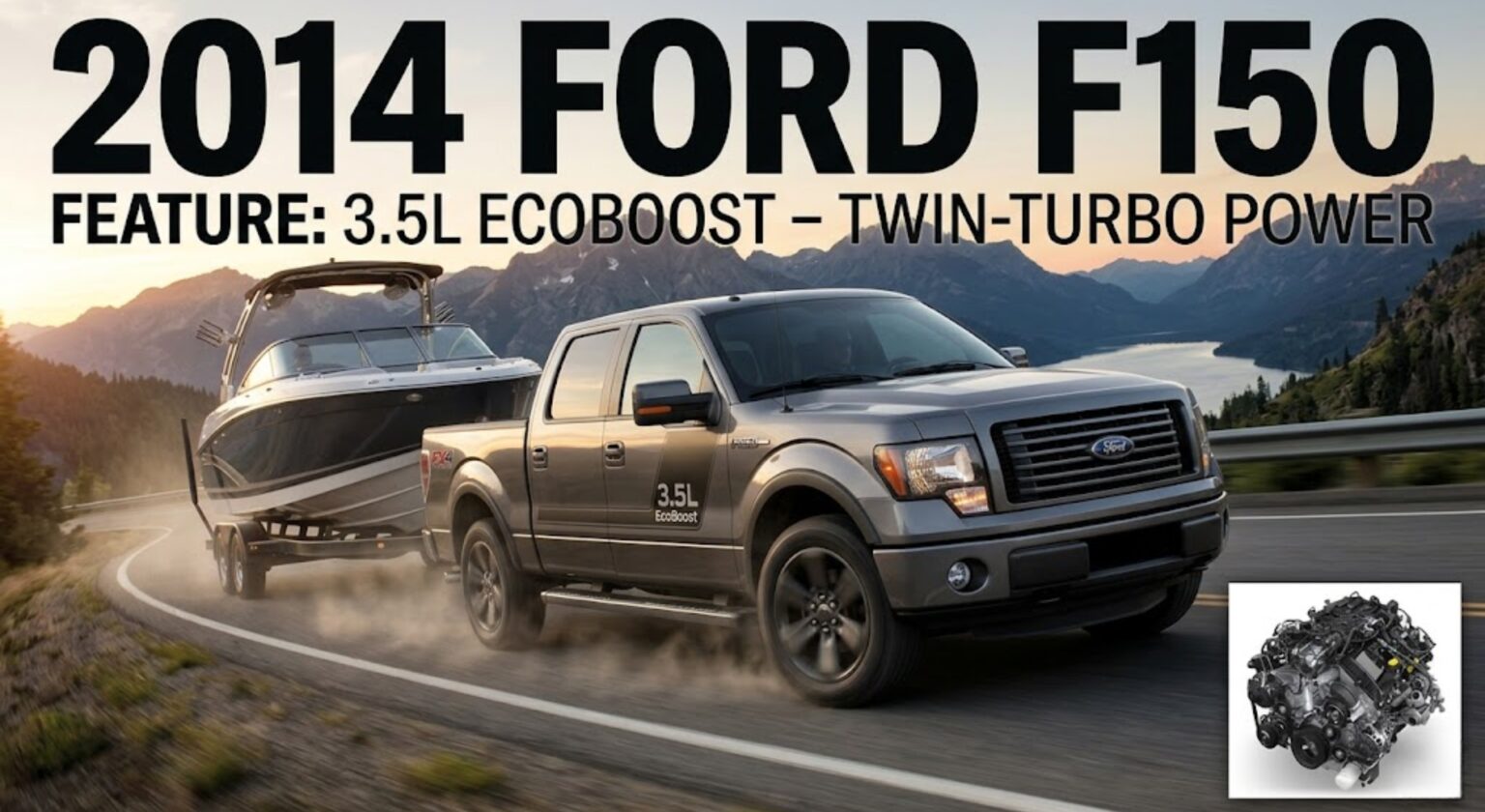
The 2019 Ford F-150 equipped with the 2.7-liter EcoBoost V6 engine delivers a balance of fuel efficiency and robust torque, producing 325 horsepower and 400 lb-ft of torque. Engineered for light-duty towing and daily driving, this turbocharged powertrain utilizes a compacted graphite iron block to maintain durability while providing responsive acceleration throughout the vehicle’s operating range.
Understanding the 2.7L EcoBoost Architecture
The 2.7-liter EcoBoost engine represents a significant point in Ford’s powertrain evolution for the F-150. Unlike larger V8 or 3.5-liter EcoBoost variants, the 2.7-liter was designed specifically to maximize power density. By utilizing a compact, twin-turbocharged V6 configuration, Ford successfully bridged the gap between fuel economy and the performance requirements expected of a full-size pickup truck.
The engine block is constructed from compacted graphite iron (CGI), a material significantly stronger and lighter than traditional gray cast iron. This metallurgical choice allows for a smaller engine footprint while maintaining the structural integrity required to handle the high pressures associated with turbocharging. For the 2019 model year, this engine is paired exclusively with a 10-speed automatic transmission, which helps the truck stay in the optimal power band during both highway cruising and heavy-load acceleration.
Core Performance Specifications
Performance in the 2019 F-150 with the 2.7L engine is defined by its torque curve. Because the turbochargers spool up early, the engine reaches its peak torque of 400 lb-ft at just 2,750 RPM. This makes the truck feel quicker off the line compared to naturally aspirated engines that require high RPMs to generate equivalent pulling power.
| Specification | Details |
|---|---|
| Engine Type | 2.7L Twin-Turbocharged V6 |
| Horsepower | 325 hp @ 5,000 RPM |
| Peak Torque | 400 lb-ft @ 2,750 RPM |
| Induction System | Twin Turbochargers, Direct Injection |
| Block Material | Compacted Graphite Iron (CGI) |
| Transmission | 10-Speed SelectShift Automatic |
| Fuel Requirement | Regular Unleaded (87 Octane recommended) |
Towing and Payload Capabilities
For many owners, the primary utility of the F-150 lies in its towing capacity. When properly configured, the 2019 F-150 with the 2.7L EcoBoost is rated for a maximum towing capacity of approximately 9,000 pounds. While this is lower than the 3.5L EcoBoost or the 5.0L V8, it is more than sufficient for the majority of recreational towing needs, such as mid-sized travel trailers, boat trailers, and utility haulers.
Payload capacity is equally critical. The 2.7L engine’s lighter weight contributes to a higher available payload in many trim configurations, as the engine does not consume as much of the truck's Gross Vehicle Weight Rating (GVWR) as the heavier V8 options. Owners should always consult the specific Safety Compliance Certification Label located on the driver-side door jamb, as payload capacity varies significantly based on body style, bed length, and optional equipment.
Fuel Efficiency and Real-World Usage
Fuel economy is the primary driver for consumers choosing the 2.7L EcoBoost over the larger displacement engines. According to EPA estimates for the 2019 model year, the 2.7L EcoBoost in a 4x2 configuration achieves approximately 20 MPG city and 26 MPG highway. The 4x4 variants see a slight reduction, generally hovering around 19 MPG city and 24 MPG highway.
It is important to note that fuel economy in turbocharged engines is highly dependent on driving habits. Because the engine utilizes turbochargers, aggressive acceleration forces more air and fuel into the cylinders, which will significantly decrease fuel efficiency. Conversely, when driven conservatively, the small-displacement engine excels at maintaining high gears at low RPMs, which is where the 10-speed transmission provides the greatest benefit.
Maintenance Considerations for Turbocharged Engines
Operating a turbocharged engine like the 2.7L EcoBoost requires a disciplined approach to maintenance. The turbochargers generate immense heat, which puts additional stress on the engine oil. To ensure longevity, adherence to the manufacturer’s oil change intervals is non-negotiable. Using high-quality, full-synthetic motor oil that meets Ford’s specifications is essential for protecting the turbo bearings and the internal components of the engine.
Common maintenance tasks that differ from naturally aspirated engines include:
- Air Filter Integrity: A clean engine air filter is vital. Restricted airflow can cause the turbochargers to work harder than necessary, potentially leading to increased operating temperatures and reduced performance.
- Cooling System Health: The 2.7L EcoBoost utilizes a complex cooling system to manage both the engine and the charge air cooler. Ensuring that coolant levels are correct and that the system is free of debris is critical to preventing heat soak.
- Spark Plug Intervals: Direct-injected, turbocharged engines are harder on spark plugs than traditional engines. Replacing plugs according to the recommended schedule helps prevent misfires and ensures smooth power delivery.
Common Misconceptions and Troubleshooting
A common concern among prospective buyers is the perceived complexity of turbocharging. While these systems add components, the 2.7L EcoBoost has proven to be a reliable workhorse over the years. However, users may occasionally encounter issues related to boost leaks or sensors.
If you notice a sudden loss of power, a "check engine" light, or a hissing sound during acceleration, inspect the intake piping and intercooler connections. These are common points where a loose clamp or a cracked rubber hose can cause a boost leak, tricking the computer into limiting engine power to protect the turbochargers. Troubleshooting these components early can prevent unnecessary strain on the engine management system.
Comparison with Alternative Powertrains
When comparing the 2.7L EcoBoost to the 5.0L "Coyote" V8 or the 3.5L EcoBoost, the choice usually comes down to primary use case. The 5.0L V8 offers a traditional power delivery and a distinct exhaust note, which many enthusiasts prefer. However, it typically lacks the low-end torque punch that makes the 2.7L feel so effortless in daily, stop-and-go driving. The 3.5L EcoBoost, meanwhile, is the heavy-duty choice, reserved for those who consistently tow trailers exceeding 10,000 pounds.
The 2.7L EcoBoost sits in the "sweet spot" for the average truck owner who wants the utility of a full-size pickup without the fuel penalty associated with larger engines. It is an ideal compromise for those who use their truck as a daily driver first and a towing vehicle second.
Frequently Asked Questions
Is the 2019 2.7L EcoBoost engine considered reliable? Yes, it is widely regarded as a reliable engine within the F-150 lineup. Its CGI block construction is highly durable. Reliability is best maintained by following strict oil change intervals and using high-quality synthetic lubricants, which prevent sludge buildup in the turbo lines.
Does the 2.7L EcoBoost require premium fuel? No, the 2.7L EcoBoost is designed to run on 87-octane regular gasoline. While you may see a minor performance increase with higher octane fuel due to the engine’s ability to adjust ignition timing, it is not required for the engine to operate safely or effectively.
How does the 10-speed transmission affect performance? The 10-speed transmission is a key factor in the engine's performance. It allows the engine to stay within its peak torque band (2,750 RPM) more frequently. It also provides a better range of gearing for towing and highway cruising, which improves both responsiveness and fuel economy.
Can I use the 2.7L EcoBoost for heavy-duty towing? While the 2.7L is capable of towing up to 9,000 pounds, it is not intended for heavy-duty, commercial-grade towing. If you regularly tow trailers at or near the 9,000-pound limit, you may find the 3.5L EcoBoost or the 5.0L V8 provides a more relaxed experience and better longevity under constant strain.
What is the "Auto Start-Stop" feature, and can it be disabled? The 2019 F-150 includes an Auto Start-Stop feature to save fuel at traffic lights. While it is standard, most models include a physical button on the dashboard to disable it for the duration of that specific ignition cycle. It is an intentional design feature to meet federal emissions and fuel economy standards.
Final Recommendation
The 2019 Ford F-150 with the 2.7L EcoBoost is an excellent choice for drivers prioritizing fuel efficiency and daily-driving comfort without sacrificing the core functionality of a full-size truck. Before purchasing a pre-owned model, ensure the vehicle has a documented service history, specifically verifying that oil changes were performed regularly. For the best ownership experience, treat the truck to high-quality maintenance and respect its mechanical limits during heavy towing—it will reward you with long-term reliability and efficient performance.