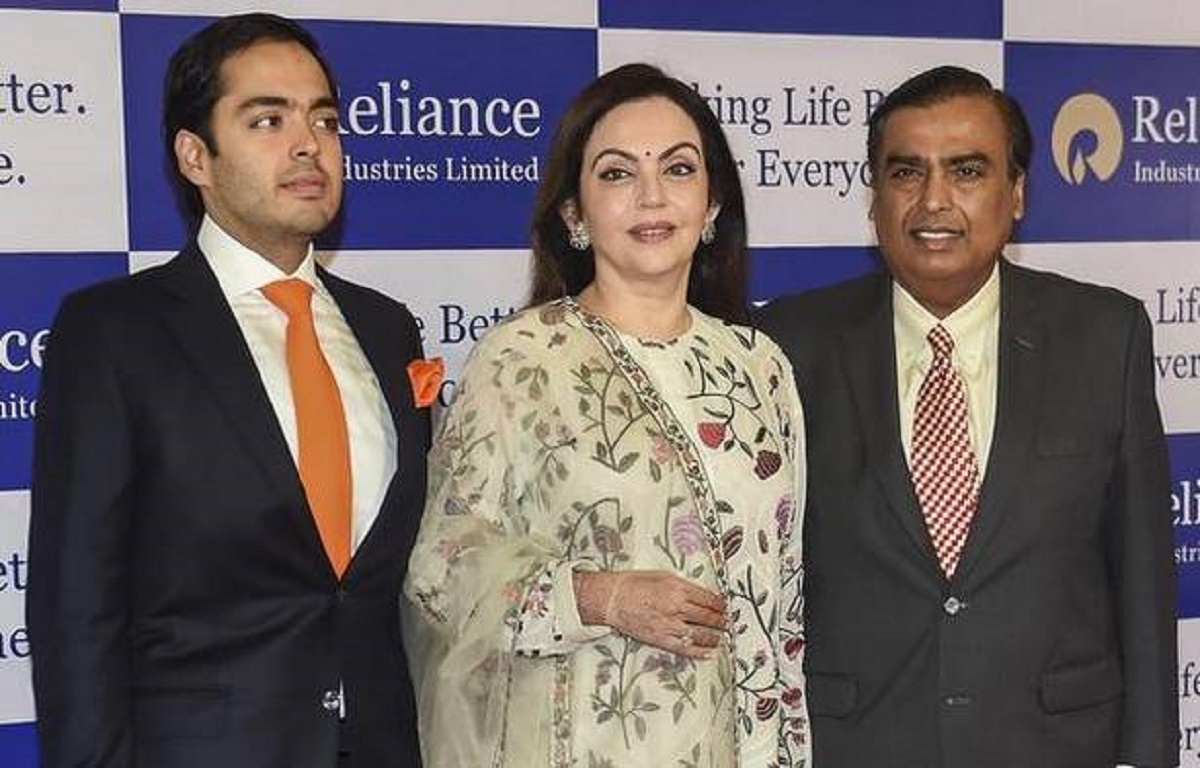
In 2017, Bill Gates held the title of the world’s richest individual with an estimated net worth of approximately $86 billion according to the annual Forbes Billionaires list, while Mukesh Ambani was ranked 33rd globally with an estimated net worth of $23.2 billion. By late 2017, a massive equity rally in Reliance Industries expanded Ambani's net worth to roughly $38 billion, narrowing the financial gap between the two business titans.
The 2017 Wealth Snapshot: Gates vs. Ambani
The year 2017 represented a pivotal moment in global wealth accumulation. Major equity markets experienced sustained growth, tech valuations surged, and emerging market conglomerates expanded into digital ecosystems. Comparing the financial standing of Microsoft co-founder Bill Gates and Reliance Industries Chairman Mukesh Ambani in 2017 highlights contrast in wealth scale, portfolio construction, and corporate exposure.
At the release of the annual Forbes World’s Billionaires list in March 2017, Bill Gates anchored the top position for the fourth consecutive year, commanding a net worth estimated at $86 billion. This marked a $11 billion increase from his 2016 valuation of $75 billion.
Mukesh Ambani, operating primarily out of India, was listed in March 2017 with an estimated net worth of $23.2 billion, placing him at #33 globally and #1 in India. However, valuation metrics shifted significantly over the course of the year. Fueled by market optimism surrounding the commercial rollout of Reliance Jio Infocomm Limited and strong refining margins in petrochemicals, shares of Reliance Industries Limited (RIL) surged by over 70% in 2017.
By October 2017, when Forbes published its India Rich List, Ambani’s net worth had vaulted to $38 billion. Meanwhile, Gates’ net worth drifted upward to approximately $89 billion to $90 billion during the same period, before Amazon founder Jeff Bezos briefly surpassed Gates as the world's wealthiest individual in late 2017.
2017 Net Worth Estimates (Forbes Data Timeline)
- March 2017 (Annual Global List):
- Bill Gates: $86.0 Billion (#1 Globally)
- Mukesh Ambani: $23.2 Billion (#33 Globally)
- October 2017 (Mid-Year Market Adjustments):
- Bill Gates: ~$89.0 Billion
- Mukesh Ambani: ~$38.0 Billion
Asset Breakdown: How Bill Gates Built His 2017 Fortune
Unlike founders whose net worth remains entirely tied to the company they created, Bill Gates’ financial profile in 2017 was characterized by deep diversification. Decades prior, Gates initiated a systemic program to sell down his stake in Microsoft Corporation, reallocating capital through his private investment entity, Cascade Investment LLC, managed by Michael Larson.
1. Microsoft Equity Holdings
By 2017, Microsoft stock comprised less than 20% of Bill Gates’ total wealth portfolio. While Microsoft's share price had entered a multi-year growth phase under Chief Executive Officer Satya Nadella—driven by rapid adoption of Office 365 and the Azure cloud infrastructure platform—Gates’ direct ownership in Microsoft had decreased to approximately 1.3% to 1.5% of the company's total outstanding shares.
2. Cascade Investment LLC
The vast majority of Gates' $86 billion fortune in 2017 resided inside Cascade Investment LLC. Cascade maintained major equity positions across multiple defensive, dividend-paying, and industrial sectors, including:
- Ecolab Inc.: A global leader in water, hygiene, and energy technologies.
- Canadian National Railway: A major North American freight railway operator.
- Waste Management, Inc.: The primary provider of waste management services in North America.
- Berkshire Hathaway: Class A and Class B holdings acquired independently and via transfers.
- AutoNation: The largest automotive retailer in the United States at the time.
3. Philanthropic Capital and Transfers
It is critical to evaluate Bill Gates’ 2017 net worth alongside his ongoing philanthropic capital commitments. By 2017, Gates had already gifted tens of billions of dollars in Microsoft shares and cash to the Bill & Melinda Gates Foundation. Without these cumulative transfers, Gates’ total personal net worth in 2017 would have easily surpassed $150 billion.
Asset Breakdown: How Mukesh Ambani Built His 2017 Fortune
In direct contrast to Gates' diversified holding model, Mukesh Ambani’s net worth in 2017 was concentrated in a single multi-sector business engine: Reliance Industries Limited (RIL). Ambani, along with his family holding entities, controlled a promoter stake of approximately 46% to 47% in RIL.
Primary Wealth Drivers (2017 Comparison)
- Bill Gates:
- Cascade Investment LLC (Diversified): ~80% Portfolio Value
- Microsoft Equity (Cloud/Software): ~20% Portfolio Value
- Mukesh Ambani:
- Reliance Industries Ltd (RIL Promoter): ~90%+ Portfolio Value
- Refining & Petrochemicals
- Reliance Retail
- Reliance Jio Infocomm
- Reliance Industries Ltd (RIL Promoter): ~90%+ Portfolio Value
1. Refining and Petrochemicals Core
In 2017, RIL operated the world’s largest single-location refining complex in Jamnagar, Gujarat, India. The core of Ambani’s valuation stemmed from RIL's cash-generative energy businesses. Robust Gross Refining Margins (GRMs)—often outperforming the regional Singapore benchmark—generated the massive operating cash flows required to fund Ambani’s corporate capital expenditures.
2. The Jio Disruption Strategy
The critical inflection point for Ambani’s wealth trajectory occurred between September 2016 and December 2017. Reliance Jio Infocomm launched commercial operations offering free high-speed voice and 4G data services, triggering an industry-wide consolidation in India’s telecommunications sector.
By late 2017, Jio had onboarded over 130 million paying subscribers after ending its promotional period. Equity analysts began pricing Jio not merely as a traditional telecom utility, but as a high-growth digital platform. This shift re-rated Reliance Industries’ valuation multiples upward on the Bombay Stock Exchange (BSE) and National Stock Exchange (NSE), pushing Ambani’s wealth from $23.2 billion in early 2017 to nearly $38 billion by late autumn.
3. Reliance Retail Operations
In addition to energy and telecommunications, RIL owned Reliance Retail, which by 2017 had established itself as India's largest retailer by revenue and store count. This multi-pronged domestic market leadership concentrated Ambani's wealth performance directly into the broader expansion of the Indian consumer economy.
Head-to-Head Comparison: 2017 Metrics
The table below outlines the core financial parameters, structural differences, and valuation profiles of Bill Gates and Mukesh Ambani during the calendar year 2017.
| Financial Parameter | Bill Gates (2017) | Mukesh Ambani (2017) |
|---|---|---|
| Estimated Net Worth (Q1 2017) | ~$86.0 Billion | ~$23.2 Billion |
| Estimated Net Worth (Q4 2017) | ~$89.0–$90.0 Billion | ~$38.0 Billion |
| Global Rank (March 2017) | #1 | #33 |
| Primary Corporate Vehicle | Cascade Investment LLC / Microsoft | Reliance Industries Limited (RIL) |
| Wealth Concentration | High Diversification (Tech, Transport, Waste, Services) | High Concentration (~46–47% RIL Promoter Stake) |
| Key Growth Catalyst in 2017 | Microsoft Azure Cloud Adoption & Dividend Income | Reliance Jio Monetization & RIL Equity Rally |
| Primary Base Currency | US Dollar (USD) | Indian Rupee (INR) / USD Equivalent |
| Philanthropic Vehicle | Bill & Melinda Gates Foundation | Reliance Foundation |
| Portfolio Volatility Index | Low (Defensive Value Stocks & Liquid Assets) | Moderate-High (Single Equity Concentration) |
Macroeconomic Context and Currency Influences in 2017
Understanding the wealth gap between Gates and Ambani in 2017 requires examining foreign exchange dynamics and regional economic conditions. Wealth listings produced by organizations like Forbes and Bloomberg convert non-U.S. holdings into U.S. Dollars (USD) at prevailing spot exchange rates.
The Indian Rupee (INR) Stability
Throughout 2017, the Indian Rupee maintained relative stability against the U.S. Dollar, trading within a range of approximately 63.5 to 66.5 INR per USD. This stability meant that stock price increases in RIL on domestic Indian exchanges translated almost directly into USD wealth gains for Mukesh Ambani, without being heavily diluted by foreign exchange depreciation.
Corporate Strategy: Capital Reinvestment vs. Wealth Distribution
In 2017, Gates was primarily in a phase of capital preservation, real-estate/asset acquisition, and charitable distribution. Conversely, Ambani was executing one of the largest corporate capital expenditure cycles in Asian business history. Between 2012 and 2017, Reliance poured over $35 billion into building its greenfield 4G network and expanding its petrochemical plants.
Corporate Investment Focus (2017)
- Bill Gates / Cascade:
- Capital Preservation
- Value Equities
- Dividend Collections
- Philanthropic Payouts
- Mukesh Ambani / RIL:
- Operating Cash Flows
- Mega CapEx ($35B+)
- Telecom Infrastructure (Jio)
- Market Re-Rating
The success of this capital deployment in late 2017 demonstrated to global capital markets that Reliance had transformed from a cyclical energy firm into a consumer tech conglomerate, triggering the historic run-up in Ambani's global net worth ranking over the following decade.
Post-2017 Wealth Trajectories: The Subsequent Divergence
The financial metrics recorded in 2017 established the springboard for dramatic shifts in global wealth rankings over the subsequent years.
- Ambani’s Path toward $100 Billion: Following the 2017 proof-of-concept for Reliance Jio, global mega-investors (including Meta Platforms, Google, and major sovereign wealth funds) invested billions of dollars into Jio Platforms and Reliance Retail in 2020. This propelled Mukesh Ambani’s net worth past $80 billion in 2021 and briefly past the $100 billion threshold in subsequent market cycles.
- Gates’ Continued Diversification and Transfer: Bill Gates continued to funding the Gates Foundation, transferring dozens of billions of dollars out of his personal portfolio. Despite these substantial charitable drawdowns, steady gains across global financial assets helped keep Gates among the top tier of international wealth indexes.
Frequently Asked Questions
Why was there such a large gap between Bill Gates and Mukesh Ambani in 2017?
The primary reason was portfolio maturity and total asset scale. Bill Gates had accumulated substantial wealth as the dominant shareholder of Microsoft during the 1980s and 1990s and subsequently compounded that wealth over two decades through diversified global investments inside Cascade Investment LLC. Mukesh Ambani’s wealth, while extensive, was tied to Reliance Industries, an emerging-market conglomerate whose enterprise valuation in 2017 was still significantly smaller than mega-cap U.S. technology companies.
Did Mukesh Ambani ever pass Bill Gates in net worth after 2017?
Yes, during specific intra-day and short-term market peaks in 2020 and late 2021, Mukesh Ambani's net worth briefly surpassed Bill Gates on selected real-time wealth indices (such as the Bloomberg Billionaires Index). This was driven by massive rallies in Reliance Industries stock following major investments from global technology companies, combined with large philanthropic share transfers from Gates to his foundation.
How much was Microsoft stock worth to Bill Gates in 2017?
In 2017, Microsoft stock accounted for roughly 15% to 20% of Bill Gates’ estimated $86 billion net worth. Gates had systematically divested millions of Microsoft shares over previous decades to fund Cascade Investment LLC and the Bill & Melinda Gates Foundation, leaving him with less than 2% ownership of Microsoft's total share count.
How did Reliance Jio impact Mukesh Ambani’s 2017 net worth?
Reliance Jio had a transformative impact on Mukesh Ambani's wealth in 2017. When Jio successfully transitioned from a free trial model to a paid service model in mid-2017—reaching over 100 million paying subscribers—investors re-evaluated RIL’s financial outlook. RIL's share price rose by over 70% during 2017, increasing Ambani’s wealth by roughly $15 billion between March and October 2017.
What exchange rate was used to calculate Mukesh Ambani's 2017 net worth?
Forbes and Bloomberg calculate international billionaires' wealth using real-time market exchange rates. In 2017, the USD/INR exchange rate hovered around 64 to 66 Indian Rupees per U.S. Dollar. The relative stability of the Rupee during 2017 ensured that RIL’s domestic stock price gains translated directly into higher U.S. Dollar wealth calculations.
Key Financial Takeaway
Comparing the 2017 financial standings of Bill Gates and Mukesh Ambani illustrates two distinct wealth creation methodologies. Bill Gates ($86 billion in early 2017) represented a diversified asset preservation model, relying on cash generation, defensive market holdings, and corporate dividends across North America. Mukesh Ambani ($23.2 billion in March 2017, growing to $38 billion by late 2017) represented a concentrated equity model, benefiting from high-capex infrastructure bets, market disruption in Indian telecom, and emerging market economic expansion.
Disclaimer: Historical net worth estimates are based on public disclosures, regulatory filings, and historical reporting from wealth intelligence organizations including Forbes and the Bloomberg Billionaires Index for the 2017 fiscal period. Net worth estimates fluctuate constantly based on equity market prices, asset illiquidity, foreign exchange movements, and private holding valuations.