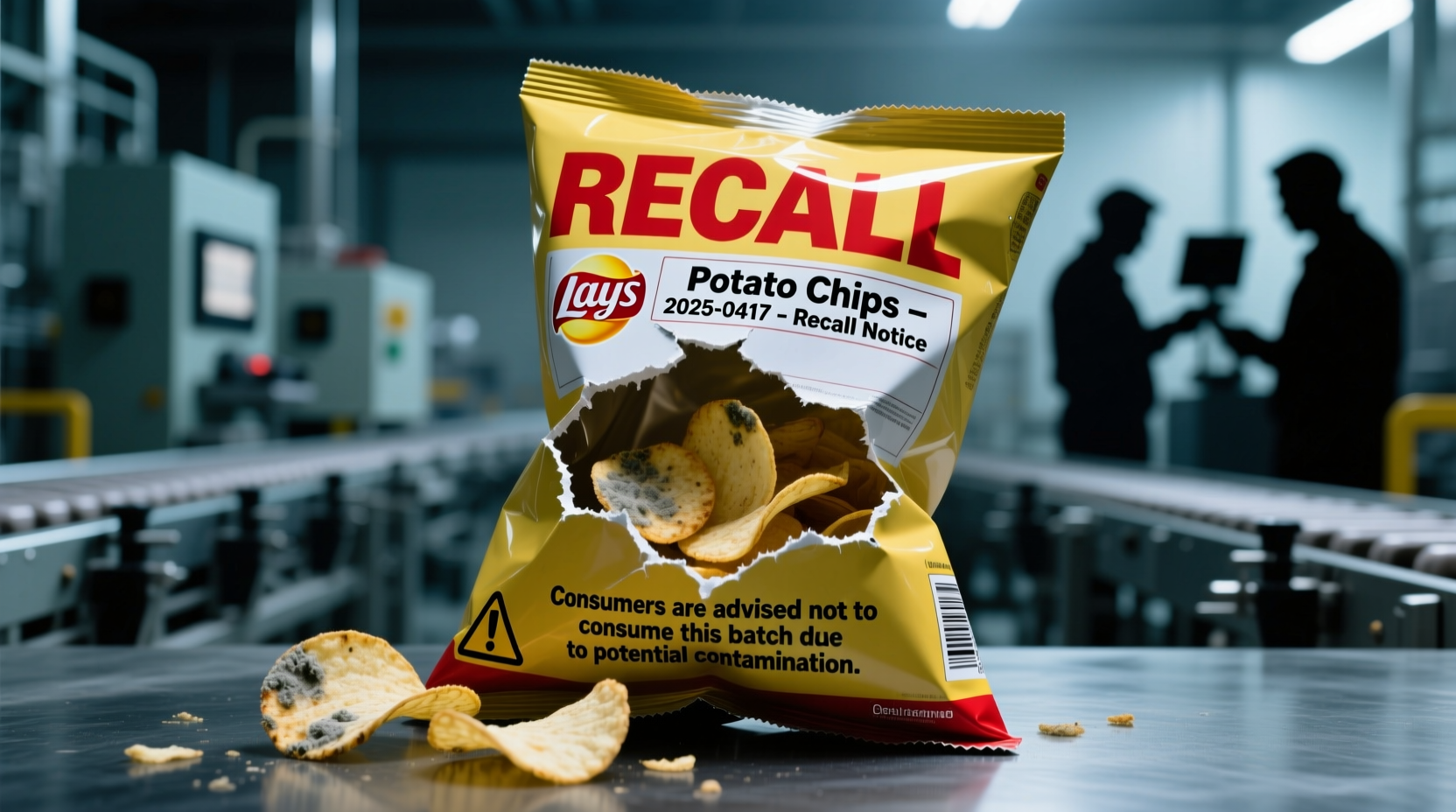
The 2025 recall of 13 oz Lay’s Classic Potato Chips was a significant food safety event triggered by undeclared milk allergens resulting from a packaging error. This industry alert impacted specific batches distributed across several states, prompting immediate intervention by the FDA and Frito-Lay to prevent severe allergic reactions in sensitive consumers.
Understanding the Scope of the 2025 13 oz Lay’s Recall
In the early months of 2025, a critical labeling discrepancy was identified in the production of one of the world’s most recognizable snack products. Frito-Lay, a division of PepsiCo, issued a voluntary recall for a specific lot of 13 oz Lay’s Classic Potato Chips. The recall was initiated after it was discovered that a limited number of bags actually contained Sour Cream and Onion flavored chips instead of the "Classic" variety. Because the "Classic" packaging does not list milk as an ingredient, this posed a life-threatening risk to individuals with milk allergies or severe sensitivities.
The 13 oz bag, often categorized as the "Party Size" or "Family Size" depending on regional marketing, is a high-volume SKU (Stock Keeping Unit). This made the recall particularly complex, as the product moved quickly through distribution channels into major retail chains, convenience stores, and independent grocers. From the perspective of 2026, we can see that this event was not merely a localized error but a symptom of broader challenges in automated high-speed packaging lines that would eventually lead to the "2025 Industry Alert."
The scope of the recall primarily focused on the U.S. East Coast and Central regions, though secondary distribution occasionally placed these bags in neighboring territories. For consumers, the primary concern was the presence of casein and whey, proteins found in milk that are used in the Sour Cream and Onion seasoning but are entirely absent from the three-ingredient Classic chip (potatoes, vegetable oil, and salt).
Product Identification: How to Verify Your Inventory
For consumers and retailers, identifying the affected product requires a precise examination of the packaging. The recall specifically targeted the 13 oz bags of Lay’s Classic Potato Chips. Even in 2026, understanding how these identifiers work is essential for navigating future food safety alerts.
To determine if a bag is part of the 2025 recall, you must locate two specific pieces of information usually found on the front of the bag: the "Guaranteed Fresh" date and the 9-digit Manufacturing Code.
Key Identifiers for the 13 oz Recall
- Product Name: Lay’s Classic Potato Chips
- Net Weight: 13 oz (368.5 g)
- UPC Code: 0 28400 31041 3
- Recall Date Range: Early 2025 "Guaranteed Fresh" dates.
- Manufacturing Code: Specific sequences containing "5" in the middle digits (representing specific plant locations).
If you have a bag that matches the UPC but has a "Guaranteed Fresh" date significantly later than the mid-2025 window, the product is likely safe. However, in the immediate aftermath of the 2025 alert, consumers were advised to dispose of any matching bags or return them to the point of purchase for a full refund.
Why This Triggered a Massive Industry Alert
The "Industry Alert" mentioned in the 2025 headlines wasn't just about the chips themselves; it was about the failure of automated verification systems. Modern snack food manufacturing relies on high-speed optical sorters and barcode scanners to ensure that the seasoning applied to the chip matches the bag it is being dropped into.
When a 13 oz bag of Classic chips is filled with Sour Cream and Onion chips, it indicates a failure in the "flavor changeover" protocol. In 2025, the FDA used this specific Lay’s incident to issue a broader warning to the snack food industry regarding preventive controls for human food. Under the Food Safety Modernization Act (FSMA), manufacturers are required to have rigorous procedures to prevent allergen cross-contact and mislabeling.
The alert highlighted that as production speeds increase to meet global demand, the margin for error narrows. The 13 oz recall served as a case study in how a single "wrong roll" of packaging film—which looks nearly identical to the correct roll at high speeds—can bypass manual inspection points. This led to a 2025-2026 industry-wide shift toward mandatory AI-driven label verification that cross-references the seasoning hopper with the packaging film's unique identifiers in real-time.
Technical Analysis of the Allergen Risk
Milk is one of the "Big Nine" allergens regulated by the FDA. For an individual with a severe milk allergy, consuming even a small amount of the seasoning used on Sour Cream and Onion chips can trigger anaphylaxis. This is a rapid-onset allergic reaction that can cause airway constriction, a sharp drop in blood pressure, and loss of consciousness.
The 2025 recall was classified by the FDA as a Class I Recall. This is the most serious category, reserved for situations where there is a reasonable probability that the use of or exposure to a violative product will cause serious adverse health consequences or death.
Cross-Contamination vs. Mislabeling
It is important to distinguish between "trace amounts" of an allergen and a "mislabeling" event.
- Cross-Contamination: Occurs when a product is made on shared equipment and picks up microscopic particles.
- Mislabeling (The 2025 Lay's Case): Occurs when the wrong product is placed in the wrong bag. The risk level in the 2025 incident was significantly higher because the chips were fully coated in the allergen-containing seasoning.
Regulatory Response: FDA and Frito-Lay Actions
Following the detection of the error—often reported first by a consumer who notices the chips "taste wrong"—Frito-Lay worked in tandem with the FDA to initiate the recall within 24 hours. This rapid response is a requirement of the Reportable Food Registry (RFR), an electronic portal where industry must report when there is a reasonable probability that an article of food will cause serious adverse health consequences.
Frito-Lay’s response included:
- Direct Notification: Alerting major distributors (Walmart, Target, Kroger) to pull the specific UPC/Date combinations from shelves.
- Public Service Announcements: Utilizing social media and traditional press releases to reach consumers who had already purchased the product.
- Internal Audit: Investigating the plant-level failure that allowed the 13 oz bags to be misfiled.
By 2026, these protocols have become even more stringent, with "active recall" notices now being pushed through retail loyalty apps directly to consumers who have a history of purchasing the 13 oz bags.
Comparison of Recall Impact by Region and SKU
The 2025 alert was particularly focused on the 13 oz size, but it is helpful to compare this to other packaging sizes to understand why this specific recall gained such traction.
| Package Size | Distribution Volume | Recall Risk Level (2025) | Reason for High Impact |
|---|---|---|---|
| 1 oz (Vending) | High | Low | Usually processed on dedicated lines with single flavors. |
| 8 oz (Standard) | Medium | Moderate | Common flavor changes, but lower inventory dwell time. |
| 13 oz (Party Size) | Very High | High | Centralized production; high household penetration; primary "share" size. |
| 18 oz (Club Size) | Moderate | Low | Often handled at different facilities (e.g., dedicated Warehouse Club plants). |
The 13 oz bag occupies the "sweet spot" of consumer snack habits. It is the size most often purchased for gatherings, meaning one recalled bag could potentially expose multiple people to the allergen, increasing the public health stakes.
Consumer Rights and Reimbursement Procedures
If you were affected by the 2025 Lay’s recall, or if you encounter similar recalls in the current 2026 landscape, you have specific rights.
- Right to Refund: Consumers are entitled to a full refund. You do not necessarily need a receipt if you have the physical bag with the affected manufacturing codes.
- Health Documentation: If a consumer suffered an allergic reaction, Frito-Lay and their insurance providers typically have a dedicated claims process for medical expenses.
- Disposal Guidance: The FDA recommends "denaturing" the product (pouring it into a trash bag and mixing it with non-food waste) to ensure that it is not consumed by others or scavenged from the trash.
To claim a refund for the 2025 recall, consumers were directed to the Frito-Lay Consumer Relations website or a dedicated toll-free number. In 2026, most of these claims have been processed, but the precedent set by this event continues to dictate how snack food companies handle large-format SKU errors.
Lessons Learned for the Food Processing Industry
The 2025 industry alert served as a wake-up call for the "Big Snack" sector. Several key takeaways emerged that have since shaped manufacturing standards in 2026:
- Redundancy in Scanning: It is no longer sufficient to scan only the film roll. Systems must now scan the finished bag at the point of boxing to ensure the UPC matches the production schedule.
- Allergen Washing Protocols: Even when mislabeling doesn't occur, the 13 oz recall highlighted the need for more transparent "May Contain" labeling during high-stress production periods.
- Transparency in Supply Chain: The speed at which Frito-Lay identified the specific 13 oz batches demonstrated the power of advanced logistics tracking, which allows companies to "surgical strike" a recall rather than pulling every bag in the country.
Frequently Asked Questions (FAQs)
What exactly was wrong with the 13 oz Lay's chips in 2025?
The recall was due to a packaging error where Sour Cream and Onion flavored chips were accidentally placed inside Lay's Classic Potato Chip bags. Because the Classic bags did not list milk as an ingredient, this created a severe health risk for people with milk allergies.
Are 13 oz Lay's chips safe to buy in 2026?
Yes. The 2025 recall was limited to specific batches with specific "Guaranteed Fresh" dates. Products currently on shelves in 2026 have passed through updated quality control and labeling verification systems implemented after the industry alert.
How do I find the manufacturing code on a Lay's bag?
The manufacturing code is a 9-digit sequence located on the front of the bag, usually near the "Guaranteed Fresh" date in the upper right or left corner. This code identifies the specific plant, line, and time of production, which is essential for verifying recall status.
What should I do if I ate the recalled chips and have a milk allergy?
If you consumed the recalled product and are experiencing symptoms of an allergic reaction—such as hives, swelling, or difficulty breathing—seek emergency medical attention immediately. Afterward, you should report the incident to the FDA's MedWatch program and contact Frito-Lay Consumer Relations.
Does this recall affect other Lay's flavors like Barbecue or Salt & Vinegar?
The primary 2025 alert was specific to the 13 oz Classic bags containing Sour Cream and Onion chips. However, whenever a major recall occurs, it is common for manufacturers to review all flavor-changeover protocols. Always check the official FDA recall database for the most current list of affected flavors and sizes.
Why was it called an "Industry Alert"?
It was labeled an industry alert because the error highlighted a systemic flaw in high-speed packaging automation that many snack food companies use. The FDA used this incident to warn the entire food processing industry to upgrade their allergen labeling safeguards and verification technologies.
Practical Recommendation: Next Steps for Consumers
While the 2025 recall is largely a matter of historical record by 2026, its lessons remain vital for household safety. The best way to protect yourself from future snack food recalls is to register for FDA email alerts and use retail "Store Apps" that notify you of recalls based on your purchase history.
If you find a bag in your pantry that you suspect is part of an older recall:
- Do not open it. Opening the bag can release allergens or lead to accidental consumption.
- Photograph the codes. Take a clear picture of the UPC and the Manufacturing Code.
- Check the official source. Visit the FDA Recall Search page or the Frito-Lay Recall site to confirm if your specific batch is affected.
- Practice "Safety First": When in doubt, throw it out. The cost of a bag of chips is never worth the risk of a severe allergic reaction.