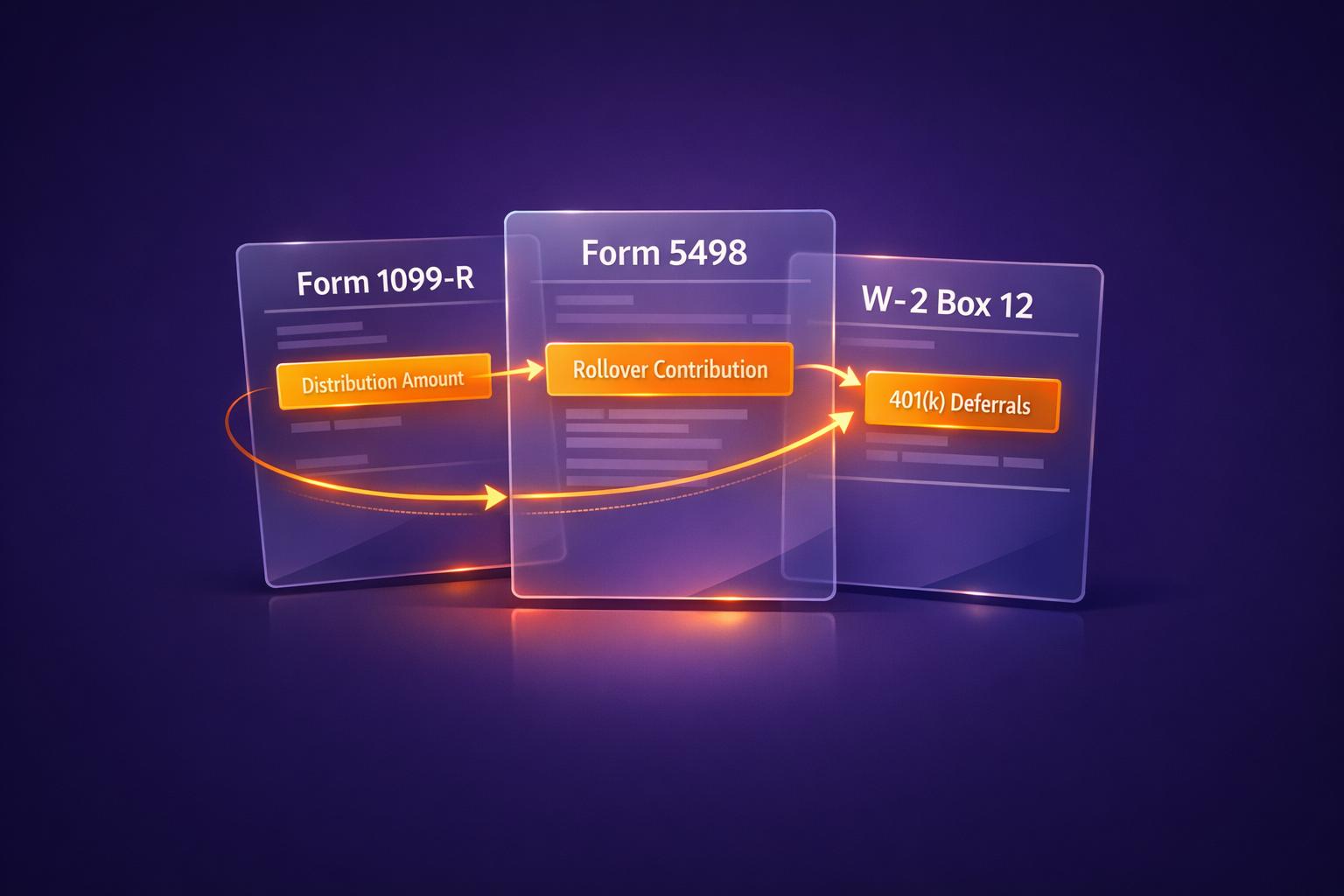
A 1099-R rollover involves moving funds from a tax-advantaged retirement account—such as a traditional IRA, 401(k), or 403(b)—into another qualified retirement plan, while properly documenting the transaction to the Internal Revenue Service (IRS) to avoid immediate income taxes and early withdrawal penalties.
Navigating the intersection of retirement account distributions and IRS tax reporting can quickly become complex, especially when a rollover is involved. When you take a distribution from a pension, annuity, profit-sharing plan, IRA, or insurance contract, the financial institution handling your account reports the transaction on IRS Form 1099-R. However, receiving this form does not automatically mean your distribution is fully taxable. If executed correctly, a rollover allows you to transfer your hard-earned retirement savings from one custodian to another without triggering a tax liability. Understanding how the 1099-R captures this event, what the various box codes mean, and how to execute the transfer correctly is vital for protecting your retirement nest egg from unexpected tax bills and penalties.
Deconstructing IRS Form 1099-R: Distributions From Pensions, Annuities, Retirement or Profit-Sharing Plans
IRS Form 1099-R is the standard document issued by financial custodians, plan administrators, and insurance companies to report distributions of $10 or more from retirement plans. Whether you take a normal retirement payout, execute a Roth conversion, or complete a standard rollover, the administrator must furnish this form to both you and the IRS, usually by January 31 of the year following the distribution.
The layout of Form 1099-R contains multiple numbered boxes designed to provide a granular accounting of the distribution. Key fields include the gross distribution amount in Box 1, the taxable amount in Box 2a, and critical flags such as Box 7, which contains the distribution code. For individuals navigating a rollover, Box 2a and Box 7 are the most critical components. Box 2a may show "$0" or a lower amount if the distribution was rolled over, but deciphering whether the IRS recognizes the transaction as a tax-free event depends heavily on the code assigned in Box 7.
Accountants and taxpayers alike must review these boxes carefully against their own financial statements. A common point of confusion arises when a direct trustee-to-trustee transfer is reported on a 1099-R, yet the taxpayer assumes no form should be generated because the money never hit their personal bank account. Custodians are legally required to report these movements, making it imperative to understand how to match the reported data with your annual tax return.
Direct Rollovers Versus Indirect Rollovers: Critical Distinctions
When moving retirement funds, the method of transfer dictates both how the transaction is reported on Form 1099-R and the level of risk associated with tax penalties. There are two primary mechanisms: direct rollovers and indirect rollovers.
A direct rollover (also known as a trustee-to-trustee transfer) occurs when your old retirement account custodian sends the funds directly to the new custodian. The money can move via an electronic funds transfer or a physical check made payable to the new financial institution for your benefit. In a direct rollover, the distribution code in Box 7 of the 1099-R will typically reflect a tax-free transfer (such as Code G for an eligible rollover distribution from a qualified plan to an IRA). Because you never take physical possession of the funds, there is no risk of missing the reinvestment window, and the custodian generally does not withhold federal income tax.
An indirect rollover, by contrast, involves taking a distribution yourself. The custodian issues a check made payable to you, or deposits the funds directly into your personal checking or savings account. You then have a strict 60-day window from the date you receive the funds to deposit them into another qualified retirement account. If you fail to deposit the full amount within 60 days, the entire distribution becomes subject to ordinary income tax, and if you are under age 59½, it may also trigger a 10% early withdrawal penalty from the IRS. Furthermore, employers are generally required to withhold 20% for federal income taxes on eligible rollover distributions paid directly to the employee, meaning you must come up with that 20% out of pocket if you want to roll over the full gross amount and reclaim the withholding later when filing your taxes.
| Rollover Feature | Direct Rollover (Trustee-to-Trustee) | Indirect Rollover (60-Day Rollover) |
|---|---|---|
| Fund Possession | Funds move strictly between financial institutions. | Funds are paid directly to the account owner. |
| Time Limit | No strict calendar limit, as the transfer is continuous. | Must be completed within 60 calendar days. |
| Tax Withholding | Generally $0 (no mandatory withholding). | Mandatory 20% federal withholding on employer plans. |
| IRS Reporting Code | Usually Code G or Code H in Box 7. | Varies, but requires precise tax return reconciliation. |
| Risk Level | Very low operational and tax risk. | High risk of missing the 60-day window or short-funding. |
Decoding Box 7: Understanding Distribution Codes
The single most important identifier on Form 1099-R is the distribution code found in Box 7. This single letter or alphanumeric code tells the IRS why the money was distributed, whether penalties apply, and if the transaction qualifies for tax-deferred rollover treatment. Misinterpreting this code can lead to incorrect tax filings and subsequent IRS notices.
Common distribution codes associated with rollovers and standard distributions include:
- Code 1: Early distribution, no known exception (under age 59½). Usually indicates a taxable event and a potential 10% penalty unless a specific waiver or exception applies.
- Code 2: Early distribution, exception applies (under age 59½). Often used for certain medical expenses, higher education costs, or substantially equal periodic payments.
- Code 7: Normal distribution. Used when the account owner is over age 59½.
- Code G: Direct rollover or transfer. Indicates a direct trustee-to-trustee transfer of an eligible rollover distribution to another qualified plan or IRA. This is the cleanest code for tax-free movement.
- Code H: Direct rollover of a designated Roth account distribution to a Roth IRA.
- Code 4: Death. Indicates a distribution made to a beneficiary following the death of the account owner.
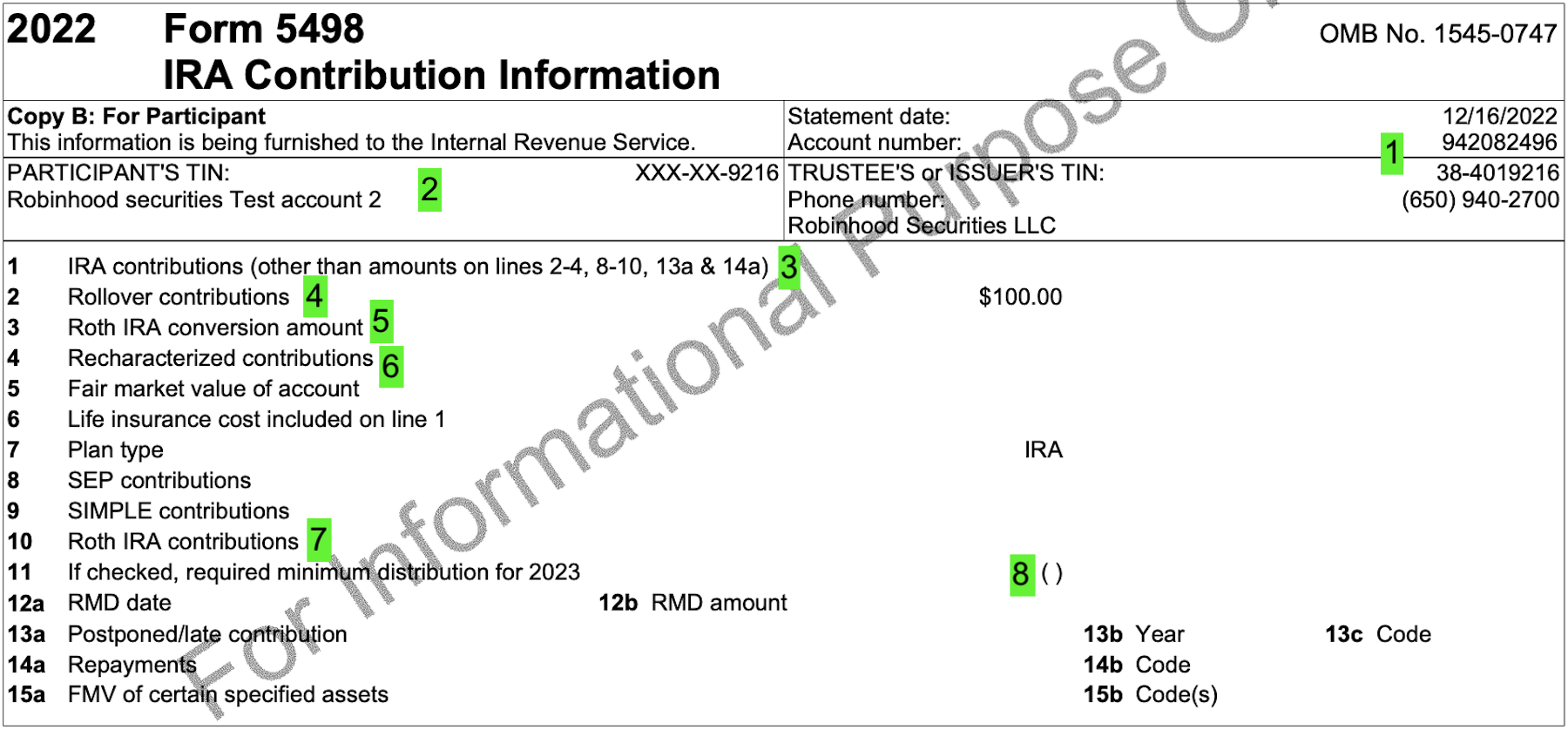
Reviewing the instructions outlined in the IRS Instructions for Forms 1099-R and 5498 provides official definitions for every possible code combination. If a 1099-R arrives with an incorrect code—such as reporting a direct rollover as an early taxable distribution (Code 1 instead of Code G)—you must contact the issuing financial institution immediately to request a corrected Form 1099-R.
Tax Implications and Reporting on Form 1040
Filing your federal income tax return accurately when a 1099-R is involved requires careful alignment between the tax software or paper forms and the data provided by your financial custodian. Even if a rollover is entirely tax-free, the transaction must still be reported on your tax return.
When using IRS Form 1040 (or Form 1040-SR for seniors), pension and annuity distributions are reported on specific lines. For an IRA rollover, the gross amount from Box 1 is entered on the IRA distribution lines, and the taxable amount (often $0 if fully rolled over) is entered on the corresponding taxable line. Tax software typically guides you through this by asking if the distribution was rolled over into another retirement account. If you answer affirmatively, the software will output the word "Rollover" next to the line item, signaling to the IRS that the funds were properly redirected rather than spent.
Failing to report a 1099-R because "no tax was owed" is one of the most common triggers for automated IRS matching notices (CP2000 notices). The IRS matches the 1099-R data submitted by the custodian against your tax return. If a 1099-R appears in their database but cannot be located on your return, the agency will automatically assume the income was omitted and assess back taxes, interest, and penalties until proven otherwise.
Common Pitfalls and Troubleshooting Mistakes
Navigating retirement account rollovers requires strict adherence to federal tax guidelines. Minor operational oversights can lead to severe financial consequences. Recognizing these frequent missteps helps safeguard your long-term savings.
The 60-Day Trap and the Once-Per-Year IRA Rule
As noted, indirect rollovers carry a strict 60-day deadline. If administrative delays or personal oversight cause you to deposit the funds on day 61, the IRS generally views the entire distribution as taxable income. While the IRS does offer a self-certification procedure for waiver eligibility under specific mitigating circumstances (such as a natural disaster or postal error), relying on a waiver is risky. Furthermore, under IRS rules, you are only permitted to make one rollover from an IRA to another IRA within any 1-year period, regardless of how many IRAs you own. This rule does not apply to direct trustee-to-trustee transfers or rollovers between traditional IRAs and employer-sponsored plans like 401(k)s, making direct transfers the preferred method to avoid accidental violations.
Dealing with Corrected 1099-R Forms
Financial institutions occasionally issue erroneous 1099-R forms due to data-entry errors, misclassified direct transfers, or delayed processing near the end of the calendar year. If you discover an error on your form, do not alter the document yourself. Contact the issuer's customer service department, explain the discrepancy, and request a Corrected 1099-R. The corrected form will feature a checked box or specific indicator at the top confirming it is a revision. If you have already filed your tax return when the corrected form arrives, you may need to file an amended return (Form 1040-X) to update the figures.
Disclaimer: Tax laws are subject to change based on federal legislation and individual financial circumstances. Readers should consult a certified public accountant (CPA) or a qualified tax professional before executing complex retirement account rollovers or amending tax filings.
Frequently Asked Questions
Do I have to report a direct rollover on my tax return if I received no money and owe no tax?
Yes. Even though a direct trustee-to-trustee transfer does not generate a tax liability, the financial institution is still required to issue a Form 1099-R to you and the IRS. You must report this distribution on your federal tax return, indicating that the taxable amount is zero due to a successful rollover. Omitting it frequently triggers automated IRS notices.
What happens if I miss the 60-day window for an indirect rollover?
If you fail to deposit the distributed funds into a qualified retirement account within 60 calendar days, the IRS treats the distribution as taxable income for that tax year. If you are under age 59½, the taxable amount is also subject to a 10% early withdrawal penalty. In limited situations, you may apply for a waiver through IRS self-certification, but approval is not guaranteed.
Can I roll over a required minimum distribution (RMD)?
No. Under IRS regulations, required minimum distributions (RMDs) cannot be rolled over into another tax-advantaged retirement account. If you take a distribution that qualifies as an RMD for the year, that specific portion must be withdrawn and treated as taxable income, while any excess amount above the RMD requirement may be eligible for a rollover.
How do I fix a Form 1099-R that lists the wrong distribution code?
You must contact the financial institution or plan administrator that issued the Form 1099-R immediately. Inform them of the incorrect code in Box 7 and request a corrected Form 1099-R. Filing your tax return with an incorrect code can result in incorrect tax assessments or processing delays while the IRS verifies the transaction details.
Are Roth accounts subject to the same rollover rules as traditional accounts?
Roth accounts follow parallel structural rules for direct and indirect rollovers, but with different tax implications. Rollovers from a designated Roth 401(k) must generally be moved into a Roth IRA or another designated Roth account to maintain their tax-free status. Mixing pre-tax and Roth funds incorrectly can trigger unintended taxable events or early withdrawal penalties.