William de Warenne, 1st Earl of Surrey, was a pivotal Norman aristocrat and a primary architect of the post-1066 English social order. As one of the few documented companions of William the Conqueror at the Battle of Hastings, he parlayed military loyalty into immense wealth, eventually becoming one of the largest landholders in the Domesday Book and a key political figure in the reigns of William I and William II.
The Origins of a Norman Powerhouse
To understand the trajectory of William de Warenne, one must look toward the Varenne river in Upper Normandy. Born in the early 11th century, William was the son of Rodulf II de Warenne and Emma. His family was not merely provincial nobility; they were intricately linked to the ducal house through marriage and proximity. The Warenne family belonged to the inner circle of the Norman elite, a group that would eventually reshape the map of Europe.
William’s rise was facilitated by his kinship with the Duchess Gunnor, the wife of Richard I of Normandy. This ancestral connection placed him within the "Gunnorid" network, a powerful web of families including the Beaumonts and the Montgomerys. Unlike some of his contemporaries who rose through sheer opportunism, William de Warenne’s ascent was grounded in established feudal structures. By the time Duke William (later the Conqueror) began planning his cross-channel invasion, de Warenne was already a trusted military leader, having distinguished himself at the Battle of Mortemer in 1054. In that engagement, he helped crush an invading French force, an act that solidified his reputation for tactical competence and unwavering loyalty to the Duke.
The 1066 Invasion and the Battle of Hastings
William de Warenne’s presence at the Battle of Hastings in 1066 is one of the few definitively recorded facts of the invasion's military roster. He was among the elite group of Norman lords who provided ships and knights for the expedition. His role in the battle was likely that of a cavalry commander, a position reserved for the most trusted and experienced knights of the ducal household.
The success of the Norman Conquest shifted the ownership of English land on a scale never seen before or since. For his service, William de Warenne received an extraordinary "honour"—a collection of manors and estates scattered across several counties. His primary rewards were concentrated in Sussex, Norfolk, and Yorkshire. These were not merely agricultural assets; they were strategic territories. The Rape of Lewes in Sussex, for instance, gave him control over a vital coastal corridor, allowing for rapid communication and troop movement between England and Normandy.
The Domesday Book: A Record of Extraordinary Wealth
By the time the Domesday Book was compiled in 1086, William de Warenne had become one of the wealthiest non-royal individuals in England. The survey records his holdings as spanning 13 counties. His annual income from these lands was estimated at over £1,100—a staggering sum for the 11th century that places him among the top ten richest men in the kingdom.
The distribution of his lands followed a deliberate pattern of "defensive geography." His Sussex estates protected the coast, his Norfolk lands (centered around Castle Acre) secured the eastern approaches, and his Yorkshire holdings provided a buffer in the volatile north. This wealth was not just passive; it funded the construction of massive fortifications and religious houses, which served to "Normanize" the English landscape. In 2026, historians continue to use de Warenne’s Domesday records as a primary case study for understanding how the Norman elite extracted value from the conquered Saxon agrarian system.
Architectural Dominance: Lewes and Castle Acre
The physical manifestation of William de Warenne’s power can still be seen in the ruins of his great castles. He was a prolific builder, recognizing that stone and mortar were the ultimate symbols of permanent conquest.
Lewes Castle
Located in East Sussex, Lewes Castle was de Warenne’s primary seat in the south. It is architecturally unique for possessing two mottes (artificial mounds). This design suggests an evolving defensive strategy, where the second motte was likely added to provide a secondary retreat or to accommodate the growing administrative needs of his earldom. The castle allowed de Warenne to govern the Ouse Valley and maintain a firm grip on the local population.
Castle Acre Castle
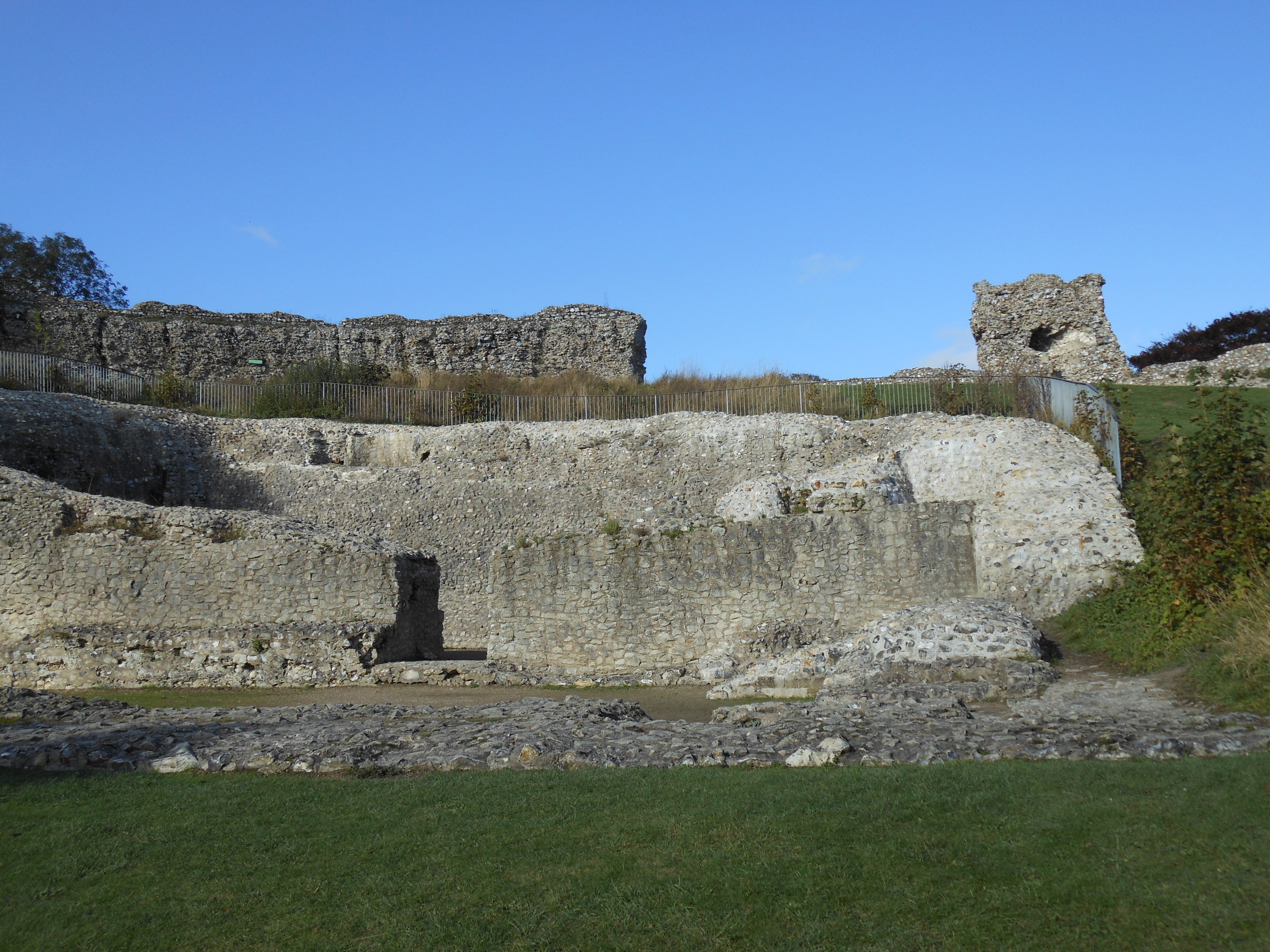
In Norfolk, de Warenne established Castle Acre. Originally a "country house" with modest defenses, it was quickly upgraded into a formidable fortress. The site today remains one of the most impressive examples of Norman earthworks in the United Kingdom. The castle was the center of a planned settlement, including a church and a market, demonstrating that de Warenne was not just a warlord but a sophisticated developer of urban infrastructure.
Religious Foundations and the Cluniac Order
William de Warenne’s legacy is equally defined by his piety—or perhaps his desire for spiritual insurance. Along with his wife, Gundred, he traveled to the Great Abbey of Cluny in France during the 1070s. This journey was transformative. Impressed by the Cluniac reforms and the majesty of the order, the couple decided to establish the first Cluniac priory in England.
St. Pancras Priory at Lewes was founded between 1078 and 1082. It became one of the wealthiest and most influential monastic houses in the country. The introduction of the Cluniac order was a significant cultural shift for England; it brought a more centralized, disciplined, and internationally connected form of monasticism to the English church. The priory served as the final resting place for William and Gundred, and their leaden caskets were rediscovered in the 19th century, providing a direct physical link to these medieval figures.
The Earldom of Surrey and Political Crises
Despite his vast holdings, William de Warenne did not receive the title of "Earl" until late in his life. He remained a loyal supporter of the Norman crown through several major crises, most notably the Revolt of the Earls in 1075. While other barons sought to limit the King’s power, de Warenne acted as a Justiciar, working alongside Richard de Bienfaite to suppress the rebellion.
His loyalty was tested again following the death of William the Conqueror in 1087. In the ensuing struggle for the throne between William Rufus (William II) and Robert Curthose, de Warenne sided with Rufus. It was in recognition of this crucial support during the Rebellion of 1088 that Rufus finally created him Earl of Surrey. Although his lands in Surrey were relatively minor compared to his Sussex or Norfolk holdings, the title granted him the highest social rank below the royal family.
| Key Milestone | Year | Significance |
|---|---|---|
| Battle of Mortemer | 1054 | Solidified military reputation in Normandy. |
| Battle of Hastings | 1066 | Proven companion of the Conqueror; earned vast English lands. |
| Foundation of Lewes Priory | c. 1077 | Introduced the Cluniac Order to England. |
| Justiciar of England | 1075 | Helped suppress the Revolt of the Earls. |
| Creation of Earldom | 1088 | Raised to the peerage by William Rufus. |
| Death at Lewes | 1088 | Wounded at the Siege of Pevensey; died shortly after. |
The Mystery of Gundred’s Parentage
For centuries, a major historical debate surrounded William’s wife, Gundred (Gundreda). Early genealogists and some 19th-century historians suggested that she was a daughter of William the Conqueror and Queen Matilda. This theory was largely based on a charter for Lewes Priory in which the King refers to her as "my child."
However, modern scholarship has largely debunked the royal parentage theory. Analysis of contemporary records, such as those by Orderic Vitalis, suggests Gundred was actually the sister of Gerbod the Fleming, Earl of Chester. The King's reference to her as "daughter" is now widely interpreted as a term of affection or a reflection of his role as her legal guardian. Regardless of her biological origins, Gundred was an active partner in William’s administrative and religious life, and her death in childbirth in 1085 was a significant blow to the Earl.
The Death of a Titan: 1088
The end of William de Warenne’s life was as violent as the era he helped create. During the Rebellion of 1088, he fought for King William Rufus against the supporters of Robert Curthose. While participating in the Siege of Pevensey, de Warenne was struck in the leg by an arrow.
Though the wound did not kill him instantly, it proved fatal in an age before modern medicine. He was carried back to his priory at Lewes, where he died on June 24, 1088. He was buried next to Gundred in the chapter house of St. Pancras Priory. His death marked the end of the first generation of "Conquerors"—those men who had crossed the channel as adventurous knights and died as the masters of a new kingdom.
Historical Significance and Modern Perspective
In 2026, William de Warenne is viewed as the quintessential Norman "new man." He represents the successful integration of military service, political loyalty, and economic management. Unlike the more volatile barons of the 12th century, de Warenne’s career was characterized by a steady accumulation of power that remained closely aligned with the interests of the crown.
His legacy is preserved not just in history books but in the very soil of England. The ruins of Lewes and Castle Acre remain major heritage sites, providing a tangible link to the 11th-century transition from Anglo-Saxon to Norman rule. His descendants, the Warenne Earls of Surrey, continued to play a leading role in English politics for nearly three centuries until the line ended in the 14th century, but the foundations laid by the 1st Earl remained the bedrock of their influence.
Frequently Asked Questions
Was William de Warenne related to William the Conqueror?
Yes, they were distant cousins. Both shared a common ancestry through the family of Duchess Gunnor. This kinship was a vital factor in de Warenne's inclusion in the Duke's inner circle and his subsequent appointment as a high-ranking official and landholder in England.
Why is he called the "1st Earl of Surrey" if his main lands were in Sussex and Norfolk?
In the early Norman period, earldoms were often titles of rank rather than strictly geographical descriptions. While he held very little land in Surrey compared to his holdings in the Rape of Lewes or Norfolk, the title of Earl of Surrey was a royal gift from William Rufus to reward his loyalty during the 1088 rebellion.
What happened to Lewes Priory after his death?
The Priory of St. Pancras continued to grow in wealth and prestige, becoming one of the most significant monastic sites in Europe. It remained a central spiritual hub until it was dissolved and mostly destroyed during the Dissolution of the Monasteries under Henry VIII in the 1530s.
Is there any physical evidence of William de Warenne today?
Yes. Aside from the extensive ruins of Lewes Castle and Castle Acre Castle, the remains of William and his wife Gundred are housed in the Southover Church in Lewes. Their original leaden "cistae" (coffins) were discovered during railway excavations in 1845 and are preserved in a dedicated chapel.
How did William de Warenne contribute to the Domesday Book?
While he did not write it, he was one of the primary subjects of its inquiry. His vast estates are meticulously cataloged in the survey, providing modern historians with detailed data on 11th-century land values, livestock, and the displacement of Anglo-Saxon thegns by Norman lords.
Did William de Warenne have children to carry on his name?
He was succeeded by his son, also named William de Warenne, who became the 2nd Earl of Surrey. He also had a son named Rainald, who inherited lands in Normandy, and a daughter named Edith. The Warenne lineage remained influential in English and Norman politics until the mid-1300s.
Recommendation for Further Research
To gain a deeper understanding of William de Warenne’s impact, a visit to the Lewes Priory Trust archives or the English Heritage sites at Castle Acre is recommended. These locations provide archaeological context that complements the written records of the Domesday Book. For those interested in the genealogical aspects, the "Complete Peerage" remains the gold standard for verifying the complex family ties of the Norman aristocracy.