An S&P 500 index mutual fund is a type of investment vehicle designed to track the performance of the Standard & Poor's 500 Index, holding a basket of large-cap U.S. equities that represent roughly 80% of available market capitalization. These funds offer broad market diversification, low operational costs, and a passive management strategy suited for long-term investors seeking alignment with the wider U.S. economy.
Understanding how these financial instruments operate requires looking beyond the basic definition. For investors navigating the vast landscape of modern wealth management, S&P 500 index mutual funds represent a foundational building block. Whether you are constructing a retirement portfolio from scratch or rebalancing an existing asset allocation, examining the mechanics, cost structures, and underlying principles of these funds clarifies why they remain a cornerstone of passive investing.
What is the S&P 500 Index?
The S&P 500 is a stock market index tracking the stock performance of 500 of the largest companies listed on stock exchanges in the United States. Maintained by S&P Dow Jones Indices, it is widely regarded as one of the best gauges of large-cap U.S. equities and, by extension, the health of the American economy.
To be included in the index, a company must meet specific criteria established by the index committee. These requirements include:
- U.S. Company: The firm must be a U.S. corporation.
- Market Capitalization: The company must have a a public float-adjusted market capitalization of at least $14.5 billion (subject to periodic adjustments by the index committee).
- Liquidity and Public Float: A high proportion of the stock must be publicly available, and the stock must exhibit adequate trading volume and liquidity.
- Profitability: The sum of the most recent four consecutive quarters of GAAP (Generally Accepted Accounting Principles) earnings must be positive, as must the most recent quarter.
Unlike price-weighted indexes such as the Dow Jones Industrial Average, the S&P 500 is market-capitalization-weighted. This means that companies with larger market values have a greater impact on the index's performance than smaller components. For instance, massive technology conglomerates carry significantly more weight than the smallest firms in the index. This structural design ensures that the index naturally reflects the shifting dominance of market leaders without requiring active human intervention.
The Mechanics of an S&P 500 Index Mutual Fund
An S&P 500 index mutual fund attempts to replicate the performance of the benchmark index by purchasing all—or a representative sample of—the 500 stocks contained within it, weighted in the same proportions.
When you purchase shares of a mutual fund tracking the S&P 500, your capital is pooled with that of other investors. The fund manager uses this collective pool to buy the underlying equities. Because the index changes periodically—when companies are added or dropped due to market cap fluctuations, mergers, or bankruptcies—the fund manager rebalances the portfolio to maintain alignment with the benchmark.
Passive Management vs. Active Management
S&P 500 index funds are inherently passively managed. Unlike actively managed mutual funds, where portfolio managers attempt to beat the market by making tactical bets on individual stocks, an index fund has a straightforward mandate: match the market, not beat it.
This philosophy yields several structural advantages:
- Lower Turnover: Because the index changes infrequently, trading activity within the fund is minimal. This reduces transaction costs and minimizes taxable capital gains distributions.
- Elimination of Manager Risk: Investors do not have to worry about a portfolio manager making poor stock picks or departing the fund. The performance is bound entirely to the index itself, minus a small management fee.
- Transparency: Investors always know precisely what the fund owns, as the holdings mirror a publicly available index.
Key Advantages of S&P 500 Mutual Funds
For retail and institutional investors alike, S&P 500 index mutual funds offer a compelling blend of simplicity and efficiency.
1. Instant Diversification
Purchasing 500 individual stocks to build a balanced large-cap portfolio would require substantial capital and continuous maintenance. An index fund provides immediate diversification across multiple sectors—including technology, healthcare, financials, consumer discretionary, and industrials—mitigating the risk associated with the failure of any single company.
2. Cost Efficiency
Because passive management requires less analytical overhead and incurs fewer trading expenses, S&P 500 mutual funds typically feature very low expense ratios. Over decades of investing, minimizing fee drag has a compounding positive effect on total returns.
3. Historical Consistency
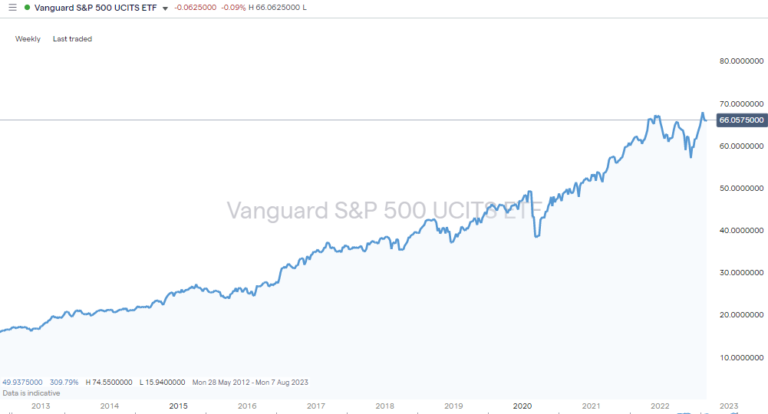
While past performance does not guarantee future results, the S&P 500 has historically delivered strong long-term annualized returns, weathering economic recessions, wars, and financial crises. For patient, long-term buy-and-hold investors, it serves as a reliable vehicle for capital appreciation.
Potential Risks and Limitations
Despite their popularity, S&P 500 index mutual funds are not without risks or structural limitations.
- Market Risk: Because the fund invests entirely in equities, a broad market downturn will cause the value of the fund to decline. Investors must possess the risk tolerance to endure bear markets without panic-selling.
- Concentration Risk: Because the index is market-cap-weighted, a small number of mega-cap technology companies can account for a disproportionate percentage of the total index value. If these specific giants stumble, the entire fund can experience significant volatility, despite holding 500 other stocks.
- Lack of Downside Protection: Unlike structured notes or hedged funds, an index mutual fund has no mechanism to cushion losses during a market correction. It captures the full downside as well as the upside.
- Mutual Fund Trading Mechanics: Unlike Exchange-Traded Funds (ETFs), which trade throughout the day on secondary exchanges, mutual funds are priced only once per business day after market close. Investors placing an order during market hours will receive the Net Asset Value (NAV) calculated at the end of that trading day.
Comparing S&P 500 Mutual Funds and ETFs
Investors often weigh whether to invest in an S&P 500 mutual fund or an S&P 500 Exchange-Traded Fund (ETF). While both track the same underlying index, their operational characteristics differ.
| Feature | S&P 500 Mutual Fund | S&P 500 ETF |
|---|---|---|
| Trading Schedule | Priced once daily after market close | Traded continuously throughout the trading day |
| Investment Minimums | Often have initial minimum investments (e.g., $1,000 to $3,000) | Typically purchased in whole shares, though fractional shares are common |
| Automatic Investing | Highly supported for recurring, automated payroll or bank deductions | Supported by some brokerages, but traditionally less seamless |
| Tax Efficiency | Generally less tax-efficient than ETFs due to mutual fund redemption mechanics | Highly tax-efficient due to the in-kind creation/redemption mechanism |
How to Evaluate and Select an S&P 500 Mutual Fund
When choosing a specific S&P 500 mutual fund, investors should examine several operational metrics to ensure they retain as much of their return as possible:
- Expense Ratio: Look for the lowest possible annual fee. Many major providers offer expense ratios well below 0.10% for institutional or investor share classes.
- Tracking Error: Review how closely the fund's returns match the actual S&P 500 index. A low tracking error indicates efficient management.
- Account Minimums: Ensure your initial investment meets the fund provider's eligibility thresholds, or look for zero-minimum brokerages that waive traditional fund hurdles.
- Tax Cost Ratio: Evaluate how much of the fund's return is eroded by taxes on capital gains distributions, particularly if holding the fund in a taxable brokerage account rather than a tax-advantaged retirement plan like an IRA or 401(k).
Practical Next Steps for Investors
For those ready to incorporate an S&P 500 index mutual fund into their financial strategy, the initial steps involve establishing an appropriate account and determining an allocation framework.
- Select the Right Account: Determine whether the investment belongs in a tax-advantaged account (such as a traditional or Roth IRA) to defer or eliminate taxes on growth, or in a taxable brokerage account.
- Establish Recurring Contributions: Harness the power of dollar-cost averaging by setting up automated, periodic transfers from your bank account into the fund. This removes emotional timing decisions from the investment process.
- Monitor and Rebalance: Periodically review your overall asset allocation to ensure that your large-cap equity exposure aligns with your evolving risk tolerance, financial goals, and timeline.