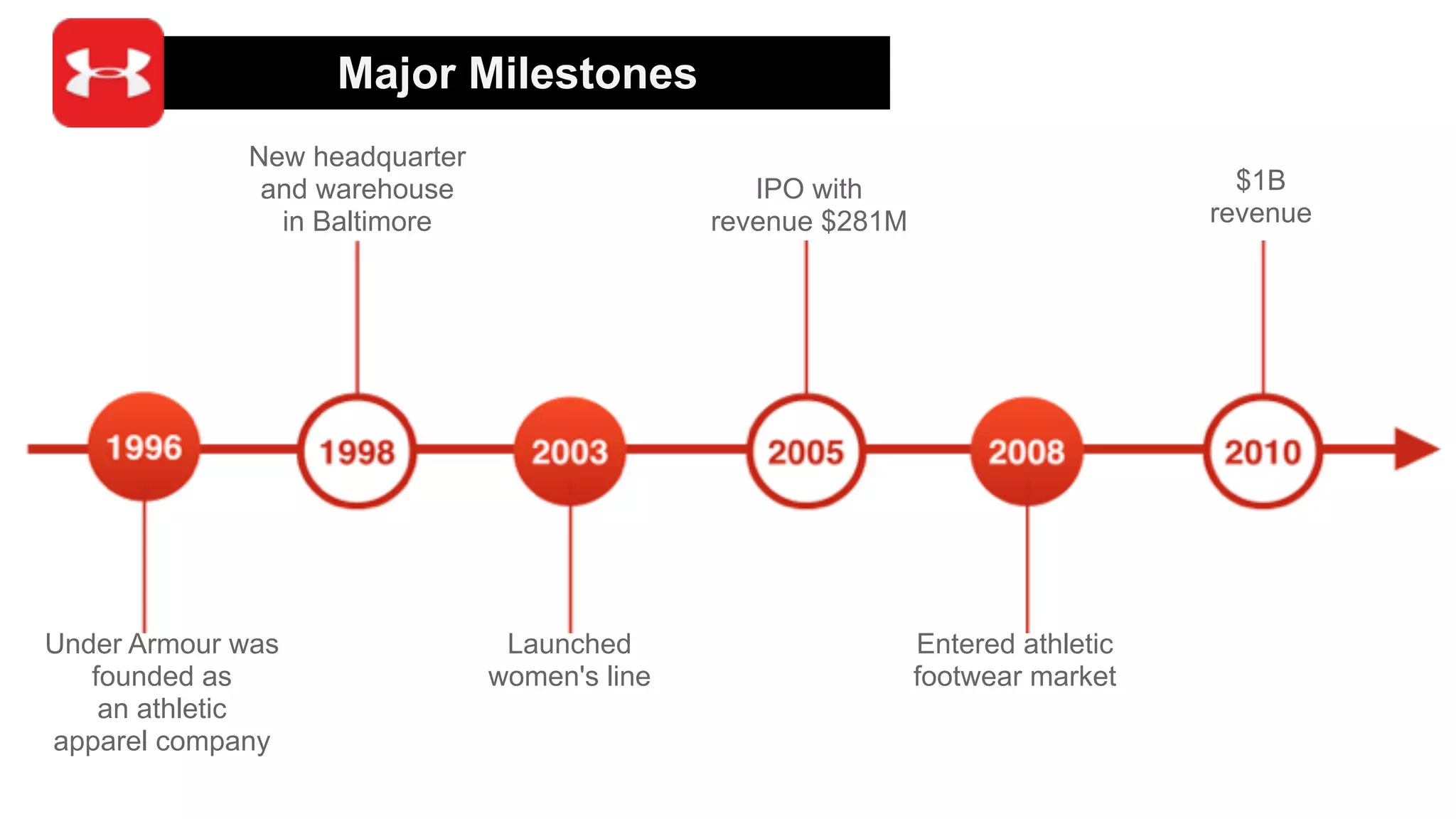
In the fourth quarter of fiscal year 2024, Under Armour reported revenue of approximately $1.33 billion, representing a 5% decline compared to the previous year. This specific financial milestone triggered a massive multi-year restructuring plan and the return of founder Kevin Plank as CEO to address North American sales slumps.
Understanding the $1.3 Billion Figure in the 2024 Fiscal Calendar
When analyzing the "1.3 billion" figure associated with Under Armour in 2024, it is essential to distinguish between the company's quarterly performance and its annual results. For the fiscal year 2024, which concluded on March 31, 2024, Under Armour’s total annual revenue reached $5.7 billion. However, the $1.3 billion reported in the final quarter (Q4) became the focal point for analysts and investors because it signaled a critical cooling period for the brand in its most profitable markets.
The 5% decrease in quarterly revenue to $1.33 billion was not an isolated event but rather the culmination of several fiscal headwinds. During this period, the brand faced a significant 10% drop in North American revenue, which was only partially offset by growth in international markets. This discrepancy highlighted a growing disconnect between the brand's global identity and its performance in its home territory.
To understand the weight of this $1.3 billion figure, one must look at the "Quality of Earnings." While the revenue topline was shrinking, the company was simultaneously battling high inventory levels and a heavy reliance on discounting. In the retail sector, revenue generated through heavy markdowns is considered "low-quality" revenue because it erodes brand equity and narrows profit margins. By the end of fiscal 2024, the $1.3 billion quarterly result served as the ultimate proof that the previous "growth at all costs" strategy required a fundamental reset.
Regional Breakdown: Where the Revenue Originated
The $1.3 billion revenue in Q4 2024 was a tale of two distinct geographical stories. While the North American market—long the bedrock of Under Armour’s success—showed signs of fatigue, the international segments demonstrated resilience and potential for expansion.
In North America, revenue fell to $802 million. This decline was attributed to a challenging wholesale environment where major retailers were tightening their buy-plans, as well as a softer demand in the company's own direct-to-consumer (DTC) channels. Conversely, international revenue increased by 7% (reaching approximately $496 million). This growth was driven by a 10% increase in the EMEA (Europe, Middle East, and Africa) region and a 1% increase in the Asia-Pacific region, though Latin America saw a slight decline.
Revenue Segment Performance Q4 Fiscal 2024
| Segment | Revenue (Approx.) | Year-over-Year Change | Key Performance Driver |
|---|---|---|---|
| North America | $802 Million | -10% | Soft wholesale demand and high promotional activity. |
| EMEA | $273 Million | +10% | Strong brand resonance in premium European sports retail. |
| Asia-Pacific | $236 Million | +1% | Stable growth in China offset by regional fluctuations. |
| Apparel | $877 Million | -1% | Strength in training gear offset by weakness in outdoor categories. |
| Footwear | $324 Million | -11% | Challenges in running and basketball product sell-through. |
| Accessories | $105 Million | +7% | Strong demand for hats and bags during the spring season. |
The Catalysts for Change: Why Revenue Was Under Pressure
The decline to $1.3 billion in quarterly revenue was the result of both internal strategic missteps and external macroeconomic pressures. By 2024, the "athleisure" trend had shifted significantly toward "sportstyle" and niche performance brands like On Running and Hoka, leaving Under Armour in a difficult middle ground.
Wholesale Struggles and the Inventory Glut
One of the primary reasons for the revenue contraction was a pullback in the wholesale channel. Large retailers like Dick’s Sporting Goods and Foot Locker became more selective with their inventory in 2024, favoring brands with higher full-price sell-through rates. Under Armour found itself with excess inventory from previous seasons, forcing the company to move products through "Factory House" outlet stores and third-party liquidators. While this helped clear warehouses, it depressed the total revenue value of the units sold.
The Innovation Gap
Technical depth in product development is the lifeblood of a sports brand. In 2024, critics argued that Under Armour had lost its "innovation edge." While products like the Flow cushioning and Iso-Chill fabrics were technically sound, they failed to capture the cultural zeitgeist in the same way Nike’s Air or Lululemon’s fabric innovations did. The $1.3 billion revenue figure reflected a brand that was seen more as a utility for the gym than a must-have lifestyle choice.
Strategic Restructuring and the Return of Kevin Plank
The revelation of the $1.3 billion Q4 revenue and the weak outlook for fiscal 2025 led to one of the most significant leadership changes in the company's history. Kevin Plank, the company’s founder, returned to the CEO role in April 2024, replacing Stephanie Linnartz. This move signaled a return to the brand's "tough, gritty" roots.
Immediately following the 2024 fiscal reports, Plank announced a comprehensive restructuring plan. This plan was designed to simplify the organization and eliminate "bloat" that had accumulated during previous expansion efforts. The restructuring included:
- Operational Streamlining: Reducing the number of stock-keeping units (SKUs) by 25% to focus on high-margin, high-demand products.
- Workforce Reductions: Cutting corporate roles to reduce annual operating expenses.
- Marketing Realignment: Shifting the focus back to the "Varsity Athlete" and away from generic lifestyle marketing.
The company estimated that it would incur approximately $70 million to $90 million in pre-tax restructuring charges as a result of these moves. The goal was to transform the company from a $5.7 billion entity with inconsistent profits into a leaner, more profitable premium brand, even if it meant accepting lower total revenue in the short term.
Comparative Analysis: Under Armour vs. The Industry Giants
To put the $1.3 billion revenue in perspective, it is helpful to compare Under Armour’s position against its primary competitors during the same 2024 window.
While Under Armour was fighting to maintain a $5 billion+ annual revenue run rate, Nike was operating at a scale nearly ten times larger. However, scale was not the only metric that mattered. Smaller, more agile competitors were the real threat to Under Armour’s market share. Brands like On Holding AG and Deckers (Hoka) were reporting record growth numbers in 2024, often at the expense of Under Armour’s footwear segment.
The "Technical Depth" of Under Armour’s competitors became a major hurdle. On and Hoka focused almost exclusively on premium running technology, whereas Under Armour’s revenue was spread across training, basketball, football, and golf. By trying to compete in every category, Under Armour's $1.3 billion quarterly revenue was spread too thin, preventing the brand from achieving dominance in any single high-growth niche.
Inventory Management and Margin Recovery
A critical component of the 2024 financial narrative was the management of gross margins. Under Armour's gross margin increased by 170 basis points to 45.0% in the final quarter of 2024. This was a surprising and positive development given the revenue decline.
How did the company increase margins while sales fell? The answer lies in supply chain efficiency. Under Armour successfully reduced freight costs—which had skyrocketed during the post-pandemic years—and implemented a more disciplined approach to promotional activity. Even though they were selling fewer items (leading to the $1.3 billion total), they were keeping more profit from each dollar of sale than they had in 2023. This "margin over volume" approach became the cornerstone of the company's strategy heading into 2025 and 2026.
The 2026 Perspective: Long-term Impacts of the 2024 Performance
Looking back from 2026, the 2024 fiscal year is now recognized as the "Great Reset" for Under Armour. The $1.3 billion revenue mark in Q4 2024 was the "bottoming out" point that allowed the company to shed its identity crisis.
By 2026, the restructuring efforts initiated in mid-2024 have resulted in a more centralized brand voice. The focus on "premiumization"—the idea that an Under Armour shirt should be sold at a premium price based on its performance tech rather than being discounted at a big-box retailer—has started to pay off. The lessons learned from the 2024 North American slump led to a revitalized footwear strategy, specifically in the "court" and "turf" categories where the brand maintains strong authentic ties.
Furthermore, the 2024 decision to cut SKUs has allowed the company to be more surgical with its research and development budget. In 2026, we see the results of this focus in the successful launch of specialized apparel lines that emphasize recovery and thermoregulation, moving away from the generic "dry-fit" styles that had become commoditized.
Frequently Asked Questions
Was Under Armour profitable when it reported $1.3 billion in revenue?
Yes, despite the revenue decline, Under Armour remained profitable in Q4 of fiscal 2024. The company reported a net income of $6.5 million for the quarter. However, when adjusted for restructuring costs and other one-time items, the "adjusted" net income was higher, at approximately $50 million. This indicated that the underlying business was still generating cash despite the sales contraction.
Why did Kevin Plank return as CEO after the 2024 results?
Kevin Plank returned because the Board of Directors believed the brand had lost its core identity. The stagnation in revenue and the 10% drop in North American sales suggested that the strategies implemented by previous leadership were not resonating with the brand's core "performance" audience. Plank’s return was intended to accelerate decision-making and restore the "founder’s mentality."
How did the 2024 restructuring affect Under Armour employees?
The restructuring plan announced in May 2024 involved significant corporate layoffs. The company aimed to reduce its global workforce to lower fixed costs and create a more agile reporting structure. These cuts primarily affected non-retail, corporate positions in marketing, product development, and administration.
What happened to Under Armour's stock price after the 2024 revenue report?
The stock experienced significant volatility. Initially, investors were concerned by the projected revenue declines for fiscal 2025 (expected to be down in the low double digits). However, the market eventually reacted positively to the increased gross margins and the aggressive cost-cutting measures, viewing them as necessary steps for long-term health.
Did Under Armour close stores as part of the 2024 pivot?
While the company did not announce a mass closure of "Brand House" locations, there was a strategic shift in how they utilized their "Factory House" (outlet) stores. The goal was to reduce the volume of "made-for-outlet" products and use these stores primarily for clearing genuine overstock, thereby protecting the premium status of their flagship retail locations.
Practical Recommendation: Navigating the Brand Pivot
For investors and consumers observing Under Armour's trajectory since the 2024 fiscal reset, the following actions are recommended:
- For Investors: Monitor "Gross Margin" and "Inventory Turnover" rather than just topline revenue. In a restructuring phase, a company may intentionally report lower revenue as it exits unprofitable wholesale accounts. Growth in gross margin is the truest indicator that the premiumization strategy is working.
- For Retail Partners: Focus on the "Team Sports" and "High-Performance Training" categories. Under Armour has doubled down on these segments since 2024, moving away from general lifestyle apparel. This makes them a more specialized partner for sports-specific retailers.
- For Consumers: Expect fewer, but more technologically advanced, product releases. The "less is more" SKU strategy means that the remaining products in the 2026 lineup are likely to feature better materials and more specialized fits than the mass-market offerings of the early 2020s.
The $1.3 billion revenue figure from 2024 was not just a number; it was a symptom of a brand at a crossroads. By choosing the path of restructuring and returning to its performance roots, Under Armour set the stage for the leaner, more focused organization it has become in 2026.