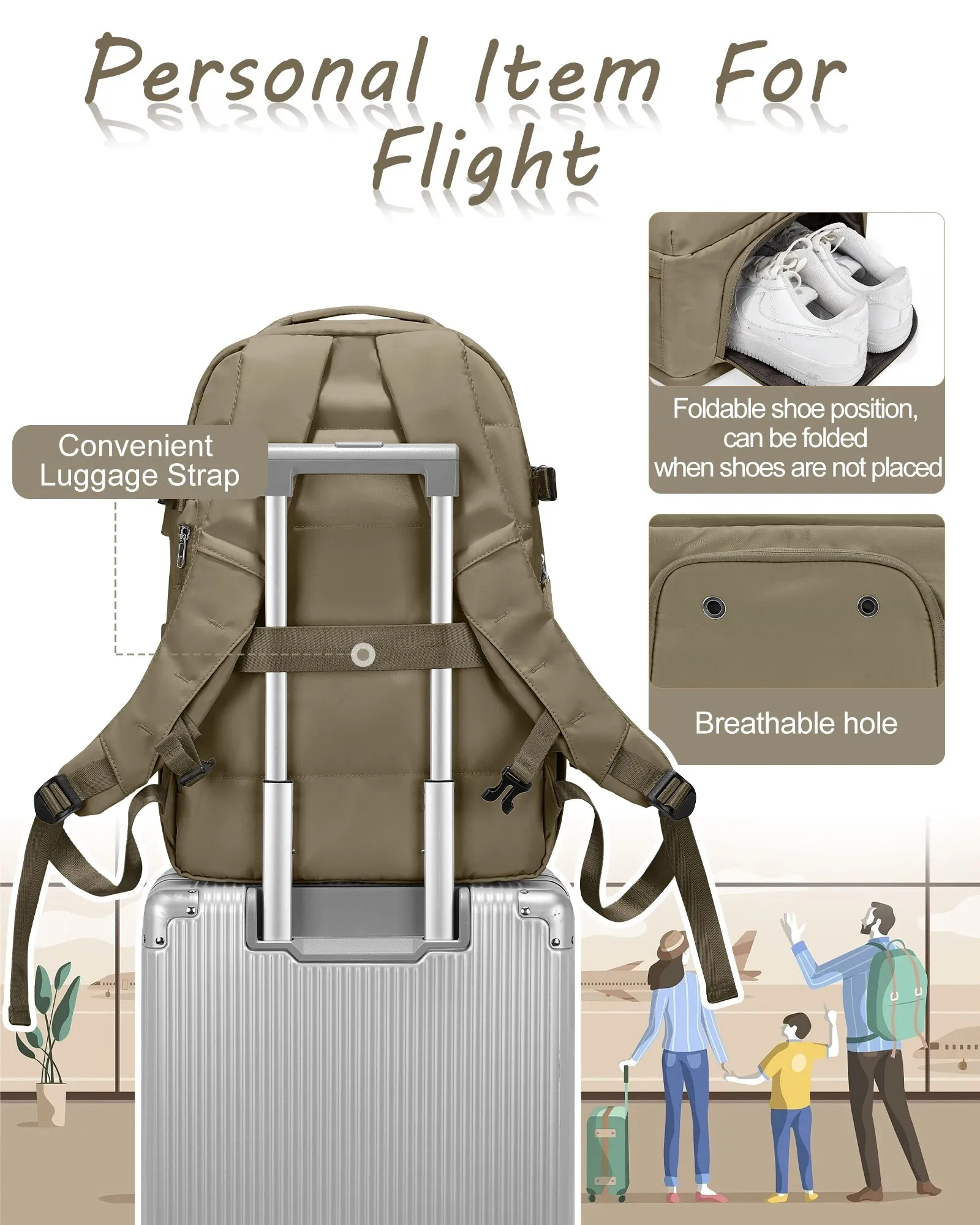
The perfect backpack for traveling is a subjective tool that balances capacity, ergonomic support, and airline compliance. For most travelers in 2026, the ideal choice is a 35 to 45-liter "clamshell" opening pack made of high-tenacity nylon, featuring a dedicated laptop sleeve and a stowaway harness system.
Defining the "Perfect" Backpack: Capacity and Volume
The first step in selecting a travel backpack is determining the appropriate volume. In the travel industry, volume is measured in liters (L). While a daily commuter bag usually ranges from 15L to 25L, a dedicated travel backpack needs to accommodate clothing, toiletries, electronics, and occasionally an extra pair of shoes.
For the modern traveler, the 35L to 45L range is considered the "sweet spot." A 35L bag is generally small enough to fit the stricter carry-on requirements of international budget airlines, while a 45L bag maximizes the space allowed by major domestic carriers. Selecting a bag larger than 45L often forces the traveler into the "checked luggage" category, which introduces the risks of lost baggage and increased fees. Conversely, bags smaller than 30L require an ultralight packing philosophy that may not be practical for trips exceeding a few days or for those carrying specialized gear.
When evaluating volume, it is vital to distinguish between external dimensions and usable internal space. Some bags feature heavy padding or complex organizational pockets that "eat" into the literal capacity. A minimalist, rectangular design often provides more actual packing volume than a stylish, tapered bag of the same liter rating.
Dimensions and Airline Compliance in 2026
As of 2026, airline enforcement of carry-on dimensions has become increasingly automated through the use of digital scanners at boarding gates. The standard "Maximum Legal Carry On" (MLCO) dimensions for most major airlines remain approximately 22 x 14 x 9 inches (56 x 36 x 23 cm). However, many European and Asian budget carriers have reduced their "personal item" or "small carry-on" limits significantly.
To find the perfect backpack, you must align the bag's physical dimensions with the carriers you fly most frequently. A soft-sided backpack offers a slight advantage over hardshell luggage because it can be compressed or "squished" into a sizing bin, provided it is not overpacked.
The International Air Transport Association (IATA) provides general guidelines, but individual airline policies are the final authority. When choosing a bag, look for "stowaway" straps. These allow you to zip the shoulder straps and hip belt into a back panel, transforming the backpack into a sleek duffel. This feature is crucial if you are ever forced to gate-check your bag, as it prevents the straps from getting caught in airport conveyor belts.
Material Science: Durability and Weather Resistance
The longevity of a travel backpack is dictated by its materials. In 2026, the industry has shifted heavily toward recycled yet high-performance fabrics. The most common metric for fabric thickness and strength is "Denier" (D).
- Ballistic Nylon (840D to 1680D): Originally developed for flak jackets, this is the gold standard for durability. It is highly abrasion-resistant and has a slight sheen. It is, however, heavier than other options.
- Cordura Nylon: Known for its ruggedness and matte finish, Cordura is a favorite for long-term travelers. It resists tears and scuffs better than standard polyester.
- X-Pac and Dyneema: These are high-end, laminated fabrics often used in the sailing industry. They are incredibly lightweight and essentially waterproof, though they come at a significant price premium and can have a "crinkly" texture.
- Recycled Polyester (RPET): Many brands now use 100% recycled materials. While early versions were less durable, 2026-era RPET is often reinforced with ripstop patterns to match the lifespan of virgin nylon.
Weather resistance is another critical factor. While very few backpacks are truly "waterproof" (submersible), most "perfect" travel bags are "water-resistant." Look for DWR (Durable Water Repellent) coatings and YKK AquaGuard zippers, which feature a polyurethane coating to prevent water from seeping through the zipper teeth.
Ergonomics and the Science of the Carry
A backpack is only as good as its suspension system. If you plan to walk through cities, navigate train stations, or stand in long customs lines, the bag's weight must be distributed across your skeletal structure rather than pulling solely on your shoulders.
A high-quality travel backpack should include:
- Contoured Shoulder Straps: These should be padded with high-density foam that won't compress permanently over time. S-shaped or J-shaped straps typically fit a wider variety of body types.
- An Internal Frame: A lightweight aluminum or polycarbonate frame sheet helps the bag maintain its shape and transfers weight down to the hips.
- Padded Hip Belt: This is perhaps the most important ergonomic feature. A proper hip belt should sit on the iliac crest (the top of your hip bones), allowing the hips to carry 60-80% of the bag's total weight.
- Load Lifters: These are small adjustable straps located at the top of the shoulder straps. Tightening them pulls the top of the bag closer to your back, preventing it from leaning outward and straining your lower back.
- Sternum Strap: This strap connects the two shoulder straps across your chest, preventing them from sliding off your shoulders and stabilizing the load.
To ensure the best fit, you should measure your torso length—from the C7 vertebra at the base of your neck to the top of your hip bones. Many premium brands, such as Osprey, offer different sizes or adjustable torso lengths to ensure the hip belt and shoulder straps align correctly with your anatomy.
Organization and Access Patterns
There are two primary ways to access the contents of a backpack: top-loading and clamshell (front-loading).
For travel, the clamshell opening is superior. It allows the bag to open 180 degrees, like a suitcase, providing immediate access to everything inside without having to dig through a "tube" of gear. This is particularly useful during security screenings or when living out of the bag in a hotel or hostel.
Internal organization is a matter of preference. Some travelers prefer a "black hole" design—one large main compartment that they organize themselves using packing cubes. Others prefer a "built-in" organization system with dedicated pockets for tech, passports, pens, and water bottles.
In 2026, the most effective travel backpacks feature a suspended laptop compartment. This means the laptop sleeve stops an inch or two above the bottom of the bag. If you drop your backpack on a hard floor, the "false bottom" prevents the laptop from making direct impact with the ground.
Comparison of Backpack Categories for Travelers
| Feature | Commuter/Daypack | Global Travel Backpack | Wilderness Hiking Pack |
|---|---|---|---|
| Typical Volume | 15L - 28L | 35L - 45L | 50L - 75L |
| Opening Style | Top or Half-Zip | Clamshell (Suitcase style) | Top-loading with drawstring |
| Carry-on Status | Always compliant | Usually compliant (MLCO) | Rarely compliant (must check) |
| Hip Belt | Minimal/Removable | Padded & Weight-bearing | Heavy-duty/Pivot system |
| Laptop Protection | Basic sleeve | Padded/Suspended/External | Usually none |
| Aesthetics | Professional/Sleek | Boxy/Functional | Technical/Bright colors |
Security Features for International Travel
When traveling in high-traffic tourist areas, security becomes a priority. The perfect travel backpack should incorporate several passive security features to deter pickpockets and "slash-and-grab" thefts.
- Lockable Zippers: Look for zipper pulls that have "interlocking" holes, allowing you to slide a TSA-approved padlock through both sliders.
- Hidden Pass-throughs: Some bags feature a hidden pocket against the back panel, making it impossible for someone to access your passport or wallet while you are wearing the bag.
- Puncture-Resistant Zippers: High-quality zippers (like the YKK RC Fuse) are designed to resist being "popped" open with a ballpoint pen.
- RFID-Blocking Pockets: While the actual threat of RFID skimming is debated by security experts, many travel bags include a dedicated RFID-blocking sleeve for credit cards and biometric passports as an added layer of peace of mind.
Maintenance and Care for Long-Term Use
To keep a high-end backpack in peak condition through 2026 and beyond, regular maintenance is required. Dirt and sand can act as abrasives in zipper tracks, leading to failure. Periodically cleaning the zippers with a soft brush and applying a dry silicone lubricant will extend their life significantly.
If the bag becomes soiled, avoid machine washing, as the agitation can damage the internal frame and strip the DWR coating. Instead, spot clean with a mild detergent and lukewarm water. Always air-dry the backpack in the shade; prolonged exposure to direct UV rays can degrade the nylon fibers over time.
Frequently Asked Questions
Is a 45L backpack too big for international travel?
A 45L backpack is generally the maximum size allowed for domestic flights in the US, but it may exceed the depth or weight limits for international budget carriers like Ryanair or AirAsia. If you frequently travel internationally, a 35L to 40L bag is a safer "one-bag" solution that is less likely to be rejected at the gate.
Can I use a hiking backpack for city travel?
While possible, hiking backpacks are usually top-loading, which makes accessing gear difficult. They also tend to be taller and thinner, often exceeding the linear inch requirements for carry-ons. Furthermore, the dangling straps and technical look can mark you as a tourist and may be cumbersome in crowded urban environments.
What is the "one-bag" travel movement?
The "one-bag" movement is a travel philosophy focused on minimalism. By using a single backpack for all belongings, travelers avoid checked bag fees, bypass luggage carousels, and enjoy greater mobility. The perfect backpack for this style is usually a 40L clamshell bag paired with compression packing cubes.
Why are YKK zippers so highly recommended?
YKK (Yoshida Kogyo Kabushiki Kaisha) is a Japanese company that produces roughly half of the world's zippers. Their "RC" (Racket Coil) zippers are specifically engineered for luggage to resist abrasion and heavy bursting loads. In the world of travel gear, a zipper failure is a "catastrophic" failure, making YKK the industry standard for reliability.
Does the weight of the empty backpack matter?
Yes. With many airlines now enforcing a 7kg (15.4 lbs) or 10kg (22 lbs) limit for carry-on bags, an empty backpack that weighs 2kg (4.4 lbs) already consumes a significant portion of your allowance. In 2026, many manufacturers are prioritizing "lightweight durability" to address these strict weight restrictions.
Practical Recommendation for 2026
When you are ready to purchase, do not rely solely on online reviews. If possible, visit a local outfitter and try on the bag with weight inside. A bag that looks perfect on a screen may not match your torso length or shoulder width.
For most travelers in 2026, look for a bag that offers a clamshell opening, a dedicated tech compartment, and a robust hip belt. Prioritize brands that offer a lifetime warranty, as a high-quality travel backpack is an investment that should last a decade of adventures. Once you have selected your bag, practice packing it at home to ensure you can comfortably carry the total weight for at least 30 minutes.