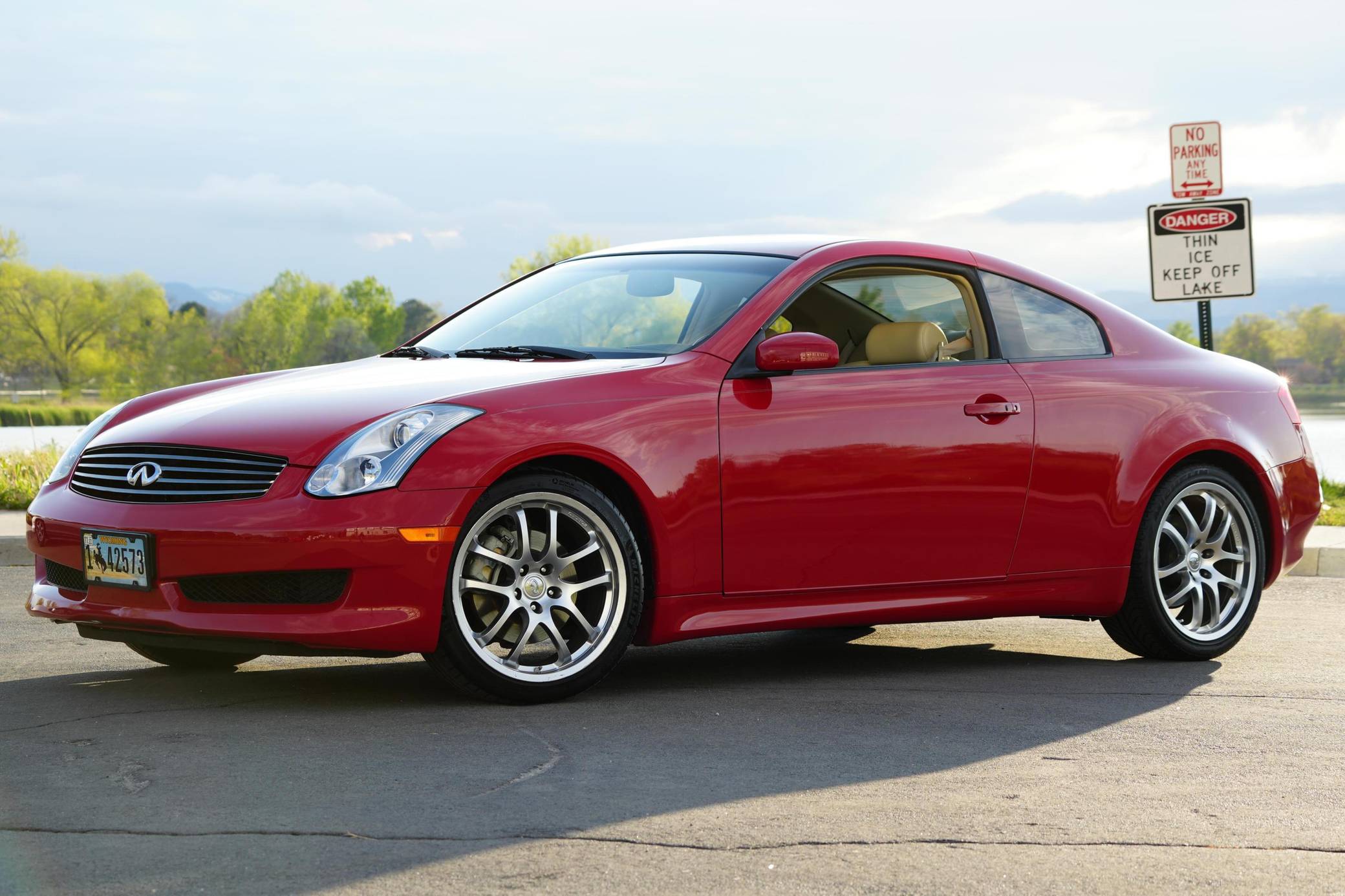
The Infiniti G35 is widely considered a reliable performance vehicle, primarily due to its award-winning VQ35 series V6 engine and robust Nissan FM platform. While high-mileage examples remain prevalent in 2026, their long-term dependability hinges on proactive maintenance, as older units are prone to oil consumption, cooling system fatigue, and suspension bushing wear.
Understanding the Infiniti G35 Reliability Legacy
The Infiniti G35, produced between the 2003 and 2008 model years, was the vehicle that redefined Infiniti as a legitimate competitor to European sport sedans. Built on the Front Midship (FM) platform shared with the Nissan 350Z, the G35 was designed for balance and durability. However, assessing its reliability in 2026 requires looking past its "bulletproof" reputation to acknowledge the realities of two decades of wear and tear.
Reliability in the context of a G35 is generally split into two categories: the mechanical powertrain and the auxiliary components. The powertrain is historically excellent, frequently reaching 200,000 to 250,000 miles with original internals. Conversely, the auxiliary systems—electronics, plastic cooling components, and interior trim—often show their age much sooner. For a prospective buyer or current owner, the "reliability" of the car is less about whether the engine will explode and more about how many small, annoying repairs are required to keep it on the road.
The Heart of the Machine: VQ35DE vs. VQ35HR Engines
The primary reason the G35 maintains a high reliability rating is the VQ35 engine. This engine family was featured on Ward’s 10 Best Engines list for several consecutive years. However, not all G35 engines are identical, and their specific failure points differ.
The VQ35DE (2003–2007 Coupe; 2003–2006 Sedan)
The "DE" variant is the workhorse of the G35 lineup. It is known for its simplicity and ease of tuning. Mechanically, the block and heads are exceptionally strong. The most significant reliability concern here is oil consumption, particularly in the "RevUp" version found in 2005–2007 manual transmission models. This issue was often linked to piston ring design and could lead to engine failure if the oil level was not monitored weekly.
The VQ35HR (2007–2008 Sedan)
Introduced for the second-generation G35 sedan, the "HR" (High Response/High Rev) engine featured 80% new parts compared to the DE. It utilized a dual-intake system and a strengthened block. While it resolved many oil consumption issues, the HR introduced a specific Achilles' heel: the internal gallery gaskets. These paper gaskets behind the timing cover can blow out, causing a drop in oil pressure that is expensive to repair due to the labor-intensive nature of accessing the timing assembly.
Common Mechanical Issues and Failure Points
To answer if the Infiniti G35 is reliable, one must look at the documented patterns of failure that emerge after 100,000 miles. As of 2026, almost every G35 on the market has surpassed this threshold.
1. Oil Consumption and Leaks
Beyond the internal consumption mentioned above, the VQ35 is notorious for leaking oil from the valve cover gaskets. The spark plug tube seals are integrated into the plastic valve covers; when they fail, oil pools in the spark plug wells, causing misfires. In 2026, most G35s will require at least their second set of valve covers, as the plastic eventually warps from heat cycles.
2. Camshaft and Crankshaft Position Sensors
If a G35 stalls while driving or refuses to start when hot, the culprit is almost always the camshaft or crankshaft position sensors. These electronic components are sensitive to heat and often fail without warning. While the parts are relatively inexpensive, it is a critical reliability "nuisance" that can leave a driver stranded. Using OEM (Original Equipment Manufacturer) sensors is vital here, as aftermarket alternatives are known for premature failure.
3. Cooling System Vulnerabilities
The G35 uses a significant amount of plastic in its cooling system, including the radiator end tanks and the heater hose connector (often called the "heater hose bleeder port"). By 2026, these plastic components become brittle. A failure in the $20 plastic bleeder port can lead to a complete loss of coolant and a warped cylinder head within minutes. Replacing these with aluminum or silicone upgrades is a standard reliability mod for the platform.
4. Suspension: Compression Rods and Control Arms
The G35’s handling comes at the cost of complex suspension geometry. The front compression rods and lower control arm bushings are notorious for premature wear, leading to "creaking" sounds over bumps and uneven tire wear. Owners often find themselves replacing these components every 40,000 to 60,000 miles to maintain the car’s safety and alignment.
Interior and Electrical Reliability
While the mechanicals are stout, the "luxury" side of the Infiniti G35 often fares worse over time. Reliability isn't just about the engine; it's about the daily usability of the cabin.
- Infotainment and CD Changers: The original Bose head units are prone to internal failure, often resulting in a "drained battery" because the unit fails to power down properly.
- Dashboard Cracking: In warmer climates, the dashboard material used in later G35 models is known to bubble or crack.
- Door Lock Actuators: It is very common for G35 door locks to stop responding to the key fob, requiring manual locking or an expensive actuator replacement.
- Seat Gears: The motorized seat tracks use plastic gears that often strip, leaving the seat stuck in one position.
Comparison of Reliability Factors by Model Year
| Component | 2003–2004 (Early V35) | 2005–2006 (Mid-Cycle) | 2007–2008 (V36 Sedan) |
|---|---|---|---|
| Engine Reliability | Very High (DE Engine) | High (Potential Oil Cons.) | High (Gasket Issues) |
| Transmission | 5AT is very durable | 5AT durable; 6MT (CD009) | Improved 5AT logic |
| Brakes | Brembo (03-04 Coupe) high cost | Standard brakes better | Larger, more durable |
| Interior Quality | Basic, utilitarian | Improved materials | Modernized, more tech |
| Typical 2026 Mileage | 180k - 250k+ | 150k - 200k | 120k - 180k |
Maintenance Requirements for Long-Term Dependability
The Infiniti G35 is not a car that tolerates "deferred maintenance." To achieve the legendary reliability associated with the VQ engine, owners must adhere to a strict schedule. By 2026, a "reliable" G35 is one that has had the following addressed:
- Fluid Services: Differential and transmission fluids should be changed every 30,000 to 50,000 miles. The 5-speed automatic is particularly robust but requires clean Matic-J or Matic-S fluid to prevent solenoid failure.
- Spark Plugs: These should be replaced every 100,000 miles. Given the labor involved (removing the intake plenum on some models), it is best to check for oil in the spark plug wells simultaneously.
- Coolant Bleeding: The VQ35 engine is notoriously difficult to bleed of air. If air pockets remain, the car will overheat. Using a "no-spill" funnel and the specific bleeder port is mandatory for a reliable cooling system.
- Oil Selection: Due to the potential for consumption, many owners in 2026 find that switching to a slightly heavier synthetic oil (e.g., 5W-40 vs. the factory 5W-30) helps stabilize consumption and protect aging bearings.
Disclaimer: Mechanical repairs involve inherent risks. For safety-critical systems like brakes and suspension, consult a certified technician. Information provided is for educational purposes based on historical data up to 2026.
Is the G35 Expensive to Maintain?
Maintenance costs for an Infiniti G35 sit in a "middle ground." It is significantly cheaper to maintain than a contemporary BMW 3-Series or Mercedes-Benz C-Class because parts are shared with the Nissan 350Z and Maxima. However, it is more expensive than a Honda Civic or Toyota Corolla due to its premium fuel requirement (91+ octane), larger tire sizes, and the V6 engine's complexity.
In 2026, the cost of ownership is often dictated by the "previous owner" factor. Because the G35 became affordable on the secondary market, many were bought by young drivers who neglected maintenance. Finding a car with a documented service history is the single most important factor in determining whether your G35 will be a reliable daily driver or a financial burden.
Frequently Asked Questions
Is a high-mileage Infiniti G35 a good daily driver in 2026?
Yes, provided the cooling system and sensors have been refreshed. The VQ35 engine can easily exceed 200,000 miles, but the rubber and plastic components around it will likely need replacement to ensure daily reliability. Expect to spend $1,000–$2,000 immediately after purchase on "catch-up" maintenance for a high-mileage unit.
Which year of the Infiniti G35 is the most reliable?
The 2006–2007 G35 Coupe and the 2006 Sedan (with the automatic transmission) are often cited as the most reliable. These "late-model V35" versions benefited from years of refinements, featuring the most durable versions of the 5-speed automatic and the more refined interior, while avoiding the "RevUp" oil consumption issues found in the manuals.
Does the G35 have transmission problems?
The 5-speed automatic transmission (RE5R05A) is exceptionally durable and can handle more power than the stock engine provides. The 6-speed manual transmissions in 2003–2004 models had weak synchronizers, but these were replaced by the much stronger "CD009" version in late 2004 and beyond, which is considered one of the best manual transmissions Nissan ever built.
Is the Infiniti G35's fuel economy a reliability concern?
While not a "reliability" issue in terms of breakage, the G35's poor fuel economy (typically 17–22 MPG) and requirement for premium fuel can impact the "financial reliability" of the car for a budget-conscious owner. Furthermore, using low-octane fuel can cause knocking and retard ignition timing, which may lead to long-term carbon buildup and reduced engine life.
How do I check for the "gallery gasket" issue on a 2007-2008 G35?
The best way to verify this is by performing a manual oil pressure test. If the pressure is below 14 PSI at idle (when the engine is at full operating temperature), the gaskets may be leaking. This is a crucial check for the 2007–2008 sedans, as a failure can lead to catastrophic engine damage if ignored.
Final Verdict and Next Actions
The Infiniti G35 remains a remarkably reliable car in 2026, provided you view it as a "high-maintenance athlete" rather than a "set-and-forget" commuter. Its core components—the engine block, crankshaft, and transmission—are over-engineered and capable of extreme longevity. However, the age of these vehicles means that "reliability" is now a reflection of the current owner's diligence.
If you are looking to buy or maintain a G35 in 2026:
- Verify the Cooling System: Replace the plastic heater hose connector with an aluminum version immediately.
- Monitor Oil: Check your oil level at every other fuel fill-up until you establish the engine's consumption rate.
- Inspect Bushings: Have a mechanic check the front compression rods and lower control arms for cracks in the rubber.
- Check Sensors: If they haven't been replaced in the last 100,000 miles, consider replacing the camshaft position sensors proactively to avoid being stranded.
By addressing these known vulnerabilities, the Infiniti G35 can continue to provide a balance of luxury and performance that few modern cars can match at its current price point.