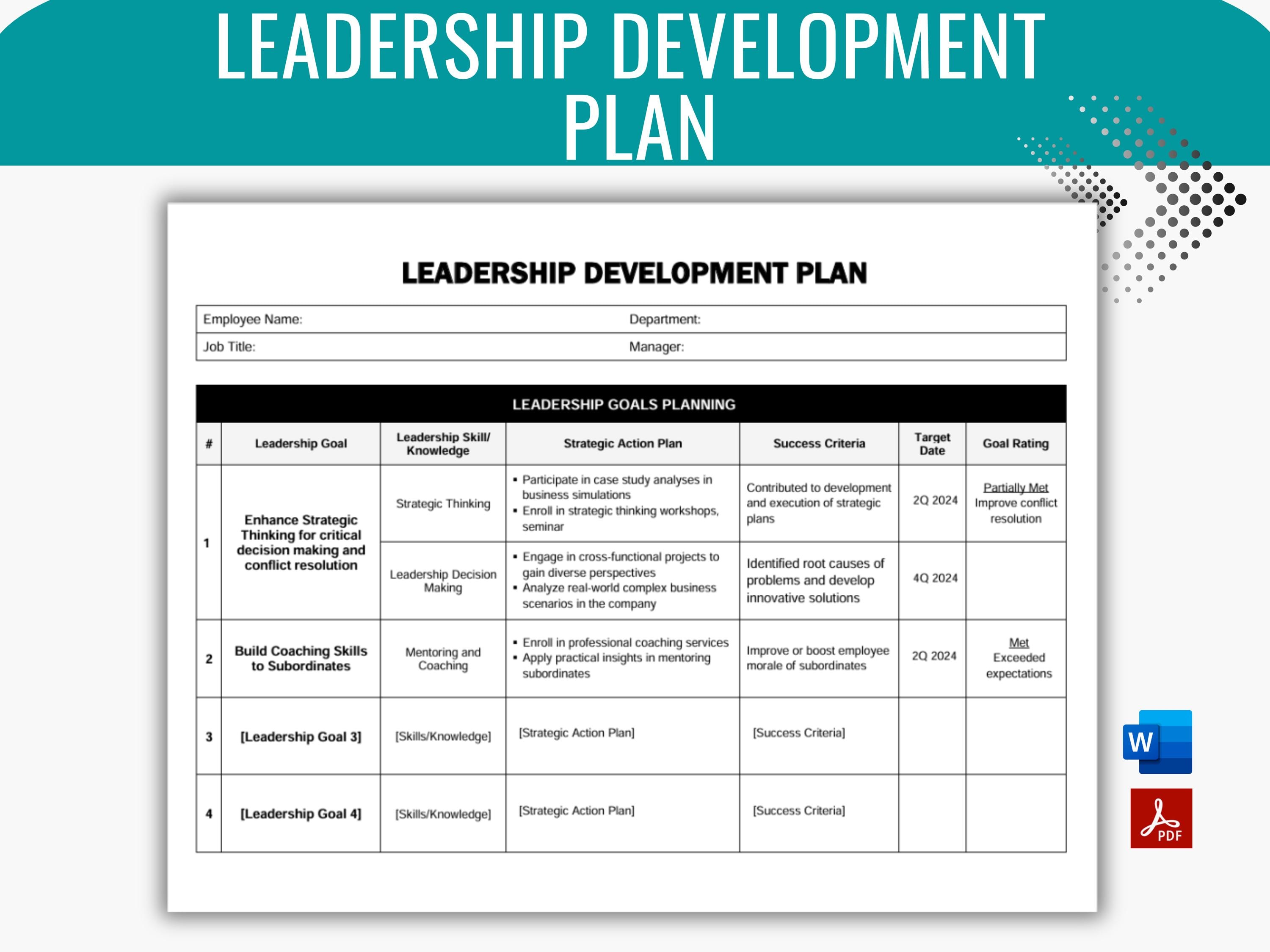
A personal leadership development plan is a structured roadmap that outlines an individual's current leadership capabilities, long-term career vision, specific skill gaps, and actionable steps to achieve professional growth. By setting measurable goals, identifying required resources, and establishing tracking timelines, professionals can systematically build core executive competencies, manage teams effectively, and advance their careers.
Core Components of an Effective Personal Leadership Development Plan
A personal leadership development plan (PLDP) is more than a list of career goals; it is an operational strategy tailored to individual professional growth. Without a structured framework, leadership growth often becomes reactive, relying on passive workplace experience rather than deliberate skill acquisition. An effective plan links self-awareness with strategic execution, ensuring that every learning objective translates into measurable performance improvements.
To build a plan that delivers tangible results, specific foundational elements must be established. These components ensure the plan addresses both present operational demands and future executive requirements:
- Self-Assessment and Baseline Evaluation: A clear diagnostic of your current capabilities, using tools like 360-degree feedback, personality indicators, and a personal SWOT analysis (Strengths, Weaknesses, Opportunities, Threats).
- Long-Term Leadership Vision: A clear statement defining the leader you aim to become, the impact you wish to have on your organization, and the executive level you intend to reach over a three- to five-year horizon.
- Target Competencies: Specific technical, strategic, and interpersonal capabilities required for your target role, such as financial acumen, emotional intelligence, strategic communication, or conflict resolution.
- Actionable SMART Goals: Objectives structured around the Specific, Measurable, Achievable, Relevant, and Time-bound framework to convert vision into daily practice.
- Development Pathways (The 70-20-10 Framework): A practical mix of experiential learning on the job (70%), developmental relationships and mentoring (20%), and formal coursework or training (10%).
- Success Metrics and Review Schedule: Key performance indicators (KPIs) and regular milestone evaluations to maintain momentum, track progress, and adjust strategies as organizational needs evolve.
Practical Example of a Personal Leadership Development Plan
To understand how these components function in practice, review the following detailed blueprint designed for a mid-level professional—a Senior Operations Manager targeting promotion to Director of Operations within 18 to 24 months.
1. Professional Profile and Baseline Assessment
- Current Role: Senior Operations Manager
- Target Role: Director of Operations
- Core Strengths: Technical process optimization, data analysis, project delivery, operational crisis management.
- Primary Development Areas: Executive presence, cross-departmental strategic alignment, change management, executive-level financial forecasting.
- Baseline Assessment Tools Used: 360-degree feedback review, Hogan Assessment, internal leadership capability matrix.
2. Personal SWOT Analysis
| Strategic Dimension | Internal & External Factors | Strategic Action Required |
|---|---|---|
| Strengths | Strong track record of project execution; deep technical knowledge of supply chain software; high trust among direct reports. | Leverage execution reliability to take on high-visibility enterprise initiatives. |
| Weaknesses | Tendency to micromanage during high-stress rollouts; limited experience presenting directly to the Board of Directors; minimal formal coaching skills. | Delegate operational tasks to junior managers and complete executive communications training. |
| Opportunities | Enterprise-wide digital transformation initiative starting next quarter; open seat on the corporate risk committee. | Sponsor the digital transformation task force to demonstrate cross-functional leadership. |
| Threats | Fast-paced industry shifts requiring rapid organizational restructuring; risk of burnout from operational firefighting. | Shift focus from short-term firefighting to long-term systemic leadership and talent delegation. |
3. Core Development Goals (SMART Framework)
Goal 1: Strategic Communication and Executive Presence
- Specific: Improve executive presentation skills and build authority when communicating with C-suite stakeholders.
- Measurable: Score an average of 4.5/5.0 or higher on presentation effectiveness feedback forms from executive sponsors across three quarterly business reviews (QBRs).
- Achievable: Partner with an executive communications coach and present enterprise update decks.
- Relevant: Strategic communication is a critical competency for advancing to the Director level.
- Time-bound: Complete within 12 months.
Goal 2: Strategic Talent Management and Delegation
- Specific: Shift from tactical task management to developmental coaching, enabling direct reports to handle daily operations independently.
- Measurable: Reduce time spent on tactical operational approvals by 40% and transition two senior supervisors into fully autonomous team leads.
- Achievable: Implement bi-weekly structured coaching sessions and establish formal decision-making thresholds for staff.
- Relevant: Freeing up bandwidth is essential to take on enterprise strategy and high-level resource planning.
- Time-bound: Complete within 6 months.
Goal 3: Advanced Business Acumen and Financial Modeling
- Specific: Master enterprise-level capital expenditure (CapEx) modeling and strategic financial forecasting.
- Measurable: Successfully draft and defend the department’s $12 million annual budget proposal with zero major audit revisions from the finance department.
- Achievable: Complete an executive certificate in corporate finance and work directly with the Finance Director during budget planning cycles.
- Relevant: Operational leaders must justify resource allocations with rigorous financial analysis.
- Time-bound: Complete within 9 months.
Action Plan Matrix for Leadership Growth
To operationalize the development goals detailed above, the following structured roadmap details specific activities, tracking metrics, target timelines, and required organizational resources across the developmental lifecycle.
| Target Competency | Action Steps (70-20-10 Model) | Learning Category | Key Performance Indicator (KPI) | Target Completion | Required Resources |
|---|---|---|---|---|---|
| Executive Communication | Lead the Q3 Enterprise Digital Transformation QBR presentation to the Executive Committee. | 70% Experiential | Positive feedback score (4.5/5+) from Chief Operating Officer. | Q3 2026 | Mentorship from VP of Operations; Slide Design Support. |
| Strategic Coaching | Institute bi-weekly 1-on-1 coaching sessions using the GROW coaching model for 4 direct reports. | 20% Mentoring | 100% of direct reports complete individual progression milestones. | Q2 2026 | Internal HR Leadership Development Toolkit. |
| Financial Acumen | Complete an accredited executive course in Corporate Financial Strategy. | 10% Formal | Course completion certificate; successful defense of divisional budget. | Q4 2026 | Professional Development Budget ($2,500). |
| Change Management | Lead cross-functional alignment across Operations, IT, and Sales during software migration. | 70% Experiential | On-time system deployment with < 5% operational downtime. | Q1 2027 | Executive Sponsorship from Chief Technology Officer. |
| Peer Leadership | Join a industry peer group or executive advisory network (e.g., Vistage, internal council). | 20% Mentoring | Attendance at monthly sessions; implementation of 2 peer best practices. | Ongoing | External Networking Allocation / Membership approval. |
The 70-20-10 Model for Leadership Advancement
A successful personal leadership development plan relies on a balanced learning framework. The 70-20-10 Model, developed by the Center for Creative Leadership, demonstrates how professionals absorb and master new management skills.
- 70% Experiential Learning
- Stretch Assignments
- Leading Cross-Functional Initiatives
- Turnaround Projects
- Decision-Making Under Pressure
- 20% Social Learning & Mentorship
- Executive Mentoring
- Peer Shadowing
- 360-Degree Feedback
- Industry Networks
- Structured Coaching
- 10% Formal Education
- Executive Courses
- Certifications
- Business Literature
- Management Seminars
- Industry Workshops
Experiential Learning (70% On-the-Job Experience)
Real leadership capability is built through hands-on practice. Theoretical knowledge cannot replicate the pressure of making decisions under uncertain conditions or resolving interpersonal team conflicts.
Examples of experiential activities include:
- Stretch Assignments: Accepting responsibility for a project outside your comfort zone, such as expanding operations into a new geographic market or managing a struggling division.
- Leading Through Crisis: Taking point on operational outages, client service recoveries, or sudden market shifts to build composure and decisive leadership.
- Cross-Functional Leadership: Chairing task forces comprising colleagues over whom you have no direct managerial authority, compelling you to rely on persuasion, negotiation, and relationship building.
Social Learning and Developmental Relationships (20% Mentorship and Peer Networks)
Leadership relies on perspectives beyond one's immediate domain. Learning through exposure to senior leaders, executive coaches, and professional peers provides critical guidance.
Key relationship-based activities include:
- Executive Mentorship: Meeting monthly with a senior leader outside your direct reporting line to discuss organizational politics, long-term strategic positioning, and personal career navigation.
- Peer Shadowing: Observing leaders in adjacent departments (such as Finance, Marketing, or Human Resources) to understand how different business units make risk decisions and evaluate success.
- Formal Executive Coaching: Working with an accredited executive coach to analyze personal behavior patterns, correct blind spots, and enhance interpersonal communication skills.
Formal Education and Structured Training (10% Coursework and Literature)
While formal education accounts for the smallest percentage of the learning model, it offers foundational frameworks that inform real-world decisions.
Key formal learning components include:
- Executive Certificates: Enrolling in targeted university or industry programs covering negotiation strategy, corporate governance, organizational design, or advanced corporate finance.
- Professional Certifications: Earning recognized credentials such as the Project Management Professional (PMP), Certified Professional in People Performance, or specialized Agile/Lean Master certifications.
- Targeted Business Literature: Maintaining a continuous reading program focused on executive leadership, organizational psychology, and industry-specific market trends.
Step-by-Step Instructions: How to Draft Your Personal Leadership Plan
Creating a personal leadership development plan requires honest self-reflection and disciplined execution. Follow these five distinct steps to construct an actionable, high-impact growth plan.
- Step 1: Conduct Self-Assessment & Gather 360-Degree Feedback
- Step 2: Map Core Capabilities & Identify Skill Gaps
- Step 3: Formulate 3-5 SMART Leadership Goals
- Step 4: Apply the 70-20-10 Strategy & Secure Resources
- Step 5: Establish Review Cadence & Feedback Loops
Step 1: Conduct a Comprehensive Baseline Self-Assessment
Begin by assessing your current skill level without judgment. Request structured feedback from a broad range of stakeholders, including direct reports, peer colleagues, and senior managers.
- Use formal 360-degree review tools or conduct informal feedback interviews focused on key areas: strategic planning, communication clarity, decision-making speed, and emotional stability under stress.
- Review recent performance evaluations, key deliverables, project outcomes, and historical team turnover metrics to identify performance patterns.
- Complete validated personality or leadership style inventories (e.g., Hogan, Birkman, or Leadership Circle Profile) to highlight innate tendencies and unconscious blind spots.
Step 2: Map Capabilities Against Target Role Requirements
Identify the exact skills required for the leadership role you want to achieve. Examine formal job descriptions, analyze executives currently performing those roles, and consult with HR leaders to determine standard promotion benchmarks.
- Construct a gap analysis table comparing your current skill level against target competencies.
- Separate technical knowledge gaps (e.g., enterprise budgeting, compliance mandates) from adaptive leadership gaps (e.g., managing conflict, building culture, influencing stakeholders).
- Prioritize addressing gaps that limit your current operational effectiveness before focusing on secondary growth areas.
Step 3: Formulate 3 to 5 High-Impact Leadership Goals
Drafting too many goals fragments focus and reduces the probability of success. Select three to five high-priority goals that offer the greatest personal and organizational impact.
- Ensure every objective strictly adheres to the SMART goal standard.
- Align your leadership objectives directly with your department's strategic plan or broader organizational goals. For example, if your company prioritizes customer retention, frame a leadership goal around cross-functional service integration.
- Define clear qualitative and quantitative metrics for each goal so progress can be objectively measured.
Step 4: Apply the 70-20-10 Learning Strategy and Secure Support
Translate your goals into specific, actionable steps across experiential assignments, social coaching, and formal education.
- Identify immediate workplace projects that can double as experiential learning opportunities (e.g., volunteering to lead a complex software rollout or restructuring a low-performing unit).
- Approach prospective executive mentors with clear, specific requests regarding their time, meeting frequency, and the specific guidance you hope to gain.
- Present your completed draft to your direct manager to align your development plan with business requirements and secure dedicated budget support for courses or external coaching.
Step 5: Establish Review Cycles and Feedback Mechanisms
A personal development plan must adapt to organizational changes, market shifts, and evolving personal career goals.
- Schedule a monthly self-review to audit progress on assigned action steps and verify deadline compliance.
- Conduct formal quarterly check-ins with your manager or executive coach to review key metrics, evaluate new feedback, and reallocate resources as needed.
- Update the overall plan annually, setting new target milestones as core competencies are mastered and career responsibilities increase.
Common Pitfalls in Leadership Planning and How to Avoid Them
Even well-intentioned leaders frequently encounter obstacles that undermine their growth plans. Recognizing these common errors helps ensure your plan yields practical results.
Setting Vague or Unmeasurable Goals
- The Error: Formulating statements such as "I want to become a better communicator" or "I want to improve my strategic thinking." These lack actionable definitions, making progress impossible to measure.
- The Solution: Define exact behaviors and measurable outcomes. Replace "Improve communication" with "Deliver three quarterly division updates to executive sponsors and achieve an average presentation rating of 4.5/5.0."
Over-Indexing on Formal Education
- The Error: Assuming that completing online courses or obtaining academic certificates automatically translates into practical leadership capability.
- The Solution: Apply the 70-20-10 rule strictly. Treat formal education as a foundational base, but dedicate 70% of your effort to practicing those concepts in real-world team environments.
Failing to Establish External Accountability
- The Error: Keeping the leadership plan private, working on it in isolation, and relying solely on self-discipline.
- The Solution: Share your plan directly with your manager, an executive mentor, or an external coach. Scheduled accountability reviews significantly increase goal completion rates.
Neglecting Feedback from Direct Reports
- The Error: Focusing development goals exclusively on managing up toward executive leadership while ignoring relationships with direct reports and frontline teams.
- The Solution: Incorporate upward feedback metrics into your plan. True leadership effectiveness is demonstrated by team engagement, low voluntary turnover, and the successful promotion of your subordinate staff.
Frequently Asked Questions
How often should I update my personal leadership development plan?
You should conduct a brief self-audit monthly to check progress against immediate action steps. Perform a thorough quarterly review with your manager or mentor to adjust milestones based on emerging business needs. Update the entire document annually to account for major achievements, promotions, or shifts in long-term career goals.
What is the primary difference between a career plan and a leadership development plan?
A career plan focuses on external milestones, such as target job titles, salary goals, target companies, and promotional timelines. A leadership development plan focuses on internal capabilities, outlining the operational skills, strategic mindsets, and interpersonal behaviors required to perform successfully at those targeted career levels.
How do I measure progress on soft skills like emotional intelligence?
Soft skills can be objectively measured by tracking observable behaviors and external feedback over time. Use pre- and post-assessment 360-degree evaluations, track formal employee engagement scores within your department, monitor voluntary team turnover, and collect written feedback following key presentations or project rollouts.
Should I share my personal leadership plan with my manager?
Yes. Sharing your leadership plan with your direct manager demonstrates professional initiative, clarifies your long-term career ambitions, and helps secure institutional support. Managers can frequently align your development goals with upcoming enterprise projects, provide necessary budget for formal training, and introduce you to executive mentors.
What are the best baseline assessment tools for starting a plan?
Widely respected tools include formal 360-degree feedback assessments, the Hogan Personality Inventory (which highlights performance tendencies under pressure), the Leadership Circle Profile, and the Myers-Briggs Type Indicator (MBTI) or DISC assessment for interpersonal communication styles. Selecting a tool certified by HR professionals guarantees actionable diagnostic insights.
Recommended Next Steps
To build your personal leadership development plan today, take these four practical actions:
- Schedule a Baseline Feedback Session: Request an informal feedback meeting with your manager or conduct a standard 360-degree survey across your immediate team to identify your top strategic blind spot.
- Draft One High-Impact SMART Goal: Select your primary development area and draft a single SMART goal using the framework provided in this guide.
- Identify an Experiential Project: Locate a current or upcoming initiative in your organization where you can volunteer to lead a cross-functional team, take on budgeting responsibilities, or drive a key operational change.
- Engage a Mentor: Reach out to a respected senior leader within your professional network and ask for a 30-minute meeting to discuss their career journey and explore a recurring mentorship arrangement.