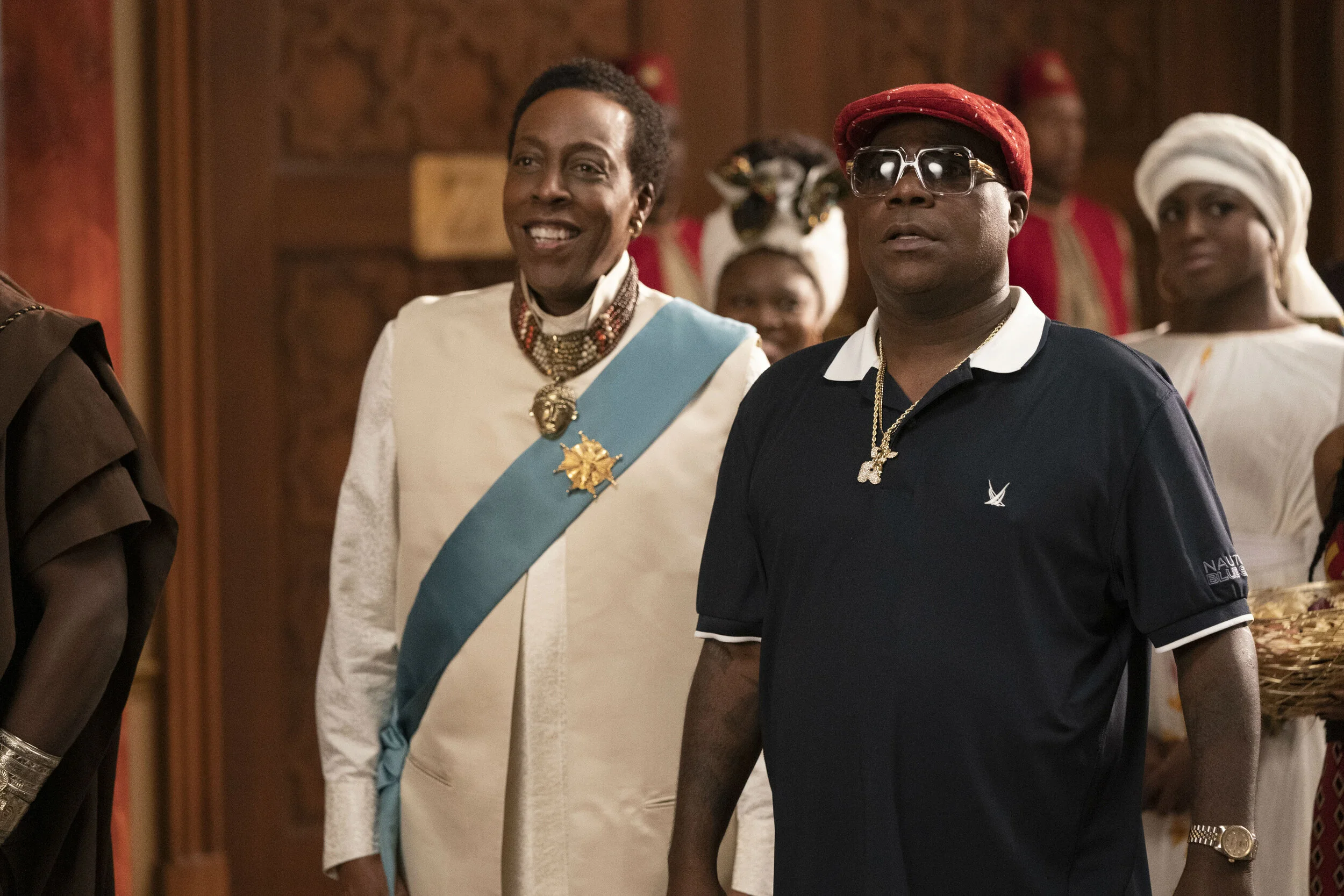
Arsenio Hall played four distinct roles in the 1988 classic Coming to America: Semmi, Morris the barber, Reverend Brown, and an unnamed woman in a bar. These performances, enhanced by Rick Baker’s legendary makeup, defined the film's multifaceted comedic approach and set a high bar for prosthetic-led character work.
The 1988 film Coming to America remains a seminal moment in cinematic history, not just for its cultural impact but for its technical achievements in makeup and character acting. While Eddie Murphy’s transformations are frequently cited, Arsenio Hall’s contributions were equally vital to the film's success. Hall didn't just play a sidekick; he populated the world of Queens, New York, with a gallery of characters that felt lived-in, distinct, and hilarious. As of 2026, the film continues to be studied by makeup artists and comedians alike for how seamlessly Hall disappeared into these roles.
The Primary Role: Semmi, the Prince's Right-Hand Man
Semmi is the anchor of Arsenio Hall’s presence in the film. Unlike the other characters, Semmi is played without heavy prosthetics, allowing Hall’s natural expressive range to shine. Semmi serves as the pragmatic, often reluctant companion to Prince Akeem (Eddie Murphy). While Akeem is driven by an idealistic search for love, Semmi is driven by a desire for the comforts of the Zamundan royal palace.
The Dynamic of the "Straight Man"
Semmi functions as the "straight man" in the comedic duo, but with a twist. Usually, the straight man is the voice of reason; Semmi is the voice of luxury. His struggle to adapt to the "peasant" lifestyle in Queens provides much of the film’s situational humor. Whether he is scrubbing floors or living in a dilapidated apartment, Semmi’s facial expressions—conveying a mixture of disgust and disbelief—are masterclasses in silent comedy.
The Turning Point in the Narrative
Semmi is also the catalyst for the film's third-act conflict. His inability to cope with poverty leads him to spend the "emergency" funds on a luxury renovation of their apartment, eventually prompting him to send a telegram to the King of Zamunda. This action bridges the gap between the fairy-tale world of Africa and the gritty reality of New York, proving that Hall’s primary character was essential for more than just laughs; he moved the plot forward.
The Invisible Transformation: Morris the Barber
Perhaps the most impressive of Hall’s transformations is Morris, one of the three elderly men in the My-T-Sharp barbershop. Many viewers during the original 1988 release—and even modern audiences—fail to realize that the man sitting in the barber chair, arguing about boxing, is actually Arsenio Hall.
The My-T-Sharp Dynamic
Morris is part of a trio that includes Clarence (Eddie Murphy) and Saul (also Eddie Murphy). The barbershop scenes are revered because they capture a specific cultural atmosphere: the community hub where debates about sports, history, and politics happen with high volume and low factual accuracy. Hall plays Morris with a raspy voice and a specific rhythmic cadence that contrasts sharply with Murphy’s high-pitched Clarence.
Technical Mastery of Movement
To play Morris, Hall had to adopt the physical tics of an older man. This included a slight tremor in the hands and a weighted way of sitting that suggested decades of standing at a barber station. These subtle physical choices, combined with the groundbreaking foam latex appliances created by Rick Baker, allowed Hall to occupy the same frame as Murphy’s characters without the audience detecting the artifice.
The Eccentric Satire: Reverend Brown
If Semmi is the grounded character and Morris is the subtle one, Reverend Brown is Hall at his most flamboyant. Introduced during the "Black Awareness Rally," Reverend Brown is a satirical take on the high-energy, performative preachers of the late 20th century.
The "Sexual Chocolate" Introduction
One of the most quoted moments in the film is Reverend Brown’s introduction of the band "Sexual Chocolate." Hall’s delivery—complete with sweat, a shimmering suit, and an overly dramatic vocal range—perfectly parodies the intersection of religious fervor and local celebrity. He manages to make the character both a joke and a recognizable community figure, ensuring the satire never feels mean-spirited.
Cultural Archetypes
Reverend Brown serves as a bridge between the various social layers explored in the film. He represents the "establishment" of the local community, attempting to maintain order and prestige while clearly being enamored with his own voice. Hall’s ability to improvise within this character’s persona added a layer of authenticity to the rally scenes that a less skilled comedic actor might have missed.
The "Extremely Ugly Girl": A Hidden Cameo
In one of the film’s most surreal sequences, Akeem and Semmi visit various bars and clubs in Queens to find a potential queen. During this montage, Hall appears as a woman credited in many circles as the "Extremely Ugly Girl" or "Girl in the Bar."
The Comedy of Rejection
This role is brief but impactful. Dressed in 1980s club attire with a heavy wig and exaggerated facial features, Hall’s character rejects Akeem with a bluntness that highlights the Prince’s struggle to find a genuine connection. The humor comes from the subversion of expectations; the audience expects Akeem to be the one doing the rejecting, but in Queens, the roles are reversed.
The "Invisibility" Factor
This character further demonstrates the versatility of the makeup team. Unlike Morris or Reverend Brown, who are meant to be believable people within their environments, this character is a heightened caricature meant for a quick comedic beat. It showcases Hall’s willingness to undergo hours of makeup for just a few seconds of screen time, emphasizing the collaborative "all-in" nature of the production.
The Role of Makeup Artistry: Rick Baker’s Contribution
It is impossible to discuss Arsenio Hall’s characters without acknowledging the work of Rick Baker. The makeup in Coming to America was revolutionary for 1988 and remains the gold standard in 2026. Baker won an Academy Award nomination for his work on the film, and for good reason.
The Process of Transformation
For Hall to become Morris or Reverend Brown, he had to endure 4 to 6 hours in the makeup chair each morning. The process involved:
- Life Casting: Creating a mold of Hall’s face to ensure the prosthetics fit perfectly.
- Foam Latex Appliances: Using thin, breathable pieces of latex that moved with Hall’s natural facial muscles.
- Hand-Painted Detailing: Adding age spots, veins, and skin textures to ensure the characters looked real under harsh movie lights.
The success of these characters relied on the synergy between Baker’s technical skill and Hall’s acting. If Hall hadn't adjusted his performance to "breathe life" into the rubber, the characters would have looked like masks. Instead, they looked like people.
Comparison of Arsenio Hall’s Characters
The following table summarizes the key attributes of the characters Arsenio Hall portrayed in the original Coming to America.
| Character | Role Type | Key Physical Trait | Primary Motivation | Memorable Moment |
|---|---|---|---|---|
| Semmi | Main Supporting | Natural Appearance | Comfort & Luxury | Sending the telegram to Zamunda. |
| Morris | Character/Barber | Elderly, Glasses | Winning Arguments | The debate about Rocky Marciano. |
| Rev. Brown | Satirical/Preacher | Jheri Curl, Shiny Suit | Self-Promotion | Introducing "Sexual Chocolate." |
| Girl in Bar | Cameo/Caricature | Heavy Makeup, Wig | Finding a Date | Rejecting Akeem at the club. |
The 2021 Expansion: Baba the Witch Doctor
While the focus of cinematic history is often on the 1988 original, the 2021 sequel, Coming 2 America, allowed Hall to return to these characters and even add a new one. In the sequel, Hall debuted Baba the Witch Doctor.
Reprising the Classics
In the sequel, Hall stepped back into the roles of Semmi, Morris, and Reverend Brown. By 2021, the makeup technology had advanced, but the goal remained the same: to make the audience forget they were watching Arsenio Hall. The return of these characters served as a nostalgic bridge for fans, proving that the archetypes Hall created in the 80s were timeless.
Adding Baba
Baba the Witch Doctor was a new addition that allowed Hall to play a more "fantastical" character. Covered in white paint and sporting a wild, weathered look, Baba provided the mystical (and comedic) guidance needed for the new plot. This character showed that even decades later, Hall had not lost his ability to find a unique voice and physicality within a new prosthetic shell.
The Cultural Legacy of Multiple Roles
The decision for Eddie Murphy and Arsenio Hall to play multiple roles wasn't just a gimmick; it was a statement. It showcased Black excellence in both performance and technical production. In the late 80s, it was rare for Black actors to be given the budget and resources for such extensive prosthetic work.
Influencing Future Comedies
The success of Hall’s characters paved the way for future films like The Nutty Professor and Norbit. However, many critics argue that Coming to America remains the superior example because the characters were not just caricatures; they were integrated into the fabric of the story. Morris and Reverend Brown didn't just exist for a gag; they represented the community that Akeem was trying to understand.
Arsenio Hall's Versatility
For Arsenio Hall, these roles proved he was more than a talk show host. While The Arsenio Hall Show would later define his career, his work in Coming to America established him as a premier character actor. The ability to switch from the high-status Semmi to the low-status Morris demonstrates a range that few comedic actors achieve.
Frequently Asked Questions
Did Arsenio Hall really play the woman in the bar?
Yes. During the club hopping montage where Akeem is looking for a bride, Arsenio Hall is heavily made up as a woman who bluntly rejects Akeem's advances. This was one of the many "hidden" roles designed to showcase the makeup team's skills.
How many characters did Arsenio Hall play in total across both movies?
In the original 1988 film, he played four roles (Semmi, Morris, Reverend Brown, and the woman in the bar). In the 2021 sequel, he reprised the first three and added a fifth character, Baba the Witch Doctor.
Who did the makeup for Arsenio Hall's characters?
The makeup was designed and applied by Rick Baker and his crew. Baker is a legendary figure in Hollywood, known for his work on An American Werewolf in London and Men in Black. His work on Coming to America is considered some of the best prosthetic work in comedy history.
Why did they choose to have the actors play multiple roles?
The director, John Landis, and Eddie Murphy wanted to create a sense of a populated, vibrant world. By having the leads play multiple roles, they could create a specific comedic chemistry that wouldn't have been possible with different actors in every chair of the barbershop. It also allowed for the satire of various social archetypes within the Black community.
Is Morris the barber Jewish?
While the character Morris is Black, his banter and some of his mannerisms in the My-T-Sharp scenes are a nod to the diverse, multicultural melting pot of Queens. The character Saul (played by Eddie Murphy) is explicitly a Jewish man, and Morris's interactions with him reflect the long-standing relationships between different ethnic groups in New York neighborhoods.
Final Recommendation
To truly appreciate the depth of Arsenio Hall’s work, viewers should watch the barbershop scenes in Coming to America with a focus on physicality. Pay attention to how Morris moves his hands and how Reverend Brown uses his eyes during the rally. If you are interested in the "behind-the-scenes" aspect, looking for high-definition still photos of the Rick Baker prosthetics will reveal the incredible level of detail—down to the individual pores and hairs—that allowed Arsenio Hall to become these legendary characters.