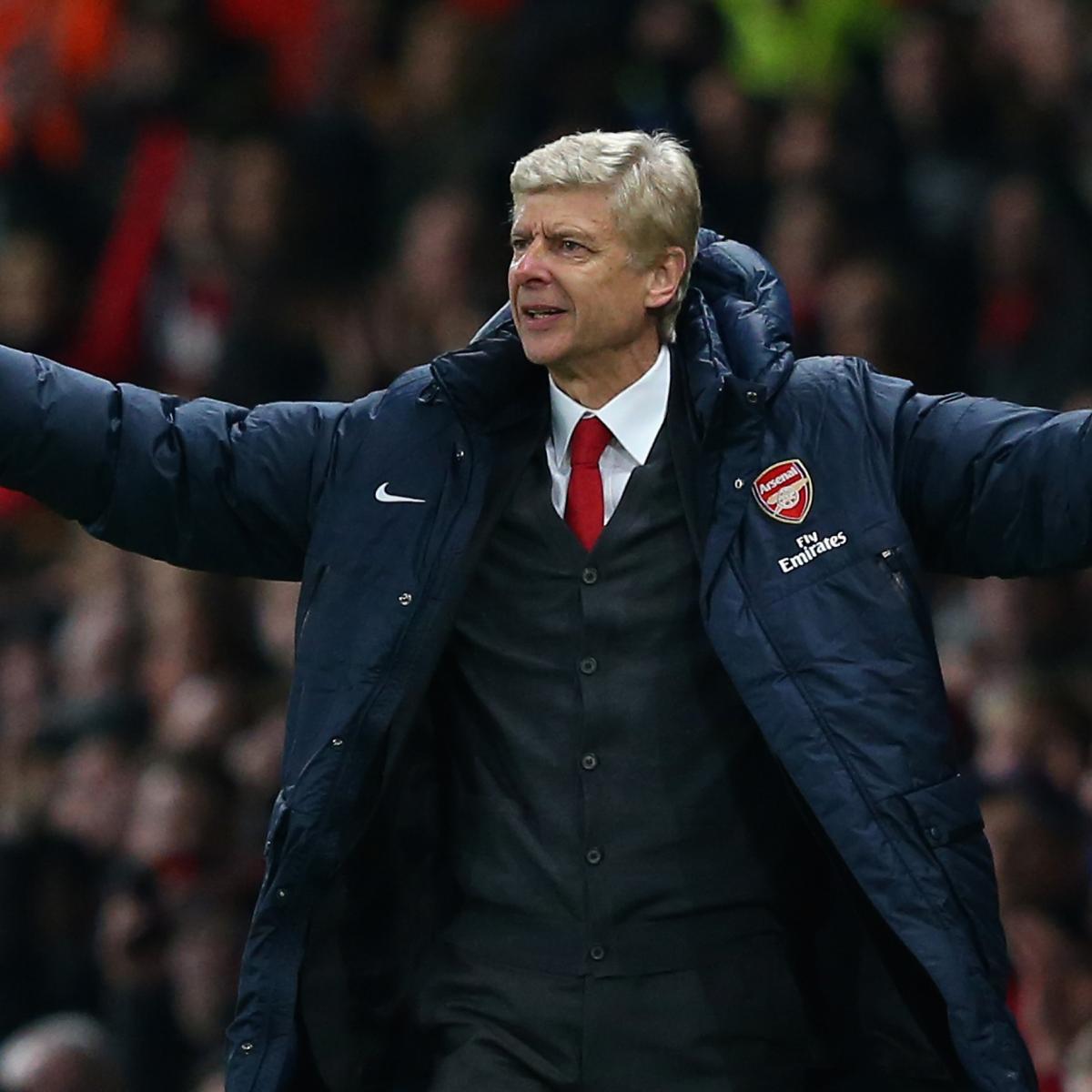
The clarification of Arsène Wenger’s final contract extension at Arsenal reveals a complex interplay between a legendary manager's loyalty and a club's desperate need for modernization. Signed in May 2017, the two-year deal was intended to provide stability after an FA Cup victory but ultimately lasted only one season before his departure in 2018.
Arsène Wenger’s tenure at Arsenal is often divided into two distinct halves: the era of "Invincible" dominance and the era of stadium-financing austerity followed by a gradual decline in Premier League competitiveness. However, the most scrutinized period remains the 2016–2018 window. During this time, the "Wenger Out" movement reached its zenith, the club missed out on Champions League qualification for the first time in two decades, and the board’s decision-making process regarding Wenger’s future became a subject of intense global debate.
By 2026, looking back at these events with a decade of hindsight, the nuances of that final contract extension have become much clearer. It was not merely a sports transaction; it was a structural collision between the old guard of football management and the emerging corporate "Director of Football" model.
The Context of May 2017: Triumph Amidst Turmoil
To understand why the contract extension was granted, one must revisit the atmosphere of May 2017. Arsenal had finished fifth in the Premier League, missing out on the Top 4 for the first time since Wenger’s arrival in 1996. The pressure from the fanbase was unprecedented, with planes flying banners over stadiums and protests becoming a weekly occurrence at the Emirates.
However, the season ended on an unexpected high. Arsenal defeated a heavily favored Chelsea side 2-1 in the FA Cup Final. This victory—Wenger’s record-breaking seventh FA Cup—provided the board with the political capital necessary to justify an extension.
The Logic of the Two-Year Deal
The board, led by Stan Kroenke and Chief Executive Ivan Gazidis, faced a dilemma. There was no clear succession plan in place. The argument for the extension was centered on "stability." The board believed that letting Wenger go immediately after a trophy win, without a replacement ready, would lead to a Manchester United-style collapse (referencing the post-Ferguson era).
The extension was clarified as a two-year commitment, intended to run until the summer of 2019. It was designed to give the club time to restructure its backroom staff—bringing in figures like Sven Mislintat (Head of Recruitment) and Raul Sanllehi (Head of Football Relations)—while allowing Wenger to guide the transition.
Key Details of the Clarified Extension
When the extension was officially announced on May 31, 2017, the details were initially kept vague to manage public relations. Over time, financial disclosures and memoirs from key figures have filled in the gaps.
| Feature | Details of the 2017 Extension |
|---|---|
| Duration | 2 Years (Expiring June 2019) |
| Estimated Salary | Approximately £8 million per annum |
| Primary Objective | Transition to a new technical structure and Top 4 return |
| Key Signings Post-Extension | Alexandre Lacazette, Pierre-Emerick Aubameyang |
| Break Clause | Effectively activated by mutual consent in April 2018 |
The "Catalyst for Change"
Ivan Gazidis famously used the phrase "catalyst for change" to describe the summer of 2017. This was a direct hint that while Wenger was staying, his absolute power over the club was being curtailed. The clarification of this contract period shows that for the first time in 21 years, Wenger was no longer the sole arbiter of transfers and medical protocols. This tension between Wenger’s desire for total control and Gazidis’s drive for a continental "sporting director" model eventually made the contract unsustainable.
Why the Extension Only Lasted One Year
Despite the two-year agreement, Wenger departed in May 2018. The clarification of this early exit involves three primary factors: on-field regression, recruitment friction, and the loss of board-level support.
1. On-Field Regression and Away Form
The 2017/18 season was statistically one of Arsenal's worst under Wenger. The team’s away form was particularly disastrous, failing to pick up a single point away from home in the first few months of 2018. By the time the Europa League semi-finals arrived, it was clear that the "stability" promised by the extension had not materialized.
2. The Power Shift in Recruitment
The arrival of Sven Mislintat from Borussia Dortmund changed the recruitment dynamic. The signing of Pierre-Emerick Aubameyang in January 2018 was a "stat-led" acquisition that diverged from Wenger’s traditional scouting methods. As Wenger later hinted in his autobiography, My Life in Red and White, he felt the walls closing in as the club began to operate through a multi-person committee rather than through the manager’s singular vision.
3. The "Mutual Consent" Reality
In April 2018, Arsenal announced that Wenger would step down at the end of the season. While officially described as a "mutual agreement," it has since been clarified that the board made it clear that a change was coming regardless of the manager's personal preference. Wenger himself later admitted, "It was not really my decision," during interviews after leaving the club. The board felt that the toxicity of the fanbase was affecting the club's commercial value and that a clean break was necessary to allow the new backroom structure to breathe.
The Financial Implications of the Extension
The contract extension wasn't just about footballing philosophy; it had significant financial ramifications for Arsenal. By extending Wenger’s deal, the club committed to a high-wage structure for both the manager and several aging stars.
The clarification of the accounts from that era shows that Arsenal’s wage-to-turnover ratio spiked during the 2017–2018 period. This was partly due to the contract renewals of Mesut Özil and the high-profile swap deal involving Alexis Sánchez and Henrikh Mkhitaryan. The "short-termism" of the 2017 extension meant that the club was spending heavily to try and recapture a Champions League spot that ultimately remained elusive until the Mikel Arteta era began to bear fruit years later.
Legacy and Re-evaluation in 2026
In 2026, the perspective on the 2017 extension has softened. While many then saw it as a mistake that delayed the club's progress, modern analysts often view it as a necessary, albeit painful, buffer.
- The Buffer Theory: Without those final two years, the transition to a modern scouting system (Mislintat/Sanllehi) might have been even more chaotic. Wenger acted as a lightning rod for criticism, shielding the new executive team as they began their work.
- The Academy Foundation: During this clarified extension period, Wenger continued to integrate youth prospects like Bukayo Saka into the training environment, ensuring that the "Arsenal DNA" survived the subsequent managerial changes of Unai Emery and later Mikel Arteta.
Common Misconceptions Clarified
Several myths surround the 2017 contract extension that require factual correction based on the records available in 2026.
Myth: Wenger was offered a three-year deal. Fact: The offer was always for two years. The board was wary of a longer commitment given the volatility of the 2016/17 season.
Myth: The extension was signed before the FA Cup Final. Fact: While discussions were held, the formalization and board vote occurred after the victory over Chelsea. The trophy was the deciding factor for several wavering board members.
Myth: Wenger had a massive payout upon leaving. Fact: While Wenger received a settlement for the remaining year of his contract, it was in line with standard industry practices for "mutual termination" and significantly less than the figures cited by tabloid rumors at the time.
Frequently Asked Questions
Did Arsène Wenger want to leave in 2017?
No. All clarified accounts suggest that Wenger believed he could still turn the situation around. He was deeply committed to the club and felt that the 2017 FA Cup win was proof that his methods still worked at the highest level.
Who was the main advocate for the extension on the board?
Stan Kroenke was the primary supporter of Wenger. Kroenke valued the long-term stability and financial self-sufficiency that Wenger provided. Ivan Gazidis was more skeptical and was the driving force behind the "change" that eventually shortened the extension to a single year.
How did the extension affect Arsenal's transfer business?
It led to a split strategy. Wenger pursued "proven" talent like Lacazette, while the newly appointed scouting department pushed for younger, data-driven targets. This duality created a disjointed squad that took several years to streamline.
Was there a specific match that ended the extension early?
The away loss to Brighton in March 2018, followed by the lack of a sustained challenge in the Premier League, is often cited as the point of no return. However, the official decision was solidified when it became clear that winning the Europa League was the only path back to the Champions League.
How is the 2017 extension viewed by fans in 2026?
Today, most fans view the extension with a sense of "bittersweet necessity." While the football was declining, it allowed for a ceremonial farewell to a man who transformed English football, avoiding a mid-season sacking that would have tarnished his legacy.
Practical Takeaway for Football Analysts
When analyzing managerial contracts, the "Arsene Wenger 2017 Clarification" serves as a case study in The Diminishing Returns of Stability. For organizations, the takeaway is clear: a contract extension should be based on future trajectory rather than past sentiment.
For fans and historians, the 2017–2018 period represents the end of the "manager-as-emperor" model in the Premier League. As of 2026, Arsenal’s structure is entirely different, but it was the friction and clarification of Wenger’s final contract that forced the club to finally modernize.