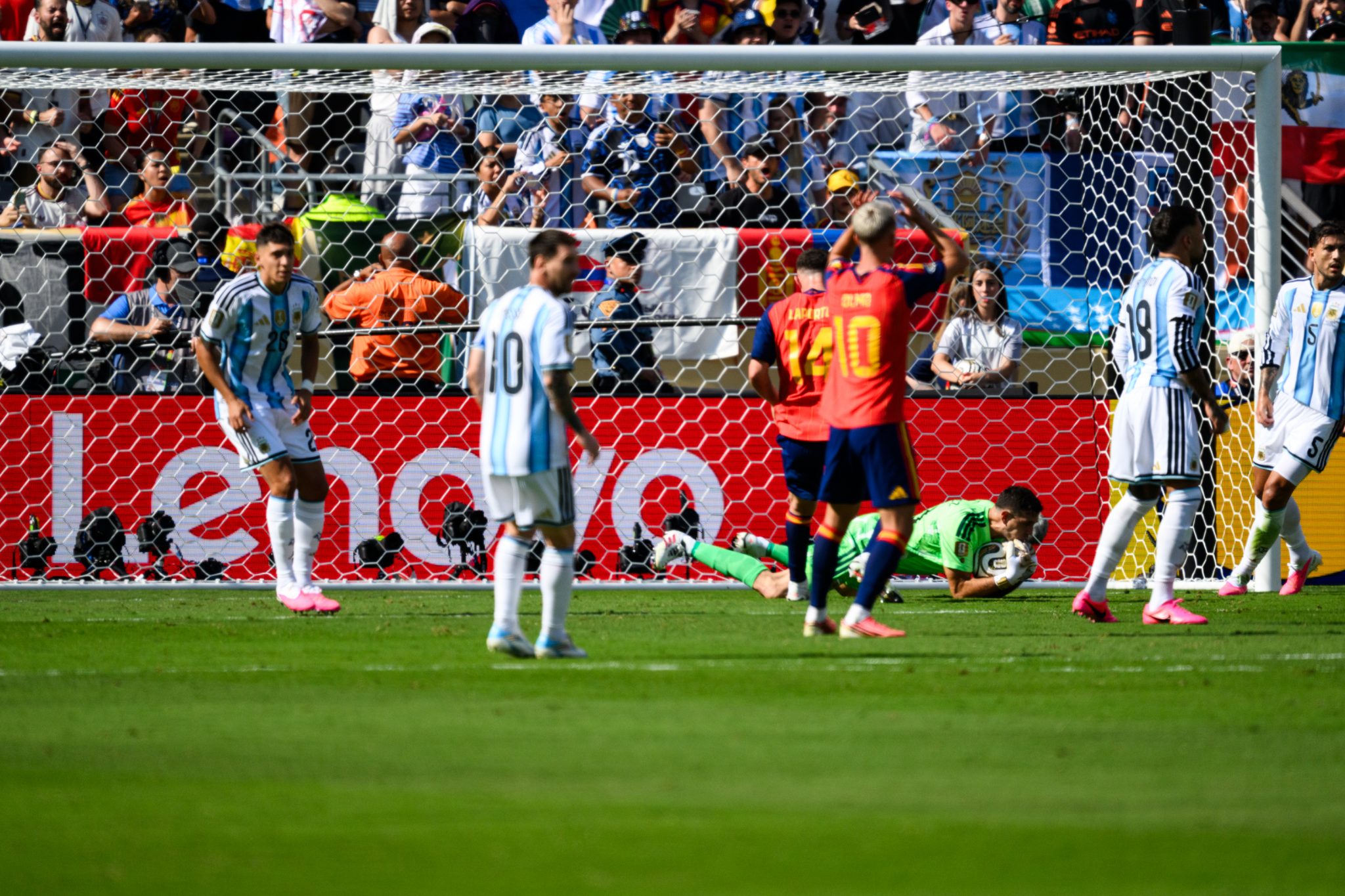
Argentina’s 4-1 victory over reigning World Champions Spain on September 7, 2010, remains a landmark friendly in international football history. Played at the Estadio Monumental, goals from Lionel Messi, Gonzalo Higuaín, Carlos Tevez, and Sergio Agüero dismantled a rotated Spanish side, providing a vital morale boost for the Albiceleste following their disappointing 2010 World Cup exit.
The Historical Context of the 2010 Showdown
To understand the significance of the Argentina vs Spain clash in September 2010, one must look at the state of international football at that specific moment. Looking back from 2026, this match serves as a fascinating bridge between two different eras of dominance. Spain had reached the absolute pinnacle of the sport just two months prior, having defeated the Netherlands in South Africa to claim their first-ever FIFA World Cup trophy. They arrived in Buenos Aires as the "Invincibles" of world football, boasting a style of play—Tiki-taka—that many believed was impossible to neutralize.
In contrast, Argentina was a nation in transition and mourning. Their 2010 World Cup campaign had ended in a traumatic 4-0 quarter-final defeat to Germany, an event that led to the departure of Diego Maradona as head coach. The AFA (Argentine Football Association) had appointed Sergio Batista as interim manager, and the pressure was immense for the Albiceleste to prove they could still compete with the European elite. The visit of the World Champions wasn't just a friendly; it was a matter of national pride and a prerequisite for Batista’s hopes of securing a permanent contract.
The atmosphere at the Estadio Monumental was electric. Over 60,000 fans packed the stands, creating a sea of light blue and white. While European friendlies are often criticized for lacking intensity, the South American context ensured this match was played with the fervor of a competitive final. For Argentina, it was a chance for redemption; for Spain, it was a celebratory lap that turned into a stern tactical lesson.
Tactical Setups and Lineup Analysis
The tactical battle between Sergio Batista and Vicente del Bosque offered a glimpse into the evolving philosophies of both nations. Argentina moved away from the somewhat chaotic 4-1-3-2 utilized by Maradona, opting for a more balanced 4-3-3 that prioritized a solid midfield anchor.
Argentina’s Disciplined Approach
Batista’s selection was a mix of veteran reliability and youthful energy. He recalled Javier Zanetti and Esteban Cambiasso—two players famously omitted from Maradona’s World Cup squad. This decision provided Argentina with a level of tactical discipline they had lacked in South Africa. The midfield trio of Javier Mascherano, Ever Banega, and Cambiasso was designed specifically to disrupt Spain’s rhythm. By crowding the central areas and utilizing Mascherano as a dedicated destroyer, Argentina aimed to force Spain into wide areas where they were less comfortable.
Up front, the trident of Lionel Messi, Carlos Tevez, and Gonzalo Higuaín offered a blend of world-class finishing and relentless pressing. Messi, operating in a free-roaming role, was the focal point of every transition.
Spain’s Rotated World Champion Squad
Vicente del Bosque chose to rotate his squad, a move that would later be scrutinized. While the core of the World Cup-winning philosophy remained, key personnel changes altered the team’s chemistry. Pepe Reina started in goal in place of Iker Casillas, and the defense featured Alvaro Arbeloa and Carlos Marchena.
Crucially, the midfield lacked the immediate presence of Xavi Hernandez, who started on the bench. In his absence, Cesc Fàbregas was tasked with creative duties alongside Xabi Alonso and Sergio Busquets. While Spain retained their signature 4-3-3/4-2-3-1 hybrid, the lack of defensive cohesion between the makeshift backline and the holding midfielders proved to be their undoing against Argentina's high-speed transitions.
Match Narrative: A First-Half Blitz
The match began with Spain attempting to establish their trademark possession game, but they were immediately unsettled by Argentina’s aggressive pressing. The "friendly" label was quickly discarded as the physical intensity of the challenges increased.
The Messi Chip and the Early Lead
In the 10th minute, the stadium erupted. After a slick interchange in the midfield, Carlos Tevez played a perfectly weighted through-ball to Lionel Messi. The Barcelona star, facing many of his club teammates, showed no hesitation. As Pepe Reina rushed out to close the angle, Messi executed a sublime chip that sailed over the goalkeeper and into the net. It was a goal of pure technical mastery, asserting Argentina's intent from the opening whistle.
Capitalizing on Defensive Errors
The Spanish defense, usually so composed, appeared rattled. Only three minutes later, in the 13th minute, Argentina struck again. A rapid counter-attack saw Gonzalo Higuaín find space behind the Spanish lines. Rounding Reina with ease, the Real Madrid striker slotted the ball home from a tight angle to make it 2-0.
The most iconic and perhaps embarrassing moment for Spain occurred in the 34th minute. Under pressure from Carlos Tevez, Pepe Reina attempted to clear a routine back-pass but slipped on the slick Buenos Aires turf. Tevez, ever the opportunist, pounced on the loose ball and bundled it into the net for Argentina’s third goal. Within just over half an hour, the World Champions were trailing 3-0, a scoreline that shocked the footballing world.
Second Half: Spain’s Resilience and Argentina’s Finish
The second half saw a more balanced contest as Vicente del Bosque introduced his heavy hitters. The introduction of Xavi Hernandez, Pedro, and Fernando Llorente brought a sense of urgency to the Spanish side. Spain began to dominate possession more effectively, hitting the woodwork three times throughout the match—twice by David Villa and once by Santi Cazorla.
The Llorente Consolation
Spain’s persistence finally paid off in the 84th minute. Fernando Llorente, utilizing his physical presence in the box, managed to turn and fire a low shot past Sergio Romero. At 3-1, there was a brief moment where a comeback seemed plausible, as Spain pushed players forward in search of a second.
Agüero’s Final Word
However, the night belonged to the hosts. In the 90th minute, substitute Sergio Agüero put the game beyond any doubt. Heading home a cross from Gabriel Heinze, Agüero made it 4-1. The goal was a testament to Argentina’s depth and their ability to remain dangerous on the break even after a grueling 90 minutes of defending.
Statistical Comparison: Argentina vs. Spain 2010
The following table breaks down the key metrics from the match, highlighting the disparity between Spain's possession and Argentina's clinical finishing.
| Metric | Argentina | Spain |
|---|---|---|
| Final Score | 4 | 1 |
| Total Shots | 12 | 16 |
| Shots on Target | 7 | 5 |
| Possession % | 41% | 59% |
| Corner Kicks | 3 | 8 |
| Fouls Committed | 18 | 11 |
| Yellow Cards | 3 | 2 |
| Woodwork Hits | 0 | 3 |
Player Performance and Key Takeaways
Lionel Messi: The Catalyst
At this stage in 2010, Messi was often criticized in his home country for not replicating his Barcelona form with the national team. This match was a significant turning point. His opening goal and his general play showed a player comfortable in a leadership role, capable of dismantling the best defense in the world.
Carlos Tevez: The Engine
Tevez’s performance was the epitome of "The Player of the People." His work rate forced the errors that led to the second and third goals. In an era where Argentina had an embarrassment of riches in attack, Tevez proved that raw intensity and pressing were just as valuable as technical finesse.
Spain’s Defensive Fragility
For Spain, this match served as a wake-up call. While their midfield remained elite, the lack of pace in the center of defense when exposed to direct counter-attacks was a vulnerability that teams would later try to exploit in the Euro 2012 and 2014 World Cup cycles. Marchena and Piqué struggled with the movement of Argentina’s front three, highlighting the importance of Carles Puyol, who was absent for this fixture.
The Long-Term Impact on Both Nations
In the immediate aftermath, Sergio Batista was hailed as a tactical genius. The win played a crucial role in him being named the permanent head coach of Argentina, though his tenure would eventually end after a disappointing 2011 Copa America. For Argentina, the match proved that they possessed the individual talent to beat anyone; the challenge remained in building a cohesive system around that talent—a puzzle that wouldn't be fully solved until the Lionel Scaloni era leading up to 2022.
For Spain, the defeat was their first since winning the World Cup. It snapped an impressive winning streak but ultimately did little to derail their dominance. They went on to win Euro 2012, proving that they could learn from defensive lapses. Vicente del Bosque used the match as a "learning friendly," often citing it as a reminder that possession without penetration and defensive alertness is a dangerous game.
Frequently Asked Questions
Why did Spain lose so heavily after winning the World Cup?
The loss can be attributed to several factors: significant squad rotation (especially in goal and defense), the high-intensity atmosphere of the Estadio Monumental, and Argentina's clinical counter-attacking. Additionally, Spain hit the woodwork three times; on another day, the scoreline could have been much closer.
Was this match a competitive fixture?
No, it was an international friendly. However, because it featured the reigning World Champions against a powerhouse like Argentina, it was treated with high importance by both the media and the players.
Who was the man of the match?
While Lionel Messi's opening goal set the tone, many analysts at the time pointed to Carlos Tevez or Javier Mascherano. Tevez's pressing directly caused two goals, while Mascherano's work in the defensive midfield was essential in neutralizing the Spanish creative hub.
Did this match affect the FIFA Rankings?
Spain remained at the top of the FIFA World Rankings despite the loss, due to their massive points lead from the World Cup victory. Argentina saw a slight climb, reinforcing their position within the top ten.
How many times did Spain hit the post?
Spain hit the woodwork three times during the match. David Villa was denied twice by the frame of the goal, and Santi Cazorla hit the bar in the second half. This suggests that while Argentina were clinical, Spain were also somewhat unlucky not to score more.
Final Recommendations for Football Historians
When reviewing the Argentina vs Spain 2010 match, it is essential to watch the full 90 minutes rather than just the highlights. The scoreline suggests a complete blowout, but the tactical nuances tell a different story. Observe how Argentina’s midfield trio shifted to cover the wings, and note the specific movements of Lionel Messi as he dropped deep to drag the Spanish center-backs out of position. For students of the game, this match remains one of the best examples of how to effectively counter a high-possession, high-line defensive system.