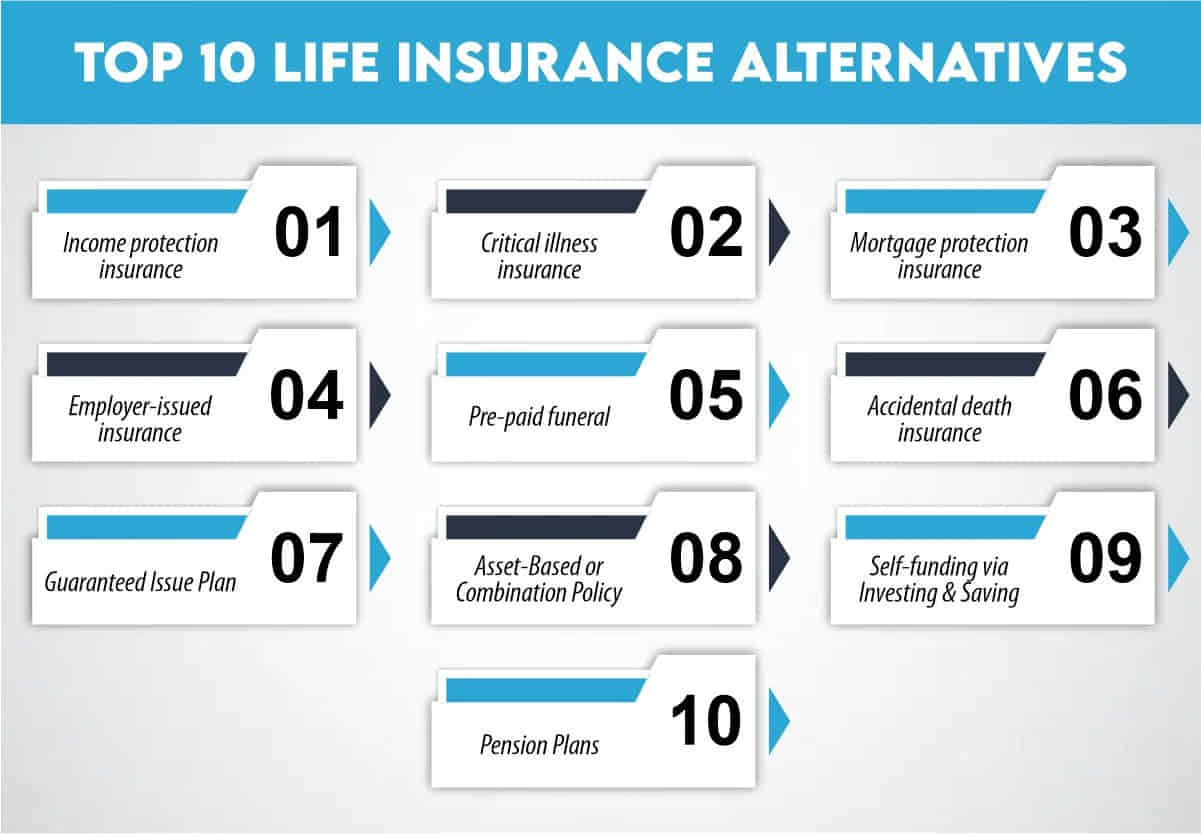
If you or a loved one is seeking financial protection but faces denials due to alcohol use, several viable alternatives exist beyond traditional underwritten policies. In 2026, the primary alternatives to standard life insurance for alcoholics include guaranteed issue life insurance, employer-sponsored group coverage, accidental death and dismemberment (AD&D) policies, and specialized "self-insurance" strategies using high-yield savings or trusts. These options bypass rigorous medical exams and history checks, providing a path to legacy planning despite a history of alcohol use disorder (AUD).
Understanding the Life Insurance Landscape for Alcohol Use in 2026
Traditional life insurance underwriting is fundamentally a game of risk assessment. For insurance carriers, a history of alcohol abuse signals a higher probability of premature mortality due to liver disease, cardiovascular issues, or accidents. While the medical community increasingly views alcoholism as a chronic but manageable disease, the actuarial tables used by insurers remain strictly focused on data.
In 2026, many carriers have streamlined their processes with automated underwriting, but this often makes it harder for those with AUD to "explain" their situation to a human agent. Algorithms often trigger automatic denials or significant "table ratings" (extra charges) if medical records mention alcohol-related hospitalizations, elevated liver enzymes (such as GGT, AST, or ALT), or DUI convictions within the last five to ten years.
Because of these hurdles, many individuals must look toward "non-traditional" or "alternative" products. These products are designed to mitigate the insurer's risk by limiting coverage amounts or using "graded" benefit structures, which makes them accessible to those who are otherwise uninsurable.
1. Guaranteed Issue Life Insurance (GI)
Guaranteed issue life insurance is perhaps the most direct alternative for those currently struggling with alcohol use or in early recovery. As the name suggests, acceptance is guaranteed regardless of your medical history. There are no medical exams and, crucially, no health questions regarding alcohol consumption.
How It Works
GI policies are typically "small-face" policies, meaning the death benefit is usually capped between $5,000 and $25,000. In 2026, some specialized carriers have pushed these limits to $50,000, but they remains focused on "final expenses" rather than replacing a lifelong income.
The Graded Death Benefit
The most important feature of a GI policy is the graded death benefit. To protect themselves from "adverse selection" (people buying insurance only when they are terminally ill), insurers implement a waiting period, usually two to three years.
- Years 1-2: If the insured dies of natural causes (including alcohol-related illness), the beneficiary does not receive the full death benefit. Instead, they receive a refund of all premiums paid plus interest (usually 5% to 10%).
- Accidental Death: If the insured dies in a verified accident during the waiting period, the full benefit is usually paid out immediately.
- Year 3 onwards: The full death benefit is payable for any cause of death.
Cost Considerations
Because the insurer is taking on unknown risks, GI policies are the most expensive type of life insurance per dollar of coverage. They are best used as a last resort when all other underwritten options have been exhausted.
2. Group Life Insurance through Employers
For many people with a history of alcohol use, the workplace provides the most affordable and accessible alternative to individual life insurance. Most medium-to-large employers offer group life insurance as part of their benefits package.
Guaranteed Issue Evolution
In 2026, most group plans offer a "Guaranteed Issue Amount." This is a specific level of coverage (often 1x or 2x your annual salary, or a flat amount like $50,000) that you can enroll in without providing any evidence of insurability (EOI). Because you are part of a large pool of employees, the insurer does not look at your individual medical records or alcohol history.
Limitations and Portability
The primary drawback of group life insurance is its link to your employment. If you leave your job, the coverage usually ends. While some policies are "portable" (allowing you to take the policy with you) or "convertible" (allowing you to change it to an individual policy), doing so often requires medical underwriting at that stage, which brings the alcohol history back into play.
3. Simplified Issue Life Insurance
Simplified issue insurance sits between traditional term life and guaranteed issue. It does not require a medical exam (no blood draw or urine sample), but it does involve a health questionnaire.
For someone in long-term recovery (typically 3 to 5 years of documented sobriety), simplified issue can be an excellent alternative. The questions are often "Yes/No" and focus on major incidents. If you can honestly answer "No" to questions regarding recent hospitalizations or specific alcohol-related diagnoses (like cirrhosis), you may qualify for higher coverage amounts than a GI policy offers, and at a lower cost.
However, for those with recent alcohol issues, the "Big Three" databases—the MIB (formerly Medical Information Bureau), Rx reports, and Motor Vehicle Records (MVR)—will likely reveal the history, leading to a denial in the simplified issue category.
4. Accidental Death and Dismemberment (AD&D)
AD&D is often marketed as a life insurance alternative, but it is technically a different financial product. It only pays out if the insured dies or is seriously injured due to a covered accident.
The Intoxication Exclusion
This is a critical "trap" for those seeking alternatives specifically due to alcohol use. Nearly every AD&D policy contains an intoxication exclusion. If the insured dies in a car accident or a fall, and toxicology reports show they were over the legal blood alcohol limit, the policy will likely deny the claim.
Therefore, while AD&D is easy to get (no medical questions), it provides very little protection for someone actively struggling with alcohol. It is a more viable alternative for someone in recovery who wants low-cost "gap" coverage for unforeseen accidents unrelated to their past.
5. Self-Insurance: The Financial Alternative
When the insurance market becomes too expensive or restrictive, "self-insurance" becomes the most logical path. This involves using financial instruments to build a "death benefit" that you control entirely.
High-Yield Savings and Sinking Funds
By redirecting the high premiums you would have paid for a GI policy (which could be $150–$300 a month for minimal coverage) into a dedicated high-yield savings account (HYSA) or a low-risk brokerage account, you create a liquid fund.
- Advantage: You retain control of the money. If you don't die, the money is still yours.
- Disadvantage: There is no "leverage." In a life insurance policy, paying $100 could result in a $25,000 payout on day one. In a savings account, you only have what you've put in plus interest.
Irrevocable Funeral Trusts (IFT)
An IFT is a specific financial product where you set aside funds (up to certain state limits, often around $15,000) specifically for funeral expenses. These funds are generally excluded from asset calculations for Medicaid eligibility, making them an excellent alternative for older individuals who may need long-term care in the future.
6. Comparison of Life Insurance Alternatives (2026 Data)
The following table compares the primary alternatives based on accessibility, cost, and typical coverage limits available in the current 2026 market.
| Option | Medical Questions? | Waiting Period? | Max Coverage (Typical) | Best For |
|---|---|---|---|---|
| Guaranteed Issue | No | 2-3 Years (Graded) | $25,000 - $50,000 | Active AUD or early recovery. |
| Group Life (Employer) | No (up to limit) | None | 1x-2x Salary | Anyone currently employed. |
| Simplified Issue | Yes (Brief) | None | $100,000 - $250,000 | Those with 3+ years sobriety. |
| AD&D | No | None | $100,000+ | Low-cost accident-only protection. |
| Self-Insurance | No | N/A | Unlimited (based on savings) | Those with high discretionary income. |
| Funeral Trust | No | None | $15,000 (varies by state) | Seniors/End-of-life planning. |
7. The Role of Annuities as a Death Benefit Alternative
Annuities are often overlooked in the search for life insurance alternatives. An annuity is a contract with an insurance company where you pay a lump sum or series of payments, and in return, they provide a regular income stream later.
Many modern annuities come with a death benefit rider. If the owner dies before the "annuitization" (payout) phase begins, the beneficiaries receive the total value of the account, and sometimes an additional "step-up" amount. Since annuities are investment products rather than mortality-based products, there is usually no medical underwriting. This allows an individual with a history of alcohol use to "park" wealth in a vehicle that can be passed directly to heirs outside of probate, effectively functioning like a life insurance policy.
8. Strategic Steps to Improve Eligibility for Traditional Policies
If the alternatives listed above do not meet your needs, you may want to spend 24 to 36 months positioning yourself for a traditional policy. Insurers in 2026 look for specific markers of stability:
- Consistent Medical Documentation: Regularly visit a primary care physician. Having "clean" blood work (normal liver function tests) over a multi-year period is the strongest evidence you can provide to an underwriter.
- Participation in Support Programs: While AA is anonymous, participation in medically supervised recovery programs or therapy can be documented. Some forward-thinking insurers now view active participation in recovery as a positive underwriting factor.
- The "Motor Vehicle Record" Cleanse: DUIs are a major hurdle. In many states, these fall off insurance records after 5 to 7 years. Waiting until your MVR is clear can drop your premiums by 50% or more.
- Work with a High-Risk Broker: Do not apply to "big name" retail brands directly. Use an independent broker who specializes in "impaired risk" cases. They know which specific carriers (such as those specializing in clinical underwriting) are more lenient toward AUD.
9. Legal and Privacy Considerations
In 2026, data privacy is a significant concern. It is important to know that while your medical records are protected by HIPAA, once you sign an application for life insurance, you are generally granting the insurer permission to access those records via the MIB.
Never misrepresent alcohol history on an application. If you claim to be sober but die of a liver-related ailment within the "contestability period" (usually the first two years), the insurer can investigate, find the discrepancy, and deny the claim entirely, leaving your family with nothing but a refund of premiums. Choosing a "no-questions-asked" alternative is always safer than lying on a medical questionnaire.
FAQ: Alternatives to Life Insurance for Alcoholics
Can I get life insurance if I have a DUI?Yes, but it depends on the timing. Most traditional insurers will decline an application if there is a DUI within the last 12 to 24 months. After 3 to 5 years, you may qualify for "Standard" or "Substandard" rates. If you have multiple DUIs, you may be forced to use guaranteed issue or group life alternatives.
What is the "waiting period" in guaranteed issue policies?Most GI policies have a two-year graded death benefit. If you die of natural causes (illness) during these first two years, your beneficiaries get your premiums back plus interest. After two years, the full amount is paid regardless of the cause of death.
Does my employer's life insurance check my medical records?Generally, no. Basic group life insurance provided by an employer is "guaranteed issue" up to a certain limit. However, if you try to buy "supplemental" or "voluntary" life insurance through your employer for a high amount (e.g., $500,000), they will likely require you to fill out a health questionnaire.
Are accidental death policies worth it for alcoholics?They are risky. Most AD&D policies exclude deaths where the insured was intoxicated. If your alcohol use leads to an accident, the policy likely won't pay. These are better for people in stable recovery who are worried about non-alcohol-related accidents.
Is there a specific "alcoholic life insurance" product?There is no product specifically named that, but "Graded Death Benefit" and "Guaranteed Issue" policies are the categories that serve this demographic. These products are designed for "impaired risks," which includes alcoholism, heart disease, and diabetes.
Next Steps for Financial Protection
To secure your family's future, start by maximizing your employer-sponsored group life insurance during the next open enrollment period, as this is the most cost-effective "no-questions" coverage available. Simultaneously, if you have a history of alcohol use, consider a Guaranteed Issue policy to cover immediate final expenses, keeping in mind the two-year graded period. Finally, consult with a financial advisor about setting up a Transfer on Death (TOD) account or an Irrevocable Trust, which ensures your assets reach your beneficiaries quickly and bypasses the medical scrutiny of the insurance industry.