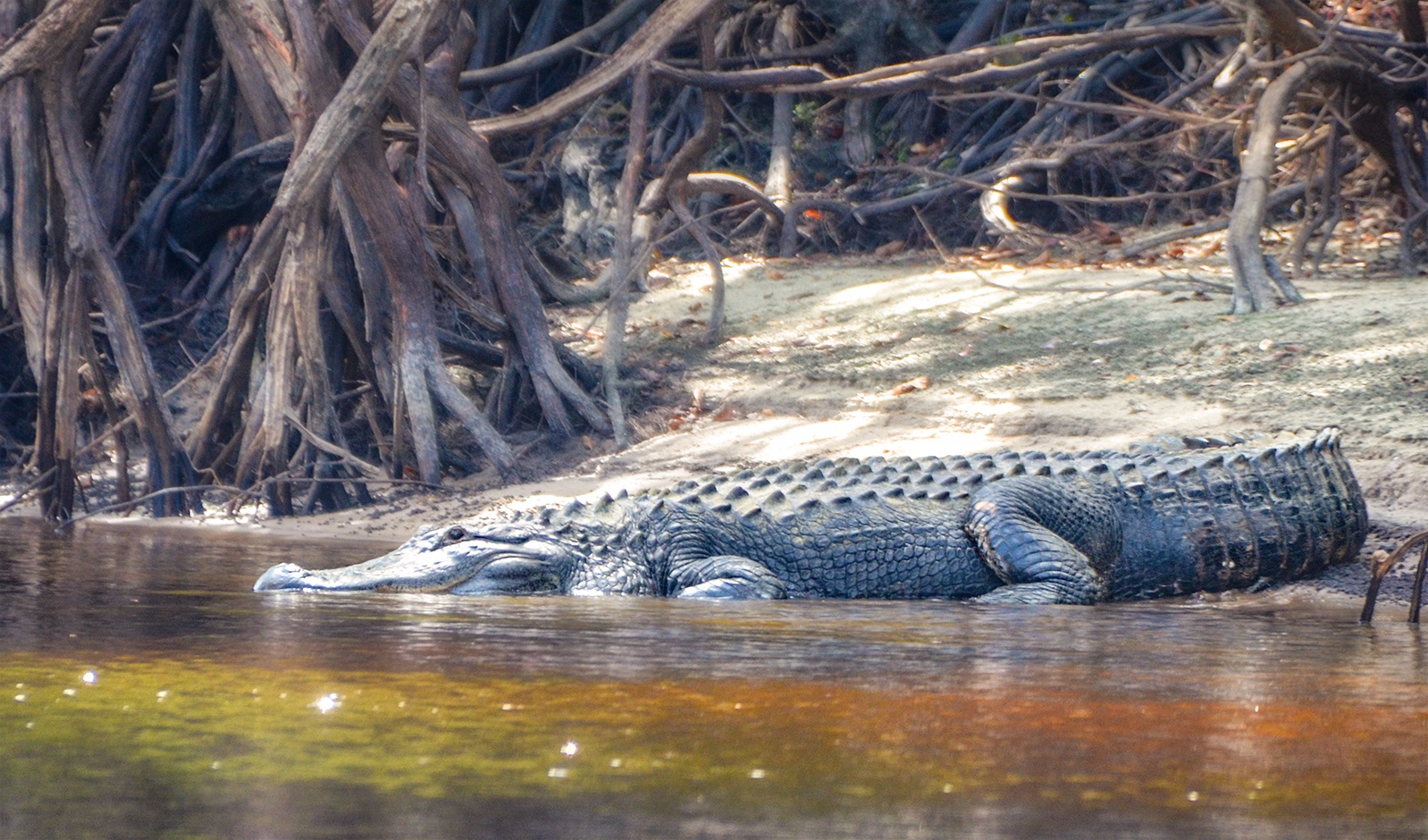
Alligators are a native and permanent fixture of the Suwannee River ecosystem, thriving within its slow-moving, tannic waters from the Okefenokee Swamp to the Gulf of Mexico. While these apex predators are common, they are generally wary of humans; however, maintaining a safe distance, adhering to state wildlife regulations, and understanding seasonal behaviors are essential for anyone kayaking, fishing, or swimming in the region.
The Suwannee River as a Primary Alligator Habitat
The Suwannee River, a 246-mile-long blackwater river, provides one of the most iconic habitats for the American alligator (Alligator mississippiensis) in the southeastern United States. The river originates in the Okefenokee Swamp in Georgia and winds through the limestone heart of North Florida. This varied geography creates a mosaic of environments—from narrow, deep channels to sprawling floodplains and cypress-lined banks—that are perfectly suited for alligator survival and reproduction.
The "blackwater" nature of the Suwannee is particularly significant. The dark, tea-colored water is caused by high concentrations of tannins from decaying vegetation in the upstream swamps. This provides excellent camouflage for alligators, allowing them to remain nearly invisible just beneath the surface. Furthermore, the limestone outcroppings and high banks along sections of the middle Suwannee offer ideal basking spots. Because alligators are ectothermic (cold-blooded), they rely on these sun-drenched banks to regulate their body temperature, especially during the cooler months of the early spring and late autumn.
In 2026, the Suwannee remains one of the most pristine river systems in the Florida-Georgia border region. Unlike more developed waterways, the Suwannee's relatively low level of shoreline urbanization allows alligators to maintain natural behaviors. The connectivity between the main river channel and the surrounding wetlands ensures a steady supply of prey, including fish, turtles, snakes, and small mammals, which in turn supports a healthy, stable population of these reptiles.
Population Dynamics and Distribution
Understanding the distribution of alligators in the Suwannee River requires looking at the river in three distinct segments: the Upper, Middle, and Lower Suwannee. Each segment offers different environmental pressures and habitat types that influence alligator density.
The Upper Suwannee (Georgia to White Springs, FL)
The headwaters in the Okefenokee Swamp represent one of the highest concentrations of alligators in the world. As the water flows south into Florida, the alligator population remains high. In this stretch, the river is often narrow and heavily forested. Alligators here are frequently seen perched on fallen logs or tucked into the roots of ancient cypress trees. Research from the Georgia Department of Natural Resources indicates that the swamp and its drainage basins act as a "nursery" for the species, with young alligators eventually dispersing downriver.
The Middle Suwannee (White Springs to Branford, FL)
In the middle section, the river cuts through the Floridan Aquifer, and the landscape is characterized by high limestone bluffs and numerous freshwater springs. While alligators are still present, they are often less concentrated here than in the swampy headwaters. However, they are frequently spotted near the mouths of spring runs where the water temperature remains a constant 72°F (22°C) year-round. During extreme cold snaps, alligators may congregate near these spring vents to avoid freezing temperatures in the main river.
The Lower Suwannee (Branford to the Gulf of Mexico)
As the river approaches the Gulf, it widens and the flow slows significantly. The surrounding landscape transitions into the Lower Suwannee National Wildlife Refuge, a massive expanse of bottomland hardwoods and tidal marshes. This area provides vast nesting grounds. The brackish water near the mouth of the river does not deter alligators; while they prefer freshwater, they are highly salt-tolerant and are frequently seen in the tidal creeks and salt marshes surrounding the town of Suwannee.
Seasonal Activity and Behavior Patterns
The behavior of alligators in the Suwannee River is dictated almost entirely by the calendar and the temperature. In 2026, wildlife management protocols continue to emphasize that human-alligator interactions peak during specific biological windows.
Spring: Mating and Movement
Starting in April and peaking in May and June, alligator activity increases significantly. This is the mating season. Male alligators become more mobile and territorial as they search for mates. During this time, you are more likely to hear "bellowing"—a deep, low-frequency sound used to attract females and warn off rivals. Because they are more active and focused on reproduction, they may be less inclined to retreat immediately when they encounter a human, making this a period for heightened caution among boaters and paddlers.
Summer: Nesting and Hatching
By July and August, females are focused on nesting. They build large mounds of vegetation, usually in secluded marshy areas or along the river banks. A female alligator is fiercely protective of her nest. If a kayaker inadvertently gets too close to a nesting site, the female may hiss or make a "bluff charge" to defend her eggs. In late August and September, the high-pitched "yip" of hatchlings can often be heard. Mothers stay with their young for up to two years, providing a level of maternal care that is rare among reptiles.
Winter: Brumation and Basking
During the winter months (December through February), alligators enter a state of brumation—the reptilian equivalent of hibernation. Their metabolism slows down, and they stop eating. On sunny days, they will emerge from underwater dens or muddy banks to bask in the sun. During this time, they are extremely lethargic and pose the least risk to humans, though they should still never be approached.
| Season | Activity Level | Primary Behavior | Risk Context |
|---|---|---|---|
| Spring (Mar-May) | Very High | Mating & Basking | Males are highly mobile and territorial. |
| Summer (Jun-Aug) | High | Nesting & Feeding | Females are protective of nest sites. |
| Fall (Sep-Nov) | Moderate | Juvenile Dispersal | Hatchlings emerge; gators prepare for winter. |
| Winter (Dec-Feb) | Low | Brumation | Gators are lethargic; mostly seen basking. |
Essential Safety Guidelines for River Users
Safety in alligator territory is a matter of respect and distance. The Florida Fish and Wildlife Conservation Commission (FWC) provides rigorous guidelines that are strictly enforced on the Suwannee River to prevent dangerous habituation.
The 15-Foot Rule and Visual Distance
The most important rule for kayakers and canoeists is to maintain a minimum distance of 15 to 20 feet from any alligator. If an alligator begins to hiss or moves toward the water as you approach, you are already too close. Most alligators will slide into the water to hide when they feel threatened; this is not an aggressive move, but a defensive one. However, a "bump" or a splash near a boat can be unnerving. Always paddle toward the center of the river when passing a large alligator on the bank.
Swimming Precautions
Swimming in the Suwannee River is popular, particularly near the springs (such as Fanning Springs or Manatee Springs). Alligators generally avoid high-traffic swimming areas during the day. However, swimming at dusk, dawn, or night is extremely dangerous and strongly discouraged. These are the primary feeding hours for alligators. Furthermore, avoid swimming in areas with heavy aquatic vegetation or overhanging trees, as these are natural ambush spots for predators.
Pets and Small Children
Pets are highly vulnerable to alligators. To an alligator, a dog splashing in the water or standing at the river’s edge is a natural prey item. Never allow dogs to swim in the Suwannee River, and keep them on a short leash when walking along the banks. Similarly, small children should be closely supervised and kept away from the water's edge, especially in areas with low visibility.
The Danger of Feeding Alligators
It is illegal in both Florida and Georgia to feed alligators. When alligators are fed by humans, they lose their natural wariness and begin to associate people with food. This "habituation" is the leading cause of alligator attacks. A habituated alligator is a "nuisance alligator," and once it poses a threat, it must typically be lethally removed by state-contracted trappers because they cannot be successfully relocated.
The Ecological Importance of Alligators
Alligators are often referred to as "ecosystem engineers." Their presence in the Suwannee River is a sign of a healthy environment. One of their most vital roles is the creation of "alligator holes." During dry periods, alligators use their tails and snouts to clear out depressions in the swamp floor. These holes retain water when the rest of the marsh dries up, providing a critical refuge for fish, turtles, and wading birds until the rains return.
As apex predators, alligators also help regulate the populations of other species. By preying on animals like raccoons, which are notorious nest predators of birds and turtles, alligators indirectly protect the reproductive success of other river wildlife. Their waste also contributes to the nutrient cycling of the river, supporting the growth of aquatic plants that form the base of the food web.
Legal Protections and Management in 2026
In 2026, the American alligator is managed under the Federal Endangered Species Act as a "threatened" species due to its similarity of appearance to the truly endangered American crocodile. This classification allows for strict state-regulated management while ensuring the population remains stable.
Nuisance Alligator Program
If an alligator exceeds four feet in length and is acting aggressively or appearing in places where it doesn't belong (such as a backyard boat ramp or a public swimming dock), it can be reported to the FWC’s Statewide Nuisance Alligator Program (SNAP). In the Suwannee River region, professional trappers are dispatched to handle these situations. It is important to note that simply seeing an alligator in the river does not constitute a nuisance; the river is their natural home.
Recreational Harvest
Florida and Georgia both maintain highly regulated alligator harvest seasons. These programs are designed to control population growth and provide economic value through the sale of hides and meat. Participants must obtain specific permits and follow strict guidelines regarding the size and location of the harvest. On the Suwannee, these hunts typically occur at night during the late summer months.
Frequently Asked Questions
Do alligators in the Suwannee River attack kayaks?
Unprovoked attacks on kayaks are extremely rare. Most "attacks" reported by paddlers are actually instances where an alligator was startled and accidentally collided with a boat while trying to reach deep water. However, alligators may become aggressive if a paddler gets too close to a nest or if the alligator has been fed by humans in the past. Always give them a wide berth to avoid accidental contact.
Is it safe to swim in the Suwannee River springs?
Yes, it is generally safe to swim in the designated spring areas during daylight hours. The clear, cold water of the springs is less attractive to alligators than the dark, warm river water. State parks also monitor these areas for alligator activity. However, always scan the area before entering the water and avoid swimming near the "run" where the spring meets the main river channel.
How big do alligators get in the Suwannee?
While the average alligator seen on the Suwannee is between 6 and 9 feet long, males can grow much larger. It is not uncommon to see "bull" gators exceeding 12 feet in the more remote sections of the Lower Suwannee National Wildlife Refuge or the Okefenokee Swamp. The record for an American alligator is over 14 feet, though such giants are rare today.
What should I do if an alligator follows my boat?
If an alligator follows your boat, it has likely been fed by humans and is looking for a handout. Do not stop, do not feed it, and do not attempt to touch it. Continue paddling steadily away from the animal. If the behavior is persistent or aggressive, note your location and report the incident to the FWC or Georgia DNR.
Can alligators climb the limestone banks of the Suwannee?
Yes, alligators are surprisingly agile and can climb steep banks, fallen logs, and even low fences if necessary. Their powerful tails and clawed feet allow them to haul their weight up onto the limestone ledges common in the Middle Suwannee to reach basking spots.
Practical Recommendations for Visitors
If you are planning a trip to the Suwannee River in 2026, your best approach is one of "observational respect." Whether you are staying at a river camp along the Suwannee River Wilderness Trail or fishing near Fanning Springs, remember that you are entering a wild habitat.
Next Actions:
- Carry Binoculars: To enjoy watching alligators safely, use binoculars. This allows you to observe their natural behavior without triggering a defensive flight-or-fight response.
- Secure Your Food: When camping at river platforms, ensure all food and trash are securely stored. Never toss food scraps into the river, as this habituates gators to camping sites.
- Check River Levels: During high water, alligators may move into flooded forests and be less visible. During low water, they are concentrated in the main channel. Check the USGS Suwannee River gauges before your trip to understand the current conditions.
By following these guidelines, you can safely enjoy the prehistoric beauty of the Suwannee River and its most famous inhabitants.