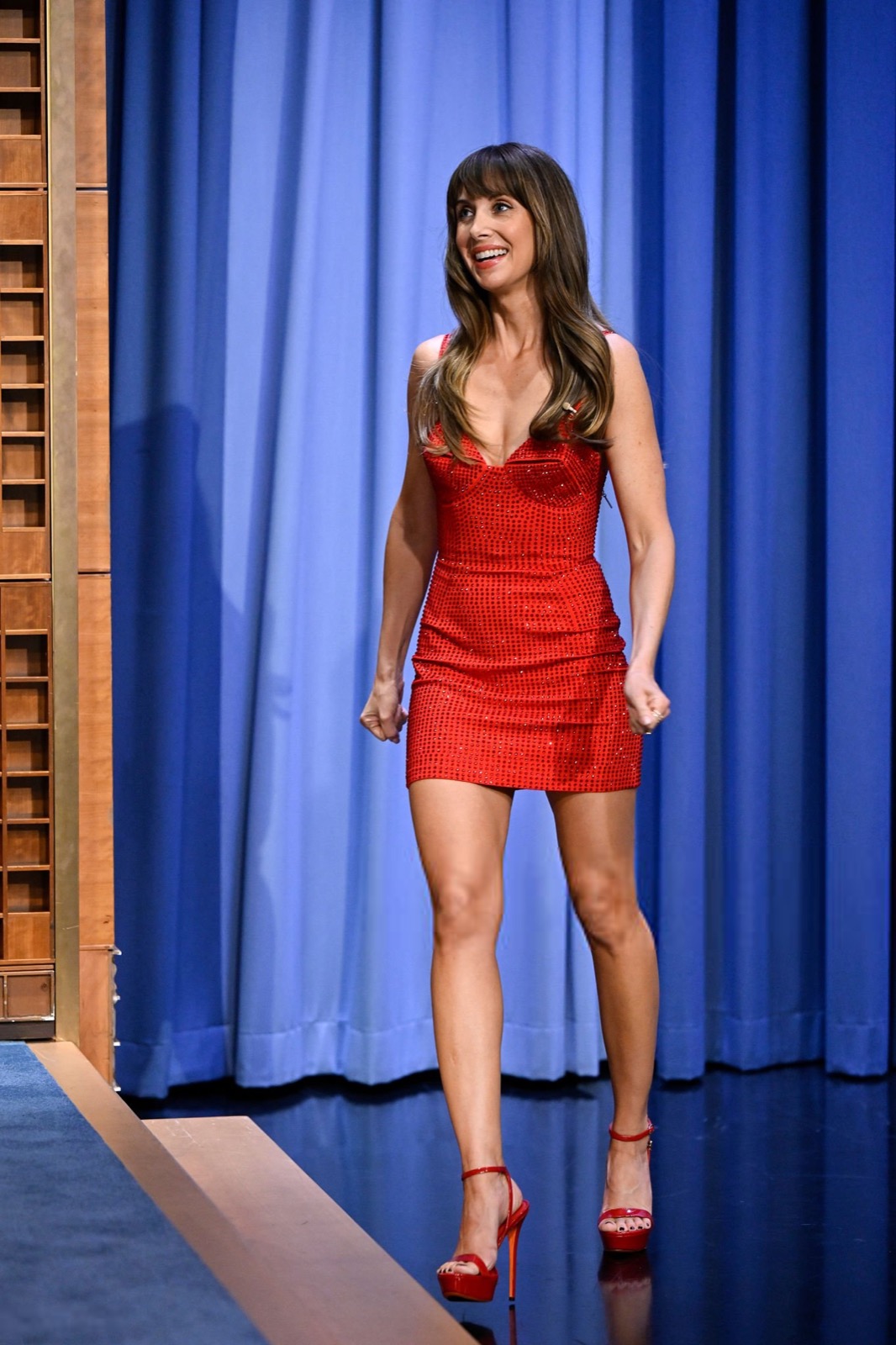
Alison Brie’s approach to physical fitness, particularly her proficiency in performing pull-ups, gained widespread attention during her preparation for the Netflix series GLOW (Gorgeous Ladies of Wrestling). Her dedication to mastering this compound movement serves as a benchmark for functional strength training. Achieving a pull-up requires a combination of scapular stability, latissimus dorsi engagement, and core integration, demonstrating that structural strength is developed through consistent, progressive resistance training rather than simple repetition.
The Functional Significance of the Pull-Up
The pull-up is frequently cited by strength and conditioning coaches as the gold standard for upper-body pulling strength. Unlike machine-assisted exercises that isolate individual muscle groups, the pull-up is a closed-kinetic chain exercise. This means the hands are fixed to a bar while the body moves through space, forcing the neuromuscular system to coordinate multiple muscle groups simultaneously.
For actors like Alison Brie, physical training is rarely about hypertrophy for the sake of aesthetics alone. Instead, it involves building the functional capacity to perform demanding athletic maneuvers repeatedly without injury. A pull-up targets the primary movers—the latissimus dorsi and the biceps—while requiring significant recruitment of the trapezius, rhomboids, and the deep core musculature to prevent swinging or compensatory movement.
Prerequisites for Performing Your First Pull-Up
Before attempting a full, unassisted pull-up, it is essential to build the foundation required to support your own body weight safely. Jumping into full repetitions without sufficient tendon and ligament strength can lead to strain in the shoulders or elbows.
Building Scapular Control
The initiation of a pull-up begins with the "scapular pull." Before bending the elbows, the shoulder blades should be retracted and depressed. If you cannot hold this position while hanging from a bar, your lats are not yet primed to handle the load of your body weight. Practice dead hangs—simply holding onto the bar with active shoulders—to improve grip strength and shoulder stability.
The Role of Negative Training
Eccentric training, or "negatives," is the most effective method for bridging the gap between an inability to perform a pull-up and completing your first one. To perform a negative:
- Use a box or bench to jump up so your chin is above the bar.
- Engage your core to maintain a rigid body position.
- Lower yourself as slowly as possible (aim for 5 to 10 seconds per descent).
- Focus on keeping the elbows tucked and the chest moving toward the bar.
This eccentric phase builds the necessary connective tissue density and muscle fibers required for the concentric (lifting) portion of the movement.
Comparative Methods for Pull-Up Progression
Strength gains are rarely linear, and athletes often use a combination of tools to facilitate progress. Below is a breakdown of common methods used to build the strength necessary for bodyweight mastery.
| Method | Focus | Skill Level | Primary Benefit |
|---|---|---|---|
| Dead Hangs | Grip & Stability | Beginner | Improves tendon health and forearm endurance. |
| Band-Assisted | Patterning | Beginner/Intermediate | Allows for full range of motion with reduced load. |
| Eccentric Negatives | Strength | Intermediate | Maximizes muscle fiber recruitment under tension. |
| Unassisted Pull-Ups | Performance | Advanced | Tests integrated strength and neuromuscular control. |
Technical Execution: The Alison Brie Training Standard
When observing the training protocols used by athletes for high-stakes roles, consistency in form is prioritized over volume. Poor form—such as kipping, swinging, or failing to reach full extension—often indicates that the individual is not yet ready for that intensity level.
Avoiding Common Technical Errors
- The "Half-Rep" Mistake: Failing to descend to a full dead hang or failing to pull the chin over the bar shortens the range of motion, reducing the effectiveness of the exercise. Always aim for a "full hang to chin-over" cycle.
- Shoulder Shrugging: If your shoulders shrug toward your ears at the top of the movement, you are losing structural integrity. Focus on pushing the bar down rather than pulling your body up.
- Core Relaxation: Allowing the legs to swing creates momentum, which masks weakness. Tighten your glutes and maintain a slight hollow-body position to ensure the lats are doing the work.
Incorporating Volume and Frequency
For those following a regimen similar to professional training, frequency is key. Instead of training to failure every day, integrate pull-up practice into a structured split. This might include three sessions per week where volume is high, interspersed with lighter sessions focusing on technical refinement. In 2026, many professional trainers advocate for "Greasing the Groove"—performing several sub-maximal sets throughout the day to build neural efficiency, rather than taxing the nervous system with high-intensity failure sets in every session.
Nutritional and Recovery Requirements
Training at the level required to master difficult movements like pull-ups necessitates an intentional approach to recovery. Muscles do not grow during the workout; they grow during the recovery phase following the stress of the training.
Protein intake must be sufficient to facilitate muscle protein synthesis. For most individuals training for strength, a baseline of 1.6 to 2.0 grams of protein per kilogram of body weight is standard. Beyond nutrition, sleep quality remains the most overlooked factor in performance. Without 7–9 hours of quality sleep, the central nervous system cannot recover from the high demand of compound pulling movements, leading to stalled progress and increased injury risk.
Frequently Asked Questions
How long does it take to get your first pull-up?
The timeline varies based on your starting strength and body composition. For an untrained individual, consistent negative and assisted training can lead to the first unassisted pull-up in 8 to 12 weeks. Consistency is more important than intensity in the early phases.
Should I do pull-ups if I have shoulder pain?
If you experience sharp or radiating pain during pull-ups, stop immediately. Shoulder pain often indicates a lack of rotator cuff stability or improper form. Consult a physical therapist to identify if the issue is a labral concern or merely an imbalance that can be corrected with specific accessory movements like face-pulls.
Are resistance bands necessary for progress?
Resistance bands are a helpful tool, but they are not strictly necessary. If you do not have bands, focus on negatives and isometric holds at various angles of the pull-up. These methods provide similar mechanical tension without the need for additional equipment.
Can pull-ups replace all other back exercises?
While the pull-up is an elite movement for back development, it primarily targets the vertical pull plane. To achieve a well-rounded physique and prevent imbalances, it is recommended to supplement pull-ups with horizontal pulling exercises, such as dumbbell rows or inverted rows, to address the muscles of the mid-back and rhomboids.
How do I maintain progress after reaching 5 pull-ups?
Once you can perform 5 clean repetitions, you should transition from bodyweight-only training to weighted pull-ups. Using a dip belt to add small amounts of external load (starting with 2.5kg to 5kg) will force continued adaptation and strength gains.
Practical Next Steps for Success
To replicate the progress seen in high-intensity training programs, start by testing your current baseline. Can you hold a dead hang for 30 seconds? If not, dedicate the next two weeks exclusively to grip and scapular hanging work. Once you can hold a hang, introduce negative pull-ups twice a week.
Track your performance in a logbook. Note the number of repetitions, the time taken for the eccentric (lowering) phase, and any lingering soreness. By treating your progress as a data-driven project rather than an indefinite struggle, you align your training with the methodologies used by professionals to achieve elite physical results.