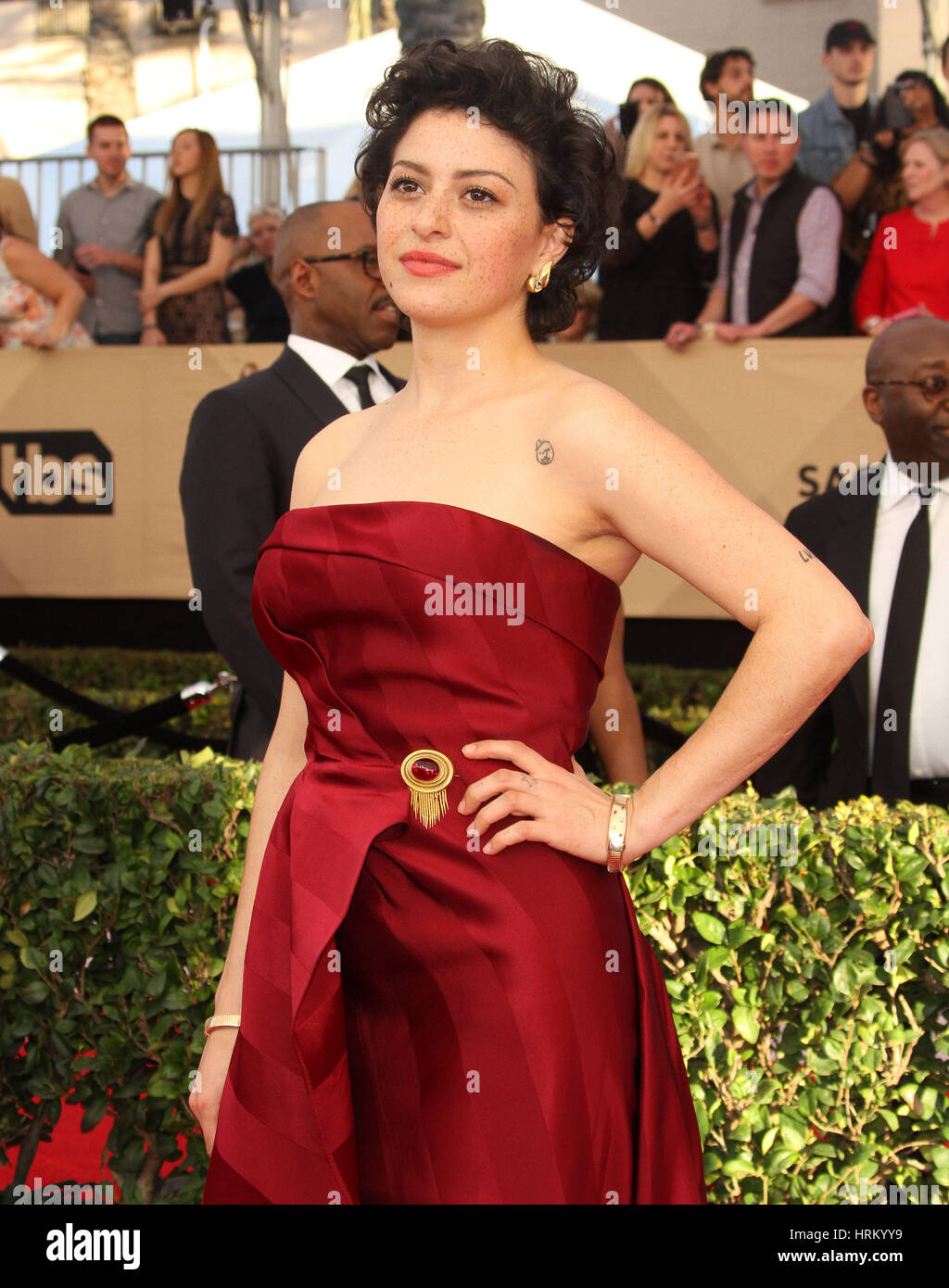
In 2003, Alia Shawkat achieved her major career breakthrough as Mae "Maeby" Fünke on the seminal sitcom Arrested Development. This role served as the cornerstone of her rising profile, transitioning her from a child actor into a critically acclaimed figure in independent film, television production, and the visual arts over the subsequent two decades.
The year 2003 remains one of the most significant inflection points in modern television history. While many viewers at the time were focused on the mainstream success of traditional multi-cam sitcoms, a quiet revolution was occurring on the Fox network. At the center of this shift was a fourteen-year-old actress named Alia Shawkat. Her portrayal of the dry, manipulative, and fiercely independent Maeby Fünke didn't just provide a comedic foil to the eccentric Bluth family; it established a template for the "indie" sensibility that would define her career for the next twenty-three years.
The 2003 Paradigm Shift: Launching Arrested Development
When Arrested Development premiered on November 2, 2003, Alia Shawkat was a relatively unknown teenager with a few credits in projects like State of Grace. However, her casting in Mitchell Hurwitz’s ensemble comedy placed her alongside heavyweights like Jason Bateman, Portia de Rossi, and Jeffrey Tambor.
The show was radical for its time. It abandoned the laugh track, utilized a single-camera documentary style, and featured a density of "Easter egg" jokes and long-running gags that demanded a high level of audience engagement. In this environment, Shawkat had to hold her own against seasoned improvisers and comedic veterans.
Why Maeby Fünke Was Different
In 2003, most teenage characters on television were written through a lens of melodrama or simple rebellion. Maeby Fünke was an anomaly. She was a con artist in training, a girl who felt neglected by her self-absorbed parents (Lindsay and Tobias) and reacted by essentially raising herself.
Shawkat played Maeby with a deadpan delivery and a "coolness" that was far beyond her years. Whether she was posing as a high-ranking film executive or orchestrating elaborate scams to get her parents' attention, Shawkat’s performance was grounded in a specific type of realism. This "rising profile" in the early 2000s was characterized by her ability to be the smartest person in the room while maintaining the vulnerability of a teenager looking for a place to belong.
The Architecture of a Rising Profile (2004–2015)
The trajectory of a child star often follows a predictable path of typecasting or burnout. Shawkat, however, used the momentum of 2003 to pivot toward the independent film circuit. As Arrested Development struggled with ratings despite its critical acclaim—eventually facing cancellation in 2006—Shawkat began curating a filmography that prioritized artistic substance over blockbuster paychecks.
Establishing the "Indie Queen" Identity
Following the initial run of Arrested Development, Shawkat became a staple of the "mumblecore" and independent film movements. Her choices in the late 2000s and early 2010s demonstrated a desire to work with auteurs and explore unconventional narratives.
- Whip It (2009): Directed by Drew Barrymore, this film allowed Shawkat to showcase a more grounded, supportive role within the roller derby subculture.
- The Runaways (2010): Portraying Robin, a fictionalized composite character, Shawkat demonstrated her range in a gritty, biographical drama about the 1970s rock scene.
- Cedar Rapids (2011): Working alongside Ed Helms and John C. Reilly, she continued to hone her comedic timing in a more mature, R-rated setting.
By the mid-2010s, her profile had risen to a point where she was no longer just "the girl from Arrested Development." She was recognized as a versatile actor who could anchor a project with a mixture of irony and heart.
The Search Party Era: A Second Career Peak
If 2003 was the year Alia Shawkat became a household name for comedy fans, 2016 was the year she redefined her career for the prestige TV era. The launch of Search Party on TBS (later HBO Max) saw Shawkat taking the lead as Dory Sief.
Search Party was a genre-bending "millennial noir" that satirized the self-obsession of a specific generation while maintaining a high-stakes mystery. As Dory, Shawkat transitioned from a lost young woman looking for meaning to a character embroiled in murder, legal battles, and eventually, a cult-like spiritual awakening. This role was instrumental in her rising profile because it allowed her to lead a series that was both commercially successful and intellectually challenging.
The show ran for five seasons, concluding in 2022. During this time, Shawkat wasn't just the star; she also served as a producer, reflecting her growing influence behind the camera. Her work on Search Party earned her widespread acclaim and solidified her status as a powerhouse in modern television.
Diversification and the Multi-Hyphenate Approach
By 2026, looking back at Shawkat's career, it is clear that her profile rose not just through acting, but through a commitment to the "multi-hyphenate" lifestyle. She refused to be contained by a single medium.
Visual Arts and Painting
Beyond the screen, Shawkat is a prolific painter and illustrator. Her work, often featuring surrealist figures and bold lines, has been exhibited in galleries in Los Angeles and New York. This secondary career as a visual artist has added a layer of depth to her public persona, presenting her as a genuine creative force rather than just a performer for hire.
Writing and Producing
Shawkat’s profile took another leap when she co-wrote and starred in the 2018 film Duck Butter. The film was an experimental romantic drama that explored intimacy by having two characters spend 24 hours together without sleeping. This project highlighted her willingness to take risks and her interest in exploring the messy, unvarnished realities of human connection—a far cry from the polished sitcom world of 2003.
Alia Shawkat's Career Milestones (2003–2026)
To understand how her profile has evolved, it is helpful to look at the key projects that defined her journey from a teenager in 2003 to an industry veteran in 2026.
| Year | Project | Role | Significance |
|---|---|---|---|
| 2003 | Arrested Development | Maeby Fünke | Breakout role; defined the "smart teen" archetype. |
| 2009 | Whip It | Pash | Transitioned from TV child star to film supporting actor. |
| 2013 | Arrested Development (S4) | Maeby Fünke | Netflix revival; proved the lasting legacy of the character. |
| 2016 | Search Party | Dory Sief | First major lead role in a prestige series; producer credit. |
| 2018 | Duck Butter | Naima | Co-writer and star; cemented her "indie" credentials. |
| 2022 | The Old Man | Angela Adams | Pivot to high-stakes thriller alongside Jeff Bridges. |
| 2025 | Severance (Season 2) | Confirmed Cast | Entry into one of the most discussed sci-fi series of the decade. |
The Cultural Impact of Her Heritage and Identity
A significant part of Alia Shawkat’s rising profile involves her advocacy and representation. Born to an Iraqi father and a mother of Norwegian and Irish descent, Shawkat has been vocal about the complexities of identity in Hollywood.
In the early 2000s, her heritage was rarely a point of discussion in mainstream press. However, as her profile grew, she began using her platform to discuss the nuances of being a person of color in an industry that often favors narrow archetypes. Her success has paved the way for other Middle Eastern actors to find roles that are not defined by stereotypes, but by talent and character depth.
Alia Shawkat in 2026: The Current Landscape
As of 2026, Alia Shawkat is experiencing what many critics call her "Third Act" of prominence. Her recent work in the second season of the Apple TV+ hit Severance and her continued role in the FX/Hulu series The Old Man demonstrate that she has successfully transitioned from the youthful energy of 2003 into a mature, commanding presence.
Her profile today is one of stability and respect. She is frequently cited by younger actors as an example of how to navigate the industry with integrity. By focusing on projects that challenge her—whether through voice acting in acclaimed animation or taking on physically demanding roles in thrillers—she has avoided the pitfalls of nostalgia. While the world will always remember her as Maeby Fünke, the Alia Shawkat of 2026 is a multifaceted artist who has more than earned her place at the table.
Common Mistakes When Analyzing Her Career
When looking back at Shawkat's rising profile since 2003, fans and critics often make several errors:
- Over-focusing on the "Child Star" narrative: Shawkat was never a traditional child star in the mold of Disney or Nickelodeon. Her roots were always in adult-oriented comedy and independent sensibilities.
- Ignoring her production work: Much of her "rising profile" in the 2020s comes from her work behind the camera, influencing how stories are told and which voices are elevated.
- Underestimating her range: Because she is so gifted at comedy, some overlook her dramatic depth, which has been the primary focus of her career in the mid-2020s.
Frequently Asked Questions
How old was Alia Shawkat when Arrested Development started in 2003?
Alia Shawkat was born on April 18, 1989. When the pilot for Arrested Development was filmed and aired in 2003, she was 14 years old. She essentially grew up on the set, concluding the show's initial three-season run at age 17.
What is Alia Shawkat's most famous role?
For many, she remains most famous for Maeby Fünke in Arrested Development. However, for the younger "streaming" generation, she is best known for her role as Dory Sief in the critically acclaimed series Search Party, which ran from 2016 to 2022.
Is Alia Shawkat still acting in 2026?
Yes, she is highly active. In 2026, she is a series regular on several high-profile shows and continues to appear in independent films. She has also expanded her work into directing and producing more frequently.
Did Alia Shawkat win any awards for her early work?
While Arrested Development won numerous Primetime Emmy Awards as a series, the individual cast members often shared in the "Best Ensemble" accolades from various critics' associations. Shawkat herself received significant praise and nominations for her performance as Dory in Search Party.
What is Alia Shawkat's background?
She is of Iraqi, Norwegian, and Irish descent. Her father, Tony Shawkat, is from Baghdad and moved to the United States in the 1970s. This diverse background has influenced her artistic perspective and the types of projects she supports.
Summary of Next Actions for Fans and Researchers
If you are interested in exploring the evolution of Alia Shawkat’s career from its 2003 origins to the present day, consider the following steps:
- Revisit the Pilot: Watch the first episode of Arrested Development (2003) to see the immediate confidence Shawkat brought to the screen.
- Explore the "Search Party" Arc: To see her growth as a lead actress, watch the progression of Dory Sief from Season 1 to Season 5.
- Check Her Recent Credits: Look for her work in the 2024 and 2025 seasons of The Old Man and Severance to see her current dramatic range.
- View Her Art: Search for her visual art collections online to understand her aesthetic beyond the screen.
Alia Shawkat’s journey from 2003 to 2026 is a blueprint for longevity in the entertainment industry. By staying true to her independent roots while embracing the opportunities of the prestige TV era, she has built a profile that is as enduring as it is influential.