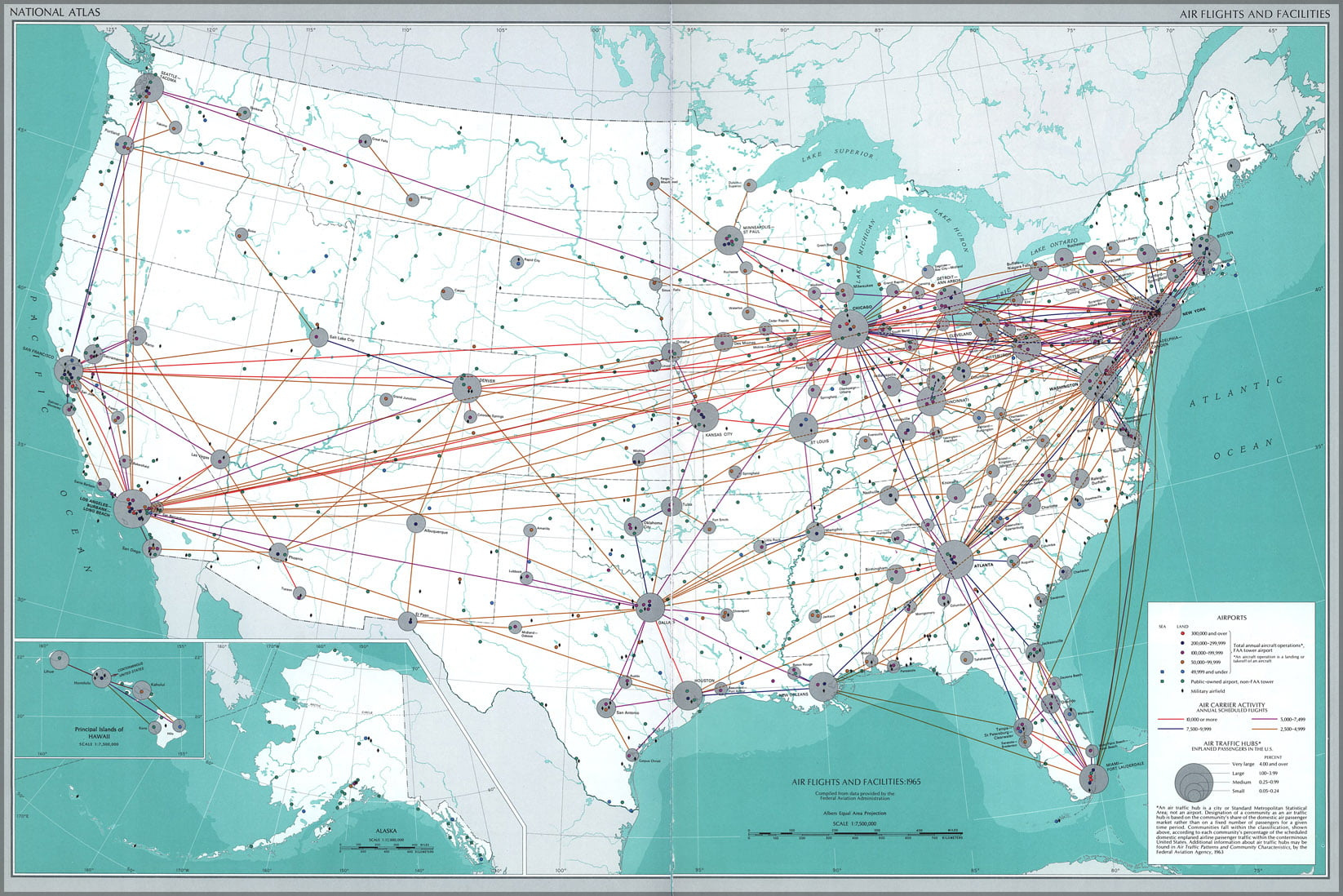
The United States aviation network is a complex, multi-tiered system comprising over 19,000 landing facilities, ranging from massive international hubs to small sod strips. As of 2026, the Federal Aviation Administration (FAA) oversees approximately 5,000 public-use airports, with 380+ designated as primary commercial service airports that facilitate the movement of nearly one billion passengers annually.
Understanding the National Plan of Integrated Airport Systems (NPIAS)
To understand the overview of US airports, one must first look at the National Plan of Integrated Airport Systems (NPIAS). This federal classification system identifies which airports are significant to national air transportation and are therefore eligible to receive federal grants under the Airport Improvement Program (AIP). The FAA categorizes these facilities based on their activity levels and the roles they play in the broader economy.
Primary Commercial Service Airports
These are the workhorses of the American economy. To be classified as a Primary Commercial Service Airport, a facility must handle more than 10,000 passenger boardings (enplanements) per year. Within this category, the FAA further breaks them down into hubs:
- Large Hubs: These handle 1% or more of total annual US enplanements. There are typically around 30 of these airports, and they manage the vast majority of international and domestic connecting traffic.
- Medium Hubs: These handle between 0.25% and 1% of enplanements.
- Small Hubs: These handle between 0.05% and 0.25%.
- Non-hub Primary: These handle more than 10,000 enplanements but less than 0.05% of the national total.
Non-Primary and General Aviation Airports
The majority of US airports fall into the General Aviation (GA) category. While they do not host scheduled commercial flights, they are critical for emergency services, agricultural spraying, corporate travel, and flight training.
- Reliever Airports: These are high-capacity GA airports located in major metropolitan areas. Their primary function is to "relieve" congestion at large commercial hubs by providing an alternative for smaller, private aircraft.
- National, Regional, and Local GA: These classifications represent the airport’s economic reach. National GA airports serve as cross-country corridors, while local GA airports often serve as the only air link for rural communities.
Major Aviation Hubs: The Engines of Connectivity
In 2026, the hierarchy of US airports remains anchored by a few "mega-hubs" that serve as the primary gateways for international commerce and domestic transfers. These facilities are often managed by city departments or independent port authorities and operate as "cities within cities."
Hartsfield-Jackson Atlanta International Airport (ATL)
ATL continues to hold its position as one of the world's busiest airports by passenger volume. Its unique layout—featuring a central terminal connected to several parallel concourses by an underground "Plane Train"—allows for incredibly efficient transfer of passengers. As the primary hub for Delta Air Lines, ATL serves as the central node for North American east-west and north-south traffic.
Los Angeles International Airport (LAX)
As the premier gateway to the Pacific Rim, LAX is a critical infrastructure asset. By 2026, the multi-year "LAMP" (Landside Access Modernization Program) has fully integrated the Automated People Mover (APM), finally connecting the terminal area to the regional light rail system and a consolidated rent-a-car facility. This has significantly reduced the historic traffic congestion around the "horseshoe" terminal area.
Chicago O’Hare International Airport (ORD)
O’Hare remains a global titan, serving as a dual hub for both United Airlines and American Airlines. The "ORD 21" expansion project has reached significant milestones by 2026, featuring a new Global Terminal that allows for seamless integration of domestic and international flights, reducing the need for passengers to exit and re-enter security during transfers.
Dallas/Fort Worth International Airport (DFW)
Geographically centered in the US, DFW is the primary fortress hub for American Airlines. It is notable for its expansive land area—larger than the island of Manhattan—and its highly efficient runway configuration that allows for simultaneous arrivals even in marginal weather conditions.
Infrastructure Modernization and the 2026 Landscape
The current state of US airports in 2026 is largely defined by the long-term results of the Bipartisan Infrastructure Law (BIL) passed earlier in the decade. This federal investment spurred a wave of terminal reconstructions and runway rehabilitations that had been deferred for years.
Digital Transformation and Passenger Flow
Modern US airports now rely heavily on biometric identification. In 2026, "curb-to-gate" facial recognition is common for international travelers, and many domestic passengers utilize digital IDs via the TSA PreCheck program. These technologies have shortened wait times despite record-high passenger volumes.
Sustainable Aviation Infrastructure
A major shift in 2026 is the integration of Sustainable Aviation Fuel (SAF) delivery systems. Major airports like San Francisco (SFO) and New York (JFK) have upgraded their fuel hydrant systems to blend SAF with traditional Jet A, supporting the industry's goal of net-zero carbon emissions by 2050. Additionally, ground support equipment (GSE), such as baggage tugs and gate bridges, have transitioned almost entirely to electric power at large hubs.
The Role of Air Cargo
While passenger traffic gets the headlines, the US airport system is the backbone of global e-commerce. Memphis International Airport (MEM) and Louisville Muhammad Ali International Airport (SDF) serve as the global "superhubs" for FedEx and UPS, respectively. These airports operate at peak capacity during the overnight hours, ensuring that the logistics chain of the United States remains uninterrupted.
Comparing Top Tier US Airports
The following table provides a comparison of key metrics for the most significant US airports based on their operational roles in 2026.
| Airport Name (Code) | Primary Hub Status | Key Carriers | Unique Operational Strength |
|---|---|---|---|
| Atlanta (ATL) | Large Hub | Delta Air Lines | Highest passenger throughput globally. |
| Los Angeles (LAX) | Large Hub | Multi-carrier Gateway | Primary trans-Pacific connection point. |
| Chicago O'Hare (ORD) | Large Hub | United, American | Triple-parallel runway landing capacity. |
| Dallas/FW (DFW) | Large Hub | American Airlines | Largest carbon-neutral airport in the US. |
| Denver (DEN) | Large Hub | United, Southwest | Massive land area for future expansion. |
| New York (JFK) | Large Hub | Delta, JetBlue, American | Primary trans-Atlantic international gateway. |
| Memphis (MEM) | Cargo Hub | FedEx Express | Highest cargo tonnage in North America. |
| Orlando (MCO) | Large Hub | Southwest, Spirit | High-volume "Origin and Destination" (O&D) traffic. |
Security, Regulations, and Governance
Every airport in the US operates under a strict regulatory framework led by the FAA and the Transportation Security Administration (TSA).
The TSA and REAL ID Implementation
By 2026, the REAL ID Act is fully enforced across all US jurisdictions. This means every traveler aged 18 and older must present a REAL ID-compliant driver’s license or another acceptable form of identification (such as a passport) to pass through security checkpoints for domestic flights. The integration of "Computed Tomography" (CT) scanners at checkpoints has also become the standard, allowing passengers to keep liquids and electronics inside their bags, which has materially improved throughput.
Federal vs. Local Control
While the FAA controls the airspace and provides funding for safety-related projects, the airports themselves are typically owned by local or state governments. This "landlord-tenant" model means that the airport authority manages the land and buildings, while airlines lease gates and terminal space. In 2026, we see an increase in Public-Private Partnerships (P3s), where private consortia manage specific terminals (such as the New Terminal One at JFK) to bring in private capital for massive renovation projects.
Air Traffic Control (ATC) Modernization
The transition to NextGen (Next Generation Air Transportation System) is largely complete by 2026. This satellite-based system has replaced aging ground-based radar, allowing for more direct flight paths (Performance Based Navigation) and "continuous descent" arrivals. This technology reduces fuel burn, minimizes noise over residential areas, and increases the overall capacity of the national airspace.
The Economic Impact of the Airport System
Airports are not just transit points; they are massive economic engines. In many US states, the primary international airport is the single largest employer. The economic impact is categorized into three tiers:
- Direct Impact: Jobs at the airport, including airlines, security, concessions, and ground handling.
- Indirect Impact: Jobs in the supply chain, such as catering companies, fuel suppliers, and aircraft maintenance facilities located nearby.
- Induced Impact: The spending of airport and airline employees in the local economy.
Furthermore, the presence of a large hub airport is a primary factor for Fortune 500 companies when deciding where to locate corporate headquarters. The ability to fly non-stop to global financial centers remains a prerequisite for regional economic competitiveness.
Challenges Facing US Airports in 2026
Despite modernization, several challenges persist within the US aviation landscape:
- Climate Resilience: Coastal airports like Miami (MIA), San Francisco (SFO), and Newark (EWR) are investing heavily in sea walls and drainage systems to combat rising sea levels and intensified storm surges.
- Workforce Shortages: The industry continues to face a need for skilled technicians, air traffic controllers, and pilots to keep pace with the growing demand for air travel.
- UAM Integration: The rise of Urban Air Mobility (UAM)—electric vertical takeoff and landing (eVTOL) aircraft—has required airports to start planning for "vertiports" to integrate air taxi services into existing airport footprints.
FAQ
What is the difference between a primary and non-primary airport?A primary airport handles more than 10,000 scheduled passenger enplanements per year. A non-primary airport handles fewer than that or serves only general aviation (private) aircraft. Primary airports receive more federal funding because they are considered more critical to the national commercial network.
How early should I arrive at a US airport in 2026?While technology has improved, the general rule remains two hours for domestic flights and three hours for international flights. However, during peak holiday periods at major hubs like ATL or ORD, additional time is recommended due to ground traffic and terminal congestion.
Are all US airports owned by the federal government?No. Almost all public-use airports in the US are owned by local, county, or state governments, or by specially created "Airport Authorities." The federal government (via the FAA) provides oversight, safety regulation, and grant funding, but it does not own or operate the airports themselves.
Do I need a passport to fly domestically in the US in 2026?Not necessarily, but you do need a REAL ID-compliant form of identification. If your state-issued driver's license is not REAL ID-compliant, you will need to use a passport or an alternative federal ID (like a Global Entry card) to clear TSA security, even for domestic flights.
Which US airport has the most international connections?John F. Kennedy International Airport (JFK) in New York typically leads in the number of international destinations and carriers, serving as the primary US gateway for trans-Atlantic and South American traffic.
Practical Recommendations for Navigating US Airports
For travelers and professionals navigating the US airport system in 2026, efficiency is found in preparation. Always verify terminal assignments through the airline's mobile app, as many major hubs have completed massive "gate shuffles" following recent renovations. Utilizing programs like TSA PreCheck or CLEAR remains the most effective way to bypass traditional security queues. Finally, for those connecting through large hubs like DFW or DEN, allow at least 60 to 90 minutes for layovers to account for the physical distance between concourses, even with the presence of automated people movers.