The AI regulation threshold debate centers on defining the specific computational, capability, and risk-based markers that trigger mandatory safety oversight for advanced machine learning models. Policymakers and industry leaders are currently negotiating whether thresholds should be based on objective hardware usage (such as training compute FLOPs), specific model capabilities (like autonomous cyber-offense), or qualitative safety testing outcomes to prevent systemic risks.
The Origins of the Threshold Concept
The discussion regarding regulatory thresholds is an attempt to bridge the gap between abstract safety concerns and enforceable legal frameworks. In the early 2020s, the development of Large Language Models (LLMs) accelerated, leading to a situation where the most powerful systems were being developed by private entities with minimal external transparency. By 2026, the global legislative landscape has shifted from voluntary commitments toward codified requirements.
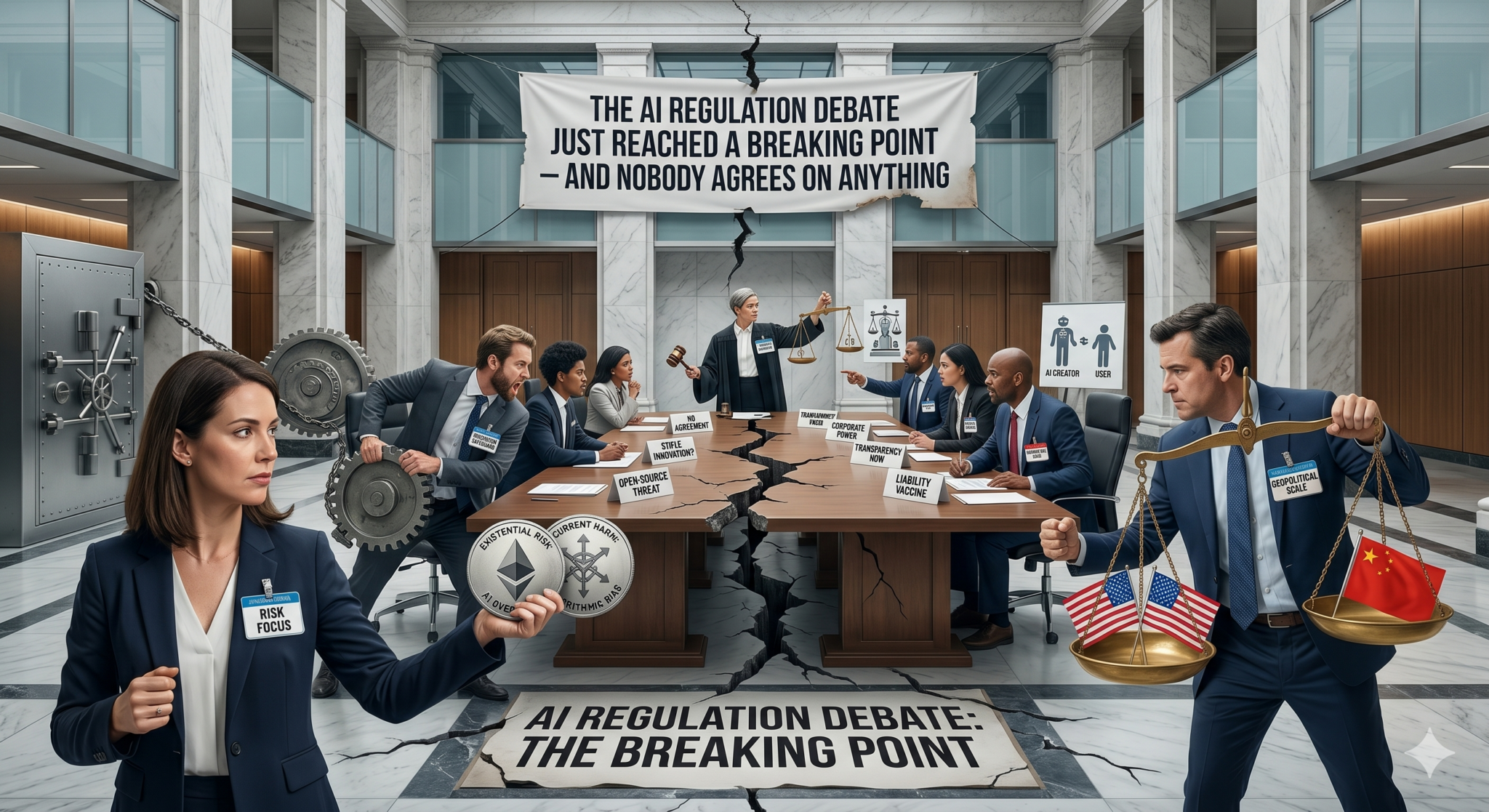
The debate is fundamentally a dispute over "what to measure." If regulators set the bar too high, they risk missing smaller, agile models that might be repurposed for malicious ends. If they set it too low, they risk stifling innovation, imposing excessive compliance costs on small-to-medium enterprises, and potentially driving the most advanced AI research into jurisdictions with lax oversight.
Primary Metrics Under Discussion
The search for a "regulatory threshold" involves three distinct schools of thought regarding how to identify an AI system that warrants government intervention.
1. Computational Power (Compute-Based Thresholds)
Proponents of compute-based thresholds argue that they provide the most objective, verifiable metric. By measuring the floating-point operations (FLOPs) used to train a model, regulators can create a clear line of demarcation. If a model requires, for instance, 10^26 FLOPs to train, it is automatically categorized as a "frontier" or "high-risk" system. This approach is highly favored by enforcement agencies because it is difficult for companies to hide the massive infrastructure required for such training runs.
2. Capability Benchmarks (Behavior-Based Thresholds)
This approach shifts the focus from how the model was built to what the model can actually do. Organizations such as the AI Safety Institute (AISI) are developing standardized batteries of tests to assess models for specific capabilities, such as automated vulnerability discovery, chemical synthesis assistance, or persuasive disinformation campaigns. The regulatory threshold is reached when a model demonstrates a predefined, dangerous level of proficiency in these tests.
3. Risk-Based Tiers
Taking inspiration from existing regulations like the EU AI Act, this model categorizes AI systems based on their deployment context and potential for harm. Under this framework, a model used in critical infrastructure or judicial decision-making triggers regulatory thresholds regardless of its raw compute power, whereas a high-compute model used for purely creative entertainment purposes might be subject to lower levels of oversight.
Comparative Overview of Threshold Approaches
| Metric Type | Primary Benefit | Main Limitation | Implementation Status (2026) |
|---|---|---|---|
| Training Compute | Easily auditable and objective. | Ignores model architecture improvements. | Standard for Tier 1 compliance. |
| Capability Testing | Directly measures harmful potential. | Susceptible to "test set" gaming. | Currently in pilot/testing phase. |
| Usage Context | Focuses on real-world impact. | Difficult to monitor post-deployment. | Core of regional legal frameworks. |
The Challenge of "Moving Goalposts"
A recurring theme in the AI regulation threshold debate is the rapid pace of algorithmic efficiency. In 2024, it was estimated that a specific amount of compute was required to reach a certain level of performance. By 2026, research in sparse activation, quantization, and architectural optimization means that a model can achieve the same—or better—performance with significantly less hardware.
This "efficiency gap" renders static thresholds obsolete quickly. If regulation is tied to a hard number, developers can simply optimize their training processes to stay just below that number while still producing highly dangerous models. Consequently, many regulatory bodies are now moving toward "dynamic thresholds" that require periodic review by independent scientific committees to adjust metrics based on the current state of the art in machine learning efficiency.
Technical and Operational Implications
For developers and companies, the threshold debate is not merely academic; it dictates the cost of compliance. Reaching a regulatory threshold usually triggers a cascade of operational requirements:
- Pre-Deployment Safety Reports: Companies must submit detailed documentation on training data, security protocols, and safety evaluations.
- Third-Party Auditing: Mandatory external assessment of the model's robustness against adversarial attacks.
- Infrastructure Reporting: Requirement to log and disclose the hardware resources utilized during training.
- Post-Market Monitoring: Real-time logging of system outputs and incident reporting if the model exhibits unexpected behavior in production.
For smaller startups, the burden of these requirements can be prohibitive. This has led to the emergence of a "compliance-as-a-service" sector, where vendors provide standardized safety suites designed to bring models into alignment with established regulatory thresholds without the company needing to build an internal compliance department from scratch.
Ethical Considerations and the "Dual-Use" Dilemma
The debate is heavily influenced by the "dual-use" nature of AI. The same architecture used for high-level drug discovery could theoretically be used to design novel pathogens. Because the underlying technology is general-purpose, setting a threshold based on the intent of the creator is rarely sufficient.
Critics of strict thresholds argue that they infringe upon academic freedom and open-source development. If an open-source model crosses a threshold due to its performance, are the developers liable for how the community uses it? This question has led to a major rift in the policy community, with some advocating for "developer liability," while others insist that regulation should focus on "deployment liability"—meaning only the entity that makes the AI accessible to the public should face regulatory scrutiny.
Common Misconceptions
- "Thresholds will end AI development." Most regulatory proposals focus on high-end frontier models rather than every AI application. Basic models used for simple classification remain largely outside these mandates.
- "Thresholds are purely political." While the negotiation is political, the selection of metrics relies on a significant amount of input from computer scientists and safety researchers aiming to quantify "catastrophic risk."
- "Compliance is a one-time cost." Regulations involve ongoing monitoring and versioning; as a model is updated or fine-tuned, it may re-cross regulatory thresholds, requiring new assessments.
Frequently Asked Questions (FAQ)
1. Who sets these thresholds in 2026? Thresholds are set by a combination of national government agencies, such as the AI Safety Institutes, and international standards bodies. While jurisdictions vary, there is a strong push for international harmonization to ensure global consistency.
2. Does an open-source model have to comply if it crosses the threshold? This is one of the most debated aspects. Currently, many jurisdictions require the release platform or the individual entity making a model available to the public to ensure it meets safety standards, even if the underlying weights were developed by a distributed open-source community.
3. What happens if a model is trained in secret but is never released? Most regulations focus on deployment. However, "compute-monitoring" legislation is gaining traction, which would require data centers to report large-scale training runs to government bodies, regardless of whether the resulting model is made public.
4. How are threshold metrics adjusted as technology improves? Regulatory frameworks are increasingly using "rolling reviews." Instead of hard-coding a specific number into law, statutes delegate the power to update threshold definitions to specialized technical committees that meet annually to account for advancements in hardware and efficiency.
5. Are these thresholds the same globally? Not yet. While the EU, US, and several Asian markets are attempting to align their definitions of "frontier" or "high-risk" AI to avoid regulatory fragmentation, slight differences in local laws and political priorities create a complex environment for global AI companies.
Moving Forward: Next Actions for Stakeholders
For businesses operating in the AI space, the primary recommendation is to adopt "safety-by-design" principles well before hitting any potential regulatory threshold. This involves building internal documentation pipelines that track training parameters, architecture, and safety-testing results from day one.
Do not wait for formal enforcement to begin your safety journey. Organizations should:
- Conduct internal capability mapping to understand where your models currently stand relative to emerging industry benchmarks.
- Invest in adversarial testing (red-teaming) early, as this will likely be a core requirement for compliance under any threshold-based regime.
- Engage with industry working groups to participate in the public commentary periods where specific threshold numbers are debated and finalized.
Staying ahead of these developments is not just about avoiding fines; it is about establishing the trust necessary to deploy AI at scale. As the industry matures, the companies that treat safety, transparency, and regulatory compliance as a competitive advantage rather than a bureaucratic burden will be the ones that sustain long-term growth.