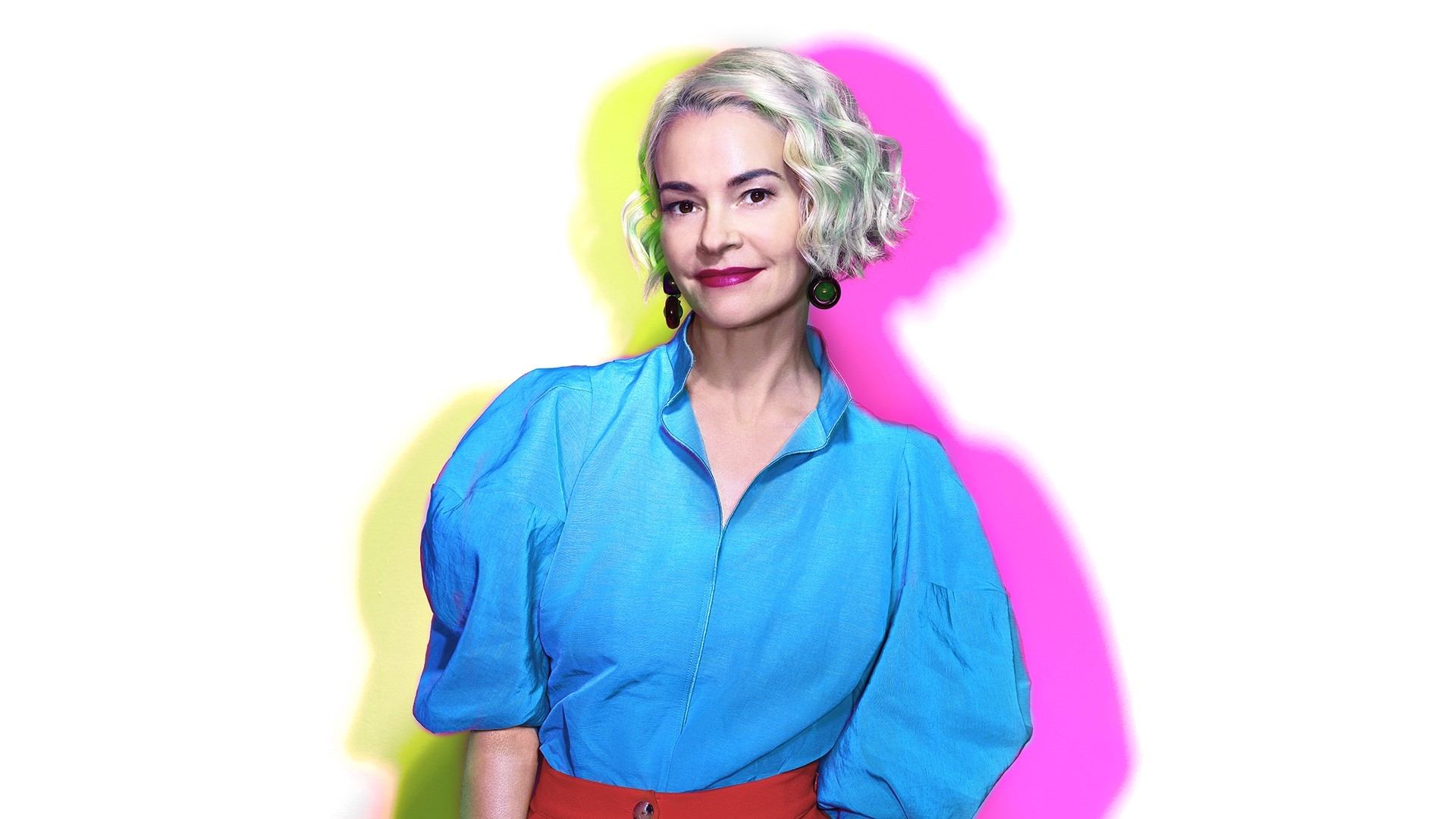
Adele Channing is a central antagonist in the Showtime series The L Word, appearing primarily in Seasons 4 and 5. Portrayed by actress Malaya Rivera Drew, Adele begins as a mousy, devoted personal assistant to Jenny Schecter but eventually orchestrates a ruthless professional and personal takeover. She is best known for stealing the directorial reins of the film Lez Girls, effectively usurping Jenny’s career and identity through calculated manipulation and psychological mimicry.
The Introduction of Adele Channing: A Study in Deception
When Adele Channing first arrives in West Hollywood during Season 4, she is presented as the quintessential "plain Jane." Her introduction is strategically understated, designed to lull both the characters and the audience into a false sense of security. At this point in the series, Jenny Schecter—now a published author and rising star in the indie film world—is at her most narcissistic. Adele leverages this by presenting herself as Jenny’s biggest admirer, a tactic that makes her indispensable to a woman who thrives on external validation.
Adele’s initial characterization is defined by her utility. She is the assistant who anticipates every need, who handles the mundane tasks of Jenny’s chaotic life, and who offers unwavering support during Jenny’s frequent emotional outbursts. However, for astute viewers, the red flags are present from the beginning. Adele’s quietness is not a sign of shyness but of observation. She spends the better part of Season 4 "studying" the social dynamics of the main group at The Planet, identifying the weaknesses in Jenny’s professional armor and the fractured relationships within the inner circle.
In the context of mid-2000s television, Adele represented a classic "Single White Female" trope. This narrative device involves a character who becomes obsessed with another, eventually attempting to replace them by adopting their mannerisms, clothing, and professional status. As the series progressed, Adele’s transformation became one of the most polarizing and discussed arcs in The L Word history, serving as a cautionary tale about the perils of unchecked ambition in the Hollywood machine.
The Single White Female Transformation
The most jarring aspect of Adele’s character development is the physical and behavioral mimicry she employs against Jenny. This process is gradual, making it all the more unsettling. It begins with small choices: a similar pair of glasses, a specific way of styling her hair, or adopting Jenny’s unique cadence of speech. By the time Jenny realizes what is happening, Adele has already integrated herself into the production of Lez Girls—the film adaptation of Jenny’s book—in a capacity that exceeds a mere assistant.
Adele’s psychological warfare is rooted in her ability to mirror Jenny’s own insecurities. She knows that Jenny fears being seen as a "hack" or losing control of her creative vision. Adele uses this knowledge to subtly undermine Jenny’s confidence while simultaneously making herself the "rational" alternative in the eyes of the studio executives and producers.
The Mirroring Phase
During the mid-point of her arc, Adele’s wardrobe begins to shift. She moves away from the drab, oversized clothing of her introduction and starts wearing pieces that are direct echoes of Jenny’s "eccentric auteur" aesthetic. This visual cues the audience that the "old Adele" is gone. She is no longer just an employee; she is a competitor who is playing a much longer and more sophisticated game than Jenny is capable of managing.
The Social Infiltration
Adele also manages to navigate the complex social waters of the "Chart." While the main group of friends (Bette, Tina, Alice, Shane, and Helena) remains largely skeptical of her, Adele finds ways to remain in their orbit. Her presence at parties and social gatherings becomes more assertive. She stops asking for permission to speak and starts offering "insights" that often serve to drive wedges between Jenny and her peers.
The Takeover of 'Lez Girls'
The climax of Adele’s narrative arc occurs during the production of Lez Girls. This fictional film within the show served as a meta-commentary on the real-life production of The L Word and the lesbian film industry of the era. As the creator and original director, Jenny Schecter is increasingly erratic on set, treating the cast and crew with disdain and failing to meet the logistical demands of a major production.
Adele sees this chaos as her ultimate opportunity. Behind Jenny’s back, Adele begins forming alliances with the film’s producers, most notably Bill (the executive producer who has little patience for Jenny’s temperament). Adele presents herself as the stable, organized, and equally talented alternative. She demonstrates a deep understanding of the script—largely because she has been "studying" Jenny’s notes and personal journals for months.
The Coup d'État
The definitive moment of betrayal occurs when the studio decides to fire Jenny from her own movie. In a move of calculated brutality, it is revealed that Adele has been promoted to the director's chair. The scene where Adele confronts Jenny, now wearing Jenny’s signature sunglasses and speaking with a newfound cold authority, remains one of the most memorable "villain reveals" in LGBTQ+ television.
Adele’s takeover was not just a professional theft; it was an erasure. By the time the film is completed, Adele has reshaped it to her own liking, often removing the more personal and nuanced elements that Jenny had infused into the story. To the industry, Adele is the "vunderkind" who saved a sinking ship. To Jenny, Adele is the monster she inadvertently created.
Psychological Profile: Ambition vs. Malice
Analyzing Adele Channing requires looking past the surface-level villainy to understand her motivations. Unlike other antagonists in the series who were driven by romantic jealousy or ideological differences, Adele is driven purely by social and professional mobility.
Opportunism or Sociopathy?
Critics and fans have long debated whether Adele is a true sociopath or simply a hyper-ambitious opportunist. Her ability to completely discard her original persona suggests a lack of a core identity, a trait often associated with high-functioning sociopathy. She does not appear to feel guilt or remorse for the lives she disrupts; for Adele, people are merely stepping stones to a higher echelon of power.
A Foil to Jenny Schecter
In many ways, Adele is the "shadow self" of Jenny Schecter. While Jenny is performative, loud, and emotionally transparent, Adele is quiet, methodical, and opaque. Jenny’s narcissism makes her vulnerable because she needs to be seen; Adele’s lack of ego (at least initially) makes her dangerous because she is content to remain invisible until the moment she strikes. The tragedy of their relationship is that Jenny was so blinded by her own reflection in Adele’s "devotion" that she failed to see the predatory nature of that gaze.
Malaya Rivera Drew’s Performance
The success of the Adele character rests heavily on the performance of Malaya Rivera Drew. Playing a character that must undergo a complete personality transplant is a significant challenge for any actor. Drew navigated this by planting seeds of the "new Adele" early on—a lingering look, a subtle smirk, or a moment of intense focus when Jenny wasn't looking.
Drew’s portrayal in Season 5, once the mask has fully slipped, is chillingly effective. She adopts a flat, monotone delivery that contrasts sharply with the frantic energy of the rest of the cast. This stylistic choice emphasizes Adele’s detachment from the emotional reality of those around her. Even in 2026, looking back at the series' 20th-anniversary discussions, Drew's performance is frequently cited as a masterclass in playing a slow-burn antagonist.
The Legacy of Adele in The L Word Canon
Adele Channing remains one of the most hated characters in the original series, often rivaling Jenny herself in terms of fan vitriol. However, her presence was essential for the show’s exploration of the Hollywood industry. She represented the "sharks" that inhabit the waters of fame—individuals who have no loyalty to art or community, only to their own advancement.
Impact on the Series Finale and Beyond
While Adele does not play a major role in the final Season 6 "Who Killed Jenny Schecter?" mystery, her actions in Season 5 are a primary catalyst for Jenny’s ultimate downward spiral. By stripping Jenny of her creative identity and her professional standing, Adele leaves Jenny in a state of total emotional insolvency. Many viewers believe that the trauma of the Adele betrayal was what finally pushed Jenny over the edge of sanity.
In the 2019-2023 revival, The L Word: Generation Q, Adele is not mentioned by name, but the themes she introduced—toxic assistants, the ethics of adaptation, and the cutthroat nature of queer media—remain prevalent. The "Adele" archetype has appeared in various forms in other prestige dramas, but rarely with the same level of specific, targeted malice.
Comparison: Adele Channing vs. Jenny Schecter
To understand why Adele was so successful in her takeover, it is helpful to compare her traits and tactics directly with those of her mentor/victim, Jenny Schecter.
| Feature | Jenny Schecter | Adele Channing |
|---|---|---|
| Primary Motivation | Artistic recognition and emotional validation | Power, status, and professional control |
| Communication Style | Dramatic, poetic, and often erratic | Quiet, observational, and eventually cold/precise |
| Weakness | Extreme narcissism and lack of boundaries | Total lack of authentic identity |
| Tactics | Emotional manipulation and storytelling | Mimicry, corporate maneuvering, and gaslighting |
| Professional Outcome | Ousted from her own production; social pariah | Successfully directed Lez Girls; gained industry fame |
| Relationship to Others | Desperate for love and approval | Views others as tools or obstacles |
Frequently Asked Questions
What happened to Adele after Season 5?
In the series continuity, Adele remains the director of Lez Girls. Following the events of Season 5, she effectively moves into the upper echelons of the film industry. While the character does not return for the sixth and final season, her presence is felt through the fallout of the film's release and the psychological damage she left behind in the West Hollywood community.
Did Adele kill Jenny Schecter?
Adele was one of the many suspects in the "Who Killed Jenny?" mystery that framed Season 6. However, she was not physically present at Bette and Tina’s house on the night of the death. While she didn't "pull the trigger" (or push her into the pool), many fans argue that Adele "killed" Jenny’s spirit, making her eventual demise a tragic inevitability of her lost career and identity.
Why did Adele start acting like Jenny?
This was a psychological tactic known as "mirroring." By acting like Jenny, Adele was able to learn Jenny’s creative process and gain the trust of the producers who were already accustomed to Jenny’s style. It also allowed her to "replace" Jenny in the eyes of the studio, making the transition from Jenny to Adele as director feel like a natural (and more stable) evolution for the project.
Who played Adele on The L Word?
The character was played by Malaya Rivera Drew. Following her stint on The L Word, Drew went on to appear in numerous other television series, including ER, Entourage, and Mayans M.C. Her performance as Adele remains one of her most recognized roles due to the character's intense impact on the series' plot.
Was Adele Channing based on a real person?
While the creators of The L Word have never confirmed a specific real-life inspiration, Adele Channing is widely seen as a composite of various "assistant-turned-rival" archetypes common in Hollywood lore. The storyline also draws heavy inspiration from the 1992 film Single White Female and the 1950 classic All About Eve.
Final Considerations for Viewers
For those revisiting The L Word in 2026, the Adele Channing arc serves as a fascinating, albeit frustrating, exploration of ambition within a marginalized community. While her actions are undeniably villainous, her character exposes the fragility of the "Found Family" when confronted with the cold realities of professional greed.
If you are watching the series for the first time, pay close attention to Adele’s behavior in the background of Season 4. The brilliance of the character lies in the details—the way she watches Jenny, the way she slowly alters her appearance, and the way she subtly collects information. Adele Channing is a reminder that in the world of West Hollywood, the most dangerous person in the room isn't always the one making the most noise; sometimes, it’s the one holding the clipboard and taking notes.
Next Action: To fully appreciate the complexity of this arc, re-watch Season 4, Episode 9 ("Line of Fire") and pay specific attention to Adele’s first interactions with the Lez Girls script. Observe how her "helpful" suggestions are actually the first steps in her long-term plan to seize control of the production.