The additive inverse property states that for any given number $n$, there exists a unique number $-n$ such that their sum equals zero, which is the additive identity. In simpler terms, every number has an "opposite" that, when added to it, "cancels it out" to result in zero. This fundamental principle applies across all real numbers, complex numbers, vectors, and matrices.
Understanding the Additive Inverse Property: A Comprehensive Definition
At its most fundamental level, the additive inverse property is one of the essential axioms of arithmetic and algebra. In the year 2026, it remains a cornerstone of mathematics education, serving as the bridge between basic counting and the complex manipulation of algebraic variables. To understand the additive inverse, one must first understand the concept of the "opposite."
In the set of real numbers, the additive inverse of a number $a$ is the number that, when added to $a$, yields the additive identity, zero. Formally, this is expressed as: $a + (-a) = 0$
This property is not merely a rule for calculation; it defines the very structure of the number systems we use. Whether you are dealing with integers, rational numbers, or irrational numbers, the property holds true. The term "inverse" refers to the action of reversing or undoing an operation. While addition moves a value along the number line in one direction, adding the inverse moves it back to the origin (zero).
The Role of Zero as the Additive Identity
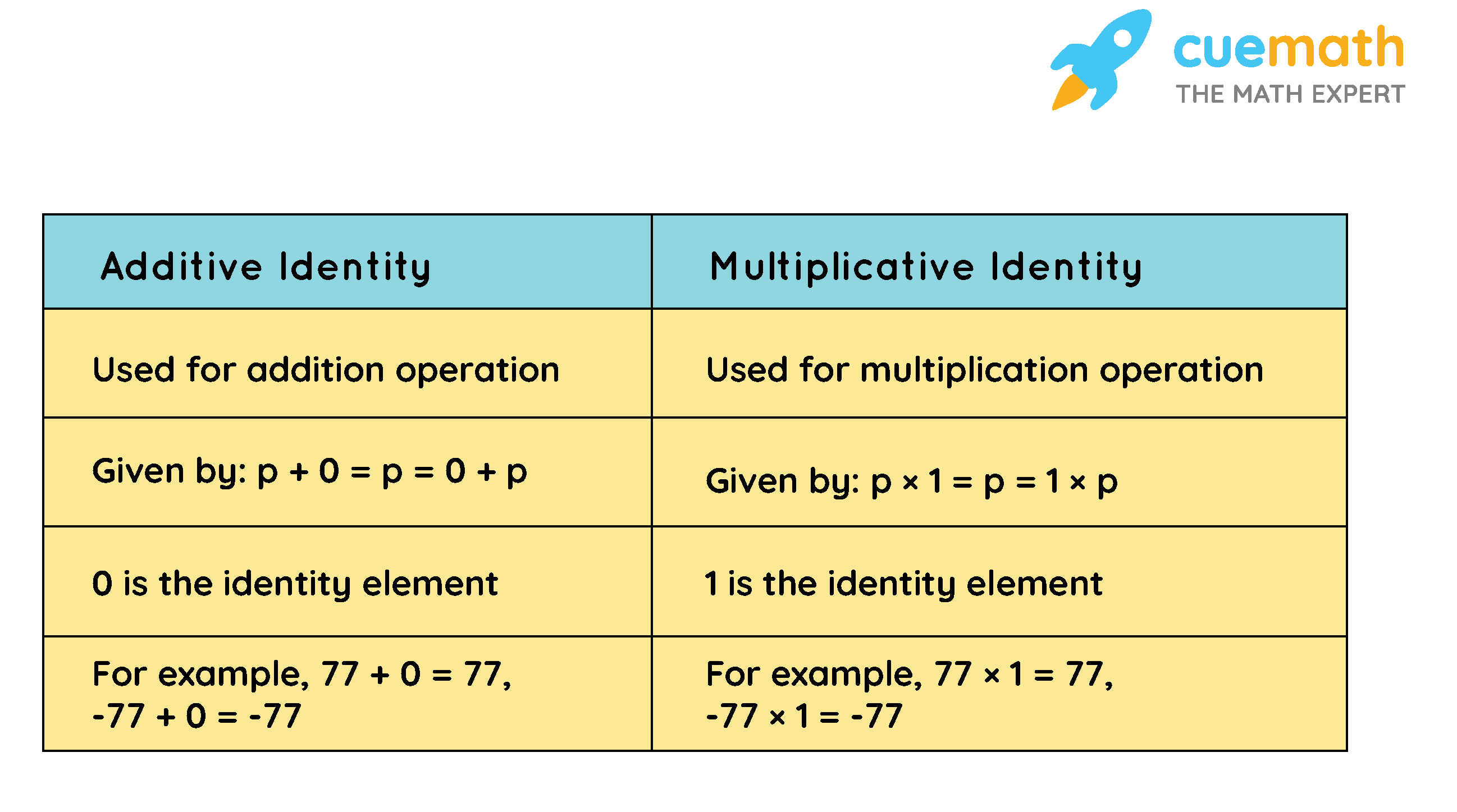
To fully grasp the additive inverse property, one must understand the role of zero. In mathematics, zero is known as the additive identity. This means that adding zero to any number does not change that number's value ($a + 0 = a$). The additive inverse property essentially identifies the specific pair of numbers that "target" this identity element.
Without the additive identity, the concept of an inverse would have no destination. The relationship between a number, its inverse, and the identity element is a foundational component of group theory in higher mathematics. In any "additive group," the existence of an inverse for every element is a requirement. This ensures that for every "action" (adding a value), there is a corresponding "reaction" or "reversal" (adding the inverse) that returns the system to its neutral state.
The Geometric Interpretation: The Number Line
Visualizing the additive inverse is often easiest through the use of a number line. If you start at zero and move three units to the right, you land on $+3$. To return to zero, you must move three units in the opposite direction—to the left. This movement to the left is represented by $-3$.
Geometrically, the additive inverse of a number is its mirror image across the zero point. The distance from zero, known as the absolute value, is identical for both the number and its additive inverse. For example, $|5| = 5$ and $|-5| = 5$. The only difference between the two is the direction they face relative to the origin. This symmetry is why the additive inverse is frequently referred to as the "opposite" in middle school mathematics curricula.
In the context of 2026 educational standards, instructors emphasize that "negative" does not always mean a number is "less than zero" in a functional sense, but rather that it represents a directional shift. This is particularly relevant in physics and engineering, where the additive inverse property helps define equilibrium in systems of forces.
Applying the Property Across Different Number Sets
The additive inverse property is universal, but its appearance changes slightly depending on the type of numbers being used. Understanding these nuances is critical for students progressing from basic arithmetic to advanced calculus.
Integers and Whole Numbers
For integers, the property is straightforward. The inverse of a positive integer is its negative counterpart, and the inverse of a negative integer is a positive one. For example, the additive inverse of $-12$ is $+12$ because $-12 + 12 = 0$. It is important to note that the natural numbers (whole numbers starting from 1) do not contain their own additive inverses within the set; this necessity for inverses is one of the primary historical reasons for the development and acceptance of negative numbers.
Rational and Real Numbers
The property extends seamlessly to fractions and decimals. The additive inverse of $\frac{3}{4}$ is $-\frac{3}{4}$. The additive inverse of $0.125$ is $-0.125$. Even irrational numbers follow this rule: the additive inverse of $\pi$ (pi) is $-\pi$. In these cases, the logic remains identical: the sum of the value and its inverse must be exactly zero.
Complex Numbers
In complex numbers, which take the form $a + bi$ (where $i$ is the imaginary unit $\sqrt{-1}$), the additive inverse requires changing the sign of both the real and the imaginary parts.
- Value: $3 + 4i$
- Additive Inverse: $-(3 + 4i) = -3 - 4i$
- Verification: $(3 + 4i) + (-3 - 4i) = (3 - 3) + (4i - 4i) = 0 + 0i = 0$.
The Additive Inverse in Algebraic Expressions
In algebra, the additive inverse property is used to simplify expressions and solve equations. It is the mathematical justification for the "balancing" method used to isolate variables.
Solving Linear Equations
Consider the equation $x + 7 = 15$. To isolate the variable $x$, we need to eliminate the $+7$. We do this by applying the additive inverse of $7$, which is $-7$, to both sides of the equation:
- $x + 7 + (-7) = 15 + (-7)$
- $x + 0 = 8$
- $x = 8$
By using the additive inverse property, we transform the $+7$ into the additive identity (zero), effectively removing it from the left side of the equation without violating the equality. This principle is taught as the foundation of algebraic manipulation as early as pre-algebra.
Subtraction as Addition of the Inverse
One of the most profound realizations in early algebra is that subtraction does not technically exist as an independent operation. Instead, subtraction is defined as the addition of the additive inverse. For instance, the expression $10 - 4$ is mathematically equivalent to $10 + (-4)$.
This perspective is vital when dealing with negative numbers. If a student is asked to solve $10 - (-4)$, they can use the property of additive inverses. The "inverse of the inverse" returns the original value. Therefore, subtracting a negative four is the same as adding a positive four: $10 + 4 = 14$. This conceptual shift reduces errors when working with complex polynomial subtractions and signed numbers.
Formal Properties and Theorems
The additive inverse property is governed by several secondary rules that provide consistency across mathematical proofs.
The Uniqueness Theorem
A critical aspect of the additive inverse is that it is unique. For any real number $a$, there is one and only one number $b$ such that $a + b = 0$. This uniqueness is a provable theorem in field theory. If there were two different inverses, the logical structure of our number system would collapse, as equations would no longer have single, predictable solutions.
The Double Negative Property
The "inverse of an inverse" is a common point of confusion for students, but it is a direct consequence of the additive inverse property. Formally, $-(-a) = a$. This states that if you take the opposite of a number, and then take the opposite of that result, you return to the starting value. This is used extensively when simplifying algebraic terms such as $-(x - y)$, which becomes $-x + y$.
The Case of Zero
Zero is the only number that is its own additive inverse. $0 + (-0) = 0$ Since $0 + 0 = 0$, it follows that $-0$ is simply $0$. This unique status reinforces zero’s role as the central point of the real number system and the identity element for addition.
Comparison: Additive Inverse vs. Multiplicative Inverse
It is common for learners to confuse the additive inverse with the multiplicative inverse (also known as the reciprocal). While both are "inverses," they operate under different rules and target different identity elements.
| Feature | Additive Inverse | Multiplicative Inverse |
|---|---|---|
| Primary Goal | Reach the sum of 0 | Reach the product of 1 |
| Common Name | The Opposite | The Reciprocal |
| Operation | Addition ($a + (-a)$) | Multiplication ($a \times \frac{1}{a}$) |
| Identity Element | 0 | 1 |
| Example (5) | $-5$ | $\frac{1}{5}$ |
| Example (-2/3) | $2/3$ | $-3/2$ |
| The Case of Zero | Inverse is $0$ | No inverse (Undefined) |
As shown in the table, the additive inverse changes the sign of the number to reach zero, while the multiplicative inverse flips the number (numerator and denominator) to reach one. Notably, every real number has an additive inverse, but zero does not have a multiplicative inverse because division by zero is undefined.
Advanced Applications: Vectors and Matrices
The additive inverse property is not limited to scalar numbers. It is a vital component of linear algebra and higher-level physics.
Vectors
In physics, forces are often represented as vectors, which have both magnitude and direction. If a force of 10 Newtons is applied to the right ($+10i$), its additive inverse is a force of 10 Newtons applied to the left ($-10i$). When these two vectors are added together, the resultant force is zero, representing a state of static equilibrium. $\vec{v} + (-\vec{v}) = \vec{0}$ The additive inverse of a vector $\vec{v} = \langle x, y \rangle$ is simply $-\vec{v} = \langle -x, -y \rangle$.
Matrices
In matrix algebra, the additive inverse of a matrix $A$ is a matrix $-A$ where every individual element has been replaced by its additive inverse. If Matrix $A = \begin{pmatrix} 1 & -2 \ 3 & 0 \end{pmatrix}$, then Matrix $-A = \begin{pmatrix} -1 & 2 \ -3 & 0 \end{pmatrix}$. Adding these two matrices results in the Zero Matrix, where every entry is 0. This is essential for solving systems of linear equations using matrix inversion or Gaussian elimination.
Common Misconceptions and Errors to Avoid
Despite the simplicity of the definition, several common errors persist in student work and professional calculations.
- Confusing Inverse with Absolute Value: Many students mistakenly believe the additive inverse is always the positive version of a number. This is incorrect. The additive inverse of $5$ is $-5$. The additive inverse is the opposite sign, not necessarily the positive sign.
- The "Change the Sign" Oversimplification: While "changing the sign" works for simple numbers, it can be confusing in expressions. For example, the additive inverse of $(x - 5)$ is $-(x - 5)$, which simplifies to $-x + 5$. Students often forget to distribute the negative sign to all terms within the parentheses.
- Operation Confusion: Using a reciprocal when an additive inverse is required. This often happens when solving equations like $5x = 0$ versus $x + 5 = 0$.
- Neglecting the Identity: Forgetting that the end goal of an additive inverse is zero. If you add a number and its "inverse" and do not get zero, you have not found the correct inverse.
Practical Recommendation for Learners
When working with the additive inverse property, the most effective strategy is to always verify your result by performing the addition. If you believe the additive inverse of $-x^2 + 3x - 4$ is $x^2 - 3x + 4$, simply add them together. If every term cancels out to leave you with zero, your inverse is correct. For those studying for standardized tests or advanced mathematics in 2026, remembering that "subtraction is just addition of the opposite" will prevent many of the sign errors that typically plague complex algebraic simplification.
Frequently Asked Questions
What is the additive inverse of a negative number? The additive inverse of a negative number is its positive counterpart. For example, the additive inverse of $-8$ is $+8$. This is because $-8 + 8 = 0$. In mathematical terms, $-(-8) = 8$.
Does every number have an additive inverse? Yes, in the sets of integers, rational numbers, real numbers, and complex numbers, every single element has a unique additive inverse. Even zero has an additive inverse, which is itself ($0$). This is a core requirement for these sets to be classified as "groups" or "fields" in mathematics.
How does the additive inverse property help in real life? The additive inverse is used daily in accounting and finance. If you have a debt of $$500$ (a negative balance), an additive inverse would be a deposit of $$500$. Adding these together results in a zero balance, effectively "canceling" the debt. It is also used in GPS technology and physics to calculate net displacement and force equilibrium.
Is the additive inverse the same as the opposite? Yes, in most educational contexts, "opposite" and "additive inverse" are used interchangeably. "Opposite" is the more common term in elementary and middle school, while "additive inverse" is the formal technical term used in high school, college, and professional mathematics.
What is the difference between an additive inverse and a reciprocal? An additive inverse is what you add to a number to get $0$ (e.g., $4$ and $-4$). A reciprocal (or multiplicative inverse) is what you multiply a number by to get $1$ (e.g., $4$ and $1/4$). They are two different ways of "undoing" an operation.