If your air conditioning system fails in Austin, Texas, the primary solution is to verify power at the thermostat and breaker, then contact a licensed Texas Air Conditioning and Refrigeration (ACR) contractor. In the Central Texas climate, professional repair involves diagnosing mechanical failures, managing refrigerant levels according to 2026 EPA standards, and ensuring system efficiency to manage high utility costs.
Navigating Austin’s High-Demand HVAC Landscape
Austin’s climate is characterized by intense, prolonged heatwaves and significant humidity levels. By 2026, the city continues to experience "urban heat island" effects, where metropolitan temperatures remain significantly higher than surrounding rural areas. For homeowners, this means HVAC systems operate under extreme stress for six to eight months of the year.
When an AC unit fails in Austin, it is rarely just an inconvenience; during the peak of July or August, it can become a health hazard. The local repair market is highly seasonal. During the "shoulder seasons" of spring and autumn, technicians are often available for same-day maintenance. However, during triple-digit temperature spikes, wait times for non-emergency repairs can extend to several days. Understanding the local industry's structure helps you navigate these periods of high demand.
The Austin HVAC market is also shaped by local energy initiatives. Austin Energy, the municipal utility, frequently updates its rebate programs to encourage high-efficiency repairs and replacements. In 2026, many repairs are evaluated not just for immediate functionality, but for their impact on the system's overall SEER2 (Seasonal Energy Efficiency Ratio) rating, which became the national standard in 2023.
Common AC Problems Specific to Central Texas
Austin’s environment presents unique challenges to cooling systems. From the limestone dust of the Hill Country to the high pollen counts and humidity of the Colorado River valley, several specific issues frequently lead to repair calls.
Capacitor and Electrical Failures
The most common "emergency" call in Austin involves the start or run capacitor. These components are sensitive to heat. When outdoor temperatures exceed 100°F, the internal temperature of a condensing unit can climb much higher. Constant cycling during Austin’s long afternoons causes capacitors to bulge or leak, preventing the compressor or fan motor from starting. While a relatively simple fix, it remains the leading cause of system downtime.
Clogged Condensate Lines
High humidity in Central Texas means an AC system pulls gallons of water out of the air daily. This moisture drains through a PVC pipe. Over time, algae and "slime" (zoogleal growth) can clog these lines. In Austin, where many units are located in attics, a clog can lead to water damage in the ceiling if the primary drain pan or the secondary float switch fails. Professional repair involves clearing these lines with pressurized air or nitrogen and installing specialized treatment tablets.
Evaporator Coil Corrosion
Austin’s air can carry various pollutants and organic compounds that contribute to "Formicary corrosion." This manifests as microscopic pinholes in the copper or aluminum evaporator coils, leading to slow refrigerant leaks. Because Central Texas systems run so frequently, even a minor leak can significantly degrade cooling capacity within a few weeks, eventually leading to a frozen coil or a compressor shutdown.
Refrigerant Transition Issues
As of 2026, the HVAC industry has moved significantly toward lower Global Warming Potential (GWP) refrigerants like R-32 and R-454B. However, many Austin homes still operate on R-410A systems. Repairing these older units has become more expensive due to the scheduled phase-down of R-410A production. Technicians must now use specialized recovery equipment to ensure no gas escapes into the atmosphere, a process strictly regulated by the Environmental Protection Agency (EPA).
Licensing and Regulatory Requirements in Texas
In the state of Texas, HVAC work is strictly regulated to ensure consumer safety. It is illegal for unlicensed individuals to perform "air conditioning and refrigeration contracting" for compensation.
The Texas Department of Licensing and Regulation (TDLR) oversees all ACR licenses. When hiring a repair service in Austin, you should verify two specific items:
- Contractor License: The business owner or lead manager must hold a Class A or Class B license. A Class A license allows the holder to work on units of any size, while Class B is limited to cooling systems of 25 tons or less (standard for residential).
- Technician Registration: The individual physically performing the work at your home should be either a "Registered Technician" or a "Certified Technician" under the supervision of a licensed contractor.
You can verify a license status directly through the TDLR License Search. Using an unlicensed repair person in Austin can void your equipment warranty and may lead to complications with homeowners' insurance claims if a fire or water leak occurs as a result of the repair.
2026 Cost Breakdown for AC Repairs in Austin
Costs for AC repair in Austin vary based on the complexity of the system (e.g., standard central air vs. high-efficiency variable-speed heat pumps). Below is a breakdown of estimated costs in the Austin metropolitan area for 2026.
| Repair Type | Estimated Cost (Parts & Labor) | Estimated Time |
|---|---|---|
| Diagnostic/Service Call | $89 – $150 | 1 Hour |
| Capacitor Replacement | $150 – $350 | 1 Hour |
| Condensate Line Clearing | $125 – $250 | 1 – 2 Hours |
| Contactor Replacement | $200 – $400 | 1 Hour |
| Blower Motor Replacement | $500 – $1,200 | 2 – 3 Hours |
| Refrigerant Recharge (R-410A) | $300 – $800+ (depending on volume) | 2 Hours |
| Evaporator Coil Replacement | $1,500 – $3,500 | 4 – 6 Hours |
| Circuit Board Replacement | $400 – $900 | 1 – 2 Hours |
Note: Prices in 2026 reflect current inflation trends and the increased cost of specialized A2L refrigerant handling tools.
Troubleshooting Before You Call a Professional
Before committing to a service fee, Austin homeowners should perform a basic diagnostic check. Many "failures" are actually simple maintenance or settings issues.
- Check the Thermostat: Ensure the batteries are fresh. In Austin's high-tech market, many homes use smart thermostats like Nest or Ecobee. If the screen is blank, the system may have tripped a safety switch due to a clogged drain line, cutting power to the thermostat.
- Inspect the Air Filter: A heavily soiled filter restricts airflow. In the dusty Central Texas environment, filters may need replacement every 30 days during peak summer. If the filter is black or grey, replace it and wait two hours to see if the system resumes cooling.
- Reset the Circuit Breaker: Locate your electrical panel and the dedicated HVAC breakers. Sometimes a power surge during an Austin thunderstorm can trip the breaker. Flip it completely to "Off" and then back to "On."
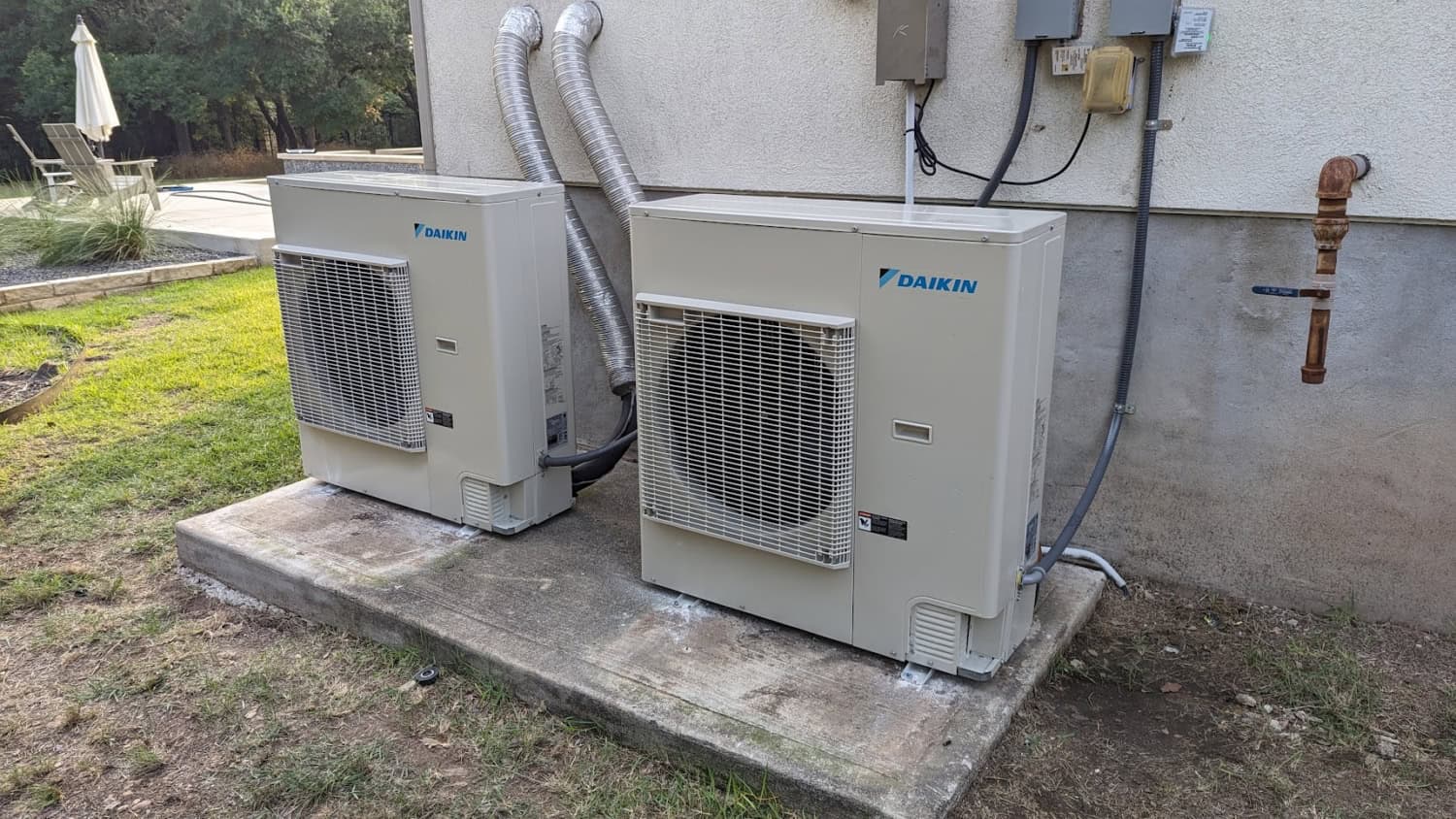
- Examine the Outdoor Unit: Ensure that shrubs, debris, or "Austin stone" landscaping isn't crowding the condenser. The unit needs at least 18 to 24 inches of clear space on all sides to reject heat effectively.
The Impact of New Refrigerant Standards
The year 2026 marks a significant era in HVAC technology. Following the AIM Act, the industry has transitioned away from R-410A in new equipment. For Austin residents, this creates a "split" repair market.
If your system was installed prior to 2025, it likely uses R-410A. Repairing a leak in these systems is now a major financial decision. Because the supply of R-410A is restricted, the cost per pound has risen significantly. Technicians must also be more meticulous about finding and fixing leaks rather than simply "topping off" a system, which is increasingly viewed as environmentally irresponsible and expensive.
Systems installed in 2025 or 2026 likely use R-32 or R-454B. These are "A2L" refrigerants, meaning they are mildly flammable. Repairs on these units require technicians to use spark-proof tools and specialized recovery cylinders. If you have a newer home in developments like Mueller or Easton Park, ensure your repair company is specifically trained in A2L safety protocols.
Emergency vs. Routine Maintenance
In Austin, the definition of an "emergency" repair is often tied to the outdoor temperature. Most local companies prioritize calls involving the elderly, infants, or those with medical conditions when temperatures exceed 95°F.
Routine maintenance, often called a "Tune-Up," is best scheduled in February or March. A professional maintenance visit in Austin should include:
- Acid wash of the condenser coils: Essential for removing the fine Texas dust that insulates the coils and forces the compressor to work harder.
- Amp-draw testing: Measuring the electrical pull of motors to predict failure before it happens.
- Static pressure check: Ensuring the ductwork is capable of handling the airflow required by modern high-efficiency blowers.
- Sanitization of the drain pan: Using EPA-approved biocides to prevent the "Austin slime" that causes clogs.
Choosing the Right AC Repair Company in Austin
With hundreds of HVAC companies operating in Travis, Williamson, and Hays counties, selection can be daunting. To find a reputable service provider, use the following criteria:
- Local Physical Address: Prioritize companies with a permanent office in the Austin area (Austin, Round Rock, Pflugerville, or Cedar Park). Some "national" companies use local sub-contractors with varying quality levels.
- NATE Certification: North American Technician Excellence (NATE) is the gold standard for technician training. A company with NATE-certified techs is more likely to diagnose a complex electrical issue correctly the first time.
- Transparent Pricing: Reputable Austin firms usually provide "flat-rate" pricing. This means you are charged a set amount for a specific repair (e.g., a fan motor replacement) regardless of how long the technician takes, protecting you from inflated hourly labor charges.
- Warranty Terms: A standard repair should come with at least a 90-day labor warranty and a one-year parts warranty. Many premium Austin contractors offer longer "no-breakdown" guarantees following a seasonal tune-up.
FAQs
Why is my AC running but not cooling my Austin home?
In Austin, this is frequently caused by a dirty evaporator coil or a low refrigerant charge. If the outdoor unit (condenser) is humming and the indoor fan is blowing air, but the air isn't cold, the heat exchange process is failing. This can also happen if the "Austin dust" has completely blocked the outdoor coil, preventing the system from releasing heat. Turn the system off to prevent compressor damage and call a technician.
How much refrigerant does my AC need?
Air conditioners are "sealed systems" and should never need refrigerant unless there is a leak. If a technician tells you that you need a "recharge" every year, you have a leak that needs to be repaired. In Austin's climate, thermal expansion and contraction of copper pipes often cause leaks at the flare fittings or the service valves.
Is it worth repairing a 10-year-old AC unit in Texas?
As a general rule, if the repair cost exceeds 50% of the value of the system and the unit is over 10 years old, replacement is often more cost-effective. In Austin, older units are typically SEER 13 or 14. Modern 2026 units are SEER2 16+, which can reduce your Austin Energy or Bluebonnet Electric bill by 20-30%, eventually paying for the replacement through energy savings.
Why does my AC smell like "dirty socks" when I turn it on?
This is a common Austin phenomenon known as "Dirty Sock Syndrome." It is caused by bacterial growth on the evaporator coils, often triggered by the high humidity and the transition between heating and cooling modes in the spring. Professional cleaning with specialized antimicrobial coatings is required to resolve the odor.
Can I repair my own AC unit?
In Austin, and the rest of Texas, you can perform basic maintenance like changing filters or cleaning the area around the condenser. However, opening the electrical panel or handling refrigerant requires a TDLR license and EPA 608 certification. Attempting DIY repairs on high-voltage components or pressurized gas systems is dangerous and typically voids your manufacturer’s warranty.
Final Recommendation for Austin Homeowners
To ensure your AC remains reliable throughout the 2026 summer season, move beyond reactive repairs and adopt a proactive strategy. Schedule a professional diagnostic before the first 90-degree day in May. If your system is more than 12 years old, begin budgeting for a transition to an A2L-compatible system, as the rising cost of R-410A will make future repairs increasingly prohibitive. Always confirm the technician’s TDLR registration upon arrival to ensure your home and investment are protected under Texas law.