The meaning behind AC/DC’s "Back in Black" is a celebratory tribute to the band's former lead singer, Bon Scott, who passed away in February 1980. Rather than a mournful dirge, the song and its parent album represent resilience, recovery, and a defiant return to the rock 'n' roll stage.
For many rock enthusiasts in 2026, "Back in Black" remains more than just a radio staple; it is a masterclass in how a creative entity can transmute profound grief into a global cultural phenomenon. To understand the song’s meaning, one must look past the thunderous riffs and examine the specific historical moment where the band’s future hung in the balance.
The Tragedy That Birthed an Anthem
To grasp the weight of the lyrics, we must return to the events of early 1980. AC/DC was on the verge of massive international stardom following the success of the Highway to Hell album. However, on February 19, 1980, lead singer Bon Scott was found dead in a car in London. The official cause was acute alcohol poisoning, classified as "death by misadventure."
The loss was catastrophic. Bon Scott was not merely a singer; he was the charismatic face and the lyrical wit of the band. Following his funeral, brothers Angus and Malcolm Young contemplated disbanding. However, encouraged by Scott’s own parents—who insisted Bon would have wanted them to continue—the band began the search for a new vocalist.
The Arrival of Brian Johnson
The transition from Bon Scott to Brian Johnson is one of the most successful "lineup changes" in music history. Johnson, formerly of the band Geordie, brought a different vocal texture—more of a gravelly, high-octane screech compared to Scott’s bluesy leer. When the band began writing for the new album, the goal was clear: they needed to acknowledge the loss of Bon without making a "funeral" record. As Angus Young famously noted, they wanted the tribute to be a celebration, not a wake.
Lyrical Analysis: Decoding the Tribute
The title track "Back in Black" serves as the mission statement for the new era of the band. Every line is carefully constructed to signal that AC/DC had survived its darkest hour.
"Back in black, I hit the sack..."
While some listeners interpret "hit the sack" literally, in the context of the song, it refers to returning to the grind of the music industry. The "black" is a multi-layered symbol. Primarily, it represents mourning—the traditional color of grief—but it also represents the "black" of a vinyl record and the "black" of a stage before the lights go up.
"Nine lives, cats eyes, abusing every one of them and running wild"
This line is a direct nod to the rock 'n' roll lifestyle that Bon Scott lived. It acknowledges the danger and the "extra" lives Scott seemed to have before his untimely passing. It is a gritty, respectful acknowledgement of his character.
"Forget the hearse 'cause I never die"
This is perhaps the most powerful line in the song. It posits that through the music, Bon Scott—and the band itself—is immortal. By refusing to "get in the hearse," the band is asserting that their spirit and Scott’s influence will continue to vibrate through the speakers of fans forever. By 2026, this prophecy has largely been fulfilled, as the song is consistently cited as one of the most played tracks in the history of digital streaming and terrestrial radio.
Musicality and the "Mutt" Lange Influence
The meaning of "Back in Black" is conveyed as much through its sonic architecture as its lyrics. Producer Robert John "Mutt" Lange played a pivotal role in shaping the sound of the album. Lange was known for his obsessive attention to detail, a stark contrast to the band’s previous "plug-in-and-play" approach.
The Power Chord Architecture
The main riff of "Back in Black"—a sequence of E, D, and A power chords—is often cited as the greatest riff in rock history. Its power lies in its space. Malcolm Young, the band’s rhythm guitarist, was a master of the "silent" beat. The gaps between the chords allow the drums to breathe, creating a sense of massive, unstoppable momentum.
Technical Precision in the Studio
Recording took place at Compass Point Studios in Nassau, Bahamas. The environment was far from the polished studios of London or Los Angeles. The band famously had to deal with tropical storms and even a crab crawling across the mixing desk. These conditions contributed to a raw, "live" feel that Lange then polished to a high-definition sheen.
| Feature | Highway to Hell (1979) | Back in Black (1980) |
|---|---|---|
| Vocalist | Bon Scott | Brian Johnson |
| Primary Theme | Rebellion and the Road | Tribute and Resilience |
| Production Style | Gritty, Blues-Rock | Polished, Hard Rock Anthem |
| Key Instrument | Gibson SG (Angus) | Gibson SG & Gretsch (Malcolm) |
| Historical Status | The Breakthrough | The Best-Seller (50M+ copies) |
The Visual Symbolism: The All-Black Cover
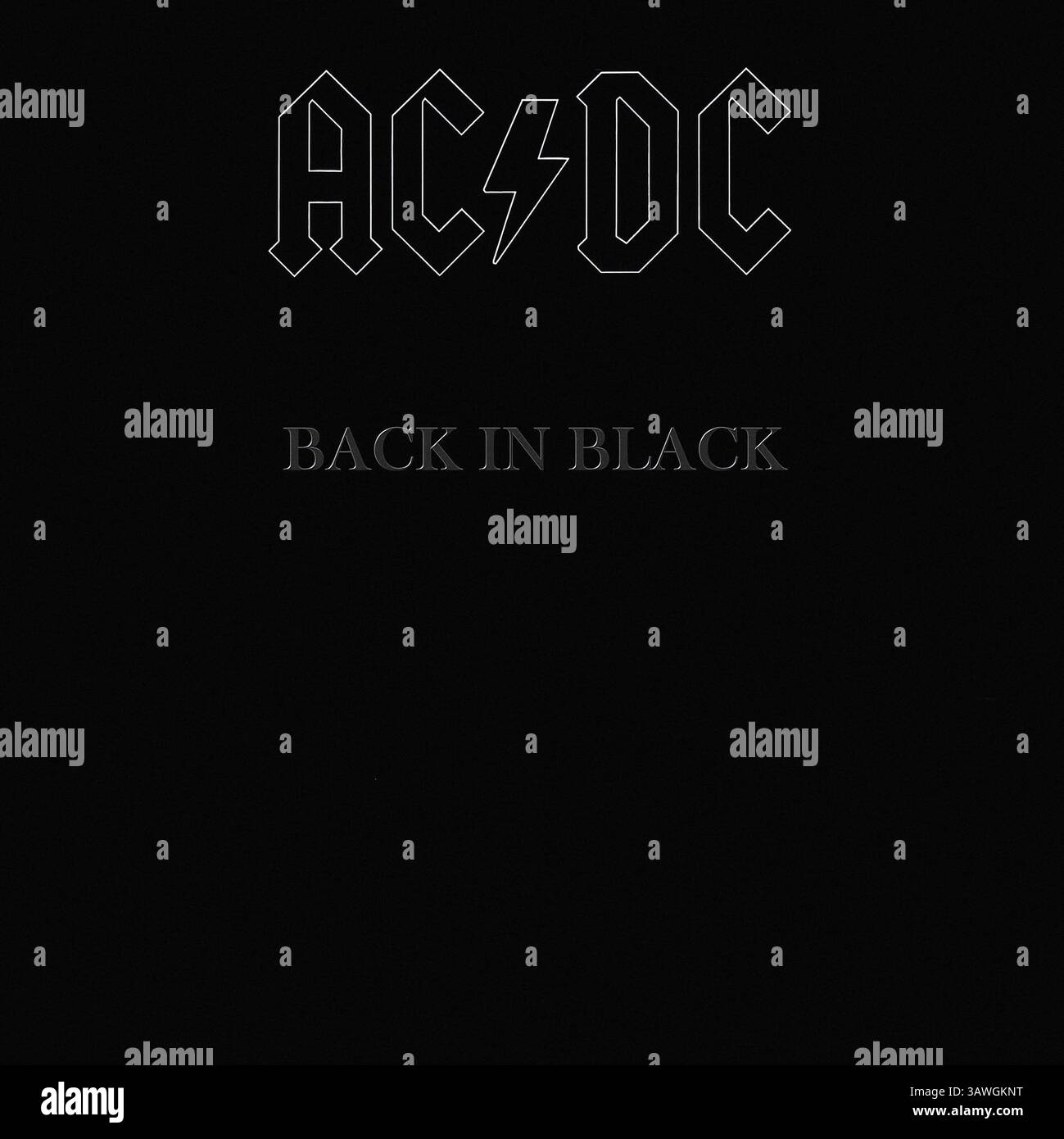
The album cover for Back in Black is an essential part of its meaning. The band insisted on a completely black cover, with the AC/DC logo outlined in white. This was a literal sign of mourning for Bon Scott.
The record label, Atlantic Records, was initially hesitant, fearing that a plain black cover would fail to attract buyers in a bin of colorful 1980s pop records. The band held their ground. To this day, the starkness of the cover remains a symbol of the somber motivation behind the music. It tells the listener, before the needle even hits the groove, that this record is a monument.
The Role of "Hells Bells" in the Narrative
While the song "Back in Black" is the centerpiece, the album’s meaning is heavily supported by the opening track, "Hells Bells." The song begins with the tolling of a 2,000-pound bronze bell, specially commissioned by the band.
The bell was not just a sound effect; it was a ritual. It announced the arrival of the band in the wake of death. The lyrics of "Hells Bells" take on a more supernatural, gothic tone, acting as a bridge between the world of the living and the memory of the dead. If "Back in Black" is the celebration of life, "Hells Bells" is the funeral rite that precedes it.
Recording Challenges at Compass Point
The creation of the album wasn't just an emotional struggle; it was a technical one. In the spring of 1980, the Bahamas was hit by severe weather. The band found themselves recording in the middle of a literal hurricane.
Brian Johnson has often recounted how he had to write lyrics while the wind howled outside. This atmospheric pressure is audible in the recordings. The tension of the weather, combined with the pressure of replacing a legend, forced the band to perform with a level of intensity they had never reached before. Every drum hit by Phil Rudd and every bass line by Cliff Williams had to be perfect to satisfy Mutt Lange’s exacting standards.
Cultural Legacy and the 2026 Perspective
As of 2026, Back in Black remains the second best-selling album of all time, trailing only Michael Jackson’s Thriller. Its meaning has evolved from a specific tribute to a universal anthem for anyone who has faced a setback and fought their way back to the top.
The song has been used in countless films, commercials, and sporting events. Whether it is Tony Stark returning in Iron Man or an underdog team taking the field, the song communicates one thing instantly: The comeback has begun.
Influence on Modern Rock
The "Back in Black" sound—characterized by dry, heavy drums and a lack of excessive reverb—set the template for hard rock in the 80s, 90s, and beyond. Producers still use the drum sounds from this album as a "gold standard" for snare and kick drum EQ.
The album proved that rock music could be both commercially massive and artistically authentic. It didn't chase the disco trends of the late 70s or the burgeoning "hair metal" trends of the early 80s. It stayed true to the blues-based roots of Angus and Malcolm Young while elevating the production to a level that made it timeless.
FAQs About AC/DC’s "Back in Black"
Did Bon Scott write any of the lyrics for "Back in Black"?
No, Bon Scott did not write the lyrics for the album. While there have been decades of rumors suggesting Scott had written lyrics in a notebook before he died, the band and the estate have consistently stated that Brian Johnson wrote the lyrics from scratch. Angus and Malcolm Young wanted to ensure the album was a fresh start and a specific tribute composed after Scott's passing.
Why is the album cover completely black?
The all-black cover was a deliberate sign of mourning for Bon Scott. The band wanted to show respect for their fallen brother by presenting the album in the "colors of grief." The minimalist design, with only the logo and title, ensures the focus remains on the music and the sentiment behind it.
What kind of bell is used at the beginning of "Hells Bells"?
The band commissioned a custom 2,000-pound (one-ton) bronze bell from the John Taylor Bellfounders in Loughborough, UK. They initially tried to record a bell in a church, but the birds nesting in the belfry kept ruining the take. The custom bell was later used as a stage prop for decades of AC/DC world tours.
How many copies has the album sold as of 2026?
By 2026, Back in Black has sold an estimated 50 million copies worldwide. It has been certified 25x Platinum by the RIAA in the United States alone. Its longevity is attributed to its "evergreen" status on streaming platforms and its continued discovery by younger generations of rock fans.
Is the song "Back in Black" about the devil?
No. While AC/DC often used "devilish" imagery (such as Highway to Hell or Hells Bells), "Back in Black" is specifically about the band's return to the music scene after the death of Bon Scott. The "black" refers to mourning and the night, not satanic themes.
Recommendations for Further Exploration
If you want to fully appreciate the meaning of "Back in Black," the best course of action is a "deep-dive" listening session. Listen to Highway to Hell (Bon Scott's final album) immediately followed by Back in Black. This sequential listening allows you to hear the stylistic shift and the emotional weight of the transition.
For those interested in the technical side, researching the production techniques of Robert John "Mutt" Lange offers insight into how the "wall of sound" was achieved without losing the individual clarity of the instruments. Finally, visiting the Bon Scott Statue in Fremantle, Australia, or his grave site provides a physical connection to the man who inspired the greatest comeback in rock history.