AARP Medigap insurance, insured by UnitedHealthcare, offers Medicare Supplement plans designed to help seniors bridge the financial gaps left by Original Medicare. Reviews generally highlight broad network access and reliable brand stability, while pointing out potential rate increases over time and the necessity of maintaining Medicare Part B.
Navigating healthcare coverage in retirement requires careful planning, particularly when transitioning from active employment benefits to Medicare. While Original Medicare (Parts A and B) provides foundational coverage for hospital visits, physician care, and medical procedures, it does not cover all out-of-pocket expenses. Deductibles, copayments, and the standard 20% coinsurance for Part B services can quickly accumulate, creating financial uncertainty for seniors living on fixed incomes. To mitigate these expenses, many older adults turn to Medicare Supplement Insurance, commonly known as Medigap.
Among the various providers in the marketplace, AARP-branded Medigap plans—which are insured and administered by UnitedHealthcare—occupy a prominent position. Evaluating these policies requires a thorough look at how they function, what consumer reviews actually say, how premiums are structured, and how they compare to alternative coverage options.
Understanding AARP Medigap Insurance Basics
Medicare Supplement insurance is sold by private insurance companies to help pay for "gaps" in Original Medicare coverage. These standardized plans are regulated by both federal and state laws, meaning that a Plan G offered by one insurer provides the exact same basic benefits as a Plan G offered by another. However, insurers differ significantly in terms of monthly premiums, customer service quality, household discounts, and financial stability.
The AARP Medigap program is unique because it is developed in conjunction with AARP (formerly the American Association of Retired Persons) and insured exclusively by UnitedHealthcare. This partnership combines AARP's massive advocacy and membership network for seniors with the immense healthcare administration and underwriting infrastructure of UnitedHealthcare, one of the largest health insurers in the United States.
It is critical for seniors to understand that AARP Medigap policies are not government-run programs, nor is AARP itself an insurance company. AARP receives royalties from UnitedHealthcare for the use of its intellectual property, which it uses to help fund its general operations and advocacy work for older Americans. The actual insurance contracts, claims processing, and customer support are handled by UnitedHealthcare or its licensed affiliates.
Core Features and Available Plan Types
UnitedHealthcare offers a variety of standardized AARP Medigap plans depending on the state of residence and the date the beneficiary first became eligible for Medicare. The most popular plans examined in consumer reviews include Plan A, Plan F, Plan G, and Plan N.
- Plan A: Offers basic benefits, covering Part A coinsurance and hospital costs, Part B coinsurance or copayment, blood, and Part A hospice care coinsurance. It is often chosen by those looking for a lower monthly premium who can absorb more out-of-pocket costs.
- Plan F: Historically the most comprehensive Medigap plan, covering all out-of-pocket costs under Original Medicare, including the Part B deductible. However, Plan F is only available to Medicare beneficiaries who became eligible for Medicare before January 1, 2020.
- Plan G: Widely considered the current gold standard for new Medicare beneficiaries. It offers nearly identical coverage to Plan F, with the single exception that the policyholder must pay the annual Medicare Part B deductible out of pocket.
- Plan N: Features lower monthly premiums by requiring small copayments for certain office visits (up to $20) and emergency room visits (up to $50) while leaving the Part B excess charges uncovered.
Summary of Aarp Medigap Plan Offerings
| Plan Type | Part A Hospital Costs & Coinsurance | Part B Coinsurance or Copayment | Blood (First 3 Pints) | Skilled Nursing Facility Coinsurance | Part A Deductible | Part B Deductible | Part B Excess Charges |
|---|---|---|---|---|---|---|---|
| Plan A | Yes | Yes | Yes | Yes | No | No | No |
| Plan F | Yes | Yes | Yes | Yes | Yes | Yes | Yes |
| Plan G | Yes | Yes | Yes | Yes | Yes | No | Yes |
| Plan N | Yes | Yes (with copays) | Yes | Yes | Yes | No | No |
Analyzing Consumer Reviews and Market Feedback
When examining independent AARP Medigap insurance reviews for seniors, a consistent pattern of strengths and weaknesses emerges from consumer watchdog reports, insurance rating agencies, and direct policyholder feedback.
Positive Review Themes
- Brand Stability and Financial Strength: UnitedHealthcare consistently receives high financial strength ratings from major agencies such as AM Best, Standard & Poor's, and Moody's. Seniors value the peace of mind that comes with knowing their insurer has the financial backing to pay claims reliably.
- Nationwide Acceptance: Because these plans utilize the extensive UnitedHealthcare network and are accepted by any doctor or hospital that accepts Medicare, policyholders rarely encounter network restrictions. This is especially appealing for seniors who travel frequently or maintain homes in multiple states.
- Additional Perks: AARP Medigap plans often include value-added benefits that go beyond standard Medigap offerings. These frequently include access to the Renew Active fitness program (similar to SilverSneakers), vision and hearing discounts, and 24/7 nurse hotline access.
- Household Discounts: Many states offer a household discount (typically ranging from 5% to 10%) if multiple individuals in the same household enroll in an AARP Medigap plan, or if multiple policies are held within the same home.
Critical Review Themes and Common Complaints
- Premium Rate Increases: A frequent point of frustration in online reviews involves rising monthly premiums. Like all Medigap insurers, UnitedHealthcare adjusts rates annually based on inflation, medical cost trends, and the aging of the local pool of policyholders. Some seniors report steep percentage increases as they grow older, particularly if their state uses an "attained-age" rating structure.
- Customer Service Inconsistencies: While many policyholders praise the phone support staff, others note long wait times or difficulty resolving complex billing disputes between Medicare and UnitedHealthcare.
- Underwriting Hurdles: Outside of the initial Medigap Open Enrollment Period, applying for an AARP Medigap plan typically requires medical underwriting. Reviewers occasionally express frustration when applications are denied or premiums are surcharged based on pre-existing health conditions.
Eligibility, Enrollment Windows, and Underwriting
Understanding when and how to enroll is the most critical factor in securing coverage without financial penalties or medical hurdles.
The Medigap Open Enrollment Period
The absolute best time to purchase an AARP Medigap plan is during your Medigap Open Enrollment Period. This is a one-time, six-month window that begins on the first day of the month in which you are both 65 or older and enrolled in Medicare Part B.
During this statutory window:
- Insurance companies cannot deny you coverage based on pre-existing health conditions.
- They cannot charge you a higher premium due to your health status or medical history.
- You do not have to answer medical underwriting questions.
Applying Outside the Open Enrollment Period
If a senior attempts to purchase or switch to an AARP Medigap plan after their Open Enrollment Period has passed, UnitedHealthcare—like any other insurer—has the legal right to subject the applicant to medical underwriting. During this process, the insurer reviews the applicant's medical history, current prescriptions, and pre-existing conditions. Depending on the state's regulations and the underwriting guidelines, the application may be accepted at standard rates, accepted at a higher rate, or outright declined.
Certain federally or state-protected scenarios, known as Guaranteed Issue Rights, allow seniors to buy a Medigap policy without medical underwriting outside the initial window. Examples include losing employer-sponsored coverage or moving out of a Medicare Advantage plan's service area during trial periods.
Cost Considerations and Premium Structures
Medigap premiums are not uniform; they vary based on geography, age, tobacco use, gender, and the rating method utilized by the insurance company within a specific state. There are three primary rating methods used for Medigap policies:
- Community-Rated (No-Age-Rated): Everyone in a specific geographic area pays the exact same monthly premium regardless of age. Premiums may still increase due to overall inflation and medical cost trends, but they do not increase simply because you have grown older.
- Issue-Age-Rated: The premium is based on your age at the exact time you bought the policy. Premiums are lower because you enrolled at a younger age, and they will not increase as you get older, barring general economic adjustments.
- Attained-Age-Rated: The premium is based on your current age, meaning it automatically increases every year as you get older. These plans often start out with the lowest initial price for younger seniors but can become the most expensive options as policyholders advance into their late seventies and eighties.
Seniors reviewing AARP Medigap options should carefully inquire about which rating system applies in their specific ZIP code to anticipate long-term budget implications.
Comparing AARP Medigap to Medicare Advantage
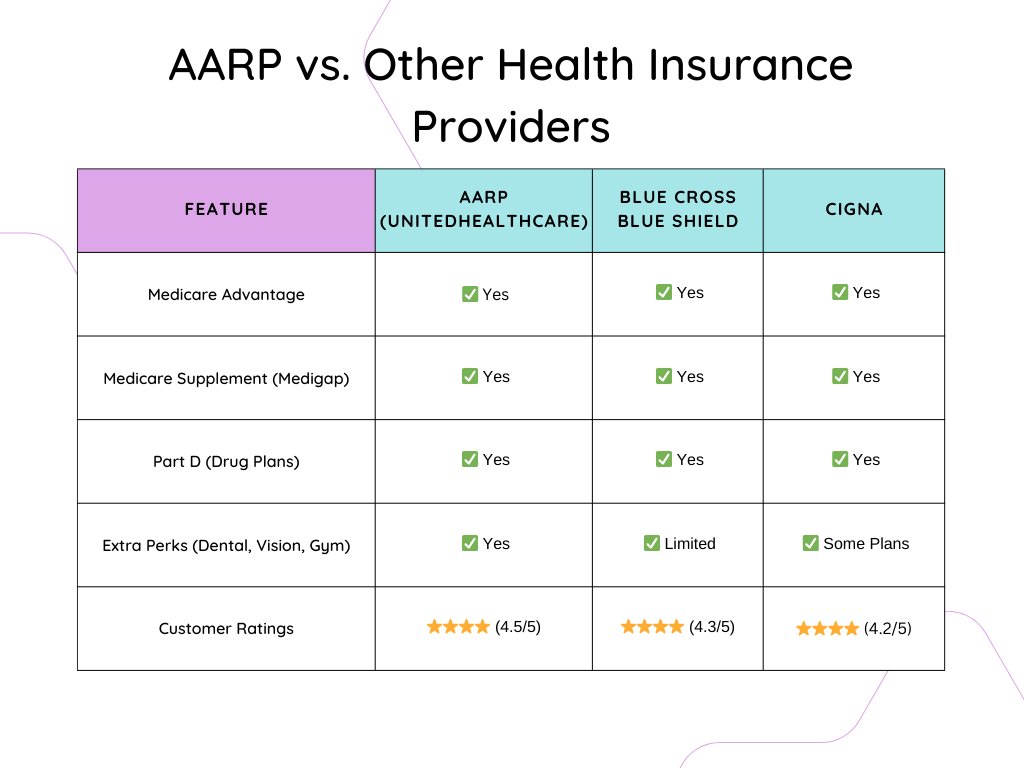
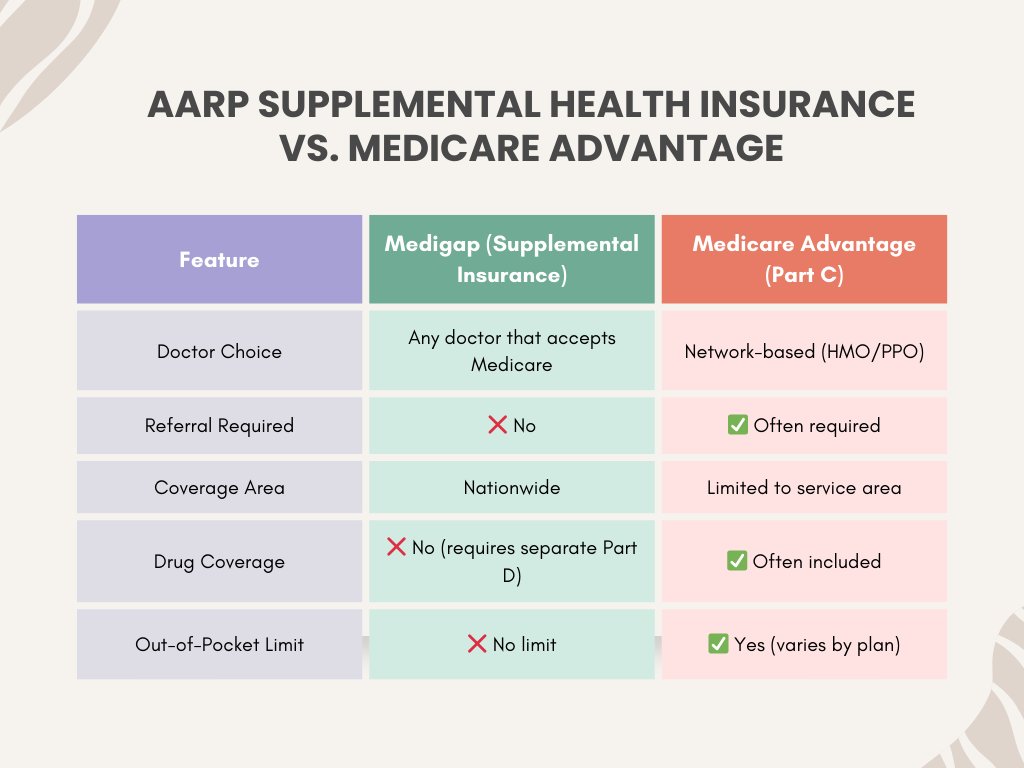
A comprehensive evaluation of AARP Medigap insurance reviews often involves contrasting Medigap with Medicare Advantage (Medicare Part C). While both pathways provide comprehensive coverage, they operate under fundamentally different financial models.
- Medicare Advantage (Part C): Typically replaces Original Medicare with a private managed care plan (HMO or PPO). These plans often feature low or $0 monthly premiums and frequently bundle prescription drug coverage (Part D), dental, vision, and hearing benefits. However, they rely on provider networks, require prior authorizations for specialized care, and involve copayments and coinsurance up to an annual out-of-pocket maximum.
- AARP Medigap: Works alongside Original Medicare. You keep Original Medicare as your primary payer, and the Medigap policy picks up most or all of the remaining out-of-pocket costs. There are no provider networks or referrals required; as long as a doctor accepts Medicare, they accept the Medigap plan. However, Medigap policies do not include prescription drug coverage, meaning seniors must purchase a separate Medicare Part D plan.
Reviewers frequently emphasize that seniors who prioritize predictable medical expenses and unrestricted access to nationwide specialists often favor Medigap, whereas those who want lower monthly premiums and built-in dental or vision benefits often gravitate toward Medicare Advantage.
Common Mistakes to Avoid When Evaluating Policies
Seniors shopping for AARP Medigap coverage should be mindful of several common pitfalls that can lead to unnecessary expenses or coverage gaps:
- Missing the Open Enrollment Window: Delaying the purchase past the initial six-month window without a guaranteed issue right can result in denial of coverage due to health history.
- Confusing Medigap with Part D: Assuming that an AARP Medigap plan covers prescription drugs. Medigap policies sold today do not include drug coverage; a separate standalone Medicare Part D plan is mandatory for outpatient prescription management.
- Failing to Compare Competitors: Assuming that the AARP brand automatically guarantees the lowest price. While the customer service and perks are strong, premium rates vary by state, and localized competitors may offer identical standardized coverage at a lower monthly rate.
- Dropping Coverage Prematurely: Dropping a Medigap policy to try a Medicare Advantage plan without realizing that re-qualifying for Medigap later may require passing strict medical underwriting.
Next Actions and How to Choose
Choosing the right Medicare Supplement plan requires a methodical approach tailored to individual health needs and financial circumstances:
- Verify Your Enrollment Status: Confirm your exact Medicare Part B effective date to identify your specific Open Enrollment window.
- Assess Your Health and Financial Risk: Evaluate whether you prefer a fixed monthly premium with zero copays (such as Plan G) or lower monthly premiums with occasional out-of-pocket copayments (such as Plan N).
- Get Multiple Quotes: Request official quote comparisons through the official UnitedHealthcare Medicare insurance portal alongside competing insurers licensed in your state.
- Consult Unbiased Resources: Utilize the official Medicare.gov Plan Finder tool or speak with a local SHIP (State Health Insurance Assistance Program) counselor for free, non-biased guidance before finalizing any contract.