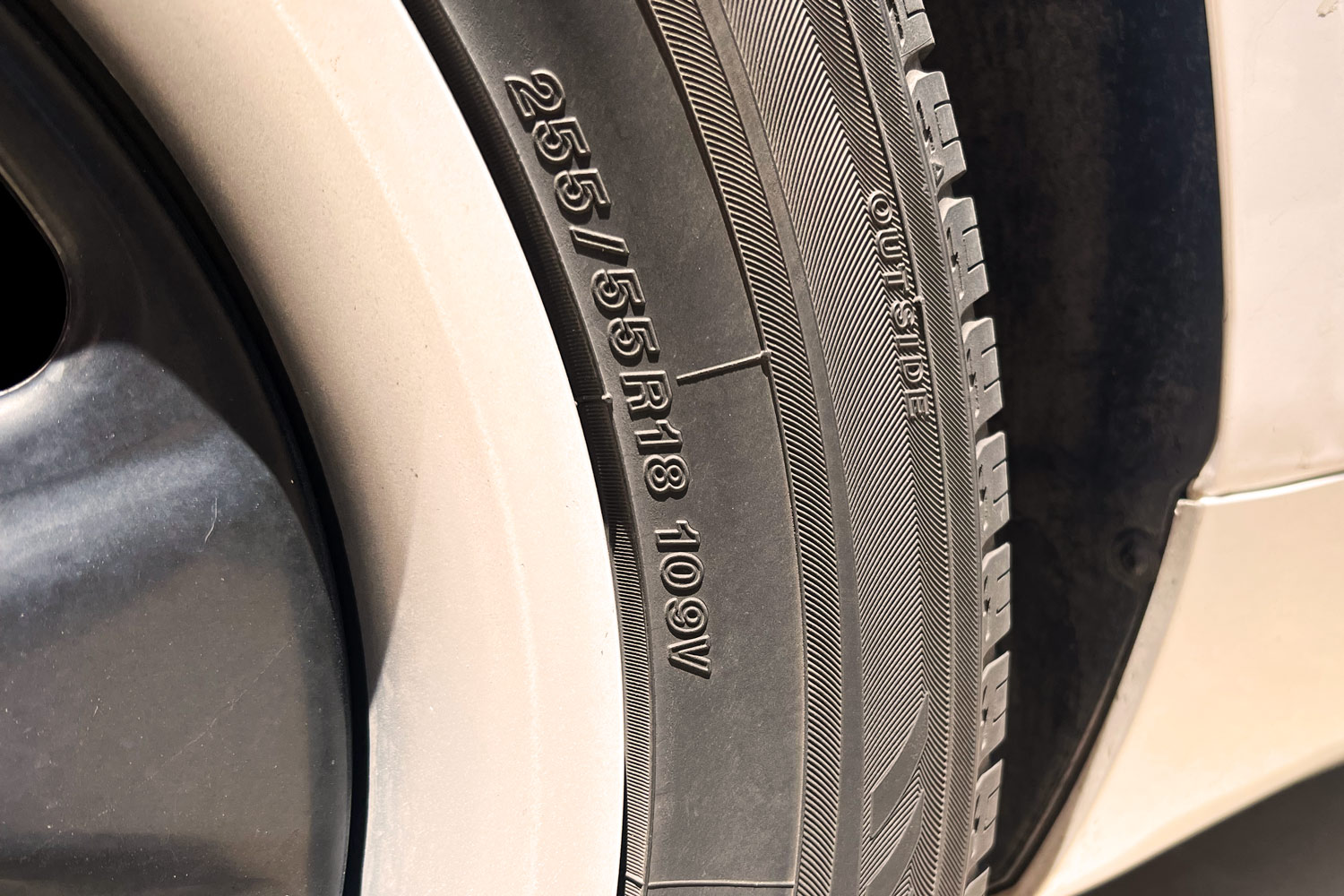
The 94V speed rating on a tire is a service description that identifies two critical performance limits: the "94" represents a load index indicating the tire can support 1,477 pounds (670 kg), while the "V" represents a speed rating signifying the tire is certified for speeds up to 149 mph (240 km/h).
When you look at the sidewall of a modern tire, you are presented with a string of alphanumeric characters that may seem like a secret code. However, for drivers in 2026, understanding these specifications—specifically the 94V designation—is essential for vehicle safety, insurance compliance, and optimal handling. This service description tells you exactly how much weight your vehicle can safely carry and the maximum sustained speed the tire can handle without structural failure.
The Anatomy of a Tire Service Description
To understand what 94V means, we must first look at where it sits within the larger context of tire identification. A typical tire size might look like 225/50R17 94V. In this sequence, "225" is the width in millimeters, "50" is the aspect ratio, "R" stands for radial construction, and "17" is the wheel diameter in inches. The final part, "94V," is the service description.
The service description is a standardized industry code regulated by organizations such as the Tire and Rim Association (TRA) and the European Tyre and Rim Technical Organisation (ETRTO). These standards ensure that a 94V tire from one manufacturer meets the same fundamental load and speed capabilities as a 94V tire from another.
Decoding the Load Index: The "94"
The "94" in 94V is the load index. This is a numerical code that corresponds to the maximum weight a tire can support when properly inflated. It is important to note that the number 94 does not mean 94 pounds or 94 kilograms; it is a point on a standardized scale.
For a tire with a load index of 94, the maximum capacity is 1,477 pounds (670 kg) per tire. If your vehicle has four 94V tires, the total theoretical maximum load capacity is 5,908 pounds. However, this does not mean your vehicle should weigh that much. Engineers calculate the required load index based on the vehicle’s Gross Vehicle Weight Rating (GVWR), accounting for the weight of the car, passengers, fuel, and cargo, while maintaining a significant safety margin.
Using a tire with a lower load index than what the vehicle manufacturer specifies is dangerous. It can lead to excessive heat buildup, premature wear, and in extreme cases, a sudden tire blowout. In 2026, with the increasing weight of battery packs in electric vehicles (EVs), verifying your load index has become even more critical than it was a decade ago.
Decoding the Speed Rating: The "V"
The "V" in 94V is the speed rating. This letter indicates the maximum speed at which the tire can dissipate heat and maintain its structural integrity over a sustained period. The "V" rating is positioned toward the higher end of the performance spectrum for consumer tires.
A V-rated tire is tested and certified to reach speeds of 149 mph (240 km/h). While very few drivers will ever reach these speeds on public roads—and legal speed limits remain well below this threshold—the rating is a proxy for the tire’s overall performance capabilities. A higher speed rating generally implies that the tire can handle heat more effectively and offers better steering response and cornering stability at highway speeds.
The Engineering Behind the V Rating
The jump from an H rating (130 mph) to a V rating (149 mph) involves significant engineering differences. To achieve a V rating, manufacturers must use specific rubber compounds and internal structures that can withstand the intense centrifugal forces generated at high rotational speeds.
Heat Dissipation
Heat is the primary enemy of a tire. As a tire rotates, it undergoes "hysteresis"—the repeated deformation and recovery of the rubber as it hits the road. This process generates internal heat. At 149 mph, a tire is spinning thousands of times per minute. If the tire cannot dissipate this heat, the adhesives holding the internal belts together can fail, leading to tread separation. V-rated tires are designed with specialized tread compounds and cooler-running base rubbers to mitigate this risk.
Structural Reinforcement
At high speeds, centrifugal force tries to pull the tire apart. To counteract this, V-rated tires often feature "cap plies"—extra layers of fabric (often nylon or aramid) wrapped around the steel belts. These cap plies act like a corset, holding the tire's internal components in place and preventing the "standing wave" effect, which is a dangerous vibration that occurs when a tire's deformation cannot recover fast enough at high speeds.
Why 94V is a Standard for 2026 Vehicles
In the current automotive landscape of 2026, the 94V rating has become a "sweet spot" for a wide variety of vehicles. You will commonly find this rating on:
- Mid-Sized Sedans: Cars like the Toyota Camry, Honda Accord, and various BMW 3-Series models often utilize this specification because it balances comfort with the high-speed stability required for modern highways.
- Compact Crossovers (CUVs): As CUVs have replaced traditional sedans as the primary family vehicle, the 94V rating provides the necessary load capacity for a loaded vehicle while maintaining the "car-like" handling consumers expect.
- Electric Vehicles (EVs): Many modern EVs require high load indices due to their heavy batteries. While some use "Extra Load" (XL) tires, many mid-range EVs find the 94 load index sufficient for their weight distribution.
Comparison of Common Speed and Load Ratings
To see where 94V fits in the broader market, it helps to compare it to other common ratings found on tires today.
| Speed Symbol | Max Speed (MPH) | Max Speed (KM/H) | Typical Application |
|---|---|---|---|
| S | 112 mph | 180 km/h | Light trucks and some SUVs |
| T | 118 mph | 190 km/h | Family sedans and minivans |
| H | 130 mph | 210 km/h | Touring sedans and crossovers |
| V | 149 mph | 240 km/h | Sport sedans and performance tires |
| W | 168 mph | 270 km/h | Exotic sports cars and high-performance EVs |
| Y | 186 mph | 300 km/h | Ultra-high-performance supercars |
| Load Index | Capacity (Lbs) | Capacity (Kg) |
|---|---|---|
| 91 | 1,356 lbs | 615 kg |
| 92 | 1,389 lbs | 630 kg |
| 93 | 1,433 lbs | 650 kg |
| 94 | 1,477 lbs | 670 kg |
| 95 | 1,521 lbs | 690 kg |
| 96 | 1,565 lbs | 710 kg |
Safety Implications of the 94V Rating
Choosing the wrong tire rating can have serious consequences, ranging from poor fuel economy to catastrophic failure.
Can You Use a Higher Rating?
Yes. It is generally safe and often beneficial to install tires with a higher speed rating or load index than your vehicle’s original equipment (OE). For example, if your car came with 94H tires, moving to 94V is perfectly acceptable. You may notice slightly crisper steering response, though the ride might feel a bit firmer due to the stiffer sidewall construction.
Can You Use a Lower Rating?
No. You should never "down-rate" your tires. If your vehicle manufacturer specifies a 94V tire, installing a 94T or a 91V tire is a safety risk.
- Lower Speed Rating: If you install an H-rated tire where a V-rated tire is required, you are reducing the tire's ability to manage heat. In some jurisdictions, and according to many insurance providers, this can void your coverage or prevent your vehicle from passing safety inspections.
- Lower Load Index: This is even more dangerous. A tire with a lower load index is physically incapable of supporting the weight of the vehicle under load. This leads to excessive sidewall flexing, which generates heat and can cause a blowout during highway driving.
Performance Characteristics of 94V Tires
The 94V rating isn't just about safety limits; it also dictates how the tire feels on the road. Because V-rated tires are built to handle 149 mph, they possess certain characteristics that affect your daily commute in 2026.
Handling and Cornering
V-rated tires generally have stiffer sidewalls and specialized tread patterns designed to maintain a consistent contact patch with the road during high-speed cornering. For the driver, this translates to more "communicative" steering. When you turn the wheel, the car reacts more quickly than it would with a lower-rated touring tire.
Ride Comfort vs. Performance
There is usually a trade-off between a tire's speed rating and its ride comfort. S or T-rated tires are often designed with softer sidewalls to absorb road imperfections, providing a "cushy" ride. V-rated tires, being more rigid, may transmit more road noise and vibration into the cabin. However, modern tire technology in 2026 has significantly narrowed this gap, using multi-pitch tread designs to cancel out noise while maintaining high-speed stability.
Braking Performance
Tires with a higher speed rating often utilize "stickier" rubber compounds that improve dry and wet braking distances. Since V-rated tires are designed for performance-oriented driving, manufacturers prioritize shorter stopping distances to match the vehicle’s capabilities.
Maintenance for 94V Rated Tires
To ensure your 94V tires perform up to their certified limits, proper maintenance is non-negotiable.
Pressure Management
The load capacity of "94" (1,477 lbs) is only achieved when the tire is inflated to its maximum "load pressure" (usually 35-42 PSI depending on whether it is a standard or extra load tire). If your tires are under-inflated, their actual load-carrying capacity drops significantly. Always refer to the tire placard located on your driver-side door jamb for the correct inflation pressure.
Tread Depth and Speed
The "V" rating applies to a tire in good condition. As tread wears down, the tire’s ability to dissipate heat and evacuate water changes. While the structural speed rating remains technically the same, the practical safety margin decreases. In wet conditions, a worn V-rated tire will hydroplane at much lower speeds than a new one.
Aging
In 2026, the U.S. Department of Transportation (DOT) and various safety organizations recommend replacing tires every six years, regardless of tread depth. The rubber compounds in V-rated tires can harden over time (oxidation), which reduces their ability to flex and manage the heat generated at high speeds.
Frequently Asked Questions
1. Can I mix 94V tires with 94H tires on the same car?
It is strongly recommended not to mix speed ratings on a single vehicle. If you must, the higher-rated tires (V) should always be placed on the rear axle to prevent oversteer. However, mixing ratings can lead to unpredictable handling because the tires will have different sidewall stiffnesses and heat-management properties.
2. Does a V rating mean I can drive 149 mph in the rain?
Absolutely not. The speed rating is determined under controlled, dry laboratory conditions. Environmental factors like rain, snow, and ice drastically reduce the safe operating speed of any tire, regardless of its rating. Hydroplaning can occur at speeds as low as 45-50 mph.
3. Do V-rated tires wear out faster than H-rated tires?
Generally, yes. To achieve the grip and heat resistance required for a V rating, manufacturers often use softer, high-performance rubber compounds. These compounds tend to wear down more quickly than the harder rubbers used in T or H-rated "long-life" touring tires.
4. Are 94V tires suitable for winter driving?
The 94V rating is independent of the tire’s weather capability. You can find 94V ratings on all-season tires, summer tires, and even some high-performance winter tires. If you live in a snowy climate, look for the "Three-Peak Mountain Snowflake" (3PMSF) symbol in addition to the 94V service description.
5. My car manual says I need 94V, but I never drive over 80 mph. Can I buy cheaper 94T tires?
You should not. Even if you never exceed 80 mph, your car's suspension and braking systems were tuned for the specific sidewall stiffness and grip of a V-rated tire. Furthermore, using a lower speed rating than specified by the manufacturer can lead to liability issues if you are involved in an accident.
Practical Recommendation
When it comes time to replace your tires in 2026, the best course of action is to match or exceed the original service description provided by your vehicle manufacturer. If your vehicle calls for 94V tires, ensure your new set carries at least that rating. Always check the tire pressure monthly and rotate your tires every 5,000 to 7,500 miles to maximize the lifespan of the high-performance rubber compounds found in V-rated tires. By adhering to the 94V specification, you ensure that your vehicle maintains its intended safety margins, handling precision, and load-carrying capacity.