The 1994 Subaru Impreza is a pivotal compact vehicle that defined the brand's shift toward standard All-Wheel Drive and rally-inspired performance. Available in sedan and Sportswagon configurations, it features the robust EJ-series boxer engine and a lightweight chassis, forming the technical foundation for the legendary World Rally Championship (WRC) success and the birth of the STi division.
Historical Context and Market Positioning
By 1994, Subaru was in the midst of a significant brand transformation. The Impreza had been introduced just a year prior to replace the aging Leone (known as the Loyale in North America). While the Leone was a rugged but utilitarian vehicle, the Impreza was designed to be more refined, competitive, and capable of taking on global giants like the Honda Civic and Toyota Corolla. However, Subaru chose a distinct path by emphasizing its proprietary All-Wheel Drive (AWD) technology and the unique balance of the "Boxer" engine layout.
In the 2026 automotive landscape, the 1994 Impreza is viewed as a high-water mark for mechanical simplicity and driver engagement. It represents the "Golden Era" of Japanese engineering, where vehicles were built with a focus on longevity and modularity. For the 1994 model year, Subaru refined the initial 1993 offering, improving interior materials and expanding the availability of safety features like driver-side airbags, which were becoming industry standards.
The 1994 model year is also historically significant because it marked the true beginning of the Subaru Tecnica International (STi) legacy. While the standard Impreza served families and commuters, the late-1994 introduction of the first WRX STi in the Japanese domestic market (JDM) signaled Subaru's intent to dominate the performance sector. This dual identity—reliable family hauler and gravel-spitting rally monster—is what continues to make the 1994 Impreza a subject of intense interest for collectors and enthusiasts today.
Exterior Design and Body Configurations
The 1994 Impreza's design language, penned by Masahiko Kobayashi, favored soft curves and a low beltline, a sharp departure from the boxy aesthetics of the 1980s. This design wasn't just for looks; it provided exceptional visibility for the driver, a hallmark of Subaru’s safety philosophy.
The Four-Door Sedan
The sedan was the volume seller, featuring a classic three-box silhouette. It was compact by 1994 standards, with a wheelbase of approximately 99.2 inches, making it nimble in urban environments. The "L" and "LS" trims were the most common, often identified by their body-colored bumpers on higher trims or unpainted plastic on base models.
The Five-Door Sportswagon
Unlike traditional, bulky wagons of the era, the Impreza Sportswagon featured a raked rear hatch that emphasized a "lifestyle" approach rather than pure cargo volume. It was popular among outdoor enthusiasts who needed the utility of a hatch but preferred the driving dynamics of a small car. In 1994, this model laid the groundwork for the "Outback Sport" that would follow a few years later.
Aerodynamics and Construction
Subaru utilized a high-tensile steel monocoque construction, which kept the curb weight remarkably low—ranging from roughly 2,400 to 2,750 pounds depending on the drivetrain. This low mass is a primary reason why even the lower-horsepower 1994 models feel surprisingly energetic. The drag coefficient was competitive for the time, helping with fuel efficiency and wind noise reduction at highway speeds.
Powertrain and Mechanical Specifications
The heart of the 1994 Impreza is the EJ-series horizontal-opposed "Boxer" engine. This layout places the cylinders 180 degrees apart, resulting in a lower center of gravity compared to the inline-four engines used by competitors.
The EJ18 and EJ22 Engines
For most markets, the 1994 Impreza offered two primary naturally aspirated engines:
- The 1.8L EJ18: This was the base engine, producing roughly 110 horsepower and 110 lb-ft of torque. It featured a Single Overhead Cam (SOHC) design and was prized more for its fuel economy and durability than its raw speed.
- The 2.2L EJ22: Available in the "LS" and Sportswagon trims in North America, the 2.2-liter version produced 135 horsepower and 140 lb-ft of torque. The EJ22 is widely regarded by Subaru technicians as one of the most reliable engines the company ever produced, often reaching 300,000 miles with basic maintenance.
Transmission and Drivetrain Logic
The 1994 Impreza was offered with either a 5-speed manual transmission or a 4-speed electronic automatic. However, the true complexity lies in the two different All-Wheel Drive systems used:
- Continuous AWD (Manual Transmission): This system used a viscous-coupling center differential that distributed power 50/50 between the front and rear wheels. If one set of wheels lost traction, the viscous fluid would heat up and thicken, transferring torque to the axle with more grip.
- Active AWD (Automatic Transmission): This system utilized an electronically controlled multi-plate transfer clutch (MPT). It varied the torque split based on sensor input, typically biased 90/10 (front/rear) under dry conditions but capable of shifting to a 50/50 split instantaneously when slip was detected.
The 1994 WRX and the Birth of the STi
While North America would not see a factory turbocharged Impreza until 2002, 1994 was a landmark year for the rest of the world. In Japan, the Impreza WRX (World Rally eXperimental) was already a sensation, featuring the EJ20G turbocharged engine.
In January 1994, Subaru introduced the very first Impreza WRX STi. These were not mass-produced on a standard assembly line but were taken from the line and upgraded by the STi division. They featured blueprinted engines, forged pistons, upgraded suspension, and the iconic large rear wing. This version produced approximately 247 horsepower (250 PS), a staggering figure for a compact car in 1994. These "Version 1" STis are now among the most sought-after JDM classics in 2026, as they represent the raw, unadulterated beginning of a performance dynasty.
Interior Layout and 90s Ergonomics
The interior of the 1994 Impreza was a masterclass in functional simplicity. Subaru focused on "Active Driving," which meant ensuring the driver could reach every control without taking their eyes off the road.
- Dashboard and Controls: The dash featured a soft-touch plastic upper section (on higher trims) and clear, analog gauges. The HVAC controls were simple sliders or dials, and the radio was placed high on the center stack for easy access.
- Seating and Space: Despite its small exterior dimensions, the Impreza offered generous headroom due to its upright greenhouse. The seats were typically upholstered in durable cloth with "90s-style" patterns. The rear seats in the sedan offered modest legroom, while the wagon featured 60/40 split-folding seats that significantly expanded cargo capacity.
- Safety Features: In 1994, a driver-side airbag became more common across the lineup. Anti-lock brakes (ABS) were available as an option or standard on higher-trim models like the LS. Subaru's safety cage construction was already ahead of its time, designed to redirect impact energy around the passenger cabin.
Performance and Handling Characteristics
Driving a 1994 Impreza is characterized by a sense of lightness and mechanical transparency. Unlike modern vehicles in 2026 that are heavy with sound deadening and electronic aids, the '94 Impreza provides direct feedback through the steering wheel and pedals.
The suspension setup consists of MacPherson struts at all four corners. This independent suspension, combined with the low center of gravity from the Boxer engine, allowed the Impreza to corner with much less body roll than its height would suggest. In inclement weather, the AWD system provided a level of confidence that was virtually unmatched in the compact segment at the time. While the base 1.8L engine was not fast by any metric, the car’s ability to maintain momentum through corners made it a favorite for rally enthusiasts and daily commuters alike.
Maintenance, Reliability, and 2026 Ownership
For those looking to own a 1994 Impreza in 2026, there are specific technical areas that require attention. While these cars are mechanically robust, three decades of exposure take their toll.
Common Mechanical Issues
- Oil Leaks: Like many older Subarus, the cam seals, crank seals, and valve cover gaskets are prone to leaking over time.
- Rust: This is the primary "Impreza killer." The rear wheel arches and rocker panels are notorious for harboring moisture and salt, leading to significant corrosion if not addressed.
- Drivetrain Wear: Viscous couplers in manual transmissions can "bind" if the tires are not kept at identical tread depths, leading to a "hopping" sensation during tight turns.
- Timing Belt: The EJ engines are interference engines (primarily the EJ22 and later models). If the timing belt snaps, it will cause catastrophic valve damage. Replacing the belt every 60,000 to 90,000 miles is non-negotiable.
Parts Availability
In 2026, mechanical parts for the 1994 Impreza are still relatively easy to source because Subaru used the EJ engine and basic chassis components across multiple models (Legacy, Forester, Impreza) for nearly two decades. However, interior trim pieces and specific body panels for the early "pre-facelift" models are becoming increasingly scarce, often requiring searches through specialized enthusiast forums or Japanese auctions.
Technical Specifications Comparison
The following table highlights the differences between the standard 1994 configurations available in most global markets.
| Feature | 1.8L Sedan (Base) | 2.2L LS Sedan | WRX (JDM/Euro) |
|---|---|---|---|
| Engine Type | 1.8L Flat-4 (EJ18) | 2.2L Flat-4 (EJ22) | 2.0L Turbo Flat-4 (EJ20G) |
| Horsepower | 110 hp @ 5,600 RPM | 135 hp @ 5,400 RPM | 217–237 hp @ 6,000 RPM |
| Torque | 110 lb-ft @ 4,400 RPM | 140 lb-ft @ 4,400 RPM | 206 lb-ft @ 3,500 RPM |
| Drivetrain | FWD or AWD | AWD Standard | AWD Standard |
| Curb Weight | ~2,450 lbs | ~2,650 lbs | ~2,700 lbs |
| 0-60 MPH | ~11.5 Seconds | ~9.2 Seconds | ~6.0 Seconds |
| Brakes | Front Disc / Rear Drum | 4-Wheel Disc (Opt) | 4-Wheel Disc (Vented) |
Frequently Asked Questions
Is the 1994 Subaru Impreza a good first car in 2026?
While the 1994 Impreza is exceptionally reliable and easy to work on, its age in 2026 makes it more of a "project" or a "classic" rather than a primary daily driver for someone without mechanical knowledge. It lacks modern safety features like side-curtain airbags, stability control, and advanced crumple zones found in later models. However, for a student of automotive mechanics, it is an excellent platform for learning.
How can I tell if a 1994 Impreza has a 1.8L or a 2.2L engine?
The easiest way is to check the VIN plate or the emissions sticker under the hood. Visually, the EJ22 is slightly wider, and the intake manifold design differs. In North America, the "LS" trim was almost exclusively paired with the 2.2L engine, while the "L" trim usually housed the 1.8L.
Did all 1994 Imprezas come with All-Wheel Drive?
No. In 1994, Subaru still offered Front-Wheel Drive (FWD) versions of the Impreza to keep the entry-level price competitive. It wasn't until the 1997 model year in North America that Subaru made All-Wheel Drive standard across its entire lineup. FWD models are significantly rarer today, as most were used as economy commuters and have since been retired.
What is the significance of the 1994 model in WRC?
The 1994 season was a turning point for the Subaru World Rally Team. It was the first full year for the Impreza 555, which replaced the larger Legacy RS. Driven by legends like Colin McRae and Carlos Sainz, the 1994 Impreza proved that a smaller, more agile chassis was the future of rallying, leading to Subaru's Manufacturers' Championship titles in 1995, 1996, and 1997.
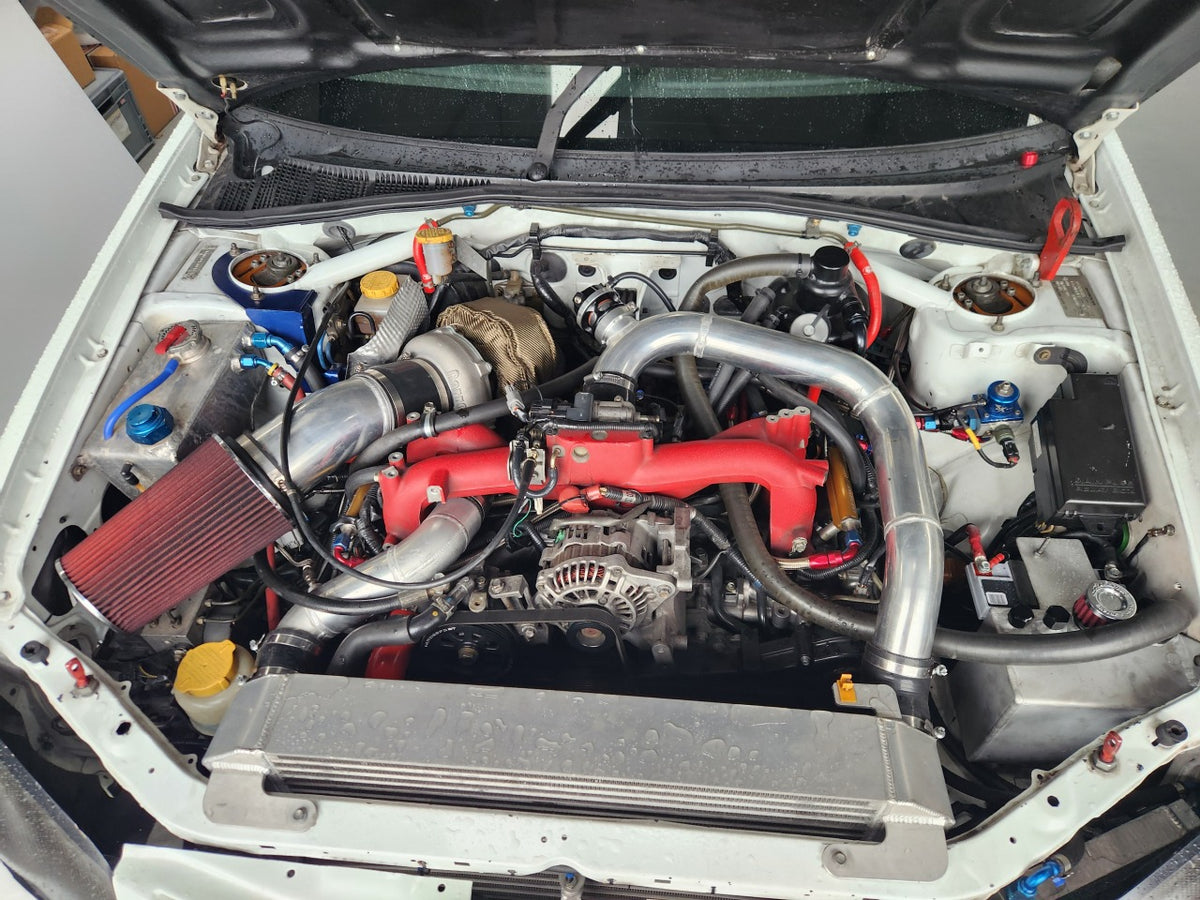
Can I swap a newer WRX engine into a 1994 Impreza?
Yes. One of the reasons the 1994 Impreza is so popular in 2026 is its modularity. Because the "GC" chassis remained largely the same until 2001, and the EJ engine family shares many mounting points, it is common to see 1994 models swapped with newer EJ205 or EJ257 engines from the 2000s.
Final Recommendation for Buyers and Enthusiasts
If you are considering a 1994 Subaru Impreza, prioritize the condition of the chassis over the engine. In the 2026 market, a rust-free shell is worth significantly more than a running car with rotted quarter panels. For those seeking the best balance of longevity and power, the 2.2L LS sedan or wagon is the "sweet spot" of the lineup. If you are a collector, the JDM 1994 WRX STi Version 1 is a blue-chip investment that captures the exact moment Subaru became a performance icon. Regardless of the trim, the 1994 Impreza remains a testament to Subaru's engineering philosophy: simple, capable, and built to handle whatever the road—or the lack thereof—throws at it.