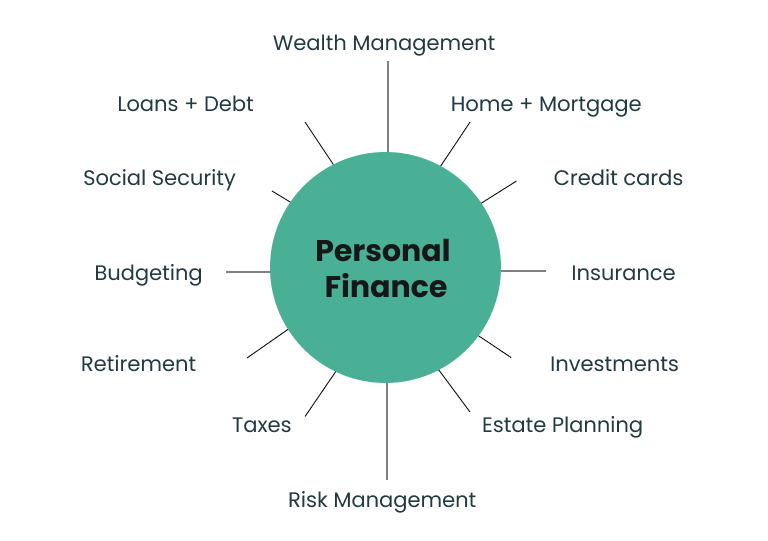
Personal finance is the strategic management of your money, involving budgeting, saving, investing, and risk protection. By mastering your cash flow, minimizing high-interest debt, and leveraging the power of compound interest through diversified assets, you create a sustainable framework for long-term wealth and financial independence.
1. The Foundation: Net Worth and Cash Flow Dynamics
Understanding your financial health begins with two primary metrics: net worth and cash flow. While many people focus solely on their monthly salary, true financial stability is measured by what you keep, not just what you earn. As we navigate the economic landscape of 2026, the integration of automated tracking tools has made these metrics more accessible, but the fundamental principles remains unchanged.
Calculating Your Net Worth
Net worth is a "snapshot" of your financial position at a specific point in time. It is calculated by subtracting your total liabilities (what you owe) from your total assets (what you own).
- Assets: This includes cash in checking and savings accounts, the market value of investment portfolios (stocks, bonds, ETFs), retirement accounts (401(k), IRA), real estate equity, and any tangible business ownership.
- Liabilities: This encompasses mortgages, student loans, car loans, credit card balances, and any other personal debts.
A positive net worth indicates that you have more assets than debt, while a negative net worth suggests a need for immediate debt restructuring. In 2026, focusing on "appreciating assets"—those that grow in value over time—is the primary driver of net worth expansion.
Mastering Cash Flow
Cash flow is the "movie" of your financial life, showing the movement of money in and out over a period (usually a month). Positive cash flow occurs when your income exceeds your expenses. This surplus is the "fuel" for all other financial goals, such as investing or debt repayment. If you lack a surplus, you cannot build wealth, regardless of how high your income is. Professionals often suggest using the 50/30/20 rule as a baseline: 50% of income for needs, 30% for wants, and 20% for savings and debt repayment. However, in higher-cost environments, these ratios may need adjustment to prioritize the savings component.
2. The Psychology of Spending and the "Zero-Based" Budget
Financial success is often 20% head knowledge and 80% behavior. Even the most sophisticated investment strategy will fail if spending remains undisciplined. In 2026, the prevalence of "invisible payments" (automated subscriptions and digital wallets) makes it easier than ever to lose track of expenditures.
The Zero-Based Budgeting Method
One of the most effective ways to regain control is through zero-based budgeting. In this system, every dollar of your income is assigned a specific job before the month begins. This does not mean you have zero dollars in your bank account; rather, it means your "Income minus Expenses" equals zero.
- Give Every Dollar a Name: Assign funds to rent, groceries, utilities, and entertainment, but also to "future" expenses like retirement and emergency funds.
- Avoid Lifestyle Creep: As your income increases, resist the urge to immediately increase your standard of living. By maintaining your current expenses and diverting raises into investments, you accelerate your path to financial freedom.
Behavioral Triggers
Understanding your psychological triggers for spending is vital. Many consumers spend money to alleviate stress, seek social validation, or out of boredom. By identifying these triggers, you can implement "friction" in your spending—such as waiting 48 hours before making a non-essential purchase over a certain dollar amount.
3. The Role of the Emergency Fund in a Volatile Economy
An emergency fund is a dedicated cash reserve kept in a liquid, low-risk account. Its purpose is not to earn high returns, but to provide a safety net that prevents you from tapping into long-term investments or taking on high-interest debt during a crisis.
Optimal Sizing of the Fund
The standard recommendation is to save three to six months’ worth of essential living expenses. In 2026, as the "gig economy" and freelance work have become more prevalent, many financial advisors recommend leaning toward the higher end of that spectrum (six to nine months) if your income is variable or if you work in a volatile industry.
Where to Store the Funds
Liquidity is the priority. High-yield savings accounts (HYSAs) or money market accounts (MMAs) are ideal. These accounts are typically insured by the Federal Deposit Insurance Corporation (FDIC) up to $250,000 per depositor, ensuring your principal is safe. In 2026, these accounts continue to offer competitive rates compared to traditional checking accounts, allowing your emergency fund to maintain its purchasing power against moderate inflation.
4. Navigating Modern Debt: Leverage vs. Liability
Not all debt is created equal. Distinguishing between "good" debt and "bad" debt is essential for effective capital allocation.
High-Interest "Bad" Debt
Bad debt is typically defined as money borrowed to purchase depreciating assets or consumables at high interest rates. Credit card debt is the most common example. With average interest rates frequently exceeding 20%, carrying a balance on a credit card is a financial emergency. In such cases, the "Interest Avalanche" method—paying off the debt with the highest interest rate first—is mathematically the most efficient way to achieve debt-free status.
Low-Interest "Good" Debt
Good debt is often viewed as an investment in your future. Mortgages and certain student loans fall into this category because they can help build equity or increase your lifetime earning potential. If the interest rate on the debt is significantly lower than the expected return on a diversified investment portfolio (historically 7-10% for the S&P 500), it may be mathematically advantageous to pay only the minimum on the debt while investing the surplus.
| Debt Type | Typical Interest Range (2026) | Strategy |
|---|---|---|
| Credit Cards | 18% - 28% | Pay off immediately; avoid carrying balances. |
| Personal Loans | 8% - 15% | Consolidate if possible; prioritize repayment. |
| Student Loans | 4% - 9% | Evaluate based on tax deductibility and terms. |
| Mortgages | 5% - 7% | Maintain as long-term leverage; prioritize over low returns. |
| Auto Loans | 6% - 10% | Avoid long terms (72+ months) on depreciating assets. |
5. Investing and the Inevitability of Compound Interest
Investing is the process of using your money to buy assets that have the potential to generate a return over time. The most powerful tool at an investor's disposal is compound interest, which Albert Einstein famously called the "eighth wonder of the world."
The Power of Starting Early
Compound interest is the interest calculated on the initial principal, which also includes all the accumulated interest from previous periods. Over long horizons, the growth becomes exponential. For instance, an individual who starts investing $500 a month at age 25 will likely have significantly more wealth at age 65 than someone who starts investing $1,500 a month at age 45, despite the latter contributing more total capital.
Diversification and Asset Allocation
To mitigate risk, investors should practice diversification—spreading investments across different asset classes (stocks, bonds, real estate) and sectors.
- Equities (Stocks): Represent ownership in a company. They offer higher growth potential but come with higher volatility.
- Fixed Income (Bonds): Represent a loan to a government or corporation. They typically offer lower returns but provide stability and income.
- Index Funds and ETFs: In 2026, low-cost index funds remain the "gold standard" for most individual investors. These funds track a specific market index (like the S&P 500), providing instant diversification at a very low cost.
6. Tax Efficiency and the Strategic Use of Accounts
It’s not about what you earn; it’s about what you keep after the Internal Revenue Service (IRS) takes its share. Tax planning is a year-round activity that can significantly impact your terminal wealth.
Tax-Advantaged Retirement Accounts
Utilizing accounts like a 401(k) or a Roth IRA is one of the most effective ways to grow wealth.
- Traditional 401(k)/IRA: Contributions are made "pre-tax," reducing your taxable income today. You pay taxes when you withdraw the money in retirement.
- Roth 401(k)/IRA: Contributions are made "after-tax," meaning there is no immediate tax break. However, the money grows tax-free, and qualified withdrawals in retirement are also tax-free.
Tax-Loss Harvesting
For those with taxable brokerage accounts, 2026 tax strategies often involve tax-loss harvesting. This involves selling an investment that is at a loss to offset capital gains realized from other investments. This can lower your total tax liability, allowing more of your money to remain invested and compounding.
7. Risk Management and Estate Planning
The final pillar of personal finance is protection. Life is unpredictable, and without proper insurance and legal documentation, a single event can wipe out years of financial progress.
Insurance as a Safety Net
Insurance is the transfer of a catastrophic risk to an insurance company.
- Health Insurance: Essential to prevent medical bankruptcy.
- Term Life Insurance: Crucial if you have dependents who rely on your income. Generally, 10–15 times your annual income is the recommended coverage amount.
- Disability Insurance: Often overlooked, this protects your most valuable asset—your ability to earn an income.
Estate Planning
Estate planning is not just for the wealthy. At a minimum, every adult should have a will, a durable power of attorney, and a healthcare proxy. These documents ensure that your assets are distributed according to your wishes and that your medical and financial decisions are handled by someone you trust if you become incapacitated. In 2026, digital asset directives have also become standard, ensuring your executors can access your online accounts and cryptocurrency holdings.
Frequently Asked Questions
What is a "good" credit score in 2026? A credit score of 740 or higher is generally considered "Excellent" and will qualify you for the best interest rates on mortgages and auto loans. Your score is determined by your payment history (35%), amounts owed (30%), length of credit history (15%), new credit (10%), and credit mix (10%). Maintaining low credit utilization (using less than 30% of your available limit) is one of the fastest ways to improve a score.
How much should I be saving for retirement? Most experts recommend saving 15% of your gross household income for retirement. This includes any employer matching contributions. If you are starting later in life, you may need to increase this percentage to 20% or 25% to catch up. The key is consistency; even small amounts invested regularly in your 20s can outperform large amounts invested in your 50s.
Is it better to pay off my mortgage or invest the money? This depends on your mortgage interest rate and your risk tolerance. If your mortgage rate is 3% and the stock market is expected to return 7-8%, it is mathematically better to invest. However, paying off a mortgage provides a "guaranteed" return equal to the interest rate and offers significant psychological peace of mind. In 2026, many homeowners opt for a balanced approach: making small extra principal payments while still maximizing tax-advantaged investment accounts.
Should I invest in cryptocurrency as part of my personal finance plan? Cryptocurrency is a highly volatile asset class. While it has become more integrated into the financial system by 2026, it should generally be treated as a "speculative" portion of your portfolio. Most financial advisors suggest limiting such high-risk investments to 1% to 5% of your total net worth, ensuring that a total loss would not jeopardize your primary financial goals.
How do I start a budget if I’ve never done one before? The simplest way to start is the "Track and Categorize" method. For 30 days, record every single expense. Use your bank statements and apps to see exactly where your money went. Once you have a clear picture, categorize them into "Fixed" (rent, car insurance) and "Variable" (dining out, hobbies). Use this data to set realistic limits for the following month.
Final Recommendation
The most important step in personal finance is automation. Decision fatigue is a major hurdle to financial success. By automating your savings, retirement contributions, and bill payments, you remove the need for willpower. Set your systems so that wealth-building happens by default. Review your progress quarterly, but otherwise, let the power of time and compounding do the heavy lifting for you.