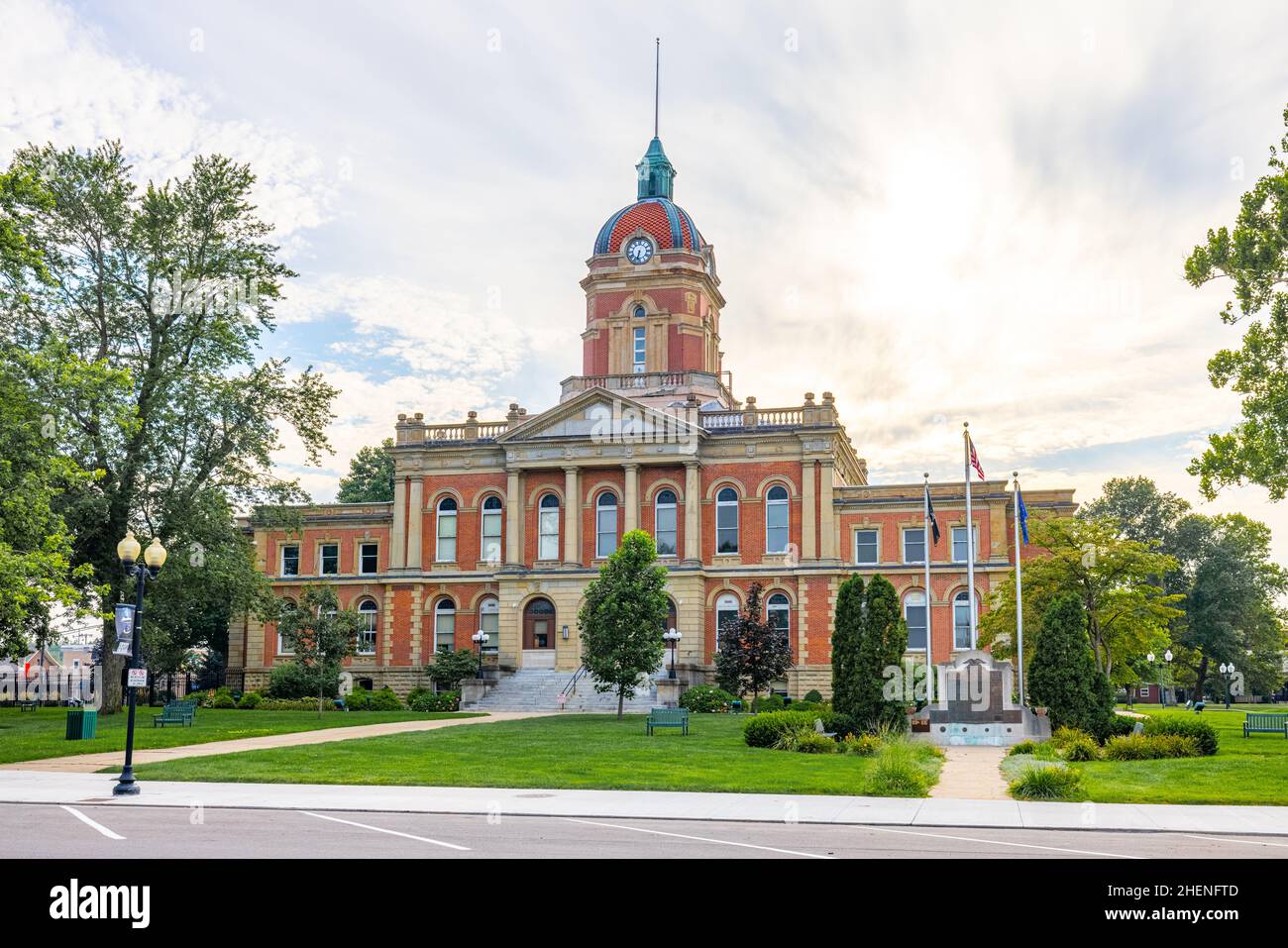
The Elkhart County Superior Court system is a multifaceted judicial entity in Indiana comprising six distinct courts that handle a wide range of legal matters, including criminal, civil, and family law. Understanding its structure, the geographical split between Goshen and Elkhart locations, and digital access protocols via the Odyssey system is essential for navigating the local legal landscape effectively in 2026.
Navigating the judicial system in Elkhart County requires an understanding of how cases are distributed across various divisions and locations. Whether you are a litigant in a civil suit, a defendant in a criminal case, or a citizen called for jury duty, the specific rules and administrative structures of the Elkhart County Superior Court will dictate your experience. The following six details provide a comprehensive overview of the court's operations, jurisdiction, and public accessibility.
1. The Multi-Court Structure and Judicial Jurisdiction
The Elkhart County Superior Court is not a single courtroom but a system of six individual courts (Superior 1 through Superior 6). While they all fall under the umbrella of the Indiana judicial branch, each court is presided over by an independently elected judge who serves a six-year term. This structure is designed to manage the high volume of cases generated by one of Indiana’s most populous counties.
Concurrent Jurisdiction
In Elkhart County, the Superior Courts share "concurrent jurisdiction" with the Elkhart County Circuit Court. This means that, for many types of cases, a matter could legally be filed in either the Circuit Court or any of the Superior Courts. However, local administrative rules usually dictate a specific distribution to ensure efficiency. For instance, major felony cases, complex civil litigation, and domestic relations are spread across the courts to prevent any single judge from becoming overwhelmed.
Types of Cases Handled
The Superior Courts are courts of general jurisdiction. This implies they have the authority to hear almost any type of case allowed under Indiana law.
- Criminal Cases: This includes everything from Level 1 felonies (the most serious) to Level 6 felonies and misdemeanors.
- Civil Litigation: This involves disputes between private parties, such as personal injury claims, contract disputes, and property disagreements.
- Family Law: A significant portion of the court’s docket is dedicated to divorces (dissolution of marriage), child custody, support modifications, and paternity actions.
- Probate and Estates: Superior courts often handle the administration of wills, estates, and guardianships.
Understanding the specific "assignment" of your case is the first step in any legal proceeding. Each court maintains its own calendar and specific courtroom procedures, although they all must adhere to the Indiana Rules of Trial Procedure.
2. Geographical Division: Goshen vs. Elkhart Locations
A unique aspect of the Elkhart County judicial system is its geographical split. Unlike many counties that centralize all judicial functions in the county seat, Elkhart County maintains two primary court hubs. This reflects the county’s population distribution between the city of Elkhart and the county seat, Goshen.
The Goshen Courts (Courthouse Square)
Superior Courts 1, 2, and 3 are historically located in Goshen. The Goshen courthouse facilities often handle high-level criminal trials and complex civil matters. Being the county seat, Goshen also houses the main administrative offices for the County Clerk and the Auditor.
- Superior Court 1: Located at 101 N. Main St., Goshen, IN.
- Superior Court 2: Located at 101 N. Main St., Goshen, IN.
- Superior Court 3: Located at 101 N. Main St., Goshen, IN.
The Elkhart Courts (S. Second St.)
Superior Courts 4, 5, and 6 are located in the city of Elkhart. These courts are situated to provide better access to the county's largest population center. These courts frequently handle a high volume of misdemeanors, traffic violations, and small claims.
- Superior Court 4: Located at 315 S. Second St., Elkhart, IN.
- Superior Court 5: Located at 315 S. Second St., Elkhart, IN.
- Superior Court 6: Located at 315 S. Second St., Elkhart, IN.
Crucial Warning: It is a common mistake for litigants to arrive at the Goshen courthouse for a case that is actually being heard in the Elkhart building, or vice versa. Always check your "Notice of Hearing" or the online MyCase portal to verify the exact physical address of your scheduled appearance.
3. The Role of the Clerk and Public Records Access
The Elkhart County Clerk of the Circuit Court serves as the official record keeper for all six Superior Courts. As of 2026, the Clerk’s office is the central hub for filing new lawsuits, paying fines, and obtaining certified copies of court orders.
The Odyssey Case Management System
Indiana utilizes a centralized system known as Odyssey. This allows the public to access non-confidential case information online. By searching the Indiana MyCase portal, you can view the chronological case summary (CCS), which lists every action taken in a case, from the initial filing to the final judgment.
Filing Procedures and E-Filing
For legal professionals and "pro se" (self-represented) litigants, Elkhart County mandates electronic filing (E-filing) for most case types. This transition, which became standard over the last decade, ensures that documents are processed faster and are instantly available to the judge and opposing parties. Physical paper filings are increasingly rare and are generally reserved for specific emergency petitions or individuals with granted waivers.
Fees and Payments
The Clerk’s office is responsible for collecting filing fees, which vary depending on the type of case. For example, filing a new civil plenary case carries a different cost than filing a small claims action. Furthermore, the Clerk handles the collection of court costs, fines, and restitution in criminal cases. In 2026, most payments can be made online through the authorized state payment portal, though in-person payments at the Goshen or Elkhart offices remain an option.
4. Small Claims Division and Self-Representation
Superior Courts 4, 5, and 6 in Elkhart are the primary venues for the Small Claims Division. This division is specifically designed to handle lower-stakes financial disputes without the strict, complex procedural requirements of the "plenary" (standard) court docket.
Jurisdictional Limits
In Indiana, the small claims limit is currently set at $10,000. If you are seeking damages or the return of property valued at more than this amount, you must file in the standard civil division. Small claims cases commonly involve:
- Landlord-tenant disputes (including evictions and security deposit claims).
- Unpaid debts and breach of contract.
- Property damage (such as minor car accidents).
- Consumer complaints.
The Informal Nature of Small Claims
The Small Claims Division is often referred to as the "People’s Court." While parties are permitted to have attorneys, many choose to represent themselves. The rules of evidence are more relaxed, allowing the judge to get to the heart of the dispute quickly. However, the judgments issued are just as legally binding as those in "major" courts. If a defendant fails to pay a small claims judgment, the plaintiff can seek "Proceedings Supplemental" to garnish wages or seize non-exempt assets.
5. Jury Service and Civic Responsibility
Jury duty is a fundamental component of the American legal system, and the Elkhart County Superior Courts rely heavily on local citizens to serve as triers of fact in both criminal and civil trials.
Selection and Qualification
Potential jurors in Elkhart County are selected at random from a list compiled by the Indiana Supreme Court, which includes data from the Bureau of Motor Vehicles and the Department of Revenue. To be eligible, you must be:
- A citizen of the United States.
- At least 18 years of age.
- A resident of Elkhart County.
- Able to read and speak English.
The Call to Duty
If you receive a jury summons, you are legally required to respond. The summons will provide instructions on how to check your status (often via a phone line or website) the evening before you are scheduled to appear. Because trials can be settled or postponed at the last minute, it is vital to verify that your presence is still required before traveling to the courthouse.
Deferrals and Exemptions
Elkhart County allows for jury service deferrals under specific circumstances, such as pre-scheduled medical procedures, extreme financial hardship, or previously booked travel. However, these are "deferrals," not "exemptions"—you will likely be placed back into the pool for a later date. Permanent exemptions are rare and usually reserved for individuals with significant physical or mental disabilities that preclude service.
6. Specialized Courts and Problem-Solving Initiatives
Recognizing that traditional incarceration is not always the most effective solution for every crime, the Elkhart County Superior Court system has implemented several "Problem-Solving Courts." These specialized dockets focus on rehabilitation and addressing the root causes of criminal behavior.
Drug Court and Veterans Court
These programs are intensive, court-supervised treatment options for non-violent offenders whose crimes are linked to substance abuse or service-related mental health issues.
- Drug Court: Participants undergo rigorous testing, mandatory counseling, and frequent check-ins with the judge. Successful completion often leads to the dismissal of charges or a significantly reduced sentence.
- Veterans Court: Specifically tailored for those who have served in the military, this program connects defendants with mentors and resources through the Department of Veterans Affairs.
Mediation and Alternative Dispute Resolution (ADR)
In civil and family law matters, the Superior Courts often require parties to attempt mediation before a trial date is set. A neutral third-party mediator helps the litigants reach a voluntary agreement. This process reduces the burden on the court's calendar and often results in a more satisfactory outcome for both parties, as they retain control over the final agreement rather than leaving the decision to a judge.
Comparison of Elkhart County Superior Court Locations
| Feature | Goshen Location (Superior 1, 2, 3) | Elkhart Location (Superior 4, 5, 6) |
|---|---|---|
| Primary Address | 101 N. Main St., Goshen, IN 46526 | 315 S. Second St., Elkhart, IN 46516 |
| Typical Case Load | Major Felonies, Complex Civil, Probate | Misdemeanors, Small Claims, Traffic |
| Parking | Street parking and small county lots | City parking garages and street parking |
| Security | Full screening required at entrance | Full screening required at entrance |
| Proximity to Clerk | Main Clerk’s Office nearby | Satellite Clerk’s Office on-site |
Frequently Asked Questions
How do I find out if I have an active case in Elkhart County Superior Court?
You can search for any public case via the Indiana MyCase portal. You can search by your legal name, case number, or attorney name. This system provides the Chronological Case Summary (CCS), which lists all filings, hearing dates, and orders issued by the judge. If you cannot find your case online, you may contact the Elkhart County Clerk’s office directly, as some cases (like certain juvenile or mental health records) are confidential and not viewable by the public.
Can I represent myself in a Superior Court case?
Yes, you have the right to represent yourself, which is known as appearing "pro se." However, the court will expect you to follow the same rules of evidence and trial procedure as a licensed attorney. For complex matters, especially felony criminal charges or high-asset divorces, it is strongly recommended to seek legal counsel. The Elkhart County Bar Association and local legal aid organizations may provide resources for those who cannot afford an attorney.
What should I wear to Elkhart County Superior Court?
The court is a formal environment, and "business casual" is generally the minimum standard for litigants and observers. You should avoid wearing shorts, tank tops, hats, or clothing with offensive language. Most judges have the authority to remove individuals from the courtroom if their attire is deemed disrespectful to the judicial process. Dressing professionally demonstrates respect for the court and can positively influence the perception of your seriousness regarding the matter at hand.
How do I pay a traffic ticket or a court fine in Elkhart County?
Most traffic tickets (infractions) can be paid through the Public Access to Court Records website or via the Elkhart County Clerk’s payment portal. If your ticket requires a "mandatory appearance," you must attend court before a fine can be assessed. For criminal fines and costs, you can pay in person at the Clerk's office at either the Goshen or Elkhart locations, or use the online systems provided your case has been disposed of and the balance is updated.
What happens if I miss my court date?
Missing a court date in a criminal case usually results in the judge issuing a "Failure to Appear" (FTA) warrant for your arrest. In a civil or small claims case, the judge may enter a "Default Judgment" against you, meaning the other party wins automatically because you were not there to defend yourself. If you have a legitimate emergency, you must contact the court or your attorney immediately before the hearing begins to request a "continuance."
Practical Recommendation for Navigating the Court
If you have business with the Elkhart County Superior Court, the most important action you can take is to verify your location and time 24 hours in advance. Because the county operates two distinct courthouse sites in different cities, many people accidentally go to the wrong building, leading to missed hearings and legal penalties. Always use the MyCase portal to confirm which "Superior Court" number is handling your case and match that number to the correct city (1, 2, 3 in Goshen; 4, 5, 6 in Elkhart). Additionally, arriving 30 minutes early allows you to pass through security screening and locate your specific courtroom without stress.
Disclaimer: The information provided in this article is for educational purposes only and does not constitute legal advice. Laws and local court rules are subject to change. For specific legal inquiries or representation, please consult with a qualified attorney licensed in the state of Indiana.