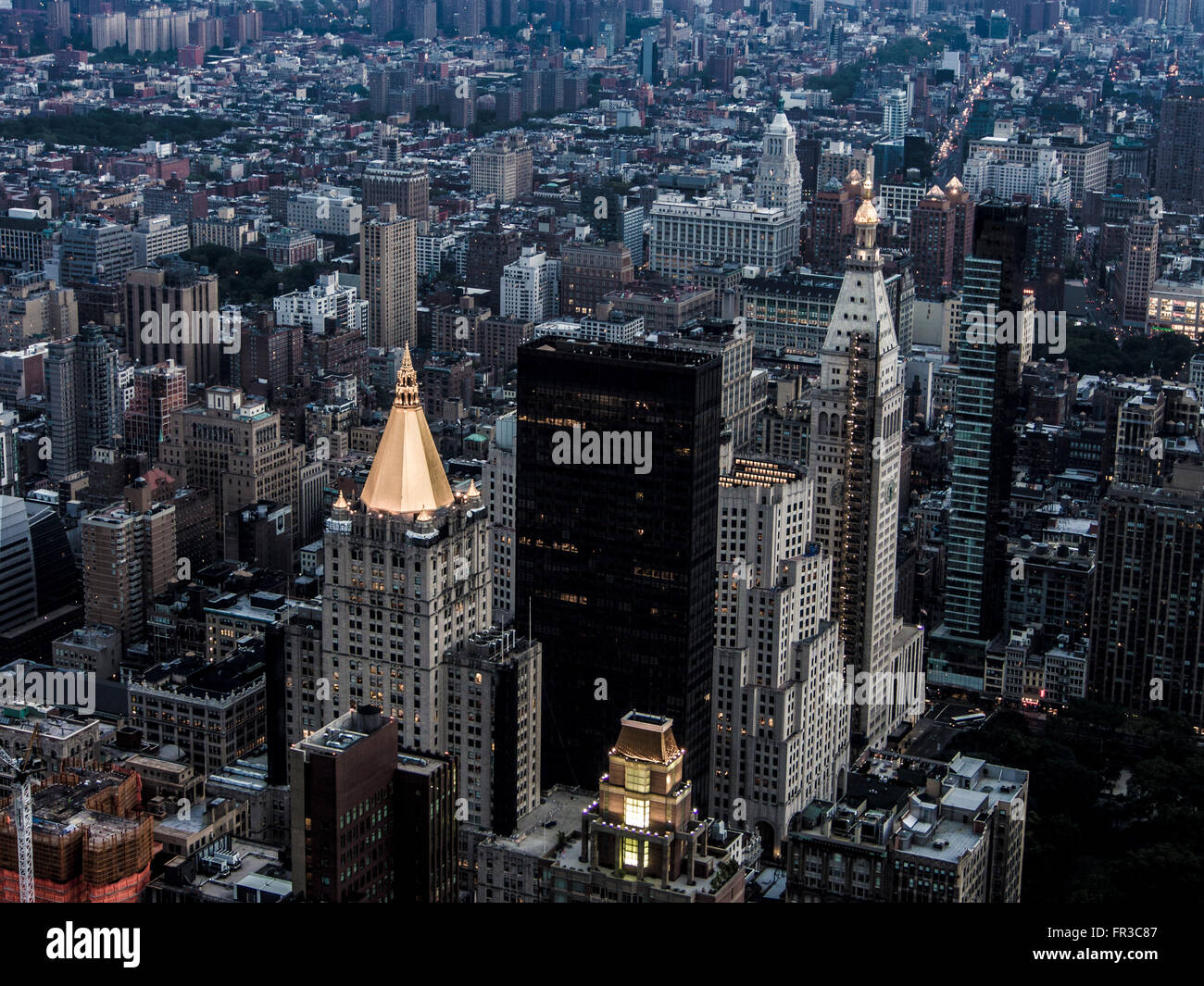
51 Madison Avenue, widely recognized as the New York Life Building, serves as the global headquarters for the New York Life Insurance Company. Completed in 1928 and designed by renowned architect Cass Gilbert, this 40-story Gothic Revival skyscraper is a National Historic Landmark, distinguished by its iconic gold-leafed pyramid roof overlooking Madison Square Park.
Architectural Grandeur: The Design of Cass Gilbert
The New York Life Building stands as a monumental achievement in the career of Cass Gilbert, the same architect responsible for the Woolworth Building—once the tallest building in the world. When New York Life commissioned the project in the mid-1920s, they sought a structure that would embody the "Mutual" strength and permanence of their institution. Gilbert responded with a design that combined the functional requirements of a modern office building with the aesthetic gravitas of a European cathedral.
The building's architecture is categorized as Gothic Revival, but it incorporates significant Art Deco transitions typical of the late 1920s. The structure rises 615 feet into the Manhattan skyline, featuring a massive six-story base that occupies an entire city block between 26th and 27th Streets. The limestone facade is characterized by intricate carvings, gargoyles, and ornate setbacks that allow light to reach the streets below. This "Cathedral of Insurance" was designed not just to house workers, but to inspire confidence in the millions of policyholders whose financial security was managed within its walls.
Internally, the architecture remains just as impressive. The lobby is a sprawling gallery of marble, bronze, and vaulted ceilings. In 2026, the building continues to undergo meticulous preservation efforts to ensure that the original materials—many of which are no longer used in contemporary construction—remain in pristine condition. The use of granite and limestone provides a sense of weight and durability, reflecting the conservative and stable nature of the life insurance industry during the early 20th century.
The Iconic Gold Pyramid Roof
Perhaps the most recognizable feature of 51 Madison Avenue is its octagonal, gold-leafed pyramid roof. This architectural crowning jewel is covered in approximately 886,000 individual tiles. Each tile was originally made of terra cotta and finished with 22-carat gold leaf. Over the decades, the roof has undergone several major restorations, including a significant project in the early 1990s and ongoing maintenance leading into 2026, to protect the gold from the corrosive effects of New York City’s environment.
The pyramid is not merely a decorative cap; it serves as a beacon. When illuminated at night, the roof glows with a warm, golden hue that is visible from miles away, making it a permanent fixture of the Midtown South skyline. The lighting system has been modernized recently to include energy-efficient LED technology that can change colors to mark specific holidays or corporate milestones, though it typically remains in its signature "gold" state to honor the building’s heritage.
Technical specifications of the roof include:
- Total Height of Pyramid: Approximately 6 stories.
- Material: Gold-leafed ceramic tiles.
- Maintenance: Specialized masonry and gilding experts are required for periodic inspections, as the height and pitch of the roof make it one of the more challenging maintenance environments in Manhattan.
Historical Significance: From Madison Square Garden to a National Landmark
The ground upon which 51 Madison Avenue sits is steeped in New York City history. Before the New York Life Building was constructed, the site was occupied by the first and second Madison Square Gardens. The second version, designed by Stanford White, was a center of New York social life, hosting circuses, boxing matches, and high-society galas. When the Garden moved uptown to its third location, New York Life seized the opportunity to consolidate its operations from its previous headquarters at 346 Broadway.
Construction of the New York Life Building began in 1926 and was completed in 1928. It was one of the last major skyscrapers finished before the Great Depression began in 1929. Because New York Life was a mutual company with significant reserves, it was able to maintain the building and its workforce throughout the economic downturn, further cementing the building’s reputation as a "fortress" of financial stability.
In recognition of its architectural and historical importance, the building was designated a New York City Landmark in 1972 and was added to the National Register of Historic Places as a National Historic Landmark in 1978. These designations ensure that the exterior of the building, and specifically the gold roof and limestone carvings, cannot be altered without strict regulatory approval.
New York Life Insurance Company: The Anchor Tenant
As of 2026, 51 Madison Avenue remains the primary hub for the New York Life Insurance Company. Founded in 1845, New York Life is the largest mutual life insurance company in the United States. A mutual company is owned by its policyholders rather than outside shareholders, a distinction that has heavily influenced the company's long-term investment strategies and its relationship with its headquarters.
The building houses executive offices, actuarial departments, legal teams, and the core administrative functions of the company. For policyholders, 51 Madison represents the physical manifestation of the company’s "The Company You Keep" slogan. While many modern financial firms have migrated to sleek, glass-and-steel towers in Hudson Yards or the Financial District, New York Life has intentionally maintained its presence in this historic location to signal continuity and traditional values.
The corporate presence inside the building has evolved. By 2026, the interior spaces have been retrofitted to support hybrid work environments, featuring high-speed digital infrastructure, collaborative zones, and wellness facilities for employees. However, these modern updates are carefully hidden behind the building's historic "bones" to preserve the aesthetic of a bygone era of American industry.
Technical Specifications and Site Details
The scale of 51 Madison Avenue is best understood through its technical data. The building provides over 1 million square feet of office space. Despite its age, it remains a highly efficient structure due to its heavy masonry walls, which provide excellent thermal mass, reducing the energy needed for cooling and heating compared to modern glass-wall skyscrapers.
| Feature | Specification |
|---|---|
| Address | 51 Madison Avenue, New York, NY 10010 |
| Architect | Cass Gilbert |
| Year Completed | 1928 |
| Total Height | 615 feet (187 meters) |
| Floors | 40 |
| Elevator Count | 38 passenger elevators |
| Landmark Status | National Historic Landmark (1978) |
| Owner/Occupant | New York Life Insurance Company |
| Neighborhood | NoMad / Madison Square Park |
Navigating the Building: Visitor Access and Public Interaction
While 51 Madison Avenue is a private corporate headquarters, it remains a significant point of interest for tourists and architecture enthusiasts. Public access is generally limited to the main lobby, which is accessible via the Madison Square Park entrance. Visitors should be aware of the following:
- Security Protocols: As a major financial institution's headquarters, security at 51 Madison is stringent. Visitors must often pass through a security screening or be met by a host if they have business within the building.
- The Lobby Experience: The lobby is the most accessible part of the interior and features 38-foot ceilings, bronze entry doors, and elaborate hanging chandeliers. Photography is generally restricted in the secure areas of the lobby but permitted in the public corridors.
- Proximity to Madison Square Park: The building is perfectly positioned for those visiting the park. It provides the backdrop for many of the park's art installations and offers a dramatic visual contrast to the nearby Flatiron Building and the Metropolitan Life Insurance Company Tower.
- No Public Observation Deck: Unlike the Empire State Building or Top of the Rock, 51 Madison does not have a public observation deck. The gold pyramid is strictly used for mechanical space and architectural aesthetics.
Engineering and Modernization in 2026
Operating a century-old skyscraper in 2026 presents unique engineering challenges. New York Life has invested heavily in "green" retrofitting to comply with New York City’s evolving Local Laws regarding carbon emissions. This includes the installation of high-efficiency HVAC systems and the integration of smart building technology that monitors occupancy and adjusts lighting and temperature in real-time.
The elevator system has also seen significant upgrades. The original manual elevators were replaced decades ago, but the latest 2020s-era "destination dispatch" systems now manage the flow of thousands of employees daily. This technology groups people going to the same floors together, drastically reducing wait times and energy consumption.
Furthermore, the building’s windows have been replaced with high-performance glass that mimics the look of the 1928 originals while providing modern insulation. This balance of preservation and modernization ensures that 51 Madison Avenue remains a viable, Class-A office space well into its second century of service.
Comparison with Nearby Landmarks
51 Madison Avenue is part of a "trio" of iconic towers that define the Madison Square Park area. Understanding its context requires comparing it to its neighbors.
- The Flatiron Building: Located just south, the Flatiron is older (1902) and smaller. It is famous for its triangular shape but lacks the vertical "cathedral" scale of 51 Madison.
- Met Life Tower: Located directly across 24th Street, the Met Life Tower was once the world's tallest building. While both have clock-related or pyramidal elements, the New York Life Building is distinct for its Gothic detailing compared to Met Life’s Italianate campanile style.
- One Madison: A modern residential "pencil tower" that stands in sharp contrast to 51 Madison’s heavy limestone footprint, highlighting the evolution of Manhattan architecture from the early 20th century to the present.
FAQs About 51 Madison Avenue and New York Life
Can I tour the inside of the New York Life Building?
Formal public tours of the office floors are not typically available as it is a functioning private headquarters. However, the ground-floor lobby is often accessible to the public during business hours, allowing visitors to view the ornate bronze work and marble finishes. Enthusiasts often visit during "Open House New York" weekends when limited guided access is sometimes granted.
Is New York Life Insurance Company still based there?
Yes, New York Life continues to own and occupy 51 Madison Avenue as its global headquarters. While the company has satellite offices across the United States, 51 Madison remains the symbolic and administrative heart of the organization.
How do I contact New York Life at this address?
General correspondence for New York Life can be sent to 51 Madison Avenue, New York, NY 10010. However, for policyholder services, it is more efficient to use the official New York Life website or the customer service number found on your specific policy documents, as most claims and service requests are processed through specialized regional centers.
What is the significance of the gold roof?
The gold roof serves as a "corporate signature." Architecturally, it finishes the Gothic verticality of the building. Symbolically, the use of gold leaf represents the value, wealth, and stability that a life insurance company promises its clients. In the early 20th century, skyscrapers often used distinctive tops (like the Chrysler Building’s spire) to differentiate themselves in the skyline.
How has the building adapted to 2026 sustainability standards?
By 2026, the building has undergone significant HVAC and window upgrades to meet NYC’s strict carbon-neutrality goals. It utilizes advanced building management systems (BMS) to optimize energy use and has earned various LEED certifications for its commitment to maintaining a historic structure with modern environmental sensitivity.
Why is it called the "Cathedral of Insurance"?
The term was coined by architectural critics because of the building’s heavy use of Gothic elements—including pointed arches, gargoyles, and the pyramid cap—which were traditionally reserved for religious structures. It reflected the idea that insurance was a sacred trust between the company and the families it protected.
Practical Recommendation for Visitors and Clients
For those planning to visit or interact with New York Life at 51 Madison Avenue, it is recommended to arrive via public transportation, as the Madison Square Park area is highly congested. The 6, N, R, and W subway lines all have stops within a few blocks of the building.
If you are a policyholder seeking assistance, ensure you have your policy number ready before arriving. While the building is a landmark, most routine business is now conducted through digital portals or by appointment. For those interested in the architecture, the best views for photography are from the southern end of Madison Square Park, where the full height of the building and the gold pyramid can be captured against the sky.
As we move through 2026, 51 Madison Avenue stands as a rare example of a corporate entity maintaining its original home for nearly a century, proving that timeless design and financial stability often go hand-in-hand.