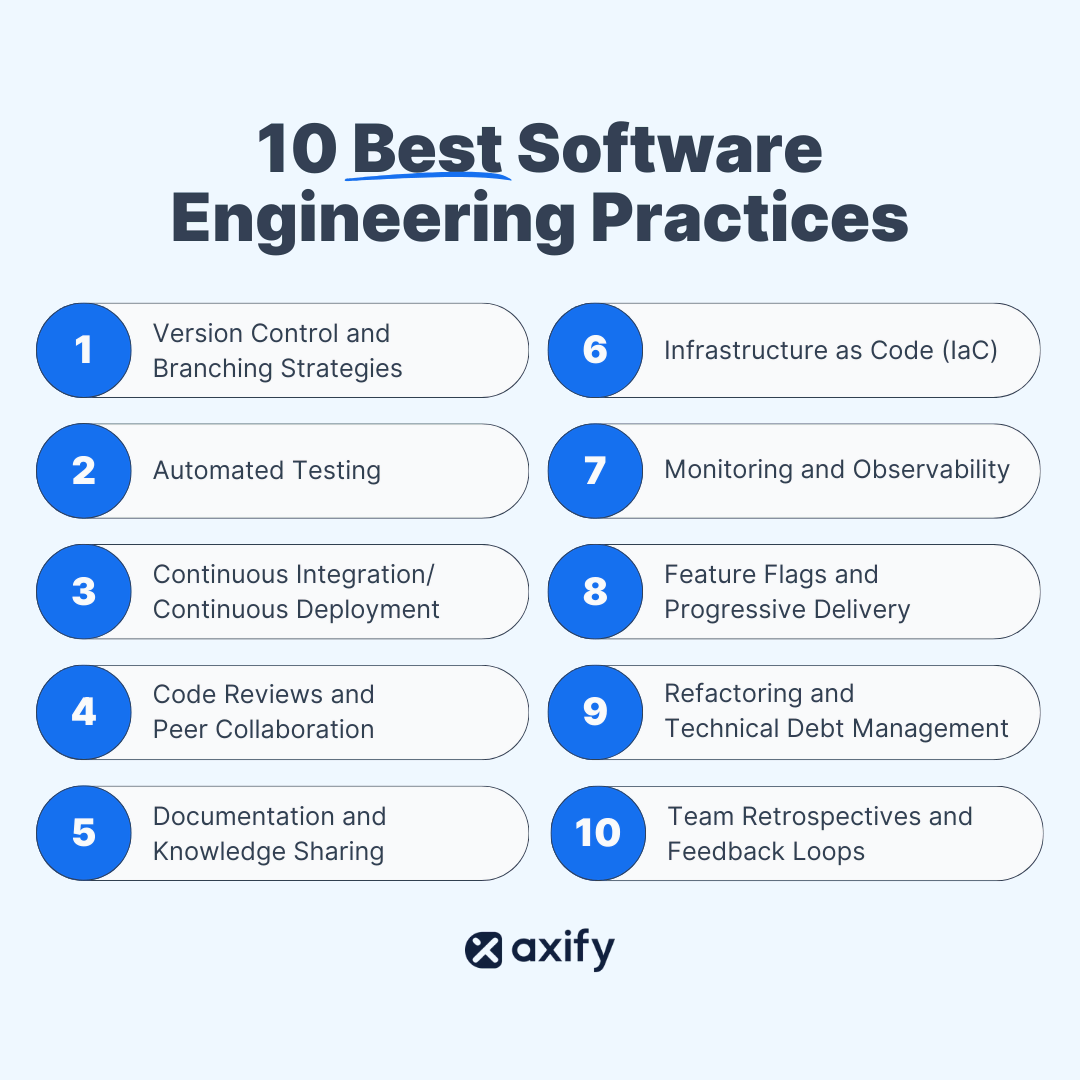
Achieving excellence in software development requires a strategic balance between technical rigor, efficient workflow management, and clear communication. By prioritizing modular architecture, automated testing, and consistent documentation, developers can significantly reduce technical debt, enhance code quality, and ensure long-term maintainability of complex software systems.
1. Prioritize Modular Architecture
At the core of sustainable software development is the principle of modularity. Rather than building monolithic structures, focus on breaking down your application into discrete, loosely coupled components or services. A modular architecture allows teams to develop, test, and deploy individual parts of a system independently. This approach minimizes the risk of cascading failures; when one module requires an update or experiences a bug, the impact on the rest of the application is isolated and manageable. In 2026, as system complexity increases, utilizing containerization tools and service-oriented patterns remains a standard for managing these distributed components effectively.
2. Implement Comprehensive Automated Testing
Manual testing is inherently prone to human error and difficult to scale. Investing in an automated testing suite—comprising unit tests, integration tests, and end-to-end tests—is essential for verifying system integrity. Unit tests ensure that individual functions behave as expected, while integration tests validate that different modules communicate correctly. By implementing a Continuous Integration (CI) pipeline, you ensure that every code commit is automatically verified against these tests, catching regressions early in the development lifecycle before they reach production.
3. Emphasize Clean and Self-Documenting Code
Code is read far more often than it is written. Writing "clean" code means adhering to consistent naming conventions, maintaining logical indentation, and keeping functions focused on a single responsibility. Instead of relying heavily on comments to explain what the code is doing, write expressive code that reveals its intent through variable and method names. When developers can understand the logic without needing a guide, the cost of onboarding new team members and performing code reviews drops significantly.
4. Master Version Control Best Practices
Version control systems like Git are non-negotiable in professional environments. Beyond merely storing code, effective version control involves adopting a disciplined branching strategy—such as GitFlow or trunk-based development—to manage concurrent work streams. Meaningful commit messages are vital; they provide a historical record of why changes were made, not just what was changed. Keeping branches short-lived and merging frequently helps avoid the "merge hell" that occurs when developers work in isolation for too long.
5. Adopt an Iterative Development Methodology
The "big bang" approach, where software is delivered in one massive release, is rarely successful. Adopting an iterative approach, such as Agile or Scrum, allows for incremental improvements and frequent feedback loops. By breaking projects into small, manageable sprints, you can demonstrate progress to stakeholders, identify potential roadblocks early, and pivot based on real-world requirements. This transparency ensures the final product aligns with user needs and market conditions.
6. Secure the Software Supply Chain
Modern software relies heavily on third-party libraries and open-source packages. While this accelerates development, it also introduces security risks. To manage these dependencies, maintain an accurate Software Bill of Materials (SBOM) and use automated tools to scan for known vulnerabilities in your project dependencies. Regularly updating libraries is not just about gaining new features; it is a critical security practice to patch known exploits that could compromise your infrastructure.
7. Invest in Robust Documentation
While code should be self-documenting, higher-level documentation is necessary for architectural decisions, API specifications, and setup instructions. Maintain a centralized "source of truth"—such as a developer portal or a structured wiki—that outlines the "why" behind design choices. This documentation serves as a guide for system design, helping future developers understand constraints and dependencies that aren't apparent in the source code alone.
8. Practice Consistent Code Reviews
Code reviews act as a vital quality assurance gate and a knowledge-sharing mechanism. Rather than focusing solely on finding bugs, use code reviews to ensure that everyone on the team is following established style guides and architectural patterns. Encourage a culture where feedback is constructive and focused on the code, not the person. This collaborative environment improves the collective skill set of the development team and ensures that knowledge is distributed rather than siloed.
9. Optimize for Observability and Monitoring
Shipping code is only half the battle. Once your software is in production, you need the tools to understand how it behaves under load. Implementing robust logging, distributed tracing, and real-time performance monitoring allows you to proactively identify bottlenecks or failures. Observability provides the data necessary to troubleshoot issues quickly, significantly reducing Mean Time to Recovery (MTTR) when incidents occur.
10. Prioritize Performance and Scalability
Developing for functionality is essential, but developing for performance is what ensures a positive user experience. Profile your application regularly to identify performance hotspots, such as inefficient database queries or memory leaks. Designing with scalability in mind—such as ensuring statelessness where possible or implementing caching layers—prepares your software for growth, ensuring that the application remains responsive as user demand increases.
Comparison of Development Focus Areas
| Focus Area | Primary Benefit | Key Tool/Metric |
|---|---|---|
| Testing | Reliability | Code Coverage % |
| Architecture | Maintainability | Coupling/Cohesion |
| Observability | Stability | MTTR (Recovery Time) |
| Security | Risk Mitigation | Vulnerability Scan Results |
| Version Control | Collaboration | Pull Request Cycle Time |
Frequently Asked Questions
What is the most effective way to start refactoring legacy code? Begin by surrounding the legacy code with a safety net of automated tests. You cannot refactor safely if you don't have a way to verify that your changes haven't broken existing functionality. Once the tests are in place, refactor in small, incremental steps rather than attempting a large-scale rewrite.
How can I manage technical debt without halting feature development? Integrate technical debt management into your regular sprint cycles. Dedicate a consistent percentage of each sprint (e.g., 20%) to addressing refactoring tasks, dependency updates, and documentation improvements. This keeps the codebase healthy without stalling product delivery.
What are the signs that my team is relying too much on manual testing? If your release cycle is stalled by long periods of QA, or if production deployments are frequently followed by "hotfixes" for regressions, you are likely under-investing in automation. High defect leakage into production is a clear indicator that automated unit and integration tests are missing.
Why is an SBOM important in 2026? An SBOM provides transparency into the composition of your software. As supply chain attacks become more sophisticated, knowing exactly which versions of which libraries are included in your application allows for rapid identification of impacted systems when a new vulnerability is disclosed.
How do I balance the need for speed with the need for quality? Quality is a prerequisite for speed. While cutting corners might result in a faster initial release, it creates "interest" on your technical debt that will eventually slow down all future development. Invest in foundational automation and modular design early; the time saved in debugging and maintenance will allow for faster development in the long term.
Next Action
Start by selecting one of the tips mentioned above—such as improving your automated testing coverage or establishing a clear branching strategy—and audit your current project against it. Dedicate your next planning session to implementing a specific process change that addresses that area, rather than attempting to overhaul your entire workflow at once.