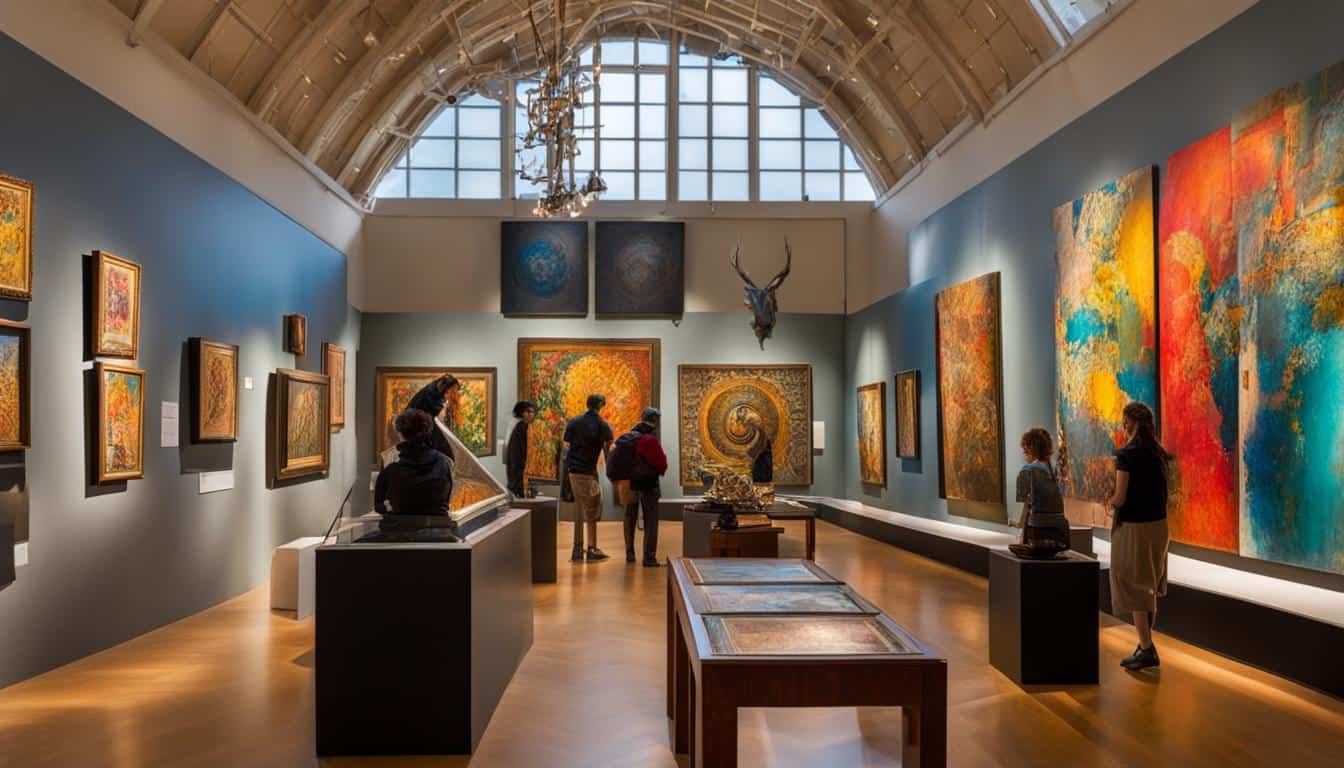
Art galleries serve as the vital keepers of human expression, housing masterpieces that define centuries of culture, innovation, and historical transformation. Determining the absolute best art galleries in the world involves examining collections of unmatched historical significance, architectural brilliance, global cultural impact, and the quality of their preservation and public presentation. These institutions do not merely display paintings and sculptures; they curate spaces where visitors can trace the evolution of civilization through the eyes of history's greatest visionaries.
Navigating the global art landscape requires an understanding of what sets premier cultural institutions apart. The best art galleries in the world feature exceptional permanent collections ranging from antiquity to contemporary installations, attract millions of annual visitors, and maintain rigorous standards of conservation. Planning a visit to these institutions involves understanding ticketing protocols, seasonal exhibitions, and navigational strategies to maximize exposure to some of humanity's most priceless cultural treasures.
1. Musée du Louvre (Paris, France)
The Musée du Louvre stands as the world's largest art museum and a historic landmark in Paris, France. Housed in the former royal palace, the Louvre boasts a collection spanning from the ancient civilizations of Mesopotamia, Egypt, and Greece to masterpieces of European art up to 1848.
The museum's most famous resident is Leonardo da Vinci’s Mona Lisa, alongside other iconic works such as the Winged Victory of Samothrace and Eugène Delacroix’s Liberty Leading the People. Navigating the Louvre requires careful planning due to its vast scale—over 35,000 works of art are displayed across three wings. Visitors are strongly advised to purchase timed-entry tickets well in advance and focus on specific wings or departments to avoid fatigue.
2. The Metropolitan Museum of Art (New York City, USA)
Fondly known as The Met, this institution is the largest art museum in the United States and a cornerstone of New York City’s cultural life. Located on the edge of Central Park, The Met’s permanent collection contains over two million works divided among 17 curatorial departments.
From American decorative arts and Egyptian temples to European paintings and contemporary installations, The Met offers a comprehensive view of global creativity over 5,000 years. A major highlight is the American Wing, featuring Emanuel Leutze's monumental Washington Crossing the Delaware. The Met’s vast scope makes it beneficial to utilize their digital map or guided tours to tailor the visit to specific historical eras or mediums.
3. The State Hermitage Museum (Saint Petersburg, Russia)
Founded in 1764 by Empress Catherine the Great, the State Hermitage Museum in Saint Petersburg is a massive complex of six historic buildings situated along the Palace Embankment. The Winter Palace, the former residence of Russian emperors, serves as the primary jewel in this museum network.
The Hermitage houses over three million items, representing a vast sweep of world art, culture, and archaeology. Its collection of Western European art features works by Rembrandt, Rubens, Matisse, and Picasso. The opulence of the museum's state rooms matches the caliber of its artwork, making the architectural experience just as compelling as the galleries themselves.
4. Museo del Prado (Madrid, Spain)
The Museo del Prado, located in central Madrid, is Spain's national art museum and widely considered to house one of the world's finest collections of European art. Dating from the 12th century to the early 20th century, the Prado is built upon the former Spanish Royal Collection.
The museum is globally renowned for its peerless holdings of Spanish masters, including extensive works by Francisco Goya, Diego Velázquez—whose masterpiece Las Meninas hangs here—and El Greco. Additionally, the Prado features significant collections of Flemish and Italian masterpieces, featuring works by Hieronymus Bosch, Titian, and Sandro Botticelli.
5. Rijksmuseum (Amsterdam, Netherlands)
Dedicated to Dutch arts and history, the Rijksmuseum in Amsterdam is the national museum of the Netherlands. Located at the Museumplein, the building itself is a masterpiece of Gothic and Renaissance revival architecture designed by Pierre Cuypers and reopened after a massive, long-term renovation.
The museum's Gallery of Honour is the focal point, drawing millions to view the Golden Age of Dutch painting. Visitors can stand before monumental works such as Rembrandt van Rijn’s The Night Watch, Johannes Vermeer’s The Milkmaid, and canvases by Frans Hals and Jan Steen. The Rijksmuseum also offers extensive collections of delftware, sculptures, and historical artifacts.
6. Uffizi Gallery (Florence, Italy)
Situated adjacent to the Piazza della Signoria in the historic center of Florence, the Uffizi Gallery is one of the oldest and most famous art museums in the western world. Designed by Giorgio Vasari in 1560 for Cosimo I de' Medici, the palazzo was originally designed to house magistrates' offices (uffizi), hence its name.
The gallery is the ultimate pilgrimage site for enthusiasts of Italian Renaissance art. Its brightly lit corridors display iconic masterworks that shifted the course of art history, including Sandro Botticelli’s The Birth of Venus and Primavera, Leonardo da Vinci’s Annunciation, and works by Michelangelo, Raphael, and Caravaggio. Advance reservations are strictly required due to high demand and strict capacity limits.
7. The British Museum (London, United Kingdom)
Dedicated to human history, art, and culture, the British Museum in London houses a permanent collection of some eight million works—the largest and most comprehensive in existence. Located in the Bloomsbury area, the museum was established in 1753, largely based on the collections of the scientist and physician Sir Hans Sloane.
While encompassing global history, the museum is renowned for antiquities such as the Rosetta Stone, the Parthenon Sculptures, and the mummies of Ancient Egypt. The Great Court, designed by Foster + Partners with its iconic glass and steel roof, serves as the stunning central hub connecting the museum's dozens of galleries.
8. Musée d'Orsay (Paris, France)
Housed in the magnificent former Gare d'Orsay, a Beaux-Arts railway station built for the 1900 Exposition Universelle, the Musée d'Orsay holds the largest collection of impressionist and post-impressionist masterpieces in the world.
The museum bridges the gap between the historical collections of the Louvre and the modern art of the Centre Pompidou, covering the period from 1848 to 1914. Visitors flock to view iconic canvases by Claude Monet, Vincent van Gogh (Starry Night Over the Rhône), Édouard Manet (Olympia), Pierre-Auguste Renoir, and Edgar Degas. The grand clock windows overlooking the Seine provide an unforgettable architectural backdrop.
9. National Gallery of Art (Washington, D.C., USA)
Established in 1937 by a joint resolution of the United States Congress, the National Gallery of Art on the National Mall in Washington, D.C., is a premier public art institution. Funded largely through private endowment by Andrew W. Mellon, the museum comprises the neoclassical West Building, the modern East Building designed by I.M. Pei, and a sprawling outdoor Sculpture Garden.
The museum's holdings trace the development of Western art from the Middle Ages to the present day. It holds the only painting by Leonardo da Vinci in the Americas (Ginevra de' Benci), alongside extensive collections of American portraiture, French impressionism, and 20th-century avant-garde works. Admission is free, making it one of the most accessible world-class cultural sites.
10. Tate Modern (London, United Kingdom)
Located on the banks of the River Thames, Tate Modern is Britain's national gallery of international modern and contemporary art. Housed in the former Bankside Power Station, the building's monumental industrial architecture—highlighted by the massive Turbine Hall—provides a dramatic setting for contemporary installations.
The museum showcases works from 1900 to the present day, featuring legendary artists such as Pablo Picasso, Henri Matisse, Salvador Dalí, Andy Warhol, and Louise Bourgeois. Tate Modern continuously pushes the boundaries of traditional exhibition spaces, commissioning massive, immersive installations that redefine how visitors interact with modern art.
Comparison of Featured World Art Galleries
| Gallery Name | City & Country | Primary Art Era / Focus | Architectural Highlight |
|---|---|---|---|
| Musée du Louvre | Paris, France | Antiquity to 1848 / European Masterpieces | I.M. Pei Glass Pyramid & Former Royal Palace |
| The Met | New York City, USA | 5,000 Years of Global Art | Beaux-Arts Façade facing Central Park |
| State Hermitage Museum | Saint Petersburg, Russia | Imperial Collections & Western European Art | The Winter Palace State Rooms |
| Museo del Prado | Madrid, Spain | 12th to Early 20th Century / Spanish Masters | Neoclassical Villanueva Building |
| Rijksmuseum | Amsterdam, Netherlands | Dutch Golden Age Art & History | Gothic/Renaissance Revival Building |
| Uffizi Gallery | Florence, Italy | Italian Renaissance Masterpieces | 16th-Century Vasari-Designed Palazzo |
| The British Museum | London, United Kingdom | World History, Art & Antiquities | The Great Court Glass & Steel Roof |
| Musée d'Orsay | Paris, France | Impressionism & Post-Impressionism (1848–1914) | Converted Beaux-Arts Railway Station |
| National Gallery of Art | Washington, D.C., USA | Western Art (Middle Ages to Present) | Neoclassical West Building & I.M. Pei East Building |
| Tate Modern | London, United Kingdom | International Modern & Contemporary Art | Converted Bankside Power Station Turbine Hall |
Frequently Asked Questions
Do I need to book tickets in advance for major art galleries?
Yes, booking tickets in advance online is strongly recommended for almost all major global art galleries, such as the Louvre, Uffizi, and Rijksmuseum. These institutions often enforce strict daily capacity limits and timed-entry slots. Purchasing tickets ahead of time eliminates hours of waiting in physical queues and guarantees entry on your preferred date and time.
Which art gallery has the largest collection in the world?
The State Hermitage Museum in Saint Petersburg, Russia, holds one of the largest collections in the world, boasting over three million items spanning various epochs and cultures. Similarly, The British Museum in London holds approximately eight million total objects, though only a fraction are on display at any given time.
Are photography and video allowed inside these art galleries?
Photography policies vary significantly by institution. Many modern galleries permit non-flash photography for personal, non-commercial use in permanent collection areas. However, flash photography, tripods, selfie sticks, and recording equipment are almost universally banned to protect sensitive pigments from light damage and ensure visitor safety. Special exhibitions often prohibit photography entirely due to copyright agreements.
Can I visit these museums on a budget?
Budget accessibility depends heavily on the specific institution and city. Several world-class galleries, such as the National Gallery of Art in Washington, D.C., and The British Museum in London, offer completely free general admission to the public. Other institutions charge admission fees but often provide discounted tickets for students, seniors, and children, or offer free admission on specific monthly evenings or cultural days.
How much time should I allocate for a single museum visit?
Due to the immense scale of world art galleries, trying to see everything in a single visit is physically and mentally exhausting. Most visitors spend between two to four hours exploring highlight exhibitions. For massive complexes like the Louvre or The Hermitage, it is best to select specific galleries or artistic movements of interest beforehand to make the most of your time.
Conclusion and Next Steps
Visiting the best art galleries in the world offers a profound connection to the shared history and creative evolution of human civilization. To ensure a seamless experience, prioritize booking your tickets well in advance, check specific photography and bag-check guidelines before arrival, and focus your itinerary on specific wings or eras that align with your personal interests. Review the official websites of your chosen destinations to verify current exhibition schedules and operating hours prior to your journey.