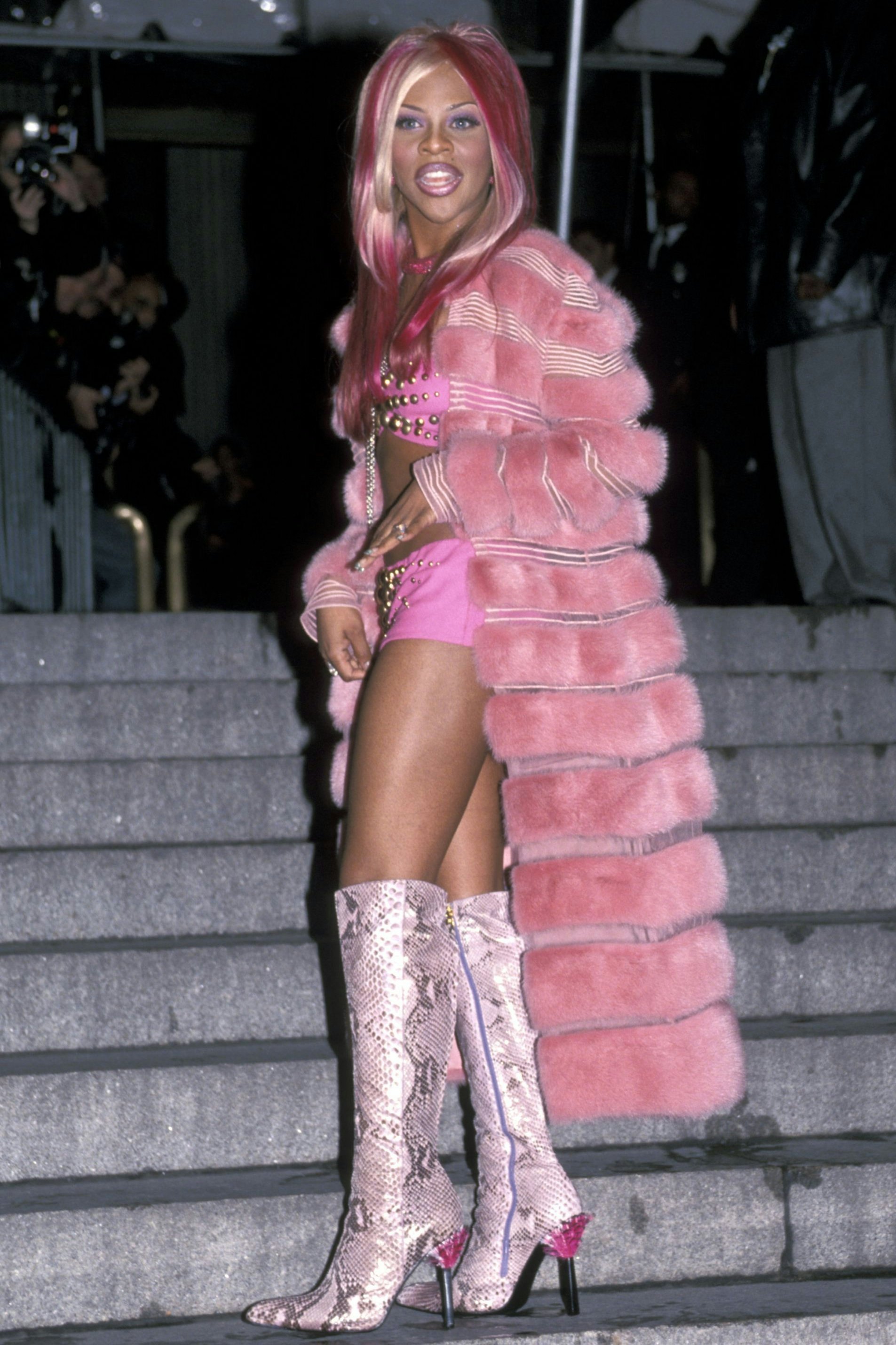
During the 1990s, Lil’ Kim redefined hip-hop fashion by transforming high-end eyewear from simple functional accessories into central, structural elements of her stage presence. Her signature look often featured oversized, tinted, or avant-garde frames that moved beyond traditional luxury, favoring bold shapes and colors that complemented her provocative and calculated approach to celebrity identity.
The Evolution of the 90s Hip-Hop Eyewear Aesthetic
The 1990s represented a pivotal era for hip-hop fashion, moving from the street-level utility of the 1980s toward a more experimental, high-fashion-adjacent aesthetic. Lil’ Kim, often collaborating with stylists like Misa Hylton, occupied the vanguard of this shift. For Kim, sunglasses were not merely a means of shielding eyes from cameras; they were a form of armor and a critical component of her "Queen Bee" persona.
Unlike her contemporaries who might have focused on classic aviators or basic dark lenses, Lil’ Kim leaned heavily into architectural frame designs. Her choices often echoed the maximalism of the decade, featuring heavy embellishments, unusual plastic composites, and color palettes that defied the industry standards of the time. These eyewear choices were calculated to be instantly recognizable, creating a visual shorthand for her brand that persists in fashion archives today.
Key Designers and Styles That Defined the Era
While Lil’ Kim wore a variety of frames, certain silhouettes became synonymous with her 90s public appearances. Her style often leaned into the "futuristic" aesthetic popularized by late 90s pop culture, which embraced synthetic materials and bold, reflective lenses.
- Wraparound Shields: These were perhaps the most iconic of her collection. The wraparound design provided a sleek, aerodynamic look that felt at home in the high-budget music videos of the late 90s.
- Embellished Frames: It was not uncommon to see Kim in frames featuring heavy crystal settings, metallic logo hardware, or gold-tone accents. These pieces bridged the gap between streetwear and high-fashion luxury boutiques.
- Tinted Lenses: Moving away from standard black or brown, Kim frequently wore lenses in shades of red, blue, and yellow, matching her outfits to her eyewear in a monochromatic style that became a staple of her visual language.
Analyzing the Impact of Stylists on Eyewear Selection
The role of the stylist in the 90s cannot be overstated when discussing Lil’ Kim’s look. Misa Hylton, in particular, was instrumental in curating these specific eyewear pieces. The selection process was rarely about finding a "classic" pair of glasses; it was about finding pieces that could withstand the high-energy, high-visual-contrast environment of 90s hip-hop media.
Stylists looked for items that could hold their own against the heavy jewelry and intricate hairstyles of the era. The sunglasses had to possess enough structural weight so as not to be "lost" on the face when paired with bold makeup or elaborate headpieces. This led to a preference for thicker acetates and oversized metallic frames that prioritized shape and silhouette over traditional ergonomic design.
Comparison of 90s Eyewear Trends
The following table categorizes the common stylistic elements observed in high-profile hip-hop eyewear during the 1990s, contrasting the typical mainstream approach with the specific "Lil' Kim" aesthetic.
| Feature | Mainstream 90s Eyewear | Lil' Kim 90s Aesthetic |
|---|---|---|
| Primary Shape | Standard Ovals/Rectangles | Wraparounds/Oversized Geometric |
| Color Palettes | Black/Tortoiseshell | Primary Colors/Iridescent/Neon |
| Hardware | Minimalist/Slim | Chunky/Logo-Heavy/Metallic |
| Materiality | Thin Metal/Standard Plastic | Heavy Acetate/Polycarbonate |
| Strategic Goal | Subtle Protection | Identity Statement/Costume |
Prerequisites for Achieving the "Kim-Inspired" Look Today
If you are looking to replicate the specific energy of 90s Lil’ Kim sunglasses, you must navigate the difference between vintage originals and modern reinterpretations.
- Sourcing Original 90s Stock: Finding genuine sunglasses from the 1997–1999 era requires monitoring vintage luxury archives or specialized archival fashion retailers. Be prepared to verify the authenticity of the hinges and lens quality, as synthetic materials from that period may show signs of degradation.
- Modern Reinterpretations: Many modern streetwear brands have released collections that pay homage to 90s silhouettes. Look for "Y2K-inspired" or "futuristic shield" search terms on high-end fashion platforms. These contemporary versions often use better-quality UV-rated lenses than the fashion-forward, non-functional costume pieces of the 90s.
- Frame Fit and Proportions: The "Kim" look is defined by proportion. When selecting frames, look for models that extend past the width of your cheekbones. The frame should sit high on the face to maintain that specific "shielded" look that characterized her press photos.
Common Mistakes in Styling 90s Eyewear
One of the most common pitfalls when attempting this aesthetic is mixing too many "hero" items at once. Lil’ Kim’s styling was deliberate; if the sunglasses were the primary focal point of the face, other elements of the outfit were often balanced to ensure the eyewear remained the centerpiece.
- Ignoring Face Shape: Because 90s frames are often wide or dramatic, they can easily overwhelm smaller faces. It is essential to ensure that the bridge of the glasses sits securely on the nose and does not slide, as the structural weight of many 90s frames is significant.
- Prioritizing Brand over Silhouette: In the 90s, the brand was often secondary to the visual impact of the shape. Do not be distracted by designer logos if the silhouette of the frame does not match the specific, sharp-edged, or shield-like aesthetic of the era.
- Neglecting Lens Quality: Many vintage pieces were designed for photography, not for long-term vision health. If you are sourcing authentic 90s frames, consider taking them to a professional optical lab to have them fitted with modern, UV-protected lenses that match the original color intensity.
The Materiality of 90s Sunglasses: A Technical Note
From a technical manufacturing standpoint, the late 90s represented an era of transition. Brands were experimenting with new injection-molded plastics and polycarbonate lens technology. When examining original pieces from this time, you will often find that the "weight" comes from the high-density acetate, which was favored for its ability to hold vivid, deep pigments.
Furthermore, the hinges on high-end 90s frames were often significantly more robust than those found on mass-market glasses today. A genuine 90s high-fashion frame will typically feature barrel hinges or complex, spring-loaded systems that provide a "snap" feel. If the hinges feel loose or are made of flimsy, un-reinforced plastic, it is likely that the item is a lower-tier fashion piece rather than an archival-quality accessory.
FAQ: Understanding the 90s Eyewear Phenomenon
1. Why were wraparound sunglasses so popular in the late 90s? Wraparound sunglasses were a visual intersection of sports technology and the burgeoning "futuristic" aesthetic. In hip-hop, this style was adopted because it offered a seamless, monolithic look that stood out in high-resolution editorial photography.
2. Are 90s-style sunglasses currently safe for eye protection? Original, vintage sunglasses from the 1990s may have lenses that have degraded over the decades, leading to poor UV protection. It is recommended to have any vintage frames fitted with new, modern lenses by a professional optometrist to ensure proper eye health while maintaining the vintage frame.
3. What specific brands were common in this era of hip-hop fashion? While Lil’ Kim often opted for custom pieces or high-fashion houses, many artists favored brands that leaned into the logo-heavy, bold-frame look. Brands like Versace, Cazal, and various independent boutique designers were highly sought after during this time.
4. How can I tell if a pair of 90s sunglasses is authentic? Authenticity can be verified by checking for manufacturer markings on the inner temple arms, the quality of the hinge hardware, and the material weight. Avoid pieces that appear to have paint flaking off or lenses that feel like thin, bendable plastic.
5. How should I store vintage eyewear? Vintage frames should be stored in a cool, dry environment. Avoid leaving them in direct sunlight or hot vehicles, as the acetate can warp and the specialized lens coatings can bubble or crack over time.
Recommendation for Collectors and Stylists
If you are looking to acquire eyewear that captures the essence of Lil’ Kim’s 90s aesthetic, prioritize the "shield" and "oversized geometric" silhouettes. Focus on finding frames that are in good structural condition, even if the lenses need replacing. The true value and visual impact of these items lie in the frame geometry. Start by searching reputable high-end vintage dealers who specialize in 90s designer eyewear; these sources are more likely to provide accurate provenance and ensure the hardware is still functional after three decades. When pairing these with modern outfits, let the glasses do the heavy lifting—keep your other accessories minimal to allow the bold, retro-futuristic shape of the eyewear to take center stage.