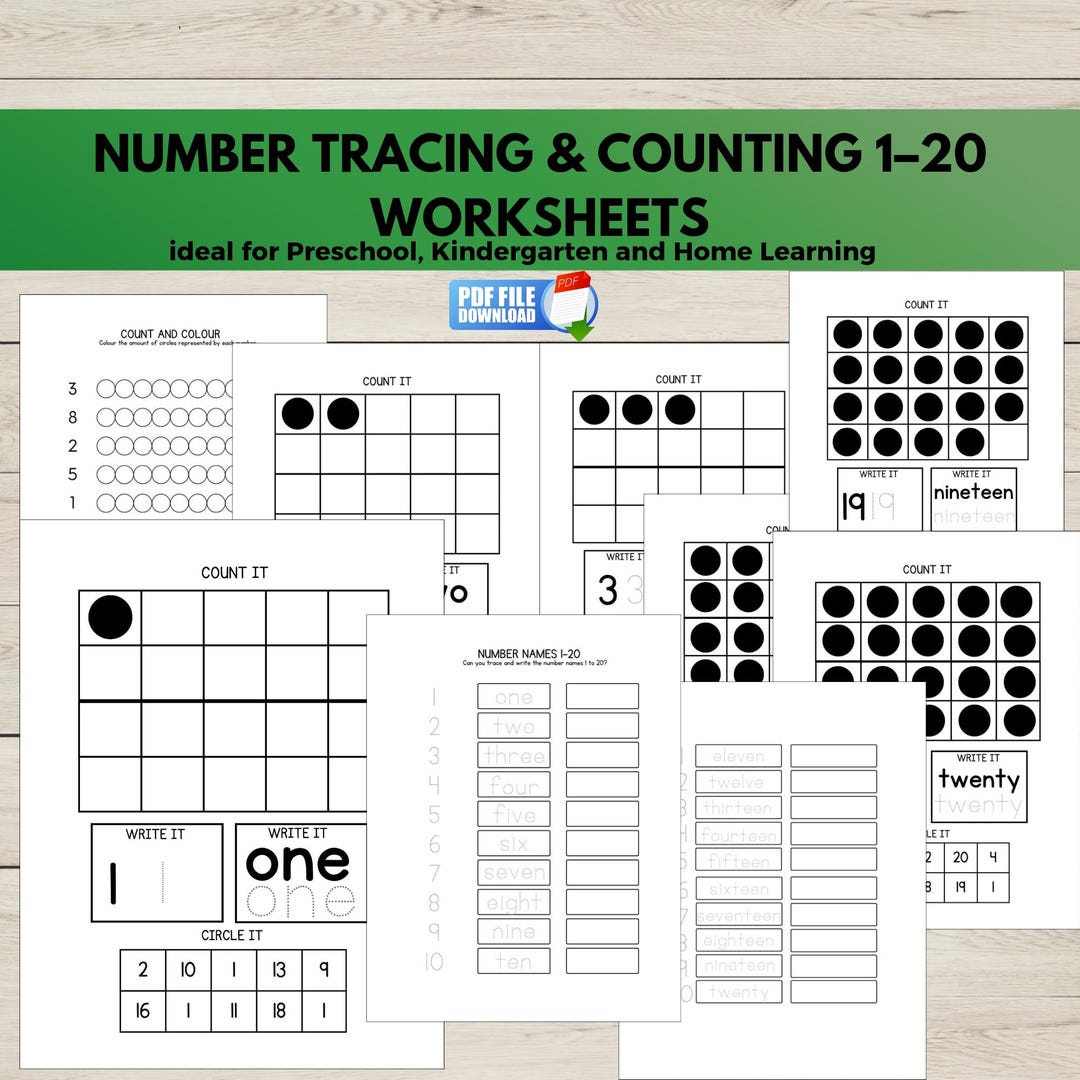
Mastering numbers 1-20 is a foundational milestone in kindergarten that bridges the gap between basic counting and complex arithmetic. To achieve proficiency, students must move beyond rote memorization to understand cardinality, numeral recognition, and the concept of "ten and some more," which provides the essential groundwork for future place value and operations.
The Significance of the 1-20 Number Range in Kindergarten
In the 2026 educational landscape, the mastery of numbers 1 through 20 remains the definitive benchmark for early childhood mathematical literacy. While many children enter kindergarten able to recite numbers up to ten, the jump to twenty represents a significant cognitive shift. This range introduces the first "double digits," requiring students to process two distinct symbols as a single numerical value.
The shift from 10 to 20 is not merely an extension of a list; it is the introduction of the base-ten system. Educators prioritize this range because it encapsulates the most challenging linguistic and conceptual hurdles in early math. For instance, the irregular naming of "eleven" and "twelve" and the phonetic similarities in the "teen" family (13-19) require specific instructional focus. By the end of the 2026 academic year, a student’s comfort with these twenty numbers is often the strongest predictor of their success in first-grade addition and subtraction.
Core Competencies for Numbers 1-20
True mastery of kindergarten numbers involves four distinct but overlapping competencies. Teachers and parents should ensure that a child isn't just "calling out" numbers but actually understanding what those numbers represent in the physical world.
1. Rote Counting and Sequencing
Rote counting is the ability to recite numbers in order from memory. While it is the most basic skill, it is the prerequisite for all others. In 2026, the standard expectation is that a student can count forward to 100, but the primary focus for deep understanding remains the 1-20 sequence. This includes "counting on" from a number other than one (e.g., "Starting at 8, what come next?") and counting backward from 10 or 20.
2. One-to-One Correspondence
This is the physical act of pairing one number word with one—and only one—object. Many children struggle with this when they reach the "teen" numbers because the higher quantity of objects makes it easier to lose track. Developing this skill requires fine motor coordination and the cognitive discipline to touch each item as they speak the corresponding number.
3. Cardinality
Cardinality is the understanding that the last number counted represents the total quantity of the set. A child who can count five apples but then asks "How many are there?" when finished has not yet grasped cardinality. For numbers 11-20, cardinality becomes more abstract as the sets of objects become larger and more difficult to perceive at a single glance.
4. Numeral Recognition and Formation
Recognizing the written symbol (the numeral) and being able to produce it is the final step. In kindergarten, this also involves distinguishing between similar-looking numbers, such as 6 and 9, or 12 and 21. Correct formation—starting from the top and following the proper stroke order—is emphasized in 2026 curricula to prevent the development of hard-to-break habits that can slow down writing in later grades.
Strategies for Teaching Numbers 1-10
The first ten numbers are the "building blocks." They are concrete and can be easily represented using a child’s own fingers, which serve as their first mathematical tool.
- Subitizing: This is the ability to "see" a small amount without counting. For example, when a child looks at a die and immediately knows it is a five without counting the dots, they are subitizing. Using "flash cards" with dot patterns rather than numerals helps strengthen this mental muscle.
- Five-Frames and Ten-Frames: These 2x5 grids are essential in 2026 classrooms. They provide a visual anchor for the number ten. A child sees a full row and knows it is five; they see a nearly full frame and know it is nine. This visualizes the "missing piece" logic that leads to early subtraction.
- Kinesthetic Learning: Numbers 1-10 should be felt. Using sand trays, playdough, or "air writing" helps build the muscle memory required for numeral formation.
Transitioning to the "Teen" Numbers (11-20)
The numbers 11 through 19 are notoriously difficult for English-speaking children. Unlike many East Asian languages where 11 is literally called "ten-one," the English words "eleven" and "twelve" provide no clues to their mathematical composition. Furthermore, "thirteen" and "fifteen" have slight root changes from "three" and "five."
The "Ten and Some More" Concept
To overcome the linguistic confusion, 2026 pedagogical standards emphasize the "Ten and Some More" strategy. Instead of seeing 14 as a 1 and a 4 smashed together, students are taught to see it as a full ten-frame and four extra units. This is the birth of place value.
When teaching 11-20, educators often use double ten-frames. One frame is always full (representing the 1 in the tens place), and the second frame shows the remaining units. This visual representation makes it clear why 17 comes after 16; it is simply one more dot in the second frame.
Tools and Manipulatives for Number Mastery
In 2026, the most effective mathematics instruction combines physical manipulatives with digital interactive tools. The goal is to move from the concrete to the representational, and finally to the abstract.
| Tool Name | Primary Purpose | Ideal Number Range |
|---|---|---|
| Unifix Cubes | Building "towers" to compare heights and quantities. | 1–20 |
| Ten-Frames | Visualizing numbers as part of a set of ten. | 1–20 |
| Number Line | Understanding sequence, "before/after," and distance. | 1–100 |
| Base-Ten Blocks | Specifically for 11–20 to show the "Long" (10) and "Units." | 11–99 |
| Counters/Buttons | One-to-one correspondence and sorting. | 1–20 |
| Rekenreks | (Abacus-style) Developing additive thinking. | 1–20 |
Addressing Common Challenges and Misconceptions
Learning numbers 1-20 is rarely a linear process. Children often experience specific "hiccups" that are a normal part of developmental progress.
Number Reversals
Writing a "5" or a "3" backward is common until age seven. However, in the 1-20 range, "digit reversal" is a different issue. A child might write "21" when they mean "12." This usually stems from the way we say the numbers. In "fourteen," the "four" comes first phonetically, so a child may naturally want to write the 4 first. Consistent work with place value mats (Tens and Ones columns) helps correct this by emphasizing that the "1" in 14 represents a whole group of ten.
The "Teen" vs. "Ty" Confusion
It is common for kindergarteners to confuse 13 with 30, 14 with 40, and so on. While 30 and 40 are technically outside the 1-20 focus, the confusion impacts their understanding of the "teen" suffix. Educators in 2026 recommend over-emphasizing the "n" sound at the end of teen numbers and using visual aids to show that "fourteen" is a small number (14) while "forty" is a much larger quantity.
Difficulty with "Counting Back"
Counting forward is a rhythmic, chant-like activity. Counting backward requires a deeper understanding of number relationships. If a child struggles to count back from 20, it often indicates they are relying on rote memory rather than a "mental number line." Using a physical number line where they can jump backward with a toy or their finger can bridge this gap.
Practical Activities for Home and Classroom
Education in 2026 thrives on "math talks" and integrating numbers into daily life. Rather than isolated worksheets, these activities embed 1-20 numbers into a child’s environment.
1. The Number Scavenger Hunt
Ask the child to find "14 of something" in the room. This forces them to use one-to-one correspondence and cardinality. To make it harder, ask them to find a "group of 10 and 3 more."
2. Mystery Number Bag
Place a set of objects (between 11 and 20) in a bag. Have the child pull them out one by one, counting as they go. Once they reach the end, ask them to write the numeral on a whiteboard. This connects the physical quantity to the abstract symbol.
3. Number Line Squeeze
This is a popular 2026 classroom game. Think of a mystery number between 1 and 20. As the child guesses, tell them if the mystery number is "greater than" or "less than" their guess. Use a physical number line to "squeeze" the possible options by covering up the numbers that have been eliminated. This builds an understanding of numerical magnitude.
4. Digital Interactive Subitizing
Use 2026-standard educational apps that flash "quick images" of dots or shapes for 2 seconds. The child must identify the number without counting. This builds the mental agility required for more advanced math in later years.
Assessing Progress: When is a Child "Ready" to Move On?
Assessment for 1-20 numbers should be multifaceted. A child is considered proficient when they can:
- Identify any numeral between 1 and 20 out of sequence.
- Represent a given numeral by drawing the correct number of circles or using counters.
- Compare two numbers (e.g., "Which is more, 13 or 15?") and explain their reasoning using words like "greater" or "less."
- Compose and Decompose numbers, specifically the teen numbers (e.g., "16 is a ten and a six").
FAQ
Why does my child keep skipping the number 15 when counting to 20?
Skipping numbers in the mid-teens is very common. It usually happens because the rhythmic pattern of counting gets interrupted by the "f" sound in fifteen, which is a phonetic shift from "five." This is rarely a sign of a learning disability in kindergarten; it usually just requires more practice with "counting on" starting specifically from the number 10.
At what age should a child be able to write all numbers 1-20?
By the end of kindergarten (typically age 5 or 6), most children are expected to write the numerals 1-20. While some reversals (writing numbers backward) are developmentally appropriate through part of first grade, the goal for 2026 is legible formation by the conclusion of the kindergarten year.
Is it better to use "ten-frames" or "tally marks" for teaching 1-20?
Both are valuable, but they serve different purposes. Ten-frames are superior for teaching place value and the base-ten system, which is crucial for the 1-20 range. Tally marks are excellent for teaching skip-counting by fives and for data collection (like taking a class vote), but they are less effective at showing the "ten and some more" structure of teen numbers.
My child can count to 100; why are we still focusing on 1-20?
Counting to 100 is often a feat of memorization, similar to learning a song. However, the deep mathematical concepts—like "how much more is 17 than 12"—are much harder to grasp. Mastery of 1-20 ensures that the child understands the logic of the number system, which makes the jump to 100 and beyond much more meaningful later on.
How can I help a child who confuses 12 and 21?
Use a "place value mat" with two columns: Tens and Ones. Place a "1" in the Tens column and a "2" in the Ones column to show 12. Then, swap them. Show the child that in 21, there are two whole bundles of ten, whereas, in 12, there is only one. Visualizing the quantity difference is the best way to fix symbol confusion.
Recommendation for Next Steps
To ensure a child successfully masters the 1-20 range, consistency is more important than intensity. Focus on "Micro-Math" moments throughout the day. Ask your child to count the stairs as you walk, identify the numbers on a digital clock, or help "set the table" for a specific number of people. If the child is struggling specifically with the 11-20 range, invest time in using a double ten-frame daily until the concept of "ten plus some" becomes second nature. Once they can confidently identify and manipulate these twenty numbers, they are ready to begin exploring basic addition within ten and skip-counting by 2s, 5s, and 10s.