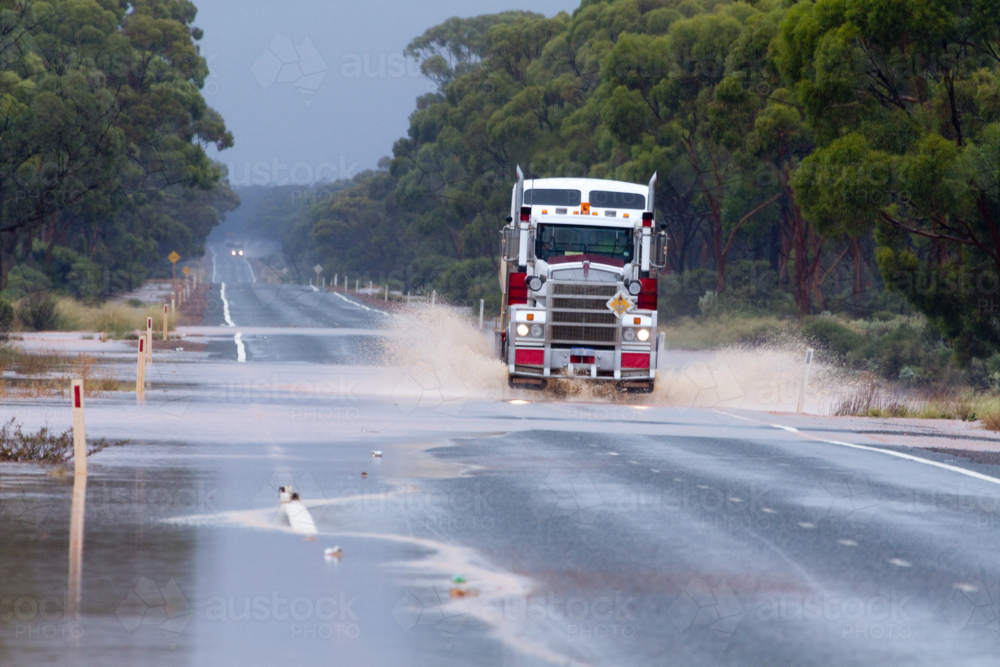
A truck driving through flood water faces catastrophic mechanical failure, electrical system ruin, and severe physical danger, frequently resulting in total vehicle loss and life-threatening situations. Even large, heavy-duty trucks with high ground clearance are vulnerable to hidden hazards, sudden hydrostatic lock, and powerful buoyant forces that can sweep vehicles away in just feet of moving water.
Understanding the mechanics of flood damage helps drivers make safe choices during severe weather events. When severe weather hits, drivers often underestimate the depth and velocity of standing or flowing water on roadways. Operating a truck in these conditions is rarely just a matter of pushing through a puddle; it is an encounter with severe hydraulic, mechanical, and safety risks. This guide explores the physical forces at play, the mechanical and electrical consequences, financial and insurance implications, and the definitive safety protocols drivers must follow.
The Physics of Moving and Standing Water
Many drivers harbor a false sense of security behind the wheel of a heavy truck or sport utility vehicle. They assume that heavy curb weight, four-wheel drive, and large tires grant immunity to flooded roadways. In reality, physics dictates that water poses an immense hazard to vehicles of every size.
Buoyancy and Vehicle Floatation
Water weighs approximately 62.4 pounds per cubic foot. When a vehicle enters standing water, it displaces that water, creating an upward buoyant force. Once the water reaches a depth of approximately 12 inches for a standard passenger car, it can begin to float. For larger trucks and pickup trucks, this threshold is higher—typically between 18 and 24 inches depending on the tire size and curb weight—but the principle remains identical.
As a truck begins to float, the tires lose traction against the pavement. Without friction between the rubber and the road, the driver loses steering and braking control. The vehicle essentially becomes a boat, at the mercy of any current or slope present on the roadway.
The Force of Flowing Water
Standing water is dangerous, but moving water introduces exponential kinetic energy. Just six inches of fast-moving water can knock over an adult and easily reach the door sills of many passenger vehicles.
For trucks, the danger escalates rapidly with depth and velocity:
- 12 inches of moving water: Can carry away most cars, small SUVs, and light trucks by reducing ground contact.
- 24 inches of moving water: Can sweep away almost all vehicles, including heavy-duty pickup trucks, commercial transport vehicles, and emergency units.
When water flows against the side of a truck, it exerts lateral pressure. A truck's large surface area acts like a sail, allowing the current to push the vehicle sideways, tip it over, or sweep it off the road into deeper ditches, canals, or rivers.
Mechanical and Electrical Destruction
When a truck enters deep flood water, various vehicle systems experience immediate exposure to destructive moisture, contaminants, and pressure. The resulting damage often totals the vehicle's market value, leading to severe financial loss.
Hydrostatic Lock in Internal Combustion Engines
The most catastrophic mechanical failure caused by driving through flood water is hydrostatic lock (hydrolock). Internal combustion engines require air and fuel to mix inside the cylinders, where it is compressed by pistons and ignited.
Air intakes are often positioned relatively low in the engine bay to draw in cool ambient air. If a truck enters water that reaches the air intake level, the engine inhales liquid water instead of air. Because water is essentially incompressible, the piston moves upward on the compression stroke and meets an unyielding wall of liquid.
The consequences are immediate and catastrophic:
- Bent or broken connecting rods
- Cracked engine blocks
- Punched cylinder walls
- Complete destruction of the internal engine assembly, requiring a total engine replacement or a new vehicle.
Electrical System and Computer Corrosion
Modern trucks rely heavily on computerized control modules, complex wiring harnesses, sensors, and electronic displays. These components are sealed against ordinary moisture, but they are not designed for prolonged immersion or submersion in flood water.
Flood water is rarely pure; it typically contains salt, mud, sewage, and chemical runoff, making it highly corrosive and electrically conductive. When water infiltrates fuse boxes, dashboard wiring, or transmission control modules, it causes short circuits. Even if the vehicle appears to run temporarily after being exposed to water, residual moisture and contaminants cause corrosion on circuit boards over the following weeks. This leads to persistent, difficult-to-diagnose electrical failures, intermittent stalling, and complete dashboard blackouts.
Transmission, Differential, and Axle Contamination
Trucks feature various mechanical gearboxes, including transmissions, transfer cases, and differential axles. These housings are lubricated by specialized gear oils and protected by breather valves or vents designed to allow air pressure to equalize as components heat up and cool down.
When a truck drives through deep water, water enters through these breather tubes or compromised seals. Water mixes with transmission and gear oil, creating a milky, ineffective sludge. If this contaminated fluid continues to circulate, it strips the lubrication properties away from gears and bearings, leading to burnt-out transmissions, ruined differential gears, and bearing seizure.
| Component | Vulnerability Level | Primary Failure Mechanism | Repair or Replacement Cost Impact |
|---|---|---|---|
| Engine | Critical | Hydrostatic lock via air intake | Extremely High (Often totals vehicle) |
| Electrical System | High | Short circuits, corrosion in ECUs and wiring | High to Severe |
| Transmission/Axles | Moderate to High | Water entry via breathers, contaminated fluid | High |
| Interior Carpeting/Seats | High | Mold, mildew, ruined electronics in cabin | Moderate to High |
The Health Hazards of Contaminated Flood Water
Beyond mechanical and financial destruction, flood water represents a severe biological and chemical hazard to anyone inside the vehicle. Flood water on roadways is frequently contaminated with raw sewage overflow, agricultural chemicals, heavy metals, petroleum products, and sharp debris hidden beneath the surface.
If water breaches the cabin floorboards, it saturates carpet padding, acoustic insulation, and seat foam. This moisture creates an ideal breeding ground for toxic molds and bacteria. Remediating a flooded truck interior requires stripping the cabin down to bare metal, replacing all absorbent materials, and thoroughly sanitizing the ductwork. In many insurance assessments, the cost of proper biological remediation combined with electrical repairs exceeds the residual value of the vehicle, classifying it as a total loss.
Insurance Coverage Realities and Financial Loss
A common misconception among vehicle owners is that standard auto insurance automatically covers flood damage. While this is true under specific policy structures, uninsured drivers face absolute financial devastation.
Comprehensive Coverage Versus Liability
Vehicle insurance is broken down into various coverages:
- Liability Coverage: Pays for damage and injuries you cause to other people. It provides zero coverage for your own vehicle if it is damaged by a flood.
- Collision Coverage: Pays for damage to your vehicle resulting from a collision with another car or object. While driving into water might feel like hitting a wall, insurers generally classify flood damage under a different category.
- Comprehensive Coverage (Other Than Collision): This is the specific policy component that covers losses from natural disasters, including floods, hurricanes, rising rivers, and torrential downpours.
Drivers who carry only liability insurance to lower monthly payments absorb 100% of the financial loss when their truck is destroyed by flood water. Even for those with comprehensive coverage, deductibles apply, and the insurance payout may be lower than the remaining balance on an auto loan, leaving the owner with "negative equity" or a gap to pay out of pocket.
Insurance Fraud and Denied Claims
Insurance investigators are trained to examine flood-damaged vehicles for signs of intentional negligence. If an adjuster determines that a driver deliberately drove around safety barricades, ignored clear warning signs, or recklessly plowed into deep water where the outcome was obvious, the insurer may deny the claim under terms related to willful negligence or reckless endangerment of insured property.
Safety Protocols and Decision-Making Framework
Avoiding flood-related loss requires strict adherence to practical road safety rules. Weather events can develop rapidly, turning familiar commutes into hazardous landscapes.
The Turn Around, Don’t Drown Principle
The National Weather Service and emergency management agencies emphasize a simple rule: Turn Around, Don’t Drown.
- Never drive through flooded roadways, low-water crossings, or underpasses where water covers the road surface.
- Do not trust depth markers or estimate water depth visually; water is often deeper than it appears, and the roadbed beneath may have washed away entirely, creating a hidden crater.
- If your vehicle stalls in rising water, abandon it immediately and climb to higher ground if it is safe to do so. Remaining inside a stalled truck in rising or moving water places occupants at extreme risk as the vehicle can be swept away or submerged rapidly.
Frequently Asked Questions
Can a snorkel modification make my truck safe to drive through deep flood water?
A properly installed engine snorkel raises the air intake point to the roof level, preventing hydrostatic lock of the engine. However, a snorkel does not protect the vehicle's electrical systems, transmission vents, differential breathers, or cabin interior from water intrusion, nor does it prevent the truck from floating or being swept away by moving currents.
What should I do if my truck stalls while driving through water?
Do not attempt to restart the engine. Restarting a hydralocked engine guarantees catastrophic internal damage. Turn on your hazard lights, unbuckle your seatbelt, and if the water outside is calm and shallow enough to navigate safely, exit the vehicle and move immediately to higher ground. Contact emergency services and your insurance provider once you are safe.
Will comprehensive auto insurance cover my truck if it floods while parked at my house?
Yes. Comprehensive coverage protects against weather-related incidents, including flash floods, overflowing rivers, and torrential rainstorms that submerge a vehicle while parked in a driveway, street, or garage.
How do I know if a used truck I am considering buying was previously flooded?
Inspect hidden areas for signs of water damage, such as rust on untreated metal under the seats, mud or silt trapped inside dashboard crevices, damp or musty odors in the carpeting, fogging inside instrument cluster lenses, and mismatched or corroded electrical connectors. A professional pre-purchase inspection by an independent mechanic is essential.
Conclusion and Next Actions
Driving a truck through flood water is a high-stakes gamble that frequently results in total mechanical failure, dangerous physical entrapment, and severe financial loss. Because water undermines both engine operation and tire traction, even the heaviest vehicles are vulnerable to the immense forces of buoyancy and moving currents. Respect all flood warnings, avoid standing water entirely, and ensure your insurance policy includes comprehensive coverage to protect against unexpected weather events. If you live in a flood-prone area, monitor local weather advisories and plan alternate routes before severe storms strike.