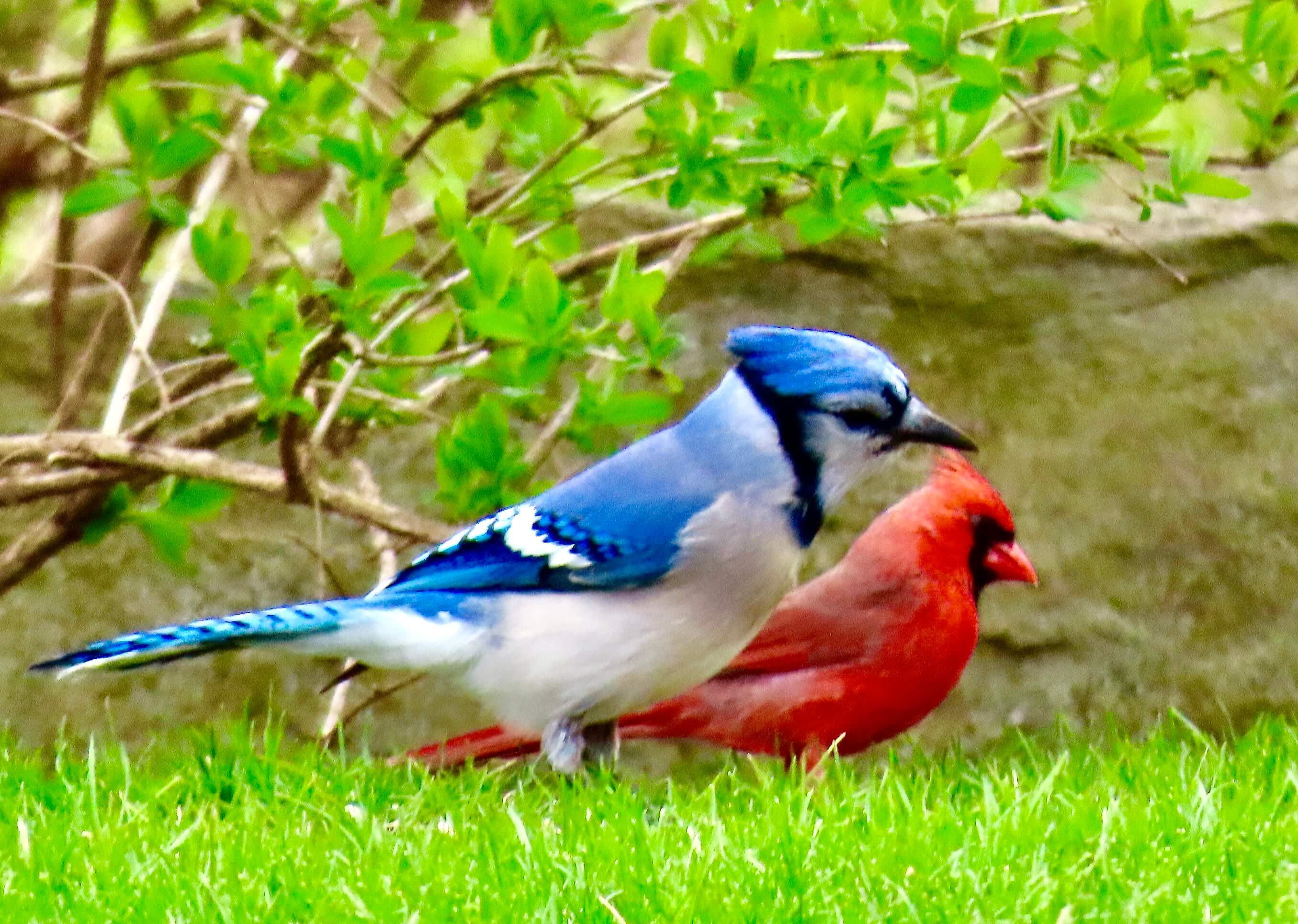
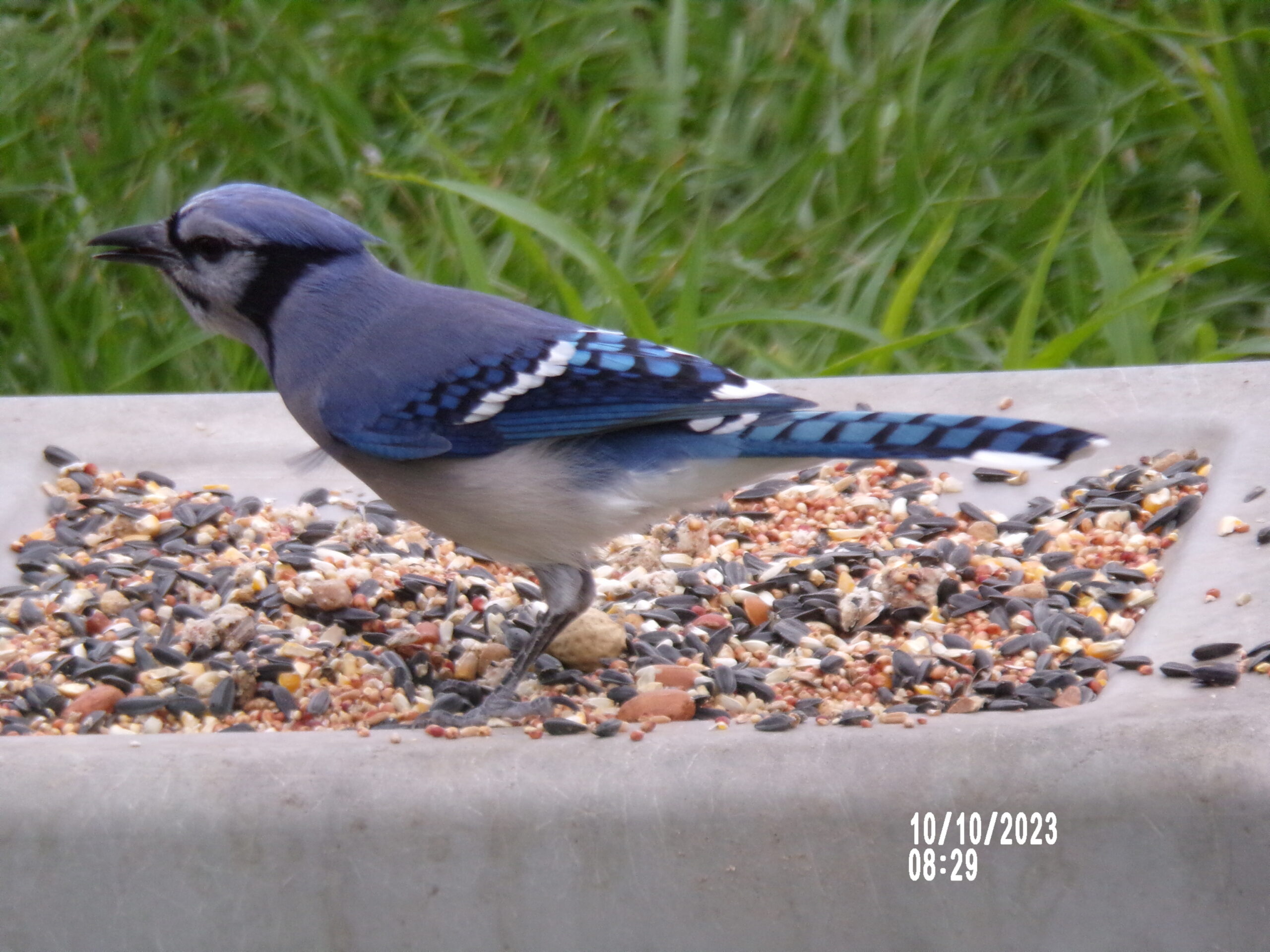
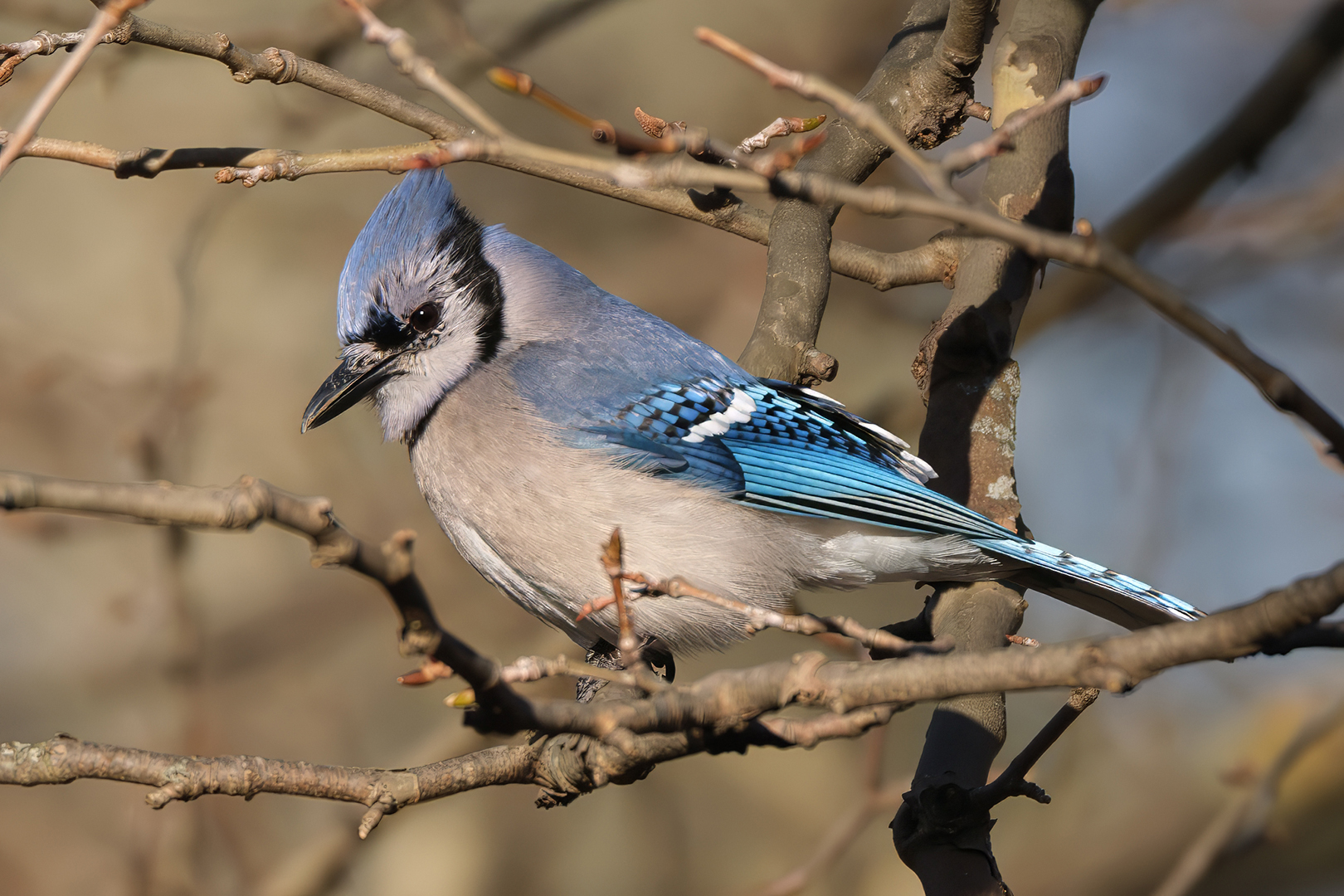
No, Blue Jays and Northern Cardinals are not the same bird. They belong to entirely different biological families: Blue Jays (Cyanocitta cristata) are members of the Corvidae family, alongside crows and ravens, while Northern Cardinals (Cardinalis cardinalis) belong to the Cardinalidae family. They differ fundamentally in color, diet, social behavior, and evolutionary lineage.
Understanding the Taxonomic Divide
To understand why Blue Jays and Cardinals are distinct, one must first look at their biological classification. While both are categorized under the order Passeriformes (perching birds or songbirds), their paths diverged millions of years ago.
Blue Jays are part of the family Corvidae. This is a significant distinction because Corvids are globally recognized as some of the most intelligent animals on Earth. This family includes magpies, nutcrackers, and crows. Blue Jays inherit the complex social structures and problem-solving capabilities characteristic of this group. Their evolutionary strategy relies on high cognitive function, memory, and aggressive territorial defense.
In contrast, Northern Cardinals belong to the family Cardinalidae, which includes grosbeaks and tanagers. These birds are primarily known for their powerful, conical beaks designed for seed-cracking and their melodious, whistled songs. While intelligent in their own right regarding survival and mating, they do not exhibit the same level of complex social "scheming" or tool-use potential seen in Corvids. In the birdwatching community of 2026, distinguishing these families is the first step toward advanced avian identification.
Physical Characteristics and Visual Identification
The most obvious difference is their coloration, but the nuances of their physical forms go much deeper than "blue versus red."
Plumage and Pigmentation
The vibrant red of a male Northern Cardinal comes from carotenoid pigments found in the seeds and fruits they consume. If a cardinal does not ingest enough of these pigments during the molting season, its feathers may appear duller or even yellowish.
Blue Jays, however, do not actually possess blue pigment. Their color is a result of structural coloration. The internal structure of their feathers scatters light, reflecting only the blue wavelength back to the eye while absorbing others. This phenomenon, known as Tyndall scattering, means that if you were to crush a Blue Jay feather, the "blue" would disappear because the light-scattering structure is destroyed.
Sexual Dimorphism
A major point of divergence is how the sexes appear. Northern Cardinals exhibit extreme sexual dimorphism. The males are the iconic "cardinal red," while females are a subtle tan or olive color with red accents on their wings, tail, and crest. This serves an evolutionary purpose: the female's muted tones provide camouflage while she sits on the nest.
Blue Jays are monomorphic, meaning males and females look nearly identical. Both sexes sport the same bold blue, white, and black patterns. For a backyard observer, it is virtually impossible to distinguish a male Blue Jay from a female without observing specific nesting behaviors.
Beak Morphology
Looking at the beaks provides insight into their ecological niches. The Cardinal possesses a heavy, thick, conical beak. This is a specialized tool for exerting high pressure to crack open tough seed hulls, such as sunflower seeds or safflower.
The Blue Jay’s beak is more of a "multi-tool." It is sturdy and straight, capable of hammering open acorns (a behavior known as "caching"), carrying multiple small food items, or even predating the eggs of other birds. The Jay's beak is built for an opportunistic generalist diet, whereas the Cardinal’s is built for specialized foraging.
Vocalizations and Communication Styles
In 2026, audio identification apps have made it easier than ever to tell these birds apart by sound, yet their "languages" are fundamentally different.
The Melodic Cardinal
The Northern Cardinal is a true songbird. Both males and females sing, which is somewhat rare among North American songbirds. Their songs are typically a series of clear, upbeat whistles that sound like "cheer, cheer, cheer" or "birdie, birdie, birdie." These songs are used to establish territory and strengthen the pair bond between mates. Because Cardinals are non-migratory, you can hear these territorial whistles throughout much of the year.
The Mimicking Blue Jay
Blue Jays are vocal powerhouses but are less "musical" in the traditional sense. Their most common call is a harsh, piercing "jay-jay-jay" used as an alarm or to intimidate rivals. However, as Corvids, they are incredible mimics. It is common for a Blue Jay to perfectly imitate the cry of a Red-shouldered Hawk.
Researchers believe Blue Jays use these hawk imitations for two primary reasons: to warn other jays of a predator's presence or to trick other birds into fleeing a bird feeder so the jay can feast alone. Beyond mimicry, they also have a "rusty pump" or "squeaky gate" call that is much softer and used during social interactions within the flock.
Behavioral Differences and Social Intelligence
The "personality" of these two birds is perhaps where they differ most. If you spend time observing a backyard feeder, the contrast becomes clear.
Social Structure
Blue Jays are highly social and often travel in family groups or small flocks, especially during the fall. They have a complex hierarchy and communicate constantly. Their intelligence is evident in their foraging; they are known to cache thousands of acorns in the ground each year, remembering the locations of the vast majority of them. This behavior makes them essential to forest regeneration, as the acorns they forget grow into new oak trees.
Cardinals are more solitary or pair-oriented. While you might see several cardinals at a feeder during a harsh winter, they do not "flock" in the way Blue Jays do. They are intensely territorial during the breeding season. It is not uncommon to see a male cardinal attacking his own reflection in a window, believing it to be a rival intruder.
Feeding Dynamics
At the feeder, Blue Jays are often perceived as the "bullies." Their arrival is usually heralded by loud calls, and their size allows them to displace smaller birds. They tend to take large amounts of food quickly to store elsewhere.
Cardinals are more methodical. They typically arrive at dawn and dusk—the "crepuscular" periods—when the light is low. They sit at the feeder for longer periods, carefully cracking seeds one by one. While they will defend their immediate space from other cardinals, they rarely initiate the broad-spectrum intimidation tactics used by Blue Jays.
Comparison Table: Blue Jay vs. Northern Cardinal
| Feature | Blue Jay (Cyanocitta cristata) | Northern Cardinal (Cardinalis cardinalis) |
|---|---|---|
| Family | Corvidae (Crows, Jays, Magpies) | Cardinalidae (Cardinals, Grosbeaks) |
| Primary Color | Blue, white, and black (structural) | Red (males); Tan/olive (females) |
| Sexual Dimorphism | None (males and females look alike) | High (males red, females tan) |
| Beak Type | All-purpose, sturdy, and straight | Conical, thick, seed-cracking |
| Diet | Omnivorous (nuts, seeds, insects, eggs) | Primarily granivorous (seeds, fruit, insects) |
| Intelligence | High (caching, mimicry, tool use) | Moderate (territorial, song complexity) |
| Nesting | Both parents build; bulky cup nest | Female builds; tidy cup in dense shrubs |
| Migration | Partially migratory (unpredictable) | Non-migratory (year-round resident) |
Habitat and Geographic Distribution
Both birds are staples of the Eastern and Central United States and Southern Canada, but their habitat preferences vary slightly.
Blue Jays are "edge" specialists. They thrive where the forest meets the field, making suburban backyards with mature trees an ideal environment. Their range has been expanding westward toward the Rockies over the last several decades, aided by human landscaping and the planting of oaks and beeches. You can find more detailed range maps through the Cornell Lab of Ornithology.
Northern Cardinals prefer dense brush and thickets. While they also frequent backyards, they require low-growing shrubs or "edge" vegetation for nesting and cover. Unlike the Blue Jay, the Northern Cardinal is strictly non-migratory. A cardinal born in a specific woodland patch will likely spend its entire life within a few miles of that location. The National Audubon Society notes that the Cardinal's range has crept steadily northward as winters have become milder in the early 21st century.
Common Myths and Misconceptions
Myth: They are "The Same Bird in Different Colors"
This is the most common misconception among casual observers. Because both have prominent head crests and are roughly similar in size (Blue Jays are slightly larger), people assume they are male and female versions of the same species or closely related "cousins." As established by their taxonomy, they are no more related to each other than a dog is to a hyena.
Myth: Blue Jays are "Evil" Because They Eat Other Birds
While Blue Jays do occasionally consume the eggs or nestlings of other birds, this is a natural part of an omnivorous diet and occurs far less frequently than many believe. A study by the American Ornithological Society found that the majority of a Blue Jay's diet consists of acorns, seeds, and insects. Their "aggressive" reputation is largely a byproduct of their high intelligence and vocal nature.
Myth: Cardinals Only Eat Sunflower Seeds
While cardinals love black oil sunflower seeds, they are also heavy consumers of wild fruits, such as dogwood berries and wild grapes. In the spring and summer, up to 30% of their diet shifts to insects like beetles and grasshoppers to provide necessary protein for their growing chicks.
Frequently Asked Questions
Do Blue Jays and Cardinals get along at feeders?
Generally, they tolerate each other, but the Blue Jay is the dominant species. Due to its larger size and more aggressive temperament, a Blue Jay will usually displace a Cardinal if they both want the same spot at a feeder. However, because Cardinals prefer feeding in the dim light of early morning and late evening, they often avoid the peak activity times of Blue Jays.
Why do both birds have crests?
The crest (the feathers on top of the head) is a tool for communication. In both species, the crest can be raised or lowered to signal mood. A raised crest typically indicates excitement, aggression, or alertness. A flattened crest often indicates fear or a submissive posture. While they evolved this feature independently, it serves a similar social function in both birds.
Can Blue Jays and Cardinals interbreed?
No. Because they belong to different families, they are genetically incompatible. There are no documented cases of a "Blue Cardinal" or "Red Jay" hybrid. Any "purple" birds seen in the wild are usually the result of unusual lighting, iridescent feathers of other species (like Grackles), or rare genetic mutations like erythrism or leucism.
Which bird is more common in backyards?
This depends on your specific geography and landscaping. If you have large oak trees, you will likely see more Blue Jays. If you have dense hedges and shrubs, Northern Cardinals will be more frequent. Throughout their shared range in the Eastern U.S., both are considered common, "least concern" species that have adapted well to human environments.
Why is the male Cardinal so much brighter than the female?
This is a result of sexual selection. Female cardinals choose mates based on the brightness of their red plumage. A bright red male signals that he is healthy and capable of finding high-quality food (rich in carotenoids). The female, meanwhile, must remain camouflaged to protect the nest from predators like hawks and snakes.
Next Actions for Bird Enthusiasts
If you want to observe these differences firsthand, the best course of action is to set up a backyard feeding station. To attract both, use a platform feeder or a large hopper feeder, as both birds are relatively large and uncomfortable on tiny, swinging tube feeders.
- Feed Selection: Use black oil sunflower seeds or a high-quality mix containing striped sunflower and safflower.
- Water Source: Provide a heated birdbath during winter months. Both species need to drink and bathe year-round to maintain feather health.
- Observation: Use binoculars to look at the Blue Jay's "necklace" (the black ring around its neck) and the Cardinal's "mask" (the black feathers around the base of the beak).
- Documentation: In 2026, citizen science is more important than ever. Report your sightings to platforms like eBird to help ornithologists track population trends and range shifts.
By understanding the distinct biological, behavioral, and physical traits of the Blue Jay and the Northern Cardinal, you can gain a deeper appreciation for the complex ecosystem thriving right outside your window.