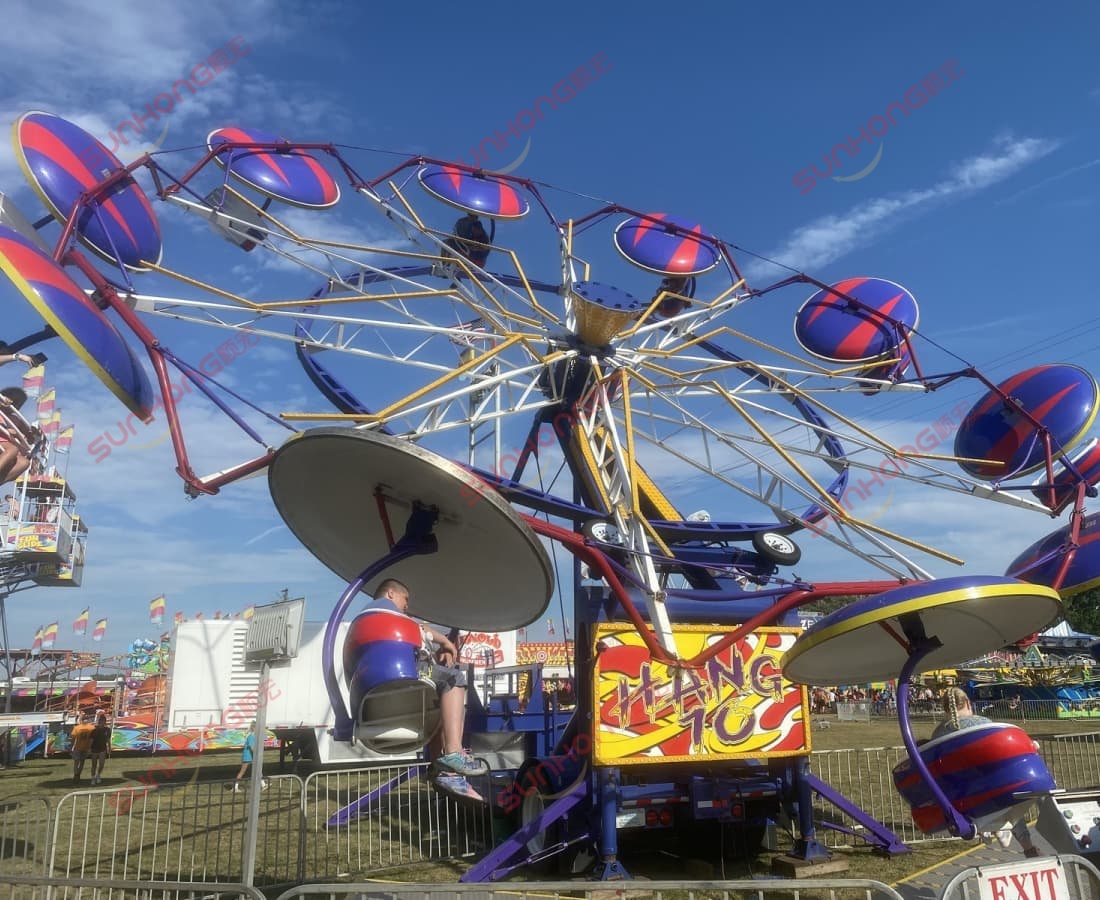
Statistically, carnival rides are remarkably safe, with the risk of serious injury being significantly lower than that of common activities like driving a car or playing contact sports. However, safety levels depend heavily on local regulations, maintenance consistency, and rider compliance. While catastrophic mechanical failures are rare, minor injuries are more frequent.
The Statistical Reality of Amusement Ride Safety
To understand the safety of carnival rides in 2026, one must first look at the sheer volume of ridership versus the frequency of incidents. Every year, hundreds of millions of people visit mobile carnivals and fixed-site amusement parks. According to data compiled by safety organizations and the International Association of Amusement Parks and Attractions (IAAPA), the chance of being seriously injured on a fixed-site ride is roughly one in 15.5 million.
For mobile carnivals—the traveling fairs that move from town to town—the data is slightly more complex. Because these rides are frequently dismantled, transported, and reassembled, they are subject to different physical stresses than permanent installations. Despite this, the National Safety Council often notes that the vast majority of injuries reported are "minor," such as scrapes, bruises, or nausea, rather than structural failures. In 2026, improved sensor technology and standardized training have further narrowed the gap between mobile and fixed-site safety records, though the "patchwork" of state regulations remains a critical factor for consumers to consider.
Comparing these risks to everyday life provides necessary context. You are statistically more likely to be injured during the drive to the carnival than on the rides themselves. However, "danger" is often perceived through the lens of control; because riders relinquish control to a machine and an operator, the psychological fear of failure often outweighs the mathematical probability of an accident.
Mobile Carnivals vs. Fixed Amusement Parks
A common point of confusion is whether a traveling "Tilt-A-Whirl" at a local church fair is as safe as a roller coaster at a major theme park. There are fundamental differences in how these two categories are managed, inspected, and maintained.
Structural Fatigue and Transport Stresses
Mobile rides are engineered to be portable. They are often mounted on trailers and use folding mechanisms. The primary risk factor unique to mobile carnivals is the cycle of assembly and disassembly. Every time a ride is moved, bolts are tightened and loosened, electrical connections are plugged and unplugged, and the chassis is leveled on varying terrain. Over time, this can lead to structural fatigue or "human error" during the setup phase. Fixed rides, conversely, benefit from permanent foundations and weather-shielded components, though they face their own challenges regarding long-term corrosion and constant operation.
Staffing and Operation
Major theme parks usually have dedicated, year-round maintenance crews and sophisticated training programs for operators. Mobile carnivals often rely on seasonal labor. While many carnival operators are highly skilled professionals who have spent decades in the "showmen" industry, the high turnover in seasonal labor can occasionally lead to lapses in operational discipline. In 2026, many reputable carnival companies have countered this by implementing digital checklists and biometric login systems for ride operators to ensure that only certified personnel are at the controls.
The Regulatory Landscape: Who Oversees Safety?
In the United States, there is no single federal agency that inspects all amusement rides. Instead, oversight is divided between federal and state authorities, creating what safety advocates call a "patchwork" of protection.
- The Consumer Product Safety Commission (CPSC): The CPSC has jurisdiction over mobile carnival rides. They have the authority to investigate accidents and issue recalls or safety alerts. However, they do not perform routine inspections. Their role is primarily reactive rather than proactive.
- State and Local Agencies: The responsibility for annual or "per-opening" inspections falls to the states. As of 2026, the rigor of these inspections varies wildly. Some states, like New Jersey and Pennsylvania, have robust departments with dedicated engineers who inspect every ride every time it is moved. Other states have virtually no oversight, allowing private insurance companies to handle the "inspection" process.
- Third-Party Inspectors: Many carnival owners hire independent, NAARSO-certified (National Association of Amusement Ride Safety Officials) inspectors to verify their equipment. This is often a requirement of their insurance policies, which serve as a secondary layer of de facto regulation.
Common Causes of Carnival Ride Accidents
When accidents do occur, they generally fall into three categories. Understanding these can help riders identify potential red flags.
Mechanical and Structural Failure
This is the most feared category but the least common. It includes weld failures, hydraulic leaks, or the malfunction of restraint systems. In 2026, the use of Non-Destructive Testing (NDT) has become the gold standard for preventing these issues. NDT allows inspectors to look for microscopic cracks in metal components using ultrasound or magnetic particles without damaging the ride. If a carnival operator cannot produce a recent NDT report for a high-intensity ride, it may indicate a lapse in maintenance.
Operator Error
This involves the human element of ride safety. Examples include an operator failing to check a lap bar properly, bypassing a safety sensor to keep a ride running, or operating a ride in high winds. Modern rides in 2026 are increasingly "interlocked," meaning the ride literally cannot start unless the computer detects that all restraints are locked and all zones are clear. However, older "legacy" rides still found at smaller carnivals may lack these electronic redundancies.
Rider Misconduct
Interestingly, the leading cause of injuries on amusement rides is the riders themselves. This includes:
- Attempting to stand up or unbuckle restraints mid-ride.
- Extending limbs outside the ride vehicle.
- Ignoring height or weight restrictions.
- Taking prohibited items (like cell phones) on the ride, which then become dangerous high-velocity projectiles.
How to Evaluate a Carnival's Safety on Site
While you don't need to be a mechanical engineer to enjoy a fair, there are several visible indicators of how seriously a carnival company takes safety.
| Feature | What to Look For | Red Flag |
|---|---|---|
| Operator Attentiveness | Focused on the ride, checking every restraint manually. | Texting, talking to friends, or looking away while the ride is in motion. |
| Ride Appearance | Clean paint, no visible rust on structural joints, well-greased pivots. | Excessive oil leaks, "clunking" sounds that seem out of sync, or duct-tape repairs. |
| Documentation | A visible state inspection sticker with a current 2026 date. | Missing or expired inspection tags. |
| Grounding and Leveling | The ride should be level, often using wooden "cribbing" blocks that look stable. | Shifting or "walking" of the ride base during operation. |
| Signage | Clearly posted height, weight, and health requirements. | No safety instructions or operators ignoring the rules for certain kids. |
The Physics of Ride Safety: G-Forces and Health
Safety isn't just about the machine staying together; it’s also about how your body reacts to the forces involved. Carnival rides use "Gs" (gravitational forces) to create thrills. Most rides stay within the 3G to 4G range, which is perfectly safe for a healthy individual. For comparison, a vigorous sneeze can exert nearly 3Gs on your body.
However, for individuals with pre-existing conditions, these forces can be dangerous. High G-forces can cause a temporary spike in blood pressure or heart rate. Sudden changes in direction (lateral Gs) can strain the neck or back. In 2026, ride manufacturers have become better at designing "smooth" transitions to reduce "jerk"—the rate of change in acceleration—which is often what causes neck injuries. If you have a history of heart issues, back problems, or are pregnant, the "danger" of a carnival ride is much higher, regardless of how well-maintained the machine is.
2026 Safety Innovations and Trends
As of 2026, several technological advancements have made the "midway" safer than ever before.
Smart Restraints: Many new rides feature hydraulic cylinders in lap bars that allow for infinite locking positions, ensuring a snug fit for every body type, rather than the "one-size-fits-many" notched bars of the past.
Real-Time Telemetry: Advanced carnival operators now use cloud-based systems that monitor the "health" of a ride in real-time. If a motor begins to overheat or a vibration exceeds a certain threshold, the system can automatically shut the ride down or alert the maintenance team before a failure occurs.
Drones for Inspection: For the tallest rides, such as portable Ferris wheels or "Star Flyers," inspectors in 2026 frequently use high-definition drones to check for bolt tightness and structural integrity at heights that were previously difficult to access.
Safety Tips for Families and Individuals
To ensure your visit to the carnival remains a positive experience, follow these expert-vetted safety protocols:
- Respect the Height Requirement: These are not suggestions. Height requirements are based on the design of the restraint system. If a child is too short, they may slide out; if they are too tall, the center of gravity may be off, or their head may be too close to overhead supports.
- Secure All Loose Items: In 2026, "flying" cell phones are a leading cause of head injuries to spectators. Use lockers or leave items with a non-rider.
- The "Two-Click" Rule: When you pull down a lap bar, ensure it feels tight. If the operator doesn't check it, ask them to.
- Observe Before You Board: Watch the ride for two or three cycles. Does it sound "right"? Does the operator seem to be following the same safety routine every time? If something feels off, trust your intuition and move to a different attraction.
Frequently Asked Questions
Are older carnival rides more dangerous than new ones?
Not necessarily. An older ride that has been meticulously maintained and retrofitted with modern safety sensors can be safer than a brand-new ride operated by an untrained crew. However, older rides do require more frequent "Non-Destructive Testing" to check for metal fatigue that is not visible to the naked eye.
What should I do if a ride stops while I am on it?
Stay calm and stay seated. Most "stops" are actually safety systems working as intended—a sensor may have detected a minor anomaly and triggered an automatic "block" to prevent an accident. Never attempt to exit a ride vehicle unless instructed by emergency personnel or the operator, as the ride could restart at any moment.
Does rain make carnival rides dangerous?
Most rides are designed to operate in light rain, but lightning or high winds are serious hazards. In 2026, most reputable carnivals use professional-grade weather tracking. If you see an operator closing a ride due to wind, do not complain; they are following essential safety protocols regarding the ride's "sail area" and structural limits.
Can a carnival ride cause a brain injury?
While "Roller Coaster Headache" is a documented phenomenon, the G-forces on standard carnival rides are generally well below the threshold for causing traumatic brain injury in healthy individuals. Risk increases significantly if a rider fails to keep their head against the headrest or has a pre-existing vascular condition.
Who is liable if I am injured at a carnival?
Liability usually rests with the ride owner/operator, though it can extend to the manufacturer if a design flaw is found, or the landowner if the setup area was unsafe. Most carnival companies carry significant liability insurance, but many states have "Assumption of Risk" statutes that protect operators if the injury was caused by the rider's failure to follow posted safety rules.
Final Recommendation
When visiting a carnival in 2026, your best defense against injury is a combination of observation and compliance. Choose reputable carnival companies that operate in states with strict inspection laws, and never bypass safety rules for the sake of a "thrill." If you see a ride that looks poorly maintained or an operator who isn't paying attention, the safest action is to skip that particular attraction. By staying informed and alert, you can enjoy the unique excitement of the midway with minimal risk.