In Arizona, an S Corporation is legally required to carry workers' compensation insurance if it has at least one employee, which includes corporate officers. Because S Corp owners who perform services for the business are technically employees, they must be covered under a policy or formally elect to reject coverage through specific state-mandated filings.
Arizona operates under a "no-fault" workers' compensation system, overseen by the Industrial Commission of Arizona (ICA). This system is designed to provide medical benefits and wage replacement to workers injured on the job, regardless of who was at fault for the accident. For the S Corp owner, navigating these requirements is not just a matter of safety; it is a critical legal compliance issue that impacts tax filings, payroll audits, and personal liability.
The Legal Mandate for S Corporations in Arizona
According to Arizona Revised Statutes (ARS) § 23-901, any employer with one or more employees must provide workers' compensation insurance. Unlike a sole proprietorship where the owner is the business, an S Corporation is a separate legal entity. This distinction is vital: the corporation is the "employer," and the shareholders who work for the corporation are "employees."
As of 2026, Arizona law continues to strictly interpret the definition of an employee. If you are an officer of an S Corp and you receive a W-2 salary—which the IRS requires for "reasonable compensation"—you are an employee in the eyes of the ICA. This triggers the mandatory insurance requirement even if you are the only person working in the business.
Why "Employee" Status Matters for S Corps
In an LLC or a partnership, members and partners are often excluded by default because they are considered owners first. However, the S Corp structure is built upon a corporate framework. Arizona law assumes that corporate officers are subject to the same risks as any other worker. This means that from the moment you incorporate and begin operations, you are technically in violation of state law if you do not have a policy in place, unless you have filed a valid rejection of coverage.
The Industrial Commission of Arizona utilizes data-sharing agreements with other state agencies to identify businesses that have active payroll but no corresponding workers' compensation policy. In 2026, these automated cross-checks have become more sophisticated, making it difficult for "single-member" S Corps to fly under the radar.
S Corp Officer Exemptions and Rejection of Coverage
While coverage is mandatory by default, Arizona law allows corporate officers to "reject" coverage. This is a nuanced process that many business owners misunderstand, often leading to gaps in protection or unexpected audit bills.
The Rejection Process
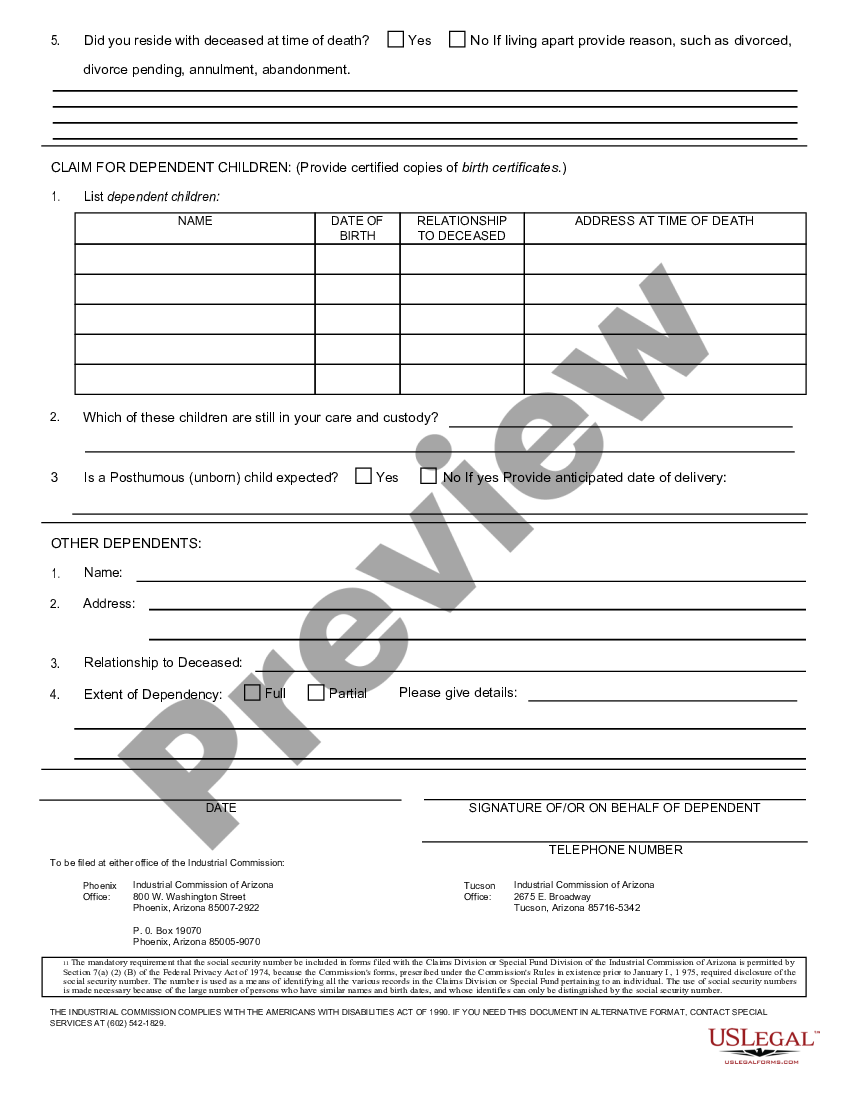
To legally opt out of coverage in Arizona, an officer must provide a written notice to the employer (the S Corp). Under ARS § 23-906, this rejection must be filed before any injury occurs. Most insurance carriers provide a specific form, often referred to as a "Rejection of Coverage" form, which must be signed by the officer and kept on file by the insurance company and the corporation.
It is important to note:
- The "Wait" Period: Rejections are typically effective when filed with the carrier, but if you are hiring your first employee, the policy must exist before you can reject coverage for yourself.
- Voluntary Nature: Rejecting coverage means you cannot claim workers' comp benefits if you are injured while working. You would have to rely on your private health insurance, which often excludes work-related injuries.
- Payroll Implications: If an officer rejects coverage, their salary is excluded from the premium calculation during the annual audit, which can significantly lower the cost of the policy.
Closely Held Corporations
For S Corps that are "closely held" (owned by a small group of individuals, often family members), the rules for exclusion are generally more flexible, but the paperwork remains mandatory. In 2026, the ICA still requires that even if you own 100% of the shares, the legal paperwork must be current. A verbal agreement or a note in the corporate minutes is not sufficient to satisfy state investigators.
Determining Costs: How Premiums are Calculated for S Corps
The cost of workers' compensation for an Arizona S Corp is determined by a formula: (Payroll / 100) x Class Code Rate x Experience Modifier.
1. Classification Codes (NCCI)
Arizona uses the National Council on Compensation Insurance (NCCI) classification system. Each job type is assigned a four-digit code based on its risk level.
- Code 8810 (Clerical Office Employees): This is the most common code for S Corp owners who handle administration. It carries the lowest rates.
- Construction or Field Codes: If the S Corp owner performs manual labor or site visits, they may be classified under a much higher-rated code (e.g., Code 5645 for residential construction).
2. Officer Payroll Caps and Minimums
For S Corp officers who do not reject coverage, the premium isn't necessarily based on their actual W-2 salary. Arizona sets "minimum" and "maximum" payroll amounts for corporate officers to ensure that premiums are equitable. In 2026, these figures are adjusted periodically. If an officer earns $200,000, the insurance company might cap the "reportable" payroll at a lower threshold (e.g., $60,000) for premium calculation purposes. Conversely, even if the officer takes a very small salary, the carrier may apply a minimum payroll floor.
3. The Experience Modifier (E-Mod)
New S Corps start with an E-Mod of 1.0. Over time, if the business remains claim-free, this number can drop, resulting in a "credit" (discount). If the business has multiple injuries, the E-Mod increases, leading to a "debit" (higher costs).
2026 Arizona Workers' Comp Comparison Table
| Feature | Single-Officer S Corp | S Corp with Employees | Notes for 2026 |
|---|---|---|---|
| Mandatory Coverage | Yes (Unless rejected) | Yes (Mandatory) | Required by ARS § 23-901 |
| Officer Inclusion | Optional via Form | Included by Default | Rejection must be filed with carrier |
| Min/Max Payroll Rules | Applies to Officer | Applies to Officer only | Employee payroll is fully rated |
| Common Class Code | 8810 (Clerical) | Job-specific (NCCI) | Accurate coding prevents audit fines |
| Audit Frequency | Annual | Annual | Conducted after policy term ends |
| Penalty for No Policy | Class 6 Felony | Class 6 Felony | Includes civil penalties of $1,000+ |
The Annual Premium Audit Process
One of the most complex aspects of Arizona workers' compensation for S Corps is the annual audit. Insurance companies are required to verify that the estimated payroll provided at the start of the year matches the actual payroll.
For an S Corp, the auditor will look at:
- W-2 Records: These are the primary source of truth.
- Form 941s: Quarterly federal tax returns.
- 1099-NECs: Auditors scrutinize payments to independent contractors. In Arizona, if a subcontractor does not have their own workers' comp insurance, the S Corp may be charged a premium for them, as they are considered "statutory employees."
- Officer Exclusions: The auditor will check for the signed rejection forms. If the form is missing or was signed after the audit period began, the carrier will charge a premium for the officer’s entire salary (up to the state cap).
Expert Tip: Always maintain a file containing the certificates of insurance (COI) for every subcontractor you hire. In 2026, digital certificates are the standard, and failing to produce them during an audit is the leading cause of "surprise" premium bills for Arizona S Corps.
Choosing Between the Private Market and the State Fund
Arizona does not have a "monopolistic" state fund like Ohio or Washington. Instead, S Corps can purchase insurance through:
- Private Carriers: Most small businesses use private insurers (e.g., Travelers, Hartford, Omaha National). These are often the most competitive for low-risk clerical work.
- CopperPoint Insurance Companies: Formerly the state's quasi-governmental fund (SCF Arizona), CopperPoint is now a private company but remains a major player in the Arizona market, especially for high-risk industries.
- The Assigned Risk Pool: If an S Corp is in a high-risk industry (like roofing or logging) and cannot find coverage in the private market, they are placed in the "Assigned Risk" pool, where rates are generally higher.
Penalties for Non-Compliance in 2026
The Industrial Commission of Arizona is aggressive in its enforcement. If an S Corp is found to be operating without insurance:
- Civil Penalties: A first-time offense typically results in a fine of $1,000. Subsequent offenses can escalate to $5,000 or $10,000.
- Criminal Liability: Under Arizona law, failing to provide workers' comp is a Class 6 Felony. While rare for first-time clerical S Corps, it is a serious legal lever used by the state.
- The Special Fund: If an employee is injured while the S Corp is uninsured, the ICA's "Special Fund" will pay the claim. However, the ICA will then sue the S Corp (and potentially the officers personally) to recoup 100% of the medical costs plus a 10% penalty. This can easily bankrupt a small corporation.
Frequently Asked Questions
Can I just use my health insurance instead of workers' comp?
No. Most private and group health insurance policies in Arizona specifically exclude "work-related injuries." If you are injured while performing S Corp business and try to use your health insurance, the provider may deny the claim once they see the injury occurred during work hours. Workers' comp provides "first-dollar" coverage with no deductibles or co-pays for medical treatment, which health insurance does not.
If I am the only owner and have no employees, do I still need a policy?
Legally, yes. Because you are an officer (employee) of the corporation, the requirement exists. However, if you choose to reject coverage for yourself, you must still have a "Ghost Policy" or a "Minimum Premium Policy" in place to provide the mechanism for that rejection and to provide coverage in case you hire a temporary worker or an unpaid intern.
How does "Reasonable Compensation" affect my insurance?
The IRS requires S Corp owners to pay themselves a reasonable W-2 salary. The workers' comp carrier uses this W-2 figure to calculate your premium. If you take $50,000 in salary and $50,000 in distributions, your premium is generally only calculated on the $50,000 salary portion (subject to state officer minimums and maximums).
What happens if I hire an independent contractor?
In Arizona, the line between an employee and an independent contractor is thin. If the contractor does not have their own workers' comp policy, the ICA may deem them your employee. Your insurance carrier will then charge you a premium for their labor costs during your annual audit. Always verify that contractors have their own coverage.
Can I cancel my policy if I stop taking a salary?
If the S Corp remains active but you are no longer taking a salary or performing work, you should consult with your broker. However, as long as the corporation is "active" with the Arizona Corporation Commission and performing any business activity, the ICA generally expects a policy to be in force.
Final Recommendation for Arizona S Corp Owners
For 2026, the best course of action for a small S Corp owner is to secure a Minimum Premium Policy. Even if you intend to reject coverage for yourself, having a policy in place protects the corporate veil and ensures you are compliant with ARS § 23-901.
- Consult a Broker: Find an agent who understands the NCCI clerical codes to ensure you aren't overpaying.
- File Form 111 (or equivalent): Ensure your "Rejection of Coverage" is filed immediately if you do not want to be covered.
- Maintain Records: Keep your payroll reports and subcontractor certificates in a dedicated digital folder to make the annual audit a 15-minute task rather than a week-long headache.
By treating workers' compensation as a standard cost of doing business rather than an optional expense, you protect both your personal assets and the longevity of your Arizona S Corporation.