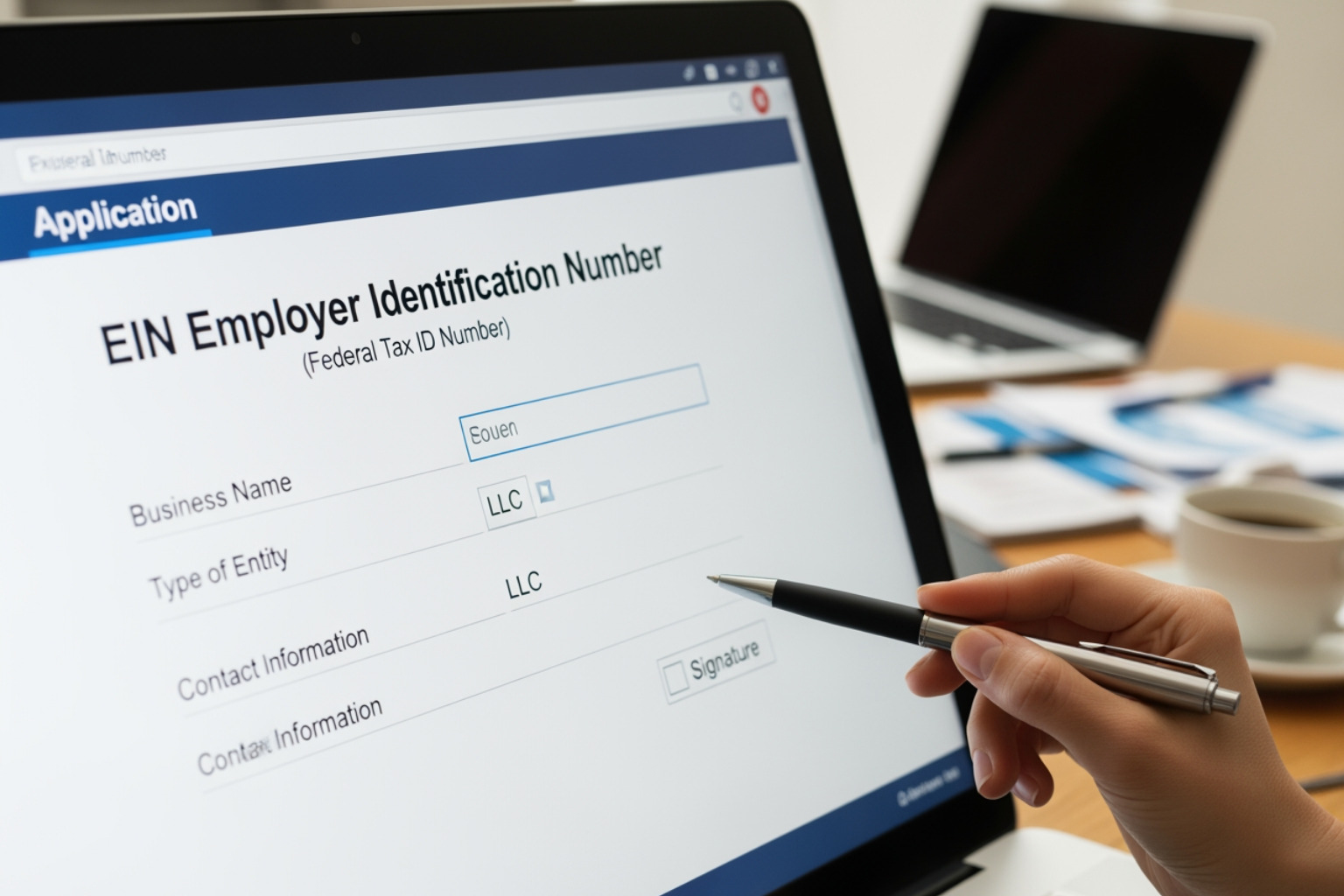
Getting a federal tax ID number—officially known as an Employer Identification Number (EIN)—is completely free when you apply directly through the official government website. While the internal revenue service issues these nine-digit identifiers without charging any filing fees, applicants must navigate a landscape of misleading third-party websites that attempt to charge service fees for completing the paperwork on their behalf.
For business owners, non-profit directors, and estate administrators, securing a federal tax identifier is a foundational step toward financial and legal compliance. Whether you are opening a commercial bank account, hiring employees, or structuring a partnership, understanding the precise mechanisms of obtaining this number ensures you avoid unnecessary expenses and compliance pitfalls. This comprehensive guide outlines the true costs, application avenues, eligibility criteria, and operational nuances associated with acquiring your federal tax identification number.
The Core Question: Does It Cost to Get a Federal Tax ID Number?
The direct answer to whether it costs to get a federal tax ID number is no. The Internal Revenue Service (IRS) does not charge any fee for issuing an EIN to eligible entities operating within the United States and its territories. The application process is structured to be accessible to all legitimate business structures and organizational types without financial barriers.
However, the proliferation of private, third-party registration services creates widespread confusion. These commercial entities often purchase search engine advertisements that closely mimic official government links. When users navigate to these intermediary sites, they are prompted to pay fees ranging from $50 to several hundred dollars for what they believe is an expedited or mandatory processing service. In reality, these companies simply collect the user's information, fill out the free online application on the official IRS portal on their behalf, and pocket the markup. Recognizing this distinction is the single most important step in protecting yourself from predatory pricing schemes.
Why Third-Party Services Exist and How They Operate
Third-party filing services operate legally as administrative facilitators, but their marketing tactics can easily mislead applicants. They position themselves as urgent or exclusive gateways to obtaining tax documentation. While some business owners knowingly pay these services for convenience or consolidated corporate-formation packages, many applicants land on these pages by accident, assuming a fee is required to process government paperwork.
To ensure you are dealing directly with the issuing authority, always verify that any online application portal is hosted on an official .gov domain—specifically, the website managed by the Internal Revenue Service. The IRS system validates data in real time and issues the EIN immediately upon successful completion of the online interview, rendering paid intermediaries entirely unnecessary for standard applications.
Eligibility and Prerequisites for an EIN
Before initiating an application for a federal tax ID number, you must determine whether your entity legally requires one and whether you meet the prerequisite conditions set by tax authorities. Not every business or individual needs an EIN, and applying for one unnecessarily can complicate your tax reporting history.
Who Needs a Federal Tax ID Number?
An EIN is primarily required for business entities that have employees, operate as corporations or partnerships, or file specific types of excise, alcohol, tobacco, or firearms tax returns. Sole proprietors who operate entirely on their own without employees or specialized tax requirements can often use their personal Social Security Number (SSN) for tax reporting, though many still choose to obtain an EIN to maintain privacy or open dedicated commercial banking accounts.
The following organizational types generally require a distinct federal tax ID number:
- Corporations and S-Corporations
- Partnerships and Limited Liability Companies (LLCs) with multiple members or those choosing corporate tax classification
- Estates of decedents that manage assets or income after an individual's passing
- Non-profit organizations, charities, and religious associations
- Trusts, pension plans, and real estate mortgage investment conduits
- Individuals who hire household employees or establish specialized agricultural operations
Information Required Before You Apply
To streamline the application process and prevent session timeouts, you should gather all necessary documentation and structural details before launching the application portal. The application requires specific identifying information about the "responsible party"—the person who owns or controls the entity or exercises ultimate control over its operations.
The table below outlines the primary data points required depending on your entity type:
| Requirement Category | Description & Necessary Details |
|---|---|
| Legal Entity Name | The official registered name of the business, corporation, or estate as recognized by state authorities. |
| Trade Name (DBA) | The "Doing Business As" name, if applicable, under which the entity presents itself to the public. |
| Responsible Party Identity | Name and Taxpayer Identification Number (SSN, ITIN, or EIN) of the individual controlling the entity. |
| Physical Address | The primary domestic location where the business operations are managed and directed. |
| Entity Structure | The legal classification (e.g., Sole Proprietorship, LLC, Partnership, Corporation). |
| Reason for Applying | The specific operational catalyst (e.g., started new business, hired employees, banking requirements). |
| Principal Activity | A clear description of the primary line of goods or services provided by the entity. |
Step-by-Step Guide to Obtaining Your EIN for Free
Securing your federal tax ID number is a straightforward administrative process when executed through official channels. The most efficient method is the online application portal, which provides immediate electronic confirmation and issuance of your official documentation.
1. Access the Official IRS Online Portal
Navigate directly to the official Internal Revenue Service website and locate the Employer Identification Number application tool. Ensure the web address terminates in .gov. The online assistant is available during specific operating hours set by the tax agency to allow for routine system maintenance and database synchronization.
2. Complete the Online Interview
The digital application is structured as a guided interview rather than a static form. You will be asked to select your entity type from a comprehensive list, specify the jurisdiction where you operate, and explain the motivation behind your application. Answer each prompt accurately based on your formation documents and legal filings.
3. Review and Verify Entity Details
Before final submission, the system provides a review screen displaying all entered data. Carefully cross-reference this information against your state registration documents, articles of organization, or personal identification records. Discrepancies between your IRS application and state-level filings can trigger processing delays or mismatched tax records in subsequent reporting cycles.
4. Receive and Save Your EIN Confirmation Letter
Upon successful submission, the system generates your nine-digit EIN instantly. You will be presented with an official PDF confirmation notice (Form CP 575 or equivalent confirmation). Download, print, and securely store this document immediately. This notice serves as definitive legal proof of your federal tax identification number and is frequently required by banks, vendors, and regulatory agencies.
Alternative Application Methods
While the online portal represents the fastest route to acquiring a federal tax ID number, alternative submission channels exist for applicants who encounter technical barriers, lack reliable internet access, or operate internationally without a standard domestic tax ID.
Applying by Fax
Applicants can complete Form SS-4 (Application for Employer Identification Number) manually and transmit it via facsimile to the designated operational center. If your fax machine is configured to provide a transmission confirmation receipt, you can typically expect a return fax containing your assigned EIN within several business days. This method is particularly useful for international applicants who cannot access the domestic online portal due to digital security protocols.
Applying by Mail
For those with flexible timelines, printing, completing, and mailing Form SS-4 to the appropriate IRS campus remains a viable option. Postal processing requires significantly more time—often taking up to four to five weeks for a written confirmation letter to arrive at the designated mailing address. Consequently, mail-in applications should be reserved for situations where immediate utilization of the tax ID is not an operational necessity.
Telephone Applications for International Entities
Historically, international applicants without an office or legal residence in the United States could apply via telephone. However, administrative updates and security protocols have restricted telephone applications primarily to specialized circumstances, such as international third parties assisting foreign entities under specific procedural agreements. Most international applicants now rely on fax or mail submissions.
Common Misconceptions and Compliance Pitfalls
Navigating the administrative requirements of business formation frequently exposes owners to widespread myths regarding federal identification numbers. Understanding these pitfalls protects your organization from compliance errors and unnecessary financial exposure.
The Myth of Paid "Fast-Track" Processing
A prevalent misconception is that paying a private registration service provides faster or higher-priority access to the federal tax system. In reality, private services submit your data through the exact same public channels you can access independently. They hold no special administrative status within tax agencies, and paying them does not accelerate government processing times.
Confusing State Tax IDs with Federal EINs
Another frequent error involves conflating federal tax identification numbers with state-level tax permits. While the federal EIN handles federal tax obligations, employment taxes, and corporate reporting, many states require a separate state tax identification number, sales tax permit, or employer withholding account. Obtaining an EIN does not automatically fulfill state-level registration obligations.
Updating Entity Changes
Once issued, an EIN belongs permanently to that specific legal entity. Changing your business address, altering your trade name, or appointing new corporate officers generally does not require a new EIN. However, major structural transformations—such as converting a single-member sole proprietorship into a multi-member corporation—may necessitate a completely new federal tax ID number depending on state and federal continuity rules.
Frequently Asked Questions
Can I get more than one EIN for the same business?
No. An entity is generally limited to one EIN. Obtaining multiple EINs for the same business structure creates administrative confusion within tax reporting systems and can trigger compliance audits. If you operate multiple distinct business divisions under the same legal umbrella, they typically fall under a single corporate EIN unless they are legally separate entities.
What should I do if I lose my EIN confirmation letter?
If you misplace your official EIN confirmation notice, you do not need to apply for a new number. You can retrieve your existing EIN by checking previous tax returns, looking at bank account opening documents, or contacting the IRS business and specialty tax line directly to verify your identity and request a replacement confirmation letter.
Do foreign nationals need a Social Security Number to get an EIN?
No. Foreign nationals and international entities that do not possess a Social Security Number or Individual Taxpayer Identification Number can still apply for an EIN. The application process accommodates international addresses and alternative organizational structures, though the verification steps may require manual fax or mail processing.
Is an EIN required to open a business bank account?
While the specific documentation requirements vary by financial institution, almost all commercial banks require a federal tax ID number to open a business checking or savings account. Banks use the EIN to verify the legal existence of the entity and report interest income or financial transactions accurately to tax authorities.
Does an EIN expire if it is not used immediately?
An EIN does not have an expiration date. Once assigned to an entity, that specific nine-digit number remains permanently active in the government database. Even if your business remains dormant for several years, the EIN does not lapse, though you may need to resume filing informational tax returns depending on your organizational standing.
Next Actions for Business Owners
Securing your federal tax ID number for free is the first of many compliance milestones in establishing your enterprise. Once your EIN is in hand, immediately store a digital and physical copy of your confirmation letter in a secure corporate records binder. Your next operational steps should include registering for any required state-level tax permits, opening a dedicated commercial banking account to separate personal and business finances, and establishing an organized bookkeeping system to track income and expenses for future tax filings. By utilizing official government channels and avoiding unnecessary third-party fees, you establish a fiscally responsible foundation for your organization from day one.