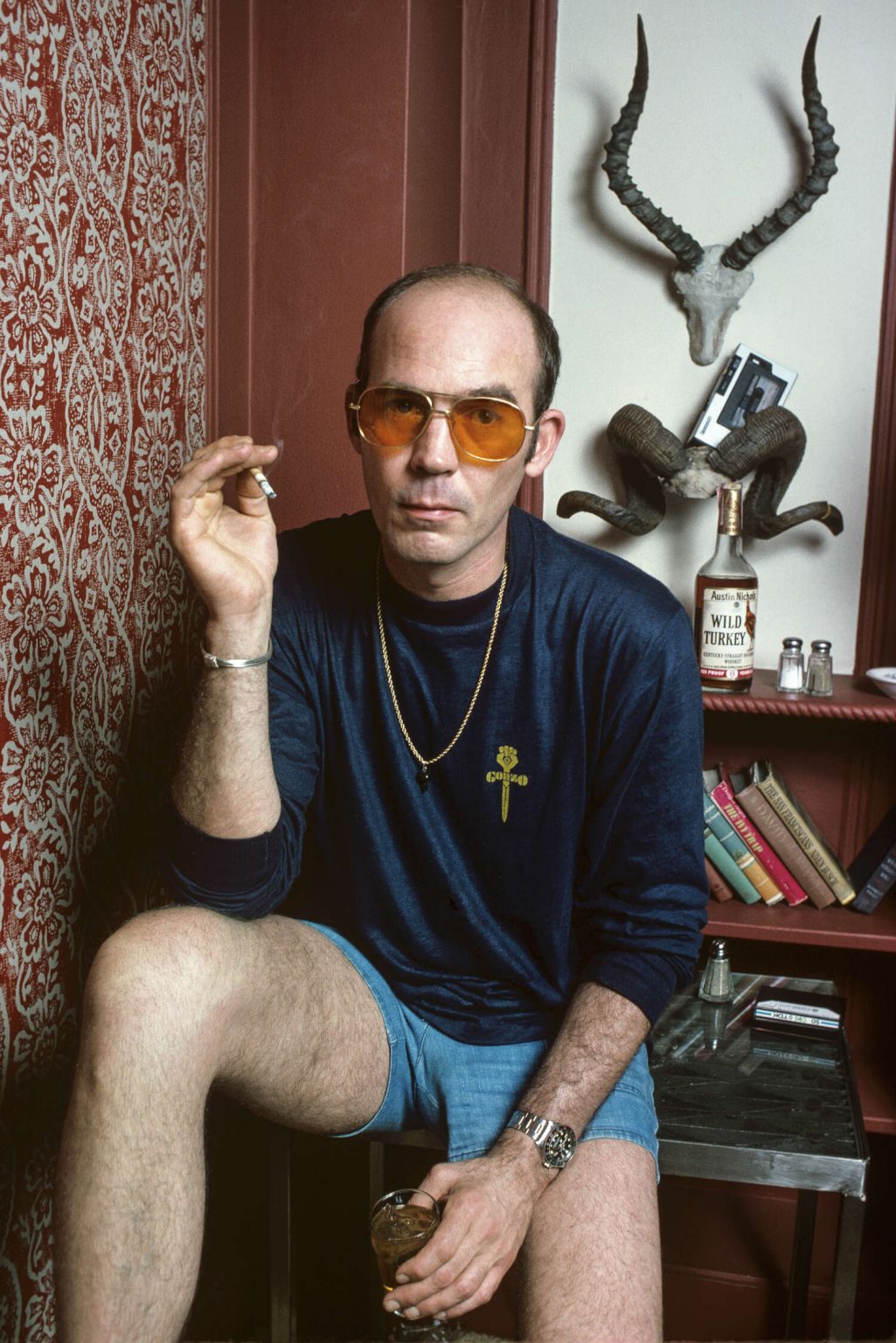
Anita Thompson was the wife and long-time assistant of the legendary Gonzo journalist Hunter S. Thompson. Since his death in 2005, she has served as the primary steward of his legacy, managing the Owl Farm estate in Woody Creek, Colorado, preserving his vast archives, and establishing the Gonzo Research Center to educate future generations about his literary and political contributions.
The Intersection of Two Lives: How Anita and Hunter Met
The story of Anita Thompson (née Beymunk) and Hunter S. Thompson began in the late 1990s. Anita first arrived at Owl Farm in 1999 to work as Hunter’s administrative assistant. At the time, Hunter was already a titan of American counter-culture, known globally for his seminal works like Fear and Loathing in Las Vegas and Fear and Loathing on the Campaign Trail '72. However, the day-to-day operations of "The Fort," as Hunter called his home, required a level of organizational rigor that the chaotic genius often lacked.
Anita’s role quickly evolved from managing correspondence and organizing files to becoming a central figure in Hunter’s creative and personal life. She lived and worked within the high-pressure environment of Woody Creek, a small community outside Aspen that served as a sanctuary for Hunter. For four years, they maintained a professional and domestic partnership that stabilized Hunter during his later years. In April 2003, the couple married in a quiet ceremony, cementing Anita’s role not just as a collaborator, but as the person entrusted with his personal well-being and, eventually, his historical record.
The relationship was defined by a shared appreciation for the "Gonzo" philosophy—a style of journalism that eschews objective detachment in favor of first-person participation. Anita understood that Hunter’s life was his work, and her presence allowed him to continue writing and engaging with the world at a time when his health was beginning to decline.
Life at Owl Farm: The "Fortress" in Woody Creek
Owl Farm is more than just a residence; it is a historical landmark of American literature. Located in the mountains of Colorado, the property served as Hunter’s headquarters for decades. It was the site of legendary parties, political strategy sessions, and the creation of some of the 20th century’s most influential prose. Anita Thompson’s presence at Owl Farm transformed the space from a bachelor’s chaotic retreat into a functional archive and home.
During their marriage, the lifestyle at Owl Farm remained distinctively "Hunter." This included late-night writing sessions, target practice on the property, and constant engagement with local and national politics. Anita acted as a gatekeeper, protecting Hunter from the relentless demands of fans and the media, while also ensuring that his creative output remained consistent.
The architectural and environmental layout of Owl Farm is essential to understanding the man. The kitchen table, often described as the "center of the universe" by those who visited, was where Hunter did much of his thinking and talking. Anita has maintained this environment with meticulous care, keeping the interior of the house largely as it was during Hunter’s life. This preservation effort serves a dual purpose: it honors the memory of her husband and provides a tangible connection for scholars and fans who wish to understand the environment that produced Gonzo journalism.
The Turning Point: February 20, 2005
The trajectory of Anita Thompson’s life changed irrevocably on February 20, 2005. At the age of 67, Hunter S. Thompson died by a self-inflicted gunshot wound at Owl Farm. The event sent shockwaves through the literary world, but for Anita, it was the beginning of a lifelong mission to protect a legacy that was at risk of being reduced to a caricature of drug use and eccentricity.
Hunter’s death was planned with the same meticulous, dramatic flair that characterized his writing. He left behind specific instructions for his funeral, which Anita and a close circle of friends, including actor Johnny Depp, worked tirelessly to fulfill. The centerpiece of the memorial was a 153-foot tower topped with a "Gonzo fist" clutching a peyote button, from which Hunter’s ashes were fired into the sky via a cannon.
This event marked Anita’s transition from a supportive spouse to the executive of a complex and highly scrutinized estate. She faced the daunting task of managing Hunter’s intellectual property, his physical assets, and the public’s perception of his work. In the years following 2005, she resisted the urge to commercialize every aspect of his name, choosing instead to focus on the literary and educational value of his archives.
Stewardship and the Gonzo Research Center
In 2026, Anita Thompson’s work continues through the Gonzo Research Center, an initiative based at Owl Farm. The center is dedicated to preserving the thousands of letters, photographs, and manuscripts Hunter left behind. Hunter was a prolific letter writer, and his correspondence provides a detailed map of the political and social shifts in America from the 1950s through the early 2000s.
Anita’s approach to stewardship involves several key pillars:
- Archival Preservation: Digitizing and cataloging personal correspondence to prevent physical degradation.
- Educational Outreach: Partnering with universities to provide scholars access to original materials.
- Scholarship Funds: Anita established the Hunter S. Thompson Scholarship for veterans at the Columbia University School of General Studies, recognizing Hunter’s own history as an Air Force veteran.
- Property Management: Ensuring Owl Farm remains a private residence that can occasionally host educational tours and small gatherings for literary figures.
By focusing on these areas, Anita has successfully shifted the narrative surrounding Hunter S. Thompson. While the public often focuses on the "wild man" persona, Anita’s work highlights his discipline as a writer and his unwavering commitment to the First Amendment.
Commercializing the Counter-Culture: Gonzo Brands
One of the more unique aspects of Anita’s management of the estate has been her foray into the legal cannabis industry. Hunter S. Thompson was a vocal advocate for the legalization of marijuana long before it became a mainstream political issue. In keeping with his lifestyle and beliefs, Anita launched Gonzo Brands.
Unlike many celebrity-endorsed products, Gonzo Brands took a scientific approach to honoring Hunter’s preferences. Anita worked with specialized botanists to extract DNA from actual samples of marijuana that Hunter had saved and stored at Owl Farm. By cloning these specific strains, she was able to offer a product that was tangibly connected to the man himself.
This move was not without controversy, as some fans felt it leaned too far into commercialization. However, Anita defended the move as a way to fund the ongoing costs of maintaining Owl Farm and the research center, which receive no government funding. It also served as a political statement, finalizing a goal that Hunter had championed throughout his life: the normalization and legalization of a plant he considered essential to his creative process.
Anita Thompson as an Author and Public Figure
Beyond her work as an estate manager, Anita Thompson has established her own voice as an author. Her book, The Gonzo Way: A Celebration of Dr. Hunter S. Thompson, provides an intimate look at the principles Hunter lived by. She explores his concepts of "High Liberty," the importance of being an active participant in democracy, and the rigorous work ethic required to produce meaningful journalism.
Anita has also been a frequent speaker at literary festivals and universities. In her public appearances, she often discusses the nuances of Hunter’s character that were missed by the media. She describes a man who was deeply sensitive, highly disciplined, and profoundly concerned with the direction of American society. By sharing these personal insights, she adds a layer of humanity to a figure who is often seen as a larger-than-life myth.
Key Milestones in the Life and Legacy of Hunter S. Thompson
| Period/Event | Significance | Anita Thompson's Role |
|---|---|---|
| 1999 | Anita joins Owl Farm as an assistant. | Managed daily operations and professional correspondence. |
| 2003 | Marriage of Anita and Hunter. | Became a life partner and formal protector of his well-being. |
| 2005 | Hunter's Death & Cannon Funeral. | Organized the memorial and began estate management. |
| 2010 | Publication of The Gonzo Way. | Authored a definitive guide to Hunter's philosophy. |
| 2015-Present | Development of Gonzo Brands. | Utilized HST's personal plant clones for legal cannabis products. |
| 2020-2026 | Expansion of the Gonzo Research Center. | Formalized archival access for scholars and established veteran scholarships. |
The Enduring Impact of Gonzo Journalism
As we look at the state of media and politics in 2026, the influence of Hunter S. Thompson remains palpable. His style—characterized by aggressive honesty, a refusal to remain neutral, and a sharp, satirical wit—has become a blueprint for many modern commentators. Anita Thompson’s role has been to ensure that the substance of his work isn't lost to the style.
She has consistently emphasized that Gonzo was not about being high; it was about being present. Hunter’s ability to predict political trends and his deep understanding of "the death of the American Dream" are more relevant now than ever. Anita’s preservation of his political writings, particularly his critiques of authoritarianism and corruption, provides a roadmap for contemporary journalists navigating a polarized landscape.
Managing the Physical Legacy of the "Fortress"
Owl Farm itself presents a significant logistical challenge. Maintaining a mountain property that serves as both a home and a de facto museum requires substantial resources. Anita has balanced this by keeping the farm private, avoiding the "tourist trap" fate that has befallen many other literary homes.
The property is still home to "the peacocks," a staple of life at Owl Farm that Hunter loved. The presence of these birds, along with the undisturbed nature of Hunter’s office, allows the farm to retain its original energy. For researchers granted access, the experience is like stepping back in time to the 1970s, providing a raw look at the tools of the trade—typewriters, fax machines, and stacks of political journals—that Hunter used to wage his literary wars.
Frequently Asked Questions
What is Anita Thompson’s current role at Owl Farm?
As of 2026, Anita Thompson remains the owner and operator of Owl Farm. She lives on the property and manages the Gonzo Research Center. Her primary focus is on the preservation of Hunter’s archives and the oversight of the Gonzo brand to ensure it aligns with Hunter’s original values.
How did Anita Thompson preserve Hunter S. Thompson’s "cloned" marijuana?
Anita worked with cannabis experts to recover DNA from plant material found at Owl Farm that dated back to Hunter’s lifetime. Through tissue culture and cloning, they were able to revive the specific strains Hunter preferred. These are now sold under the Gonzo Brands label in legal jurisdictions, with proceeds supporting the Owl Farm estate.
Can the public visit Owl Farm?
Owl Farm remains a private residence to respect the neighborhood of Woody Creek and the sanctity of the property. However, Anita occasionally hosts small, curated groups for literary events, and researchers can apply for access through the Gonzo Research Center for specific scholarly projects.
What is the Hunter S. Thompson Scholarship?
Established by Anita, this scholarship specifically supports military veterans attending Columbia University. It honors Hunter’s service in the United States Air Force and his lifelong respect for the written word. It is one of the primary ways Anita has channeled the estate's resources into social and educational good.
Did Hunter S. Thompson really want to be shot out of a cannon?
Yes. Hunter had designed the cannon and the "Gonzo Fist" tower years before his death. He even drew sketches of the monument. Anita, along with Johnny Depp, ensured that every detail of his "final blast" was executed according to his specific, often eccentric, requirements.
Pursuing the Gonzo Legacy Further
For those looking to understand the life of Hunter S. Thompson through the lens of Anita Thompson’s work, the best starting point is his primary literature. Reading Fear and Loathing on the Campaign Trail '72 provides the political foundation, while Anita’s own book, The Gonzo Way, offers the philosophical context needed to understand the man behind the myth.
If you are a student or researcher, engaging with the archives through official channels is the most effective way to contribute to the preservation of this legacy. Supporting the scholarship funds established by Anita is another practical way to ensure that the spirit of fierce independence and literary excellence that Hunter championed continues to thrive in the next generation of writers.