Anjelica Huston is the daughter of the legendary film director and actor John Huston. Their relationship was one of the most creatively potent father-daughter dynamics in cinema history, resulting in three major film collaborations and a historic milestone as the first family to produce three generations of Academy Award winners.
The bond between Anjelica and John Huston was characterized by a profound blend of professional rigor, artistic mentorship, and personal friction. To understand Anjelica Huston's career is to understand the shadow—and the light—cast by her father, a man whose influence on the American film industry remains monumental as of 2026. This exploration details their genealogical significance, their collaborative filmography, and the personal evolution of a daughter finding her voice under the tutelage of a titan.
The Huston Dynasty: A Three-Generation Legacy
The Huston family holds a unique position in the annals of Hollywood. Before Anjelica and John, there was Walter Huston, John’s father and Anjelica’s grandfather. This lineage established what historians often call the "Huston Royal Family" of film.
In 1948, John Huston directed his father, Walter, in The Treasure of the Sierra Madre. Walter won the Academy Award for Best Supporting Actor, while John won for Best Director and Best Screenplay. Nearly four decades later, John directed Anjelica in Prizzi’s Honor (1985), for which she won the Academy Award for Best Supporting Actress. This achievement marked the first time in history that three generations of a single family—grandfather, father, and daughter—all won Oscars. As we look back from 2026, this record remains a testament to the family's consistent dedication to the craft of storytelling.
The Huston legacy was not merely about awards; it was about a specific style of filmmaking. John Huston was known for his "man’s man" persona, a lover of boxing, hunting, and literature. His films often explored the themes of failed quests, masculine honor, and the irony of fate. Anjelica, growing up in this environment, inherited a deep respect for literature and a fearless approach to performance, though her journey to self-actualization required navigating her father's formidable personality.
Early Life and the Difficult Debut of "A Walk with Love and Death"
Anjelica Huston was born in 1951 while her father was in Africa filming The African Queen. She spent much of her childhood at St. Clerans, a sprawling estate in County Galway, Ireland. This upbringing provided a sense of aristocratic isolation, where she was surrounded by her father’s literary friends and the rugged beauty of the Irish countryside.
Her professional entry into film, however, was fraught with tension. In 1969, John Huston cast a teenage Anjelica as the lead in his medieval romance, A Walk with Love and Death. John was notoriously demanding and, by many accounts, was particularly hard on his daughter during production. He wanted her to embody a specific type of ethereal beauty and innocence that she, as a rebellious and self-conscious teenager, struggled to project.
The film was a critical and commercial failure. Critics were harsh toward Anjelica’s performance, and the experience was so bruising that she stepped away from acting for over a decade. During this hiatus, she moved to New York and became a highly successful fashion model, working with legendary photographers like Richard Avedon. This period was essential for her development; it allowed her to cultivate her own identity and aesthetic away from the direct influence of her father’s camera lens.
The Turning Point: "Prizzi’s Honor" and Artistic Redemption
The 1980s marked a dramatic shift in the Huston dynamic. After years of supporting roles and a high-profile relationship with Jack Nicholson, Anjelica returned to the forefront of cinema in her father’s 1985 film, Prizzi's Honor.
In this dark comedy about a Mafia family, Anjelica played Maerose Prizzi, a calculating and vengeful woman who uses her intellect to navigate a world dominated by men. Unlike their first collaboration, Prizzi’s Honor allowed Anjelica to leverage her maturity and her unique, striking features. John Huston’s direction this time was precise and supportive, recognizing that his daughter had evolved into a formidable actress in her own right.
The success of Prizzi’s Honor was a cathartic moment for both. When Anjelica won the Oscar, it validated her talent independent of her father's name, even as it celebrated the work they did together. This period proved that the "Huston Luck" was not merely a matter of coincidence but a result of a shared, rigorous artistic language.
"The Dead": A Final Masterpiece and Farewell
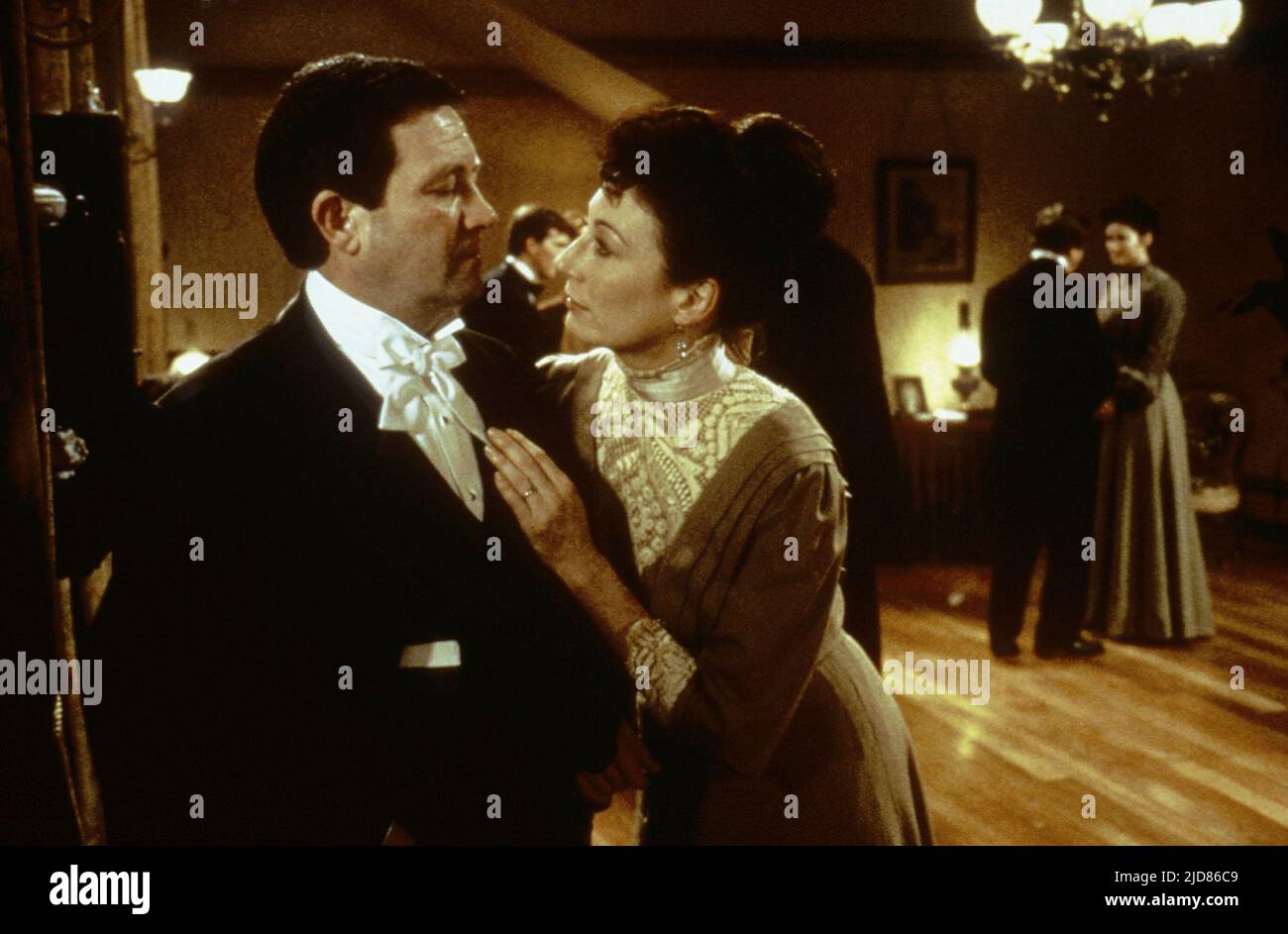
The final chapter of their professional relationship is perhaps the most poignant. In 1987, John Huston directed an adaptation of James Joyce’s short story, The Dead, from the collection Dubliners. By this time, John’s health was failing; he suffered from severe emphysema and required an oxygen tank to breathe. He directed the film from a wheelchair, often needing to be assisted onto the set.
Anjelica played the lead role of Gretta Conroy. The film is a meditative piece on memory, lost love, and the presence of the past. Working on The Dead was a deeply emotional experience for the entire cast and crew, as they were aware it would likely be John’s final work. Anjelica’s performance in the film’s closing scenes is widely considered one of her finest, capturing a sense of melancholy that mirrored the real-life circumstances of her father's impending departure.
John Huston died shortly after the film’s completion in August 1987. The Dead stands as a haunting, beautiful coda to his career and a final gift to his daughter—a role that allowed her to showcase the depth of her dramatic range in a project that honored their shared Irish roots.
Comparison of Major Collaborations
The following table outlines the three primary films where John Huston directed Anjelica Huston, highlighting the evolution of their professional relationship.
| Film Title | Year | Anjelica's Role | Context & Significance |
|---|---|---|---|
| A Walk with Love and Death | 1969 | Claudia | Her film debut; a difficult production that led to a long hiatus from acting. |
| Prizzi's Honor | 1985 | Maerose Prizzi | Critical and commercial hit; won Anjelica the Academy Award for Best Supporting Actress. |
| The Dead | 1987 | Gretta Conroy | The final film for John Huston; a sensitive adaptation of James Joyce’s work. |
The Personal Dynamics of the Huston Household
Beyond the film sets, the relationship between Anjelica and John was complex. John Huston was a larger-than-life figure who had five wives and numerous high-profile affairs. His lifestyle was nomadic, and his expectations for his children were immense. In her memoirs, A Story Lately Told and Watch Me, Anjelica reflects on the intimidation she felt as a child and the "theatricality" of their home life.
John was a man who prized courage and intellect above all else. He often tested his children, pushing them to be adventurous and articulate. For Anjelica, this meant navigating a childhood where her father was often absent but his presence was always felt. The "Huston way" involved a certain stoicism, which Anjelica eventually adopted, helping her survive the volatile nature of the entertainment industry.
In 2026, many film scholars point to Anjelica’s resilience as a hallmark of the Huston legacy. She did not just inherit a name; she inherited a work ethic and a specific "Huston eye" for detail. Even after John's death, Anjelica continued to honor his memory by maintaining high standards in her choice of roles and her eventual foray into directing with films like Bastard Out of Carolina.
Technical Impact: The Directorial Style of John Huston
John Huston's directing style significantly influenced Anjelica's approach to acting. He was known for his "economy of style," rarely using more than one or two takes if he got what he wanted. He believed in casting the right people and then letting them do their jobs, a philosophy that Anjelica has praised in interviews.
Huston’s films were often characterized by:
- Literary Depth: He frequently adapted complex novels and stories (Herman Melville, Tennessee Williams, James Joyce).
- Visual Simplicity: He avoided flashy camera work, focusing instead on composition and the actor's face.
- The "Anti-Hero": He was drawn to characters who were flawed, cynical, yet strangely noble.
Anjelica’s career reflects these influences. She is known for playing "outsider" characters with a strong internal life—women who are often smarter than those around them and who carry a certain worldly weariness. This archetype is a direct descendant of the "Huston protagonist."
Frequently Asked Questions
How many Oscars did the Huston family win?
The Huston family has won a total of four Academy Awards across three generations. Walter Huston won one for The Treasure of the Sierra Madre. John Huston won two for the same film (Directing and Screenplay). Anjelica Huston won one for Prizzi's Honor. This makes them the first family in Oscar history to achieve this three-generation milestone.
Did Anjelica Huston always want to be an actress?
While she grew up in a film-centric environment, Anjelica initially resisted acting after the poor reception of her first film, A Walk with Love and Death. She spent over a decade as a successful fashion model before returning to acting in the early 1980s, realizing that it was her true calling once she had gained the maturity to handle the industry's pressures.
What was the last movie Anjelica Huston made with her father?
The last movie was The Dead, released in 1987. It was an adaptation of a story from James Joyce's Dubliners. John Huston directed the film while suffering from severe illness, and he passed away before its wide release. The film is considered a masterpiece of late-career directing.
Was John Huston supportive of Anjelica's career?
Their relationship was complicated. While he was responsible for her early debut, which was a difficult experience, he later became one of her greatest champions. By the time of Prizzi's Honor, they had developed a mutual professional respect. Anjelica has often described him as a tough but brilliant mentor who taught her the importance of authenticity in performance.
Is the Huston family still active in Hollywood in 2026?
Yes, the Huston legacy continues. Anjelica Huston remains a respected figure in the industry, and other members of the family, including her brother Danny Huston and her nephew Jack Huston, are active and successful actors and directors. The family's influence persists through their continued work and the enduring popularity of John Huston's classic films.
Practical Guidance for Film Students and Historians
For those researching the Huston family or the history of Hollywood dynasties, the relationship between Anjelica and John serves as a primary case study in the intersection of family and art. To fully appreciate this legacy, one should view their collaborative works in chronological order to see the growth in both the director’s sensitivity and the actress’s technical skill.
Key Actions for Researchers:
- Analyze "A Walk with Love and Death": Observe the raw, unrefined energy of a young Anjelica and compare it to the polished, Oscar-winning performance in Prizzi's Honor.
- Read Anjelica’s Memoirs: A Story Lately Told provides unparalleled insight into her early life in Ireland and her complex feelings toward her father during the 1950s and 60s.
- Study John Huston's Directorial Theory: Look for his interviews in the American Film Institute (AFI) archives to understand his philosophy on "casting as 90% of directing."
- Explore the Irish Connection: Visit or research the Huston estate in St. Clerans, Galway, to understand the cultural environment that shaped Anjelica’s worldview and John’s later directorial choices.
The story of Anjelica and John Huston is more than just a footnote in movie history; it is a narrative of a daughter coming into her own under the watchful, often difficult eye of a genius. Their journey from the failures of 1969 to the triumphs of the mid-1980s remains one of Hollywood's most compelling stories of redemption and artistic excellence.